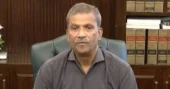
Law Adviser Asif Nazrul
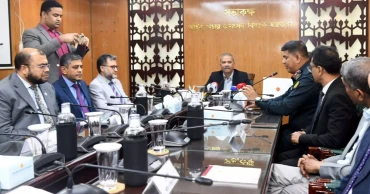
Govt launches e-bail bond system in 8 districts
The government of Bangladesh on Wednesday (January 21, 2026) launched electronic bail bond or e-bail bond management system in eight districts if the country, aiming to make the bail bond submission process easier.
Law Adviser Asif Nazrul inaugurated the programme virtually from the Secretariat.
The new system has been introduced simultaneously in Manikganj, Bandarban, Meherpur, Joypurhat, Moulvibazar, Panchagarh, Jhalakathi and Sherpur following the successful pilot implementation in Narayanganj.
The Adviser said the e-bail bond system was first launched on a trial basis in Narayanganj on October 15 last year and has been operating with cent percent success.
Read more: Election 2026: 1967 candidates left standing after withdrawals, highest since 2008
“Based on this success, we have further improved the software. Today, the e-bail bond system has been launched in eight more districts,” he said.
He said the new system will save time and costs for litigants, lawyers, prison authorities and all other stakeholders involved in the bail process.
Before the introduction of e-bail bonds, people had to go through multiple steps even after bail was granted, the adviser said.
“As a result, litigants had to endure unnecessary loss of time, money and mental distress. In many cases, people had to remain in jail for several days or even weeks despite being granted bail. There was a lack of transparency and accountability, and it was not possible to identify where delays were occurring,” he said.
Dr Asif Nazrul said the government plans to introduce the system in all 64 districts.
“We still have 20 to 25 days. We will try to launch it in a few more districts during this time. We hope that within the next six months, the system will be operational in all districts,” he added.
Read More: Rule of law biggest challenge despite progress: Asif Nazrul
Responding to a question on whether future governments would continue the initiative, the adviser said he believes the system will be maintained as it does not involve any political controversy.
9 months ago

Khaleda was convicted in Bangladesh’s most disgraceful trial: Asif Nazrul
Dhaka, Jan 16 (UNB)— Law Adviser Asif Nazrul on Friday said former Prime Minister Khaleda Zia was unjustly convicted in what he described as the most disgraceful and farcical trial in Bangladesh’s history, referring to the Zia Orphanage Trust corruption case.
Addressing a condolence meeting held at the South Plaza of the Jatiya Sangsad Bhaban, Asif Nazrul termed the Zia Orphanage Trust case against Khaleda Zia a “sham and disgraceful judgment” in the country’s judicial history.
He recalled an incident from the trial, saying a defence lawyer had asked Khaleda Zia whether she had misappropriated orphan funds.
“Hurt and astonished, Khaleda Zia repeated the question—‘Did I embezzle orphan money?’ The court treated this as her statement and convicted her on that basis. As a student of law, I can say with certainty that there cannot be a more disgraceful trial than this,” the law adviser said.
Khaleda Zia’s grace, sense of dignity were truly admirable: Nurul Kabir
Asif Nazrul noted that there was a time when hardly anyone dared to speak out in support of the BNP or against the injustice done to Khaleda Zia. While searching for statements protesting the unfair trial, he said, only four people at home and abroad could be persuaded to issue statements.
“I am talking about a time when it was almost impossible to find people willing to stand by Khaleda Zia,” he added, noting that the situation has since changed.
Asif Nazrul further said Khaleda Zia has found a permanent place in the hearts of the people, while ousted former Prime Minister Sheikh Hasina has been relegated to a place of rejection.
Asif Nazrul remarked that Bangladesh would prosper only if the country is envisioned in the way Khaleda Zia had envisioned it. “Khaleda Zia is no more. Now the biggest concern is what Bangladesh will look like in the days ahead. If we want a better Bangladesh, we must uphold Khaleda Zia, follow her ideals and run the country in that spirit.”
Thanking the fighters of the July uprising, the adviser said people in the country are now able to express their opinions freely, without obstruction in expressing either love or dissent.
Khaleda Zia’s legacy honoured in Washington National Press Club
BNP Chairperson Tarique Rahman and his family members were present at the programme. Senior leaders, including members of the BNP Standing Committee, also attended the condolence meeting.
Eminent citizens from the media, business community and various professional groups spoke at the event, recalling Khaleda Zia’s memories and paying tribute to her.
9 months ago
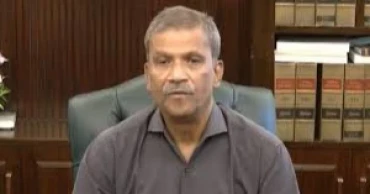
Recognised Qawmi Madrasah graduates now eligible to become marriage registrars: Law Adviser
Graduates of recognised Qawmi Madrasah holding the Dawra-e-Hadith degree will be eligible to serve as marriage registrars (Qazi) from now on, said Law Adviser Asif Nazrul.
He shared the information in a post on his verified Facebook account on Sunday (December 07, 2025).
He wrote previously this opportunity was limited to those holding Alim certificates.
Read more: No legal barrier to Tarique Rahman’s return, says Law Adviser
The Ministry of Law has amended the law to extend the eligibility to recognised Qawmi Madrasah graduates.
Earlier, on August 5, Religious Affairs Adviser Dr AFM Khalid Hossain had sent a letter urging the Law Adviser to prioritise granting marriage registrar licenses to Dawra-e-Hadith certificate holders.
10 months ago
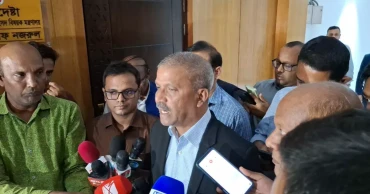
No legal barrier to Tarique Rahman’s return, says Law Adviser
There is no known legal bar preventing BNP Acting Chairperson Tarique Rahman from returning to Bangladesh, Law Adviser Dr Asif Nazrul said on Monday (December 01).
“If any obstacles exist, we will certainly cooperate (with him). We will make the best possible arrangements for his security,” he said while talking to reporters at the Secretariat.
The adviser said the decision to return rests entirely with Tarique Rahman. “He has the authority to choose the appropriate time. I believe he will return when he considers it right,” he added.
Read more: 'Political realities prevent my return', says Tarique as he seeks prayers for Khaleda
Responding to questions about why Tarique has not yet returned, the adviser said such speculation is unnecessary. “Many people raise questions about his return, but I find those comments uninteresting. This is a matter between a mother and her son. Is there any directive from Begum Khaleda Zia, or does Tarique Rahman have personal considerations? I don’t think it is appropriate to comment on that,” he said.
“We must understand that this is a mother-son relationship. He knows best when to come and when to take any action,” Nazrul added.
Read more: No objection to Tarique’s return, says govt
10 months ago
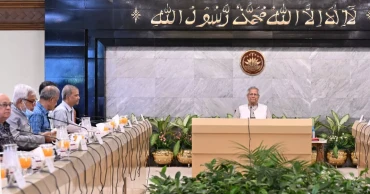
Settle disputes over charter, referendum within week: Govt to anti-fascist parties
The interim government on Monday urged the anti-fascist political parties to reach an agreement through discussions within a week on disputed issues such as the implementation of the July Charter and the proposed referendum.
“Regarding the timing of the referendum — when it will be held and what its subject will be — as well as the steps to be taken in response to the notes of dissent in the July Charter, the meeting expressed the view that a final decision should be made urgently in line with the proposals made by the Consensus Commission,” said Law Adviser Asif Nazrul.
Briefing reporters after a meeting of the Council of Advisers at the Chief Adviser’s Office, he said, “The meeting called upon the long-time allied political parties of the anti-fascist movement to hold discussions among themselves on their own and, if possible, to provide the government with a united guideline within the next week in this regard.”
Professor Asif said that a united guideline from the political parties would make it much easier for the government to make decisions.
“The meeting also emphasised that, given the current situation, there is no room for delay, and everyone must keep this in mind,” he observed.
NCC recommends referendum, constitution reform assembly to implement July Charter
The Adviser, however, said the government itself will not take any steps to arrange such discussions.
He added that if the political parties fail to settle their disputes, the government will act on its own.
Asif said the Council of Advisers reaffirmed the government’s commitment to hold the next parliamentary election in the first half of February 2026.
He said the emergency meeting of the Council of Advisers was held to discuss the July Charter prepared by the National Consensus Commission and matters related to its implementation.
The Adviser said the meeting thanked the National Consensus Commission and the political parties for their efforts to build unity on reform issues and for reaching agreement on many matters.
Recommendations on July Charter implementation submitted to CA
He said the Council of Advisers discussed the Consensus Commission’s proposed July National Charter, including finalising the Constitution Amendment Order and the holding of the referendum mentioned in the Charter, as well as the subject of that referendum.
“It was observed at the meeting that despite long discussions within the Consensus Commission, there remain differing opinions on a few of the reform recommendations. The meeting also noted that disagreements have emerged among political parties over when the referendum should be held and what its subject should be,” the Adviser said.
Replying to a question, Asif said the political parties have carried out the anti-fascist movement together for the past 15 years. “We want to give them a little more time. Let’s see if they can discuss among themselves and reach an agreement on the issues I mentioned.”
Responding to another question, the Adviser said he had earlier stated that the final decision on the referendum and the implementation of the July Charter would be taken by the Council of Advisers under the leadership of the Chief Adviser. “We have not moved away from that position at all. Expecting a united recommendation from the political parties should be seen as a gesture of goodwill, not as backing down.”
NCC holds review meeting with experts on July Charter implementation
When a journalist asked whether the government would organise discussions for the political parties or whether they would sit and discuss on their own, Asif said the government has already held many discussions and is not going to organise any further meetings.
He said the anti-fascist political parties have, over the past 15 years, discussed matters among themselves and taken many important decisions.
“They have worked together during extremely difficult times and faced persecution together. We expect that they will discuss among themselves on their own initiative and provide us with a united guideline. Just yesterday (Sunday), I saw that one party has called for discussions, and we welcome that,” Asif said.
11 months ago

BNP sought impartial role, not caretaker govt: Law Adviser
BNP has not demanded a caretaker government but rather sought an impartial role from the current interim government during the next national election, said Law Affairs Adviser Asif Nazrul.
Talking to reporters at the Secretariat, the adviser clarified that during Tuesday’s meeting between the BNP and the government, they (BNP) did not call for reinstating a caretaker system.
“What I understood from the discussion is that the BNP did not ask for a caretaker government. They said the interim government should act neutrally, like a caretaker government,” he said.
The party (BNP) wanted a neutral role from the government who assured them that they (government) are already maintaining neutrality, and the Chief Adviser himself has guaranteed this, he said.
The head of the government will personally oversee major administrative transfers and postings to ensure fairness, Asif Nazrul said.
When asked whether the Council of Advisers would be downsized during the election period, he replied no such issue was discussed anywhere. “It is a matter for the Council of Advisers. No party has made any demand to reduce its size.”
Will do whatever necessary to hold peaceful, impartial polls: Prof Yunus tells BNP
Meanwhile, the adviser has lauded the way army officers were brought before the International Crimes Tribunal, describing it as a remarkable show of respect for the judicial process.
“The manner in which the army members appeared before the tribunal and the cooperation extended by senior military officials, including the army chief, deserve high praise. Their respect for the rule of law is very encouraging,” he said.
On the decision to keep the officers in a sub-jail, he said the matter is entirely under the jurisdiction of the Home Ministry, which will take steps it deems appropriate.
11 months ago

Trial over July mass killings to end under current govt: Asif Nazrul
Law Adviser Asif Nazrul on Monday said the trial of the July mass killings is moving forward at a good pace and is expected to conclude under the current government.
“I want to assure you that the trial is moving ahead in full swing. There will be no negligence and we firmly believe that justice will be served under this government,” he said.
The adviser came up with the remarks while addressing a programme after inaugurating the ‘July Martyrs Monument’ built in remembrance of those killed during the July mass uprising in Narayanganj.
“Cases have been filed in criminal courts and many of the investigations have made significant progress. We are hopeful that chargesheets will be submitted before August 5. Once submitted, the trials of the accused can be conducted under the Speedy Trial Act, if necessary,” he said.
Highlighting the significance of the July movement, Asif said, “This uprising brought down 15 and a half years of fascist rule in Bangladesh. The tyrannical regime was uprooted.”
Quick justice to be ensured in Old Dhaka murder: Asif Nazrul
Recalling the Narayanganj incident, the adviser said 56 people were killed and over 350 injured in Narayanganj alone. “We remember the immense sacrifice made by the people of Narayanganj.”
Referring to recent incidents, Asif said, “The law-and-order situation has deteriorated in some areas. Heinous killings and extortion are taking place. But just as you defeated fascist forces through unity in July, that same unity is needed to resist local extortionists. The administration will stand by you.”
Earlier, in the day, the first ‘July Martyrs Monument’ implemented by the Ministry of Housing and Public Works, was inaugurated in the Hajiganj area of Narayanganj city.
1 year ago

Govt working to ensure faster, affordable justice: Law Adviser Asif Nazrul
Law Adviser Asif Nazrul on Saturday said the government is working to ensure swift and cost-effective disposal of cases, uphold human rights and free people from the 'curse of the burden of cases'.
"The overwhelming number of pending cases not only strains the judicial system but also questions the probability of the prospect of justice. Reducing the pressure of new cases has become a necessity," he said at a consultation on the draft “Legal Aid Services (Amendment) Ordinance 2025” held at the National Legal Aid Services Organisation (NLASO) on Bailey Road in the capital.
Asif Nazrul emphasised the importance of strengthening alternative dispute resolution mechanisms to reduce the pressure on courts. "Introducing mandatory pre-litigation mediation is essential to tackle the case backlog," he said.
He further stated that the Ministry of Law has identified three core objectives for judicial reform, ensuring timely and low-cost case resolution, securing justice for all and relieving citizens from the curse of prolonged litigation.
No more night-time voting in Bangladesh: Attorney General
Nazrul, also the chairman of NLASO, said, "At present, of the nearly 5,00,000 new cases filed annually across the country, only around 35,000 are settled through the government’s legal aid services. Legal aid offices can resolve disputes with over 90 per cent satisfaction among parties involved and in just one-tenth of the time required by the courts."
He added that expanding and institutionalising the legal aid programme could increase the number of cases resolved through mediation to between 100,000 and 200,000 annually, which would reduce case filings by up to 40 per cent.
1 year ago

Govt working sincerely to fulfill people's expectations: Asif Nazrul
Law Affairs Adviser Asif Nazrul on Tuesday said the government is making sincere efforts to meet the people's expectations, mentioning that the core objective of all reform initiatives is to establish good governance and the rule of law in the country.
“The government is working to ensure that future rulers cannot endanger lives through abuse of power….so that people do not become destitute due to legal complexities, that personal freedoms are not compromised in the name of civic benefits, and that citizens can live under a well-defined legal system,” he said while speaking at a views-exchange meeting on the Code of Criminal Procedure (Amendment) Ordinance, 2025 held at the Judicial Administration Training Institute in Dhaka.
Regarding the implementation of reform proposals submitted by various commissions, Asif Nazrul said more than a hundred recommendations have already been identified as ready for immediate implementation, and work has begun to execute them.
He expressed the hope that these reforms would be completed by August this year.
Govt to form high-level committee to review public service ordinance
“The government has already amended several laws, including the Code of Civil Procedure (CPC), Cyber Security Act, Women and Children Repression Prevention Act, and the Power of Attorney Act,” he said, adding that amendments to the Judicial Service Recruitment Rules and the National Legal Aid Services Act are also in the pipeline.
“Two separate consultation meetings have been held regarding the enactment of a law to prevent enforced disappearances, and the process is expected to be completed within the next month,” he added.
The adviser also noted that the finance and home ministries have made several legal amendments. “The reform process is already underway."
He, however, pointed out that some major reforms, especially those requiring constitutional amendments, demand political consensus.
“In such cases, we are waiting for the July Charter. Once this charter is formulated in July, it will provide the foundation for undertaking broader reforms,” he explained.
Asif Nazrul acknowledged that the nature and structure of the current government are not entirely conducive to the scale of reforms expected by society, which is why the administration is having to work extra hard to deliver.
252 lower court judges transferred; 12 judges get promotion
“The government will not attempt to amend the Constitution bypassing all political parties’ consensus,” he assured.
At the meeting, Attorney General Md Asaduzzaman, Chief Prosecutor of the International Crimes Tribunal Tajul Islam, Professor of Law Department of Dhaka University Mahbubur Rahman, Supreme Court lawyer Advocate Mahbub Uddin Khokon and others expressed their opinions on various sections and sub-sections of the draft ordinance.
1 year ago

Committed to credible probe into July-August massacre: Dhaka tells Geneva talks
Law Adviser Dr Asif Nazrul has said the interim government is committed to an impartial and credible investigation into the July-August massacre in Bangladesh and proper judicial processes for redress.
Asif Nazrul made the remarks when he was addressing a session titled ‘OHCHR Fact-Finding Report on Human Rights Violations and Abuses Related to the Protests of July and August 2024 in Bangladesh: Charting the Path Forward’ as a panelist at the Palais des Nations in Geneva on Wednesday.
The event was organised by the Office of the High Commissioner for Human Rights (OHCHR) as part of the ongoing 58th session of the Human Rights Council (HRC) in Geneva.
UN High Commissioner for Human Rights Volker Turk also participated in the event and made a presentation on the OHCHR Fact-Finding Report released on February 12.
In his panel remarks, the Law Adviser appreciated High Commissioner Turk for commissioning the mandate of the OHCHR Fact Finding Team by undertaking a comprehensive, independent investigation of the July and August mass uprising.
UN rights chief calls for accountability over Bangladesh’s 2024 protest abuses
He also said that the findings of the report and the evidence collected and analysed for the purpose of the report would be pivotal for the ongoing accountability and judicial processes in Bangladesh to ensure justice.
Asif Nazrul also shared the interim government’s various reform initiatives.
High Commissioner Turk, in his presentation, stated that former government officials, members of the security and intelligence apparatus and violent elements associated with the former ruling party had committed serious, organized and systemic human rights violations in July-August 2024.
He mentioned that OHCHR has reasonable grounds to believe that certain crimes committed in July-August constituted crimes against humanity.
He assured Bangladesh of OHCHR’s continued cooperation and support in ensuring accountability, truth telling and national healing through its enhanced presence in Bangladesh.
From Bangladesh side, Mir Mahmudur Rahman, brother of July uprising martyr Mugdha’s brother, spoke at the panel recounting the painful experience from the victim’s family; while Farzana Sharmin Emu, a civil society representative working to support the injured, also spoke sharing the story of the injured.
CA Dr Yunus asks labour ministry to reform labour law maintaining global standard
The panel ended with a Q&A session where Law Adviser Nazrul and High Commissioner Turk responded to the questions raised from the floor.
Well-attended by the Geneva-based Diplomats and international Civil Society Representatives, one highlight of the panel discussion was the screening of a forensic video on Jatrabari atrocities during the mass uprising, said a media release issued by the Bangladesh side.
Later, the Law Adviser met High Commissioner Turk in a bilateral meeting.
They discussed the future modalities of engagement of OHCHR in the national accountability process pertaining to the atrocities and crimes committed in July and August last year.
Information Adviser Md Mahfuj Alam, Bangladesh Permanent Representative and Sanjida Islam Tuli of Maayer Dak were present during the panel as well as at the bilateral meeting.
1 year ago