Ali Riaz
Every ‘July Charter’ word written in blood: Ali Riaz
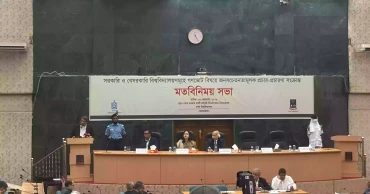
Prof Ali Riaz, special assistant to the chief adviser, on Tuesday said the book of the July Charter presented to the public may be printed in black and white, but every single word of it has been written with the blood of the country’s people.
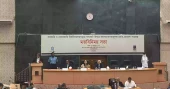
He made the remarks at an interactive meeting titled ‘Public Awareness Campaign on Referendum in Public and Private Universities’ held at the Nabab Nawab Ali Chowdhury Senate Building auditorium of Dhaka University.
Referring to the sacrifices of the July martyrs and injured, Ali Riaz said they did not seek to become prime minister or president; they wanted a dignified state. The July Charter, he said, is the recognition of that debt.
“Do we have no responsibility? Will we deny the debt that allows us to speak here today?” he asked, adding that acknowledging this debt is precisely what the July Charter represents.
He said the charter was prepared through discussions with political parties, civil society, various organisations, groups, and individuals. “When I open the book of the July Charter, I hear the cries of mothers who lost their children.”
Ali Riaz also discussed the context behind the abolition of the caretaker government system.
He said the July Charter includes safeguards to ensure that ‘one-person rule’ never returns to Bangladesh. “Everyone knows that the farce carried out in the name of three so-called elections in Bangladesh happened at the will of one individual. That became possible through the abolition of the caretaker government system.”
Referring to the 2014 Election Commission, he said, “The President staged another drama.”
He claimed that the name Kazi Rakibuddin Ahmad was not on the search committee’s list, yet he was appointed Chief Election Commissioner at the Prime Minister’s behest, leading to a rigged election in 2014. “No conscientious person with democratic aspirations can say that such a situation should continue.”
He said that through extensive dialogue, political parties have agreed in the July National Charter that future Election Commissions will be formed based on consultations among representatives of the ruling party, the main opposition party and the third party-the second-largest opposition party- in parliament.
Ali Riaz highlighted the role of the Public Service Commission during the previous regime and said that if the July Charter is implemented, the President will no longer hold unilateral authority to grant pardons.
He said the Constitution allows the ‘right to life’ to be violated during a state of emergency, but political parties have agreed that future emergencies will drop the term ‘internal disturbance’ and require cabinet approval with opposition representation.
Mentioning past instances of constitutional amendments made for the benefit of a single individual, he said that any future constitutional amendment would require a two-thirds majority in the parliament, followed by the support of at least 51 members of a 100-member upper house.
He also spoke about reforms related to the presidential election and changes to Article 70. “The situation created by forcing public representatives into party servitude has meant that our parliament has not even become a debating club,” he said.
Awami League must face trial, seek apology before returning to politics: Ali Riaz
Ali Riaz said all political parties have agreed that out of the standing committees of the parliament, four key committees will be chaired by members from the opposition.
He urged all to work in support of the July Charter.
Those present included the Chief Adviser’s Special Assistant Monir Haidar, University Grants Commission Chairman Dr SMA Fayez, DU Pro-Vice-Chancellor Prof Dr Sayma Haque Bidisha, individuals injured in July, and vice-chancellors, teachers, students and officials from various universities.
7 months ago
July Charter a pact with people and parties, not an imposition: Ali Riaz
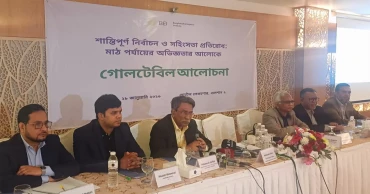
The July National Charter is a pact between people and political parties, with the parties themselves primarily responsible for its implementation, said Prof Ali Riaz, Special Assistant to the Chief Adviser.
“Thirty political parties formulated these agendas through uninterrupted discussions over nine months. Therefore, the responsibility to translate this pact into reality rests with the political parties. This is not something imposed from above; it is meant to realise the dreams of countless martyrs,” he said.
Ali Riaz was speaking at a seminar titled ‘Peaceful Election and Prevention of Violence: Grassroots Experiences’, organised by the Bangladesh Enterprise Institute (BEI) in Gulshan in the morning.
He said the July mass uprising was centred on one fundamental demand— establishing justice in Bangladesh.
“Those who committed injustice must be brought to justice. The core objective of the uprising is to ensure that fascism or feudal domination can never again be established in Bangladesh,” Ali Riaz said.
Italy supports Bangladesh’s democratic transition, July Charter: Deputy Minister
Stressing the need for accountability, he said a balance of power must be created and the people’s voting rights ensured through elections. “If we want justice, reforms and a new democratic political system, there is no alternative to elections. The authority over referendums, elections and constitutional reforms belongs to the people alone.”
He pointed out that students and citizens sacrificed their lives to free the country from fascist oppression and that Bangladesh is now on a path of democratic transition.
“That democracy must be strengthened so that every citizen feels they are an owner of the state. Therefore, on February 12, everyone must exercise their voting rights freely and independently, and vote ‘Yes’ in the referendum.”
Calling for collective action, Ali Riaz expressed the hope that a prosperous, egalitarian, humane and justice-based Bangladesh could be built with the people united.
He urged all to campaign in favour of the ‘Yes’ vote on February 12.
Meanwhile, a BEI survey conducted among 400 men and women at the grassroots, 200 local influential figures and political leaders, as well as district and upazila-level administrators, found that only 30 percent of respondents believe the July Charter will be implemented, while only 40 percent are aware of the referendum.
Vote ‘Yes’ to curb concentration of power: Prof Ali Riaz
The survey also revealed that 50 percent of respondents believe the country’s situation will improve after the election, while 60 percent expect a violence-free election.
7 months ago
Win for 'Yes’ to ensure discrimination-free Bangladesh for youths: Ali Riaz
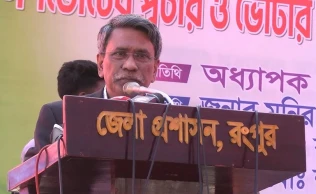
Special Assistant to the Chief Adviser Professor Ali Riaz on Wednesday said voting ‘Yes’ in the referendum would pave the way for building a new, discrimination-free Bangladesh for the young generation.
“To rebuild the country anew, people must vote ‘Yes’ in the referendum. The decision on what kind of Bangladesh will be handed over to the youth in the future will be determined by this ‘Yes’ or ‘No’ vote,” he said.
Prof. Riaz came up with the remarks while addressing a divisional-level Imam Conference at Abu Sayeed Stadium in Rangpur on Wednesday afternoon, organised to promote the referendum and motivate voters.
Read More: Upper house of legislature key to preventing autocracy: Ali Riaz
Referring to the July Charter, Prof. Riaz said that although it was written in black ink, it was essentially written with the blood of the martyrs of the 'July' movement, referring to the Uprising of 2024.
“To implement the July Charter, the referendum must receive a ‘Yes’ vote,” he explained.
He clarified that the referendum is not about voting for any individual. “If the people say ‘Yes’, no political party will have the power to block reforms,” he said.
Ali Riaz also said that public funds had been looted for the past 16 years and that a ‘Yes’ vote in the referendum would help curb looting and corruption in many areas.
8 months ago
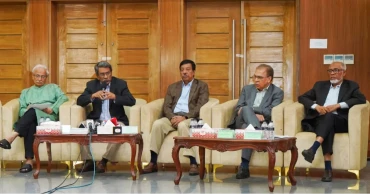
Consensus Commission won’t impose decisions, only consult parties: Ali Riaz
The National Consensus Commission (NCC) will not impose any decisions on its own as it will work out an execution plan based on what political parties want, Commission Vice-Chairman Prof Ali Riaz said on Thursday.
He made the remarks as the commission resumed talks in the morning at the Foreign Service Academy with political parties on implementing the July Charter.
“The cooperation the commission has received so far from all political parties has been remarkable,” Prof Riaz said, adding that almost every party has made concessions from its original positions.
He went on to say, “This spirit of consensus has enabled preliminary agreement on 84 issues. The success of implementing reforms in these areas will determine Bangladesh’s future trajectory.”
NCC assesses various opinions to implement July Charter
While some reforms would be undertaken by the interim government, others would be implemented later through elected representatives, said Prof Riaz, adding, “The commission will consult an expert panel to decide which reforms the interim government can pursue immediately but will not dictate actions for elected representatives after polls.”
Ahead of Thursday’s dialogue, the NCC reviewed earlier expert opinions and political party feedback on implementation strategies.
On September 7, the commission held an extensive meeting with experts to finalise the charter and assess execution methods.
Multiple informal talks with parties and alliances had also been conducted prior to the formal session.
1 year ago
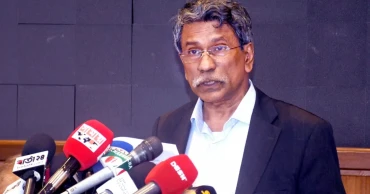
No disagreement on reinstating caretaker govt: Ali Riaz
Vice-Chairman of the National Consensus Commission Professor Ali Riaz on Wednesday said there is no disagreement among political parties regarding the reinstatement of the caretaker government system.
“There is a clear and specific consensus on this issue (caretaker issue),” he told reporters during a briefing at the Foreign Service Academy in Dhaka, following the eighth day of the second phase of dialogues between the Commission and political parties.
Ali Riaz said discussions on the formation, structure and jurisdiction of the caretaker government took place today, with political parties moving significantly closer through open and detailed dialogue.
Ali Riaz hopeful of consensus on ‘July Charter’ by mid-July
Apart from the caretaker issue, the demarcation of electoral constituencies was also discussed. “On this matter too, a notable consensus has been reached,” he said.
He said the parties agreed on taking both immediate and long-term measures for constituency delimitation.
As an immediate measure, an expert committee — comprising individuals with appropriate expertise —will be formed (or modified if already in place) with assistance from the Election Commission to determine parliamentary constituencies for the upcoming 13th National Parliamentary Election, based on the committee’s recommendations.
On long-term arrangements, Riaz said a provision will be added to the end of Article 119(1)(g) of the Constitution—after the word “and”—stating that “an expert committee will be formed by law” to revise parliamentary boundaries after every census or within a maximum of 10 years.
The structure and responsibilities of this committee will be defined by amending Section 8(3) of the National Parliament (Constituency Demarcation) Act, 2021, revised in 2025.
Representatives from 30 political parties, including BNP, Jamaat-e-Islami, National Citizens’ Party (NCP), Gono Odhikar Parishad, Ganasamhati Andolon, Communist Party of Bangladesh (CPB), Revolutionary Workers Party, and Amar Bangladesh (AB) Party, took part in today’s dialogue.
Commission members present at the dialogue included Justice Md Emdadul Haque, Safar Raj Hossain, Dr Badiul Alam Majumdar, Dr Md Aiyub Miah and Monir Haidar, Special Assistant to the Chief Adviser.
Ali Riaz seeks consensus on appointments to constitutional bodies
Wednesday’s discussions also covered the appointment process of constitutional and statutory bodies and the election procedure for an upper chamber.
The next round of talks with political parties will be held on Thursday (July 3) at 10:30am.
1 year ago
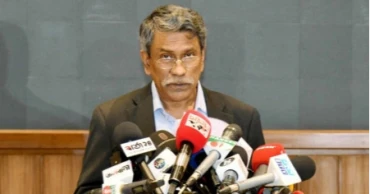
Consensus expected today on presidential election process: Ali Riaz
Vice-Chair of the National Consensus Commission Ali Riaz said on Thursday that efforts will be made to reach a consensus on the presidential election process and the scope of executive powers at the very beginning of today’s discussions with political parties.
“If any issues remain unresolved today, further discussions will be held next week,” he said in his opening remarks during the second round of talks at the Foreign Service Academy in the capital.
“We are short on time. Everyone must come to a consensus as soon as possible so that the July Charter can be finalised within this month. The Commission faces many limitations. Despite these, we need everyone’s cooperation to make the discussions fruitful,” Ali Riaz said.
Today’s dialogue will deal with unresolved matters from the previous day. The primary topics of the fourth day’s discussions include the term of the Prime Minister, the Constitution and the fundamental principles of the state and the delineation of electoral constituencies.
Consensus Commission seeks final decision on NCC in today’s meeting: Ali Riaz
Nearly 30 political parties, including the Bangladesh Nationalist Party (BNP), the National Citizens’ Party (NCP), and Jamaat-e-Islami, joined today’s talks.
Representing the BNP in the dialogue is its Standing Committee member Salahuddin Ahmed. The NCP is represented by its chief organiser for the southern region, Hasnat Abdullah, while Jamaat-e-Islami’s Nayeb-e-Ameer Syed Abdullah Mohammad Taher is attending on behalf of his party.
1 year ago
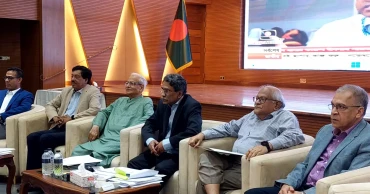
Consensus Commission seeks final decision on NCC in today’s meeting: Ali Riaz
The National Consensus Commission (NCC) aims to reach a final decision on the National Constitutional Council (NCC) during Wednesday’s meeting with political parties.
At the start of the second day of the commission’s second phase of discussions, being held at the Foreign Service Academy in the capital, Prof Vice-Chairman of the National Consensus Commission Ali Riaz made the remarks.
“Today, we will discuss the District Coordination Council. During the preliminary stage of the Constitution Reform Commission’s discussions, several alternative proposals emerged. We expect to make significant progress on this issue today. I will be most pleased if we can come to a decision on the NCC today. That would greatly assist our work moving forward,” he said.
Professor Riaz went on to say, “The most urgent matter is to reach a consensus through consultations with all stakeholders before making any decisions. Our time is limited. By mid-July, we must finalise a national charter, after which signatures from all parties will be required.”
Consensus Commission resumes talks with parties; Jamaat joins second day
He also urged the political leaders present to avoid repetition during discussions to ensure the meeting’s efficiency.
The agenda for today’s meeting includes concluding previously unfinished discussions, the National Constitutional Council (NCC), and the presidential election.
The National Consensus Commission announced that discussions will continue tomorrow (Thursday- June 19).
Political parties such as BNP, Jamaat-e-Islami, NCP, Islami Andolan, Nagorik Oikko, Gan Adhikar Parishad, and Gan Songhoti Andolon, among others, joined the talks.
1 year ago
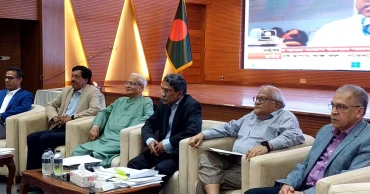
Consensus Commission resumes talks with parties; Jamaat joins second day
The National Consensus Commission resumed its Wednesday’s session under the second phase of dialogue with the country’s political parties, with Jamaat-e-Islami joining the discussions on the second day.
The meeting began at 11:29 am at the Foreign Service Academy in the capital, with Commission’s Vice-Chairman Professor Ali Riaz in the chair.
Jamaat, which did not participate in Tuesday’s session, was represented today by its central assistant secretary generals Maulana Rafiqul Islam Khan and AHM Hamidur Rahman Azad, and central executive council member Syed Abdullah Mohammad Taher.
When asked why the party skipped the first day, Rafiqul Islam Khan told reporters, “I’ll explain the reason later -- not now.”
Wednesday’s agenda includes concluding unfinished discussions from previous rounds, alongside talks on the formation of a proposed National Constitutional Council (NCC) and the procedure for the presidential election.
Consensus Commission biased towards particular party, allege NCP, Nur
The Commission said the dialogue will continue on Thursday (June 19).
Along with BNP, other political parties attending today’s session include the Nationalist Citizen Party (NCP), Islami Andolan Bangladesh, Nagorik Oikya, Gono Adhikar Parishad and Gonosonghoti Andolon.
The ongoing talks are aimed at building broader political consensus on key constitutional and electoral issues.
1 year ago
Majority of political parties want 100 reserved seats for women in Parliament: Ali Riaz
Most political parties on Tuesday reached a consensus on keeping 100 seats aside for women in the next national parliament, said Vice-Chairman of the National Consensus Commission Ali Riaz.
Talking to reporters after the day’s session of the commission, Riaz said there was no significant opposition, apart from one or two parties, to the idea of increasing the number of reserved seats for women.
He, however, said discussions are still going on regarding the method by which women will be elected to these reserved positions.
"After an entire day of discussion, we have yet to reach a decision regarding the mechanism of women's representation in these seats. It would be unrealistic to expect a decision on such an important issue in just one day. We hope to finalise the matter within the next week," Ali Riaz said.
He highlighted that nearly all political parties agreed on amending Article 70 to allow MPs to express independent opinions, except in cases of money bills and votes of confidence.
Besides, Ali Riaz said there was unanimous agreement on appointing opposition members to chair several key parliamentary standing committees — namely Public Accounts, Privileges, Estimation, and Public Undertakings.
DMP urges political parties to avoid road protests on working days
Parties also agreed to ensure proportional representation for the opposition in other parliamentary roles.
Regarding the process of appointing the Chief Justice, Riaz said, "Most political parties are in favour of amending the Constitution in this regard. But, there are disagreements over the procedural changes required for the appointment. A final decision on this matter is yet to be reached."
On the proposal for a bicameral legislature, Dr Riaz said many parties are still not in agreement in principle, suggesting the need for further discussion. Talks also included the idea of allocating 100 seats in the proposed upper house, he added.
About the allegations of favouritism towards the National Citizens’ Party (NCP) and Gono Odhikar Parishad, Ali Riaz said the commission is striving to maintain neutrality and work collectively with all political parties on matters of national importance.
1 year ago
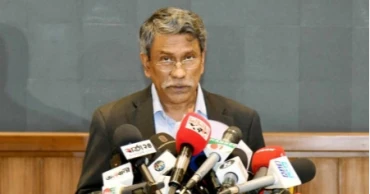
‘July Charter’ to be finalised by month-end: Ali Riaz
Vice-Chair of the National Consensus Commission Ali Riaz on Tuesday said efforts are underway to finalise the ‘July Charter’ by the end of this month following discussions with political parties.
Speaking at the opening of the second phase of talks with political parties at the Foreign Service Academy, Prof Riaz emphasised the need for a spirit of compromise among all stakeholders.
“Not all political parties may agree on every issue, but everyone must continue the dialogue with willingness to compromise,” he said.
Although informal discussions resumed before Eid, Tuesday marked the beginning of formal talks between the commission and representatives from various political parties.
Representatives from 30 political parties, including the BNP and NCPC, are participating in this phase.
Prof Yunus hopes for consensus-based ‘July Charter’ by next month
Key agenda items include Article 70 of the Constitution, women’s representation in Parliament, nomination of standing committee chairpersons, the proposal for a bicameral legislature and the appointment process of the Chief Justice.
Ali Riaz informed that discussions would continue for the next three consecutive days.
He also noted that the commission is open to continuing talks even on weekends, should the political parties agree.
Prof Yunus optimistic about finalising excellent ‘July Charter’ through broader consensus
The National Consensus Commission has initiated this multi-phase dialogue to build a broad political agreement on key governance and constitutional issues.
The proposed ‘July Charter’ is expected to serve as a foundational framework for future reforms.
1 year ago