bicameral parliament

Jamaat favours PR for upper house, reserved seats, referendum for critical changes in Constitution
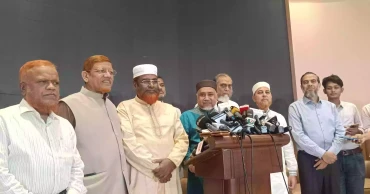
Bangladesh Jamaat-e-Islami Nayeb-e-Ameer Syed Abdullah Muhammad Taher on Tuesday said his party is in favour of the proportional representation (PR) system to be used in formation of the upper house of a bicameral parliament and the election of women for the reserved seats in parliament as well as introduction of a referendum for amendment of the fundamental provision of the constitutional amendment.
“More than two-third political parties expressed support in favour of the PR system (of votes) for the formation of the upper house, while less than one-third parties including BNP don’t want it ... .Now the national consensus commission will take a decision. We hope the Commission will present it in a final decision on Sunday, considering the opinions of the political parties,” he told reporters.
The Jamaat leader raised his party’s stance after the 14th day of the second-round of reform talks between the National Consensus Commission and political parties at the Foreign Service Academy in the capital.
He said except for one or two parties, most agreed on the formation of a bicameral legislature. “The Commission has proposed the PR system. A majority—more than two-thirds—support it, while less than one-third, including BNP, are against it,” he added.
Jamaat leader calls for ensuring massive turnout at July 19 rally
Taher said two to three proposals came up regarding the functioning of the upper house. Some proposed that constitutional amendments be passed by a simple majority; others suggested a two-thirds majority.
A few even proposed that money bills be placed before the upper house, though in such cases it would only be able to provide observations and suggestions. However, the upper house will have no authority to endorse or reject the bill. The lower house will have authority to accept or not accept the observation or suggestion of the upper house in this case.
Constitutional Amendment:
The Jamaat leader said his party fully supports the proposal that the two-thirds majority is required in the lower house for the constitutional amendment and a referendum is required for the amendment of some fundamental issues (the Preamble, Articles 8, 48, 56 and 142, and caretaker government related Articles 58K, 58G and 58Gh) of the Constitution. But his party think it require a simple majority in the upper house for constitutional amendment.
He said they support the proposal as making the constitutional amendment harder.
PR System for Women's Reserved Seats
Regarding women’s reserved seats, Taher said Jamaat supports raising the number of woman seat to 100 from the existing 50 ones but it wants PR system (of voters) to elect women for the reserve seats.
4 months ago
Jamaat backs proportional representation, bicameral parliament, 2-term limit for PM
Bangladesh Jamaat-e-Islami has agreed to the proposals for the introduction of the proportional representation (PR) system, a bicameral parliament and the provision to prevent any individual from becoming Prime Minister more than twice.
“If the PR system is introduced, we think the irregularities, the use of muscle power and money in elections, as well as voter-less polls, would be stopped,” said Jamaat-e-Islami Nayeb-e-Ameer Syed Abdullah Muhammad Taher.
Jamaat for bicameral parliament with 5-yr tenure
The Jamaat leader was briefing reporters on the outcomes of his party’s first-day talks with the National Consensus Commission.
A 10-member Jamaat delegation, led by Syed Abdullah Muhammad Taher, participated in the discussion, which began at 10:30am with Vice Chairman of the National Consensus Commission Professor Ali Riaz in the chair.
Taher said his party had been in favour of the PR system from the beginning.
The PR system means elections would be held simultaneously across the country on the basis of symbols or political parties. Then, the number of seats in parliament would be determined for a party proportionally to the number of votes that party receives nationwide, he explained.
Noting that there is a PR system in more than 60 countries worldwide, the Jamaat leader said, “We think it is better.”
He said they discussed only the Constitution-related reform recommendations during Saturday's talks, which continued until 5pm.
Jamaat to fully support constructive, realistic reforms: Taher
Jamaat-e-Islami agreed on some issues and raised its own proposals on others, he added.
Taher said they agreed with the proposal that no person would be Prime Minister more than twice.
Regarding Article 70 of the Constitution, which bars an MP from voting in Parliament against his or her party, he said they proposed lifting the bar for MPs except in cases of constitutional amendment, passage of the finance bill or budget, and votes of confidence.
He mentioned that they agreed, in principle, to the proposed National Constitutional Council (NCC), although they have differing opinions regarding its formation process.
Taher said they had disagreed with the NCC earlier but finally agreed in principle during the talks.
The Jamaat leader also said they agreed to a bicameral parliament with a five-year tenure.
During the lunch break of the discussion, Taher said, "We've agreed on the bicameral parliament issue.”
He said there were proposals to reduce Parliament and Presidential tenures to four years from five years. “But we told them that it wouldn’t be right. The tenures should be of five years.”
Consensus Commission members Safar Raj Hossain, Justice Emdadul Haque, Dr Badiul Alam Majumdar, and Dr Iftekharuzzaman were present at the discussion, moderated by Chief Adviser’s Special Assistant Monir Haider.
The Jamaat delegation members included its Secretary General Professor Mia Golam Porwar, Assistant Secretaries General Rafiqul Islam Khan, AHM Hamidur Rahman Azad, and Ehsanul Mahbub Jubair, Publicity and Media Affairs Secretary Matiur Rahman Akand, Jamaat Dhaka South City unit Ameer Nurul Islam Bulbul and Shishir Monir.
On March 20 last, the National Consensus Commission opened its dialogues with political parties, aiming to build a national consensus on the reform initiatives undertaken by the interim government.
The Commission has already held talks with 16 political parties, including BNP and the National Citizen Party (NCP).
Formed under the leadership of Chief Adviser Professor Muhammad Yunus, the Commission aims to establish a unified stance on critical reforms.
7 months ago