primary care
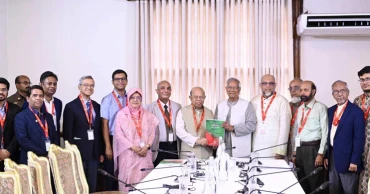
Health Reform Commission proposes free primary care, 15% budget allocation
The Health Sector Reform Commission on Monday unveiled its report recommending the inclusion of primary healthcare as a basic right in the constitution, providing free primary healthcare, allocation of 15 percent of the national budget for the health sector and formation of a permanent health commission.
The commission also recommended formation of the Bangladesh Health Service, recruitment of primary care physicians by establishing primary healthcare centres in rural and urban areas, free supply of essential drugs at the primary level and at subsidised prices in other cases, and shutting down substandard medical education institutes.
The report was unveiled at a press conference at Foreign Service Academy in the capital.
Chief of the 12-member Health Sector Reform Commission national professor Dr AK Azad Khan delivered the introductory speech, while commission member Prof Dr Syed Md Akram Hossain unveiled the report.
The reform report proposed an independent and permanent ‘Bangladesh Health Commission’ should be formed to ensure a transparent, accountable and effective health system in the country.
The report said Bangladesh Health Service should be formed to transform the health cadre into a separate autonomous cadre like the judicial cadre, merging the BCS family planning and medical (technological) officers under the proposed Bangladesh Health Service, and formation of a separate public service commission (health).
About the primary healthcare centres, the Commission in its report proposed that the primary centres should be established, merging Union healthcare sub-centre and family planning cetre at union level in rural areas. And such healthcare centres should be established at ward-level in urban areas as well.
The commission recommended that a structural referral system be made mandatory in necessary cases so that the patients would be able to receive the right services at the right time and the flow of patients to higher institutes would decline.
It said an international standard regional referral hospital will have to be developed in every division which would act as a specialized service center. In this case, the referral hospital can be developed with PPP or foreign investment, it added.
The reform commission proposed that the secondary health and specialised (tertiary) healthcare services should be introduced in district-level and upazila-level in phases to ease public access to the medical treatments and thus reduce the flow of patients to medical colleges and national institutes.
It suggested development of a digital complaint disposal platform to settle complaints from the service recipients.
The legal authority of BMDC, BNMC, Bangladesh Pharmacy Council and Allied Health Professional Council should be made effective and none should be arrested on charge of professional negligence without permission from the concerned council.
53 more dengue cases reported in 24 hours
The councils will have to complete an investigation and make a decision regarding complaints within 90 days, said the report.
The report also said a trained special unit named ‘medical police’ will have to be formed to resist violence in the hospitals and clinics.
According the report of a survey conducted by Bangladesh Bureau of Statistics on 8,256 adult people in eight divisions, 97 percent people opined for providing free primary healthcare and even 92 percent opined for establishment of ward-level primary healthcare centres in the urban areas like the rural areas, said Dr Syed Md Akram Hossain.
Some 97 percent people opined for fixation of drug prices, 96 percent for fixation of disease diagnostic test prices and prescription fees of the physicians, and 95 percent for fixation of surgery fees, as per the survey findings.
The survey report showed that 68 percent of people opined that antibiotic drugs should not be sold without the prescription of an MBBS doctor.
The Health Sector Reform Commission in its report, recommended fixation of the prices for all services of the private hospitals and diagnosis centres.
It also proposed that physicians should prescribe 25 percent drugs writing their generic names right now and 100 percent within the five years.
The commission recommended that influencing the physicians by providing them with samples of medicines and gifts should completely be prohibited. Rather pharmaceutical companies can send information about their products to the doctors through email or postal services.
Representatives of the pharmaceutical companies cannot carry out daily product promotion through direct meetings with doctors, it said.
Prof Yunus orders quick action on implementable health sector reform proposals
About medical education, the reform commission proposed that the existing medical colleges and universities and the seats of these institutions should be restructured and rearranged in line with the standards set by the World Federation for Medical Education (WFME).
Besides, the quality-less medical institutes should be shut down by transferring their students to the recognised institutes, said the commission.
The report proposed allocation of at least 1 percent of the national budget for health research now and gradual increment of this allocation in future.
The Commission suggested reviewing the existing health sector-related laws and making these time befitting ones as well as enactment of a number of laws by promulgating ordinances during this interim government in a bid to ensure protection of patients, financial allocation, accountability and emergency preparedness.
The new laws that were suggested are primary healthcare law, Bangladesh Health Commission law, Bangladesh Health Service Law, Health Protection Law, Fixation of Drug Prices and Rights to Access Law, Allowed Health Professional Council Law and Bangladesh Medical Research Law.
Reform Commission Chief Dr AK Azad Khan said the capacity of the country’s health sector will have to be enhanced and confidence in local treatment will be created to discourage the patients who go abroad to receive treatment.
“It will have to increase capacity and create confidence,” he said, replying to a question.
Other members of the commission Dr Abu Mohammad Zakir Hossain, Prof Dr Liaquat Ali, Prof Dr Syed Md Akram Hossain, Prof Dr Syed Atiqul Haque, Prof Dr Sayera Akther, MM Reza, Dr Azharul Islam, Dr Ahmed Ahsanur Rahman and Omair Afif were present.
Earlier, at 11:00am, the Reform Commission submitted its report to Chief Adviser Professor Dr Muhammad Yunus.
On 17 November 2024, the Health Reform Commission was formed with National Professor and President of the Diabetic Association of Bangladesh Professor Dr AK Azad Khan as its head.
1 year ago