Pakistan Prime Minister Shehbaz Sharif
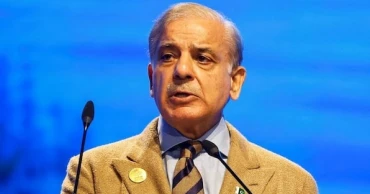
Pakistan PM breaks silence saying India boycott is a ‘thoughtful decision’ to support Dhaka
Pakistan Prime Minister Shehbaz Sharif has officially confirmed that their national cricket team will not take the field against India in the upcoming T20 World Cup, stating the decision was made to stand in solidarity with Bangladesh.
Addressing cabinet members in Islamabad on Wednesday, Sharif declared that “politics should not exist on the sports field.”
This is the first time the government has publicly articulated the specific reason behind the boycott, which was announced via social media last week.
“We have taken a very clear position on the T20 World Cup—we will not play the match against India,” Sharif told his cabinet. “We took this decision after much thought. We should fully stand by Bangladesh. I think this is a very appropriate decision.”
T20 World Cup: ICC rejects Bangladesh’s safe-venue request, includes Scotland
The diplomatic sporting row stems from the International Cricket Council's (ICC) decision to replace Bangladesh with Scotland in the tournament.
The Bangladesh government had refused to send their team to India citing security concerns, following threats from communal groups that led to pacer Mustafizur Rahman being dropped from the IPL on January 3.
While the Bangladesh Cricket Board (BCB) requested a venue change to Sri Lanka, the ICC rejected the plea, labeling the threat against Mustafizur as “isolated.” Bangladesh’s Sports Adviser Asif Nazrul later said that neither the ICC nor the Indian government provided necessary security assurances.
ICC warns PCB of legal and financial fallout over India match boycott
Pakistan Cricket Board (PCB) Chairman Mohsin Naqvi has supported Bangladesh throughout the process, criticizing the ICC for “double standards” regarding security protocols.
The T20 World Cup, co-hosted by India and Sri Lanka, begins on February 7. The India-Pakistan clash was scheduled for February 15 in Colombo.
The ICC has previously warned the PCB to “reconsider” the boycott, citing potential long-term implications for Pakistan cricket.
7 months ago
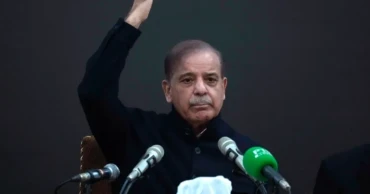
Pakistan calls Indian missile strikes ‘Act of War’
India launched missile attacks on several sites in Pakistan-administered territory early Wednesday, killing at least eight people, including a child, in what Pakistan’s leadership has termed an “act of war.”
According to Indian authorities, the strikes targeted infrastructure allegedly used by militants linked to the recent massacre of tourists in Indian-administered Kashmir. Meanwhile, the Indian army reported that three civilians were killed in Pakistani shelling in Indian-controlled Kashmir.
Tensions have sharply escalated between the nuclear-armed rivals following the deadly attack in Kashmir, which India blames on Pakistan-backed militants—an allegation Islamabad has firmly denied.
Prime Minister Shehbaz Sharif condemned the strikes, calling them “cowardly” and vowed retaliation. “Pakistan reserves the right to respond forcefully to this act of war, and a strong response is already underway,” he stated. A meeting of the National Security Committee was convened for Wednesday morning.
Lt. Gen. Ahmed Sharif, spokesperson for Pakistan’s military, said India launched missiles at six locations in Punjab province and Pakistan-administered Kashmir, killing eight and injuring 38 others. One strike hit a mosque in Bahawalpur, killing a child. Other areas struck include Muridke, Kotli, and Muzaffarabad.
At least 8 killed in Indian missile strikes on six Pakistani locations: ISPR chief
India’s Defence Ministry claimed nine locations linked to terrorist activity were hit in a “measured, focused and non-escalatory” operation named “Sindoor.” It emphasized that no Pakistani military installations were targeted.
In Indian-controlled Kashmir, intense cross-border shelling continued along the Line of Control, with the Indian army accusing Pakistani troops of unprovoked firing that killed three civilians. Separately, an aircraft crash was reported in southern Wuyan village, where a plane fell on a school building, sparking fires and panic.
Pakistan said its air force had downed five Indian jets in retaliation, though India has yet to comment on that claim.
The missile attacks triggered widespread panic, with hospitals in affected Pakistani regions placed on emergency alert and schools shut down. Authorities in Muzaffarabad reported major damage, blackouts, and people fleeing their homes fearing more strikes.
The UN called for restraint, warning of the grave risks of further escalation between the two nuclear powers. “The world cannot afford a military confrontation between India and Pakistan,” said UN spokesperson Stephane Dujarric.
India launches strikes on Pakistan, Pakistan-administered Kashmir
Following the strikes, India’s National Security Advisor Ajit Doval reportedly spoke with U.S. officials, including NSA Marco Rubio and Secretary of State, to share what India described as “credible intelligence” linking Pakistan-based groups to the Kashmir attack.
Source: With inputs from agency
1 year ago