Kurigram’s Char Children
Kurigram’s Char Children: Dreaming through dust, erosion and everyday struggle
Scattered like green islands across the shifting waters of the Brahmaputra, Kurigram’s chars are places of both breathtaking beauty and heartbreaking neglect.
These remote sandbars—isolated, unstable and often invisible on development maps—are home to lives shaped by river erosion, poverty, and sheer resilience.
Here, every morning is a challenge. For the families who call these chars home, dawn does not signal a fresh start—it begins another chapter of survival.
For children growing up in these forgotten lands, childhood is not a time for dreams but for duty.
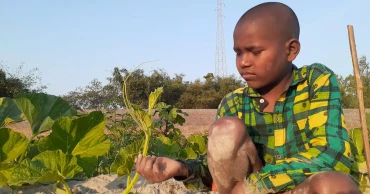
With hunger pressing and families stretched thin, little hands grasp hoes before they hold pencils.
At the break of day, tiny feet rush across muddy fields—not to schoolyards but to farmland.
They plough the soil, irrigate crops, or work side by side with adults harvesting paddy.
“They start early,” said farmer Taher Ali of Char Shoulmari. “Many work with their fathers, plowing or irrigating, while some help harvest rice.”
These children grow up not just near the land, but with it. By the time they’re barely into their teens, they’ve mastered the movements of farming: mounding soil around potatoes, harvesting rice with speed and precision. Their bond with the earth is intimate, born of necessity, grounded in survival.
Shyamal Polli Slum Fire: Dwellers watch their dreams turn into ashes
In a world where textbooks are a luxury, education becomes a rare privilege.
“My son is in Class Four,” said Selina Khatun of Kodalkati Char, “but if he doesn’t work, we won’t have food.”
School, for many, is a fragile dream—often extinguished too soon.Some carry schoolbags in the morning and farm tools in the afternoon. Others drop out entirely, crushed under the weight of responsibilities far beyond their years.
Girls often shoulder an even heavier burden. They care for siblings, cook, clean, fetch water—tasks that fill their daylight hours and steal their right to learn or play.
Yet even here, amid hardship, joy finds a way.
In the soft glow of evening, the charlands echo with the thud of a football, the shout of a goal.
A dozen boys gather barefoot in the sand—torn sandals, tattered clothes, no coaches, no gear. What they lack in equipment, they make up for in passion.
“Some boys from our chars now play football at the district level,” said Shariful Islam, a volunteer from Char Jatrapur.
Their determination is a silent protest against the poverty they were born into, against the indifference they endure.
Weaving Dreams: A Jamdani artisan’s tale of passion and perseverance in Chandpur
1 year ago