iran-IAEA
Iran to suspend cooperation with UN nuclear watchdog IAEA
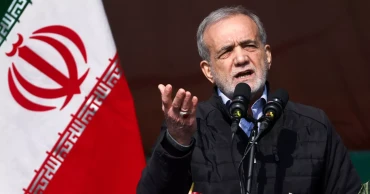
Iran’s president on Wednesday ordered the country to suspend its cooperation with the International Atomic Energy Agency after American and Israeli airstrikes hit its most-important nuclear facilities, likely further limiting inspectors' ability to track Tehran's program that had been enriching uranium to near weapons-grade levels.
According to AP, the order by President Masoud Pezeshkian, however, included no timetables or details about what that suspension would entail. However, Iranian Foreign Minister Abbas Araghchi signalled in a CBS News interview that Tehran still would be willing to continue negotiations with the United States.
“I don’t think negotiations will restart as quickly as that,” Araghchi said, referring to Trump's comments that talks could start as early as this week. However, he added: “The doors of diplomacy will never slam shut.”
Iran has limited IAEA inspections in the past as a pressure tactic in negotiating with the West — though as of right now Tehran has denied that there's any immediate plans to resume talks with the United States that had been upended by the 12-day Iran-Israel war.
Iranian state television announced Pezeshkian's order, which followed a law passed by Iran’s parliament to suspend that cooperation. The bill already received the approval of Iran's constitutional watchdog, the Guardian Council, on Thursday, and likely the support of the country's Supreme National Security Council, which Pezeshkian chairs.
“The government is mandated to immediately suspend all cooperation with the International Atomic Energy Agency under the Treaty on the Nonproliferation of Nuclear Weapons and its related Safeguards Agreement,” state television quoted the bill as saying. "This suspension will remain in effect until certain conditions are met, including the guaranteed security of nuclear facilities and scientists.”
Iran took preparations to block Strait of Hormuz: Report
It wasn’t immediately clear what that would mean for the Vienna-based IAEA, the United Nations’ nuclear watchdog. The agency long has monitored Iran’s nuclear program and said that it was waiting for an official communication from Iran on what the suspension meant.
On the other hand, Iran's decision drew an immediate condemnation from Israeli Foreign Minister Gideon Saar.
“Iran has just issued a scandalous announcement about suspending its cooperation with the IAEA,” he said in an X post. “This is a complete renunciation of all its international nuclear obligations and commitments.”
Saar urged European nations that were part of Iran's 2015 nuclear deal to implement its so-called snapback clause. That would reimpose all UN sanctions on it originally lifted by Tehran’s nuclear deal with world powers, if one of its Western parties declares the Islamic Republic is out of compliance with it.
Israel is widely believed to be the only nuclear-armed state in the Middle East, and the IAEA doesn't have access to its weapons-related facilities.
1 year ago

What to know about inspections of Iran's nuclear program by IAEA ahead of key board vote
Iran's nuclear program remains a top focus for inspectors from the International Atomic Energy Agency, particularly as any possible deal between Tehran and the United States over the program would likely rely on the agency long known as the United Nations' nuclear watchdog.
This week, Western nations will push for a measure at the IAEA's Board of Governors censuring Iran over its noncompliance with inspectors, pushing the matter before the U.N. Security Council. Barring any deal with Washington, Iran then could face what's known as “snapback” — the reimposition of all U.N. sanctions on it originally lifted by Tehran's 2015 nuclear deal with world powers, if one of its Western parties declares the Islamic Republic is out of compliance with it.
All this sets the stage for a renewed confrontation with Iran as the Mideast remains inflamed by Israel's war on Hamas in the Gaza Strip. And the IAEA's work in any case will make the Vienna-based agency a key player.
Here's more to know about the IAEA, its inspections of Iran and the deals — and dangers — at play.
Atoms for peace
The IAEA was created in 1957. The idea for it grew out of a 1953 speech given by U.S. President Dwight D. Eisenhower at the U.N., in which he urged the creation of an agency to monitor the world's nuclear stockpiles to ensure that “the miraculous inventiveness of man shall not be dedicated to his death, but consecrated to his life."
Broadly speaking, the agency verifies the reported stockpiles of member nations. Those nations are divided into three categories.
The vast majority are nations with so-called “comprehensive safeguards agreements" with the IAEA, states without nuclear weapons that allow IAE monitoring over all nuclear material and activities. Then there's the “voluntary offer agreements” with the world's original nuclear weapons states — China, France, Russia, the United Kingdom and the U.S. — typically for civilian sites.
Israel attacks Yemeni port city of Hodeida
Finally, the IAEA has “item-specific agreements” with India, Israel and Pakistan — nuclear-armed countries that haven't signed the Nuclear Nonproliferation Treaty. That treaty has countries agree not to build or obtain nuclear weapons. North Korea, which is also nuclear armed, said it has withdrawn from the treaty, though that's disputed by some experts.
The collapse of Iran's 2015 nuclear deal
Iran’s 2015 nuclear deal with world powers, negotiated under then-President Barack Obama, allowed Iran to enrich uranium to 3.67% — enough to fuel a nuclear power plant but far below the threshold of 90% needed for weapons-grade uranium. It also drastically reduced Iran's stockpile of uranium, limited its use of centrifuges and relied on the IAEA to oversee Tehran's compliance through additional oversight.
But President Donald Trump in his first term in 2018 unilaterally withdrew America from the accord, insisting it wasn't tough enough and didn't address Iran's missile program or its support for militant groups in the wider Mideast. That set in motion years of tensions, including attacks at sea and on land.
Iran now enriches up to 60%, a short, technical step away from weapons-grade levels. It also has enough of a stockpile to build multiple nuclear bombs, should it choose to do so. Iran has long insisted its nuclear program is for peaceful purposes, but the IAEA, Western intelligence agencies and others say Tehran had an organized weapons program up until 2003.
IAEA inspections and Iran
Under the 2015 deal, Iran agreed to allow the IAEA even greater access to its nuclear program. That included permanently installing cameras and sensors at nuclear sites. Those cameras, inside of metal housings sprayed with a special blue paint that shows any attempt to tamper with it, took still images of sensitive sites. Other devices, known as online enrichment monitors, measured the uranium enrichment level at Iran's Natanz nuclear facility.
Iran FM reaffirms cooperation after IAEA warns on uranium stockpile
The IAEA also regularly sent inspectors into Iranian sites to conduct surveys, sometimes collecting environmental samples with cotton clothes and swabs that would be tested at IAEA labs back in Austria. Others monitor Iranian sites via satellite images.
In the years since Trump's 2018 decision, Iran has limited IAEA inspections and stopped the agency from accessing camera footage. It's also removed cameras. At one point, Iran accused an IAEA inspector of testing positive for explosive nitrates, something the agency disputed.
The IAEA has engaged in years of negotiations with Iran to restore full access for its inspectors. While Tehran hasn't granted that, it also hasn't entirely thrown inspectors out. Analysts view this as part of Iran's wider strategy to use its nuclear program as a bargaining chip with the West.
What happens next
Iran and the U.S. have gone through five rounds of negotiations over a possible deal, with talks mediated by the sultanate of Oman. Iran appears poised to reject an American proposal over a deal this week.
Without a deal with the U.S., Iran’s long-ailing economy could enter a freefall that could worsen the simmering unrest at home. Israel or the U.S. might carry out long-threatened airstrikes targeting Iranian nuclear facilities. Experts fear Tehran in response could decide to fully end its cooperation with the IAEA, abandon the the Nuclear Nonproliferation Treaty and rush toward a bomb.
If a deal is reached — or at least a tentative understanding between the two sides — that likely will take the pressure off for an immediate military strike by the U.S. Gulf Arab states, which opposed Obama's negotiations with Iran in 2015, now welcome the talks under Trump. Any agreement would require the IAEA's inspectors to verify Iran's compliance.
But Israel, which has struck at Iranian-backed militants across the region, remains a wildcard on what it could do. Last year, it carried out its first military airstrikes on Iran — and has warned it is willing to take action alone to target Tehran's program, like it has in the past in Iraq in 1981 or Syria in 2007.
1 year ago