Pickaxe Mountain
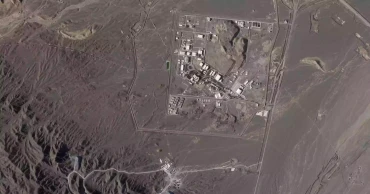
Pickaxe Mountain: Could Iran’s nuclear program retreat beneath this mountain near Natanz?
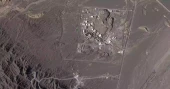
Satellite photos taken in April 2023 by Planet Labs PBC and analyzed by the AP showed Iran burrowing into the Kūh-e Kolang Gaz Lā, or “Pickaxe Mountain,” just to the south of the existing perimeter of the known nuclear facility at Natanz (see Image 1), part of the 1500-km Zagros Mountains range extending over Iran, northern Iraq, and southeastern Turkey.
A different set of images analyzed by the James Martin Centre for Nonproliferation Studies revealed that four entrances had been dug into the mountainside, two to the east and another two to the west. Each was 6 metres (20 feet) wide and 8 metres (26 feet) tall.
The scale of the work could be measured in large dirt mounds, two to the west and one to the east. Based on the size of the spoil piles and other satellite data, experts at the James Martin Centre told AP that Iran was likely building a facility at a depth of between 80 metres (260 feet) and 100 metres (328 feet). The Centre’s analysis, which it provided exclusively to AP, was the first to estimate the tunnel system’s depth based on satellite imagery.
The Institute for Science and International Security, a Washington-based nonprofit long focused on Iran’s nuclear program, suggested the tunnels could go even deeper.
The Pickaxe Mountain facility, which since its discovery has been at times referred to as part of one large facility at Natanz, is said to be even deeper underground than the one at Fordow, that was the main target of the US attack on Saturday using its never-used-before GBU-57 bomb, which can plow through at least 60 metres (200 feet) of earth before detonating.
The facility at Pickaxe Mountain, roughly 330 feet below the mountain itself, is between 30 to 70 feet deeper than Fordow. That is believed to exceed the striking depth of the GBU-57, the most powerful bunker-busting weapons in the US arsenal.
1 year ago