Middle East War
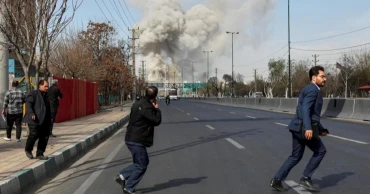
War spreads across Middle East as Iran launches missiles, drones
The conflict involving Iran, Israel and the United States has intensified across the Middle East, with fresh missile and drone attacks reported across several countries on Thursday as the war entered its sixth day.
Images from Tehran showed extensive damage to residential buildings after days of joint US and Israeli strikes on the Iranian capital. Explosions were also seen across the city as the bombardment continued.
Meanwhile, Israel’s military said it had detected another wave of missiles fired from Iran toward the country. The Israeli air defence system was activated and residents in affected areas were instructed to remain in protected shelters.
The conflict has increasingly spread beyond Iran and Israel, affecting several Gulf countries. The defence ministry of the United Arab Emirates said it intercepted six ballistic missiles and 131 drones launched from Iran on Thursday. However, one missile and six drones landed inside the country.
Authorities said three people—foreign nationals from Pakistan, Nepal and Bangladesh—have been killed since the attacks began, while at least 94 others were injured.
Explosions were also reported in Doha and Manama as Gulf states responded to Iranian strikes with air defence systems. Bahrain said it had intercepted dozens of Iranian missiles and drones targeting the country since the weekend.
Elsewhere, Azerbaijan reported that two Iranian drones struck its territory in the Nakhchivan region. One drone hit a terminal building at Nakhchivan International Airport while another landed near a school in Shakarabad village, injuring two civilians.
In the Gulf waters, a tanker was damaged after being struck, while Iranian media reported that the country’s navy had targeted a US ship in the region.
Satellite images analysed by BBC Verify also revealed damage to several Iranian military sites, including the headquarters of the Iranian Air Force in western Tehran. Missile installations near Garmdarah and Khorramabad were also hit, with infrastructure and tunnel entrances showing visible damage.
The economic impact of the conflict has begun to spread globally. Energy prices have surged, with gas prices rising about 80% compared with the start of the week and crude oil prices climbing more than 10%.
Energy infrastructure has also been affected. Qatar temporarily shut down operations at the Ras Laffan Industrial City, the world’s largest liquefied natural gas facility, raising concerns about global fuel supplies.
European countries are also increasing their military presence in the region. France, Italy, Spain and the Netherlands have announced plans to deploy naval assets to protect Cyprus after a drone attack targeted the British military base at RAF Akrotiri earlier this week.
Meanwhile, security alerts were issued in parts of Cyprus during a visit by UK Defence Secretary John Healey after a potential threat was detected near the base, though authorities later said no object was heading toward the site.
The conflict has also affected civilians across the region. In Beirut, residents returned to find a residential building destroyed following an overnight Israeli strike. Locals said they had evacuated earlier in the week due to security fears.
In northern Iraq, Kurdish Iranian opposition groups denied reports that their fighters had crossed into Iran to join the conflict. Representatives said their forces could not move without air protection and called for a no-fly zone.
Meanwhile, travel disruptions continue. A UK government charter flight scheduled to evacuate citizens from the region was delayed due to technical issues but is expected to depart from Muscat later on Thursday.
As fighting spreads across multiple countries, concerns are growing that the war could further destabilise the Middle East and threaten global energy supplies and regional security.
With inputs from BBC
6 months ago
Operation Rising Lion: The 12-day war that shook the Middle East
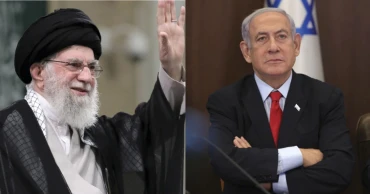
Missiles streaking across the sky, cities on edge, and families fleeing their homes. On June 13, 2025, this became reality as Israel launched Operation Rising Lion, a bold airstrike campaign targeting Iran’s nuclear facilities and military leadership.
For 12 days, the Middle East held its breath as Iran fired back with missile barrages, and the conflict threatened to spiral into a regional catastrophe. It was a moment that tested the resilience of not only those in the region, but around the world.
This war didn’t come out of nowhere. Its roots trace back decades, fueled by Iran’s nuclear ambitions and Israel’s resolve to stop them. The tension skyrocketed after the US pulled out of the 2015 nuclear deal in 2018, a move that left Israel feeling exposed and vulnerable.
On that fateful June morning, Israel decided to act, launching strikes to cripple Iran’s nuclear program. Iran, defiant and unyielding, responded with missile barrages that shook Israeli cities.
The US entered the fray on June 22, targeting Iranian nuclear sites, while the Houthis’ missile strikes on Israel added another layer of chaos. It was a powder keg, and for 12 days, it seemed the entire region might ignite.
The ceasefire on June 23 offered a glimmer of hope, but for those who lived through the terror, parents shielding children, communities under siege, the scars remain raw—a stark reminder of war’s human toll
The Human Cost: Lives and Homes Lost
The toll of those 12 days is heartbreaking. In Israel, 29 people, mostly civilians, lost their lives, and over 3,200 were injured as Iranian missiles rained down. Over 8,000 Israelis were left homeless, their lives upended by the sudden violence.
In Iran, the devastation was even more staggering. Official reports cite 610 deaths, but human rights groups like Human Rights Activists News Agency (HRANA) estimate up to 974, with over 4,700 wounded. Tens of thousands of Iranians were displaced, their homes reduced to rubble.
The war’s ripple effects touched neighboring regions. A Syrian woman was killed by a suspected Iranian drone, seven Jordanians were injured, and five Palestinians, including three children, were wounded by a Houthi missile.
Iran’s military took a beating, losing 950 drones, over 200 ballistic missile launchers, eight helicopters, and several fighter jets. Israel lost two drones but maintained air superiority, a testament to its military edge. Yet, the civilian suffering on both sides underscores the war’s brutal cost.
Who Came Out Ahead?
Pinpointing a victor in this conflict is like trying to call a draw in a storm. Israel’s strikes hit hard, damaging Iran’s nuclear facilities at Fordo, Natanz, and Isfahan and killing key figures, including IRGC commanders.
Social media buzzed with claims of Israel’s dominance, with posts on X noting air superiority over Tehran and crippled Iranian defenses. Israel declared its objectives met, but according to The New York Times, US intelligence paints a different picture: Iran’s nuclear program was only set back by a few months, with much of its enriched uranium enough for nine nuclear weapons, per some estimates, likely moved to safety before the strikes.
Iran, meanwhile, showed resilience. Its missile barrages struck Israeli targets, and a retaliatory attack on a US airbase in Qatar, though intercepted, signaled defiance. Yet, Iran’s heavy losses of hundreds of drones, launchers, and aircraft left it vulnerable.
Experts argue Israel gained a tactical edge but failed to eliminate Iran’s nuclear threat long-term. Posts on social media reflected this split, with some calling it a “major victory” for Israel, while others saw Iran’s restraint as strategic, avoiding a wider war.
The ceasefire, brokered by Trump and Qatar, suggests neither side wanted to risk further escalation. Both nations faced mounting losses and international pressure, with some condemning Israel’s strikes as illegal and others defending them as self-defense. It’s less about a clear winner and more about both sides stepping back from the brink.
A Fragile Peace: Is the War Truly Over?
As of June 25, 2025, the ceasefire holds, with Israel and Iran publicly committing to peace unless provoked. Reports confirm the truce took effect on June 23, with Iran halting attacks first, followed by Israel.
Yet, the calm feels uneasy. Israel’s military chief hinted that operations against Iran aren’t fully concluded, raising fears of renewed conflict. On X, some speculate about a “pre-planned conclusion” tied to regional deals, while others warn of Iran’s potential retaliation.
The world watches anxiously. Families in Tehran and Tel Aviv long for stability, but the unresolved nuclear issue and deep-seated rivalries loom large.
Experts like David Albright note that Iran’s nuclear program, though damaged, remains under scrutiny, with risks of further strikes if rebuilding begins. The ceasefire is a reprieve, but it’s a fragile thread in a region frayed by conflict.
Looking Ahead: Hope Amid Uncertainty
For those who lived through these 12 days, whether huddling in shelters or mourning loved ones, the war’s end brings cautious relief. The ceasefire offers a chance to rebuild, but the path forward is murky. Iran’s nuclear ambitions, Israel’s security fears, and the region’s volatile dynamics mean peace is no guarantee.
As one X post put it, the conflict may have paused, but it’s left a “newly negotiated order” that could reshape the Middle East.
1 year ago