caretaker system
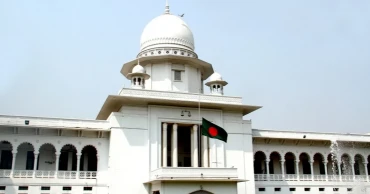
Caretaker Govt: Top court sets Nov 20 for delivering judgment
The Appellate Division on Tuesday (11th November 2025) fixed November 20 for delivering its judgment on two review petitions concerning the reinstatement of a non-partisan caretaker government system during elections.
The seven-member bench of the Appellate Division, led by Chief Justice Syed Refaat Ahmed, announced the date after hearing the two petitions.
Earlier, on August 27, the Appellate Division allowed the filing of an appeal against the verdict that abolished the caretaker government system. The hearing of the appeal to restore the caretaker government system began on October 21.
The caretaker system was introduced into the Constitution through the 13th Amendment in 1996. Later, three lawyers, including Advocate M Salim Ullah, filed a writ petition challenging the amendment in 1998.
Read more: No scope for holding next national election under caretaker govt: Shishir Manir
In 2005, the petitioner filed an appeal.
Acting on that appeal, a full bench of the Appellate Division, by a majority opinion, delivered a verdict on May 10, 2011, declaring the 13th Amendment null and void.
Following the verdict, the 15th Amendment Act, which abolished the caretaker government system along with several other changes, was passed in Parliament on June 30, 2011, with the gazette notification published on July 3 that year.
After the change of government, five prominent individuals, including Shushashoner Jonno Nagorik (SUJAN) Secretary Dr Badiul Alam Majumdar, filed an appeal on August 5 last year seeking a review of the verdict. The other petitioners were Tofail Ahmed, M Hafizuddin Khan, Zobairul Haq Bhuiyan and Zahra Rahman.
Meanwhile, BNP Secretary General Mirza Fakhrul Islam Alamgir filed a review petition on October 16, followed by another from Jamaat-e-Islami Secretary General Prof Mia Golam Parwar on October 23.
Read more: BNP sought impartial role, not caretaker govt: Law Adviser
11 months ago
Referendum needed for future changes to caretaker system in constitution: Ali Riaz
National Consensus Commission Vice-Chair Prof Ali Riaz on Tuesday said a referendum would be required in the future if any government intends to amend the caretaker government system once it is reincorporated in the constitution.
“There is no disagreement among political parties over the restoration of the caretaker government system. That’s why the provision for a referendum has been proposed for any future changes to this system,” he said at a press briefing.
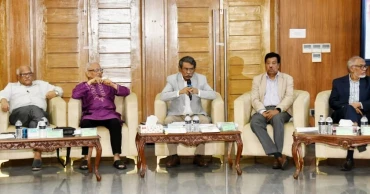
The briefing was held in the afternoon to raise the outcomes of the 14th day of the second phase of reform talks with political parties at the Foreign Service Academy in Dhaka.
Prof Riaz expressed the hope that a consensus would be achieved over the appointment of the chief of the caretaker government by the next week.
Noting that the discussion reached decisions regarding some issues related to the constitutional amendments, he said if the upper house is not formed or until it is not formed, constitutional amendments will require a majority vote in the existing parliament.
Try to reach decisions over unsettled reform issues soon: Ali Riaz
But, amendments to specific provisions of the constitution—such as the preamble, the fundamental principles of the state, Articles-48, 56, 142, and the caretaker government system related Articles 58B, 58C, 58D and 58E—would require a referendum, he added.
Upper House Formation
Prof Riaz said the majority of political parties and alliances expressed support for establishing a bicameral parliament during the first-round discussion.
“But, no consensus has yet been reached on the formation process of the upper house. Some parties suggested forming the upper house based on the proportional representation-PR (proportional share) of votes, while others proposed forming it based on PR (proportional share) of the number of seats won in the lower house,” he said.
“Since political parties and alliances have failed to reach a consensus on this issue despite several discussions, they have entrusted the commission with making a decision on the matter,” said Prof Riaz.
He hoped that the commission would be able to come to a position on the formation of the upper house through informal discussions with political parties by next week.
Representatives from some 30 political parties, including BNP, Jamaat-e-Islami, NCP, Gano Odhikar Parishad, Ganasamhati Andolon, CPB, Revolutionary Workers Party and AB Party, attended Tuesday’s discussion.
Commission members Justice Md Emdadul Haque, Dr Iftekharuzzaman, Dr Badiul Alam Majumdar, Safar Raj Hossain and Dr Md Ayub Miah were present in the discussion moderated by Chief Adviser’s Special Assistant Monir Haidar.
1 year ago