default loans
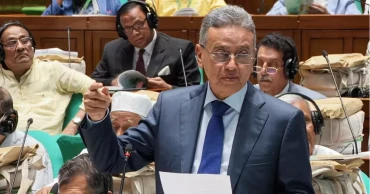
Finance Minister briefs JS on state banks' NPL situation, govt's debts
Finance Minister Amir Khosru Mahmud Chowdhury on Sunday informed Parliament that the total amount of default loans in nine state-owned banks stood at Tk 188,701.75 crore as of May 31 this year.
Replying to a question from reserved seat Jamaat-e-Islami MP Sabikun Nahar during the question-answer session, the minister said the figure was based on data submitted by the banks to the Credit Information Bureau (CIB) database of Bangladesh Bank.
The minister said the nine state-owned banks are Agrani Bank, Janata Bank, Rupali Bank, Sonali Bank, BASIC Bank, Bangladesh Development Bank, Bangladesh Krishi Bank, Rajshahi Krishi Unnayan Bank and Probashi Kallyan Bank.
He said reducing the high level of default loans is essential to restoring discipline in the country's banking sector.
Responding to a question from Jamaat MP Golam Rasul, the finance minister said the government's total outstanding debt stood at Tk 2,206,462 crore as of December 31. Of the total, external debt amounted to Tk 959,311 crore, while domestic debt stood at Tk 1,247,151 crore.
Answering another question from Jamaat MP Shahjahan Chowdhury, Amir Khosru said the government repaid foreign loans worth US$4.65 billion during the 2025-26 fiscal year. Of the total, US$3 billion was repaid as principal and US$1.65 billion as interest.
In reply to a question from Jamaat MP Mahbubul Alam, the minister said Bangladesh Bank has taken several initiatives to provide easier access to loans for young entrepreneurs.
He said the central bank has increased the refinancing fund for new entrepreneurs in the cottage, micro and small enterprise sector from Tk 100 crore to Tk 500 crore.
Under the scheme, new entrepreneurs can obtain collateral-free loans of up to Tk 10 lakh at a maximum interest rate of 7 percent, while loans of up to Tk 35 lakh are available against collateral.
Replying to a question from reserved seat MP Nilufar Chowdhury Moni, the minister said outstanding customs duties and taxes on imported goods collected by various customs houses under the National Board of Revenue over the past five years amounted to Tk 25,504.3 crore.
He added that out of Tk 3,912 crore payable by Bangladesh Petroleum Corporation, Chattogram Custom House had recovered Tk 590 crore by June this year.
Responding to a question from Dhaka-18 MP SM Jahangir Hossain, the finance minister said the government had decided to waive agricultural loans of up to Tk 10,000, including interest, for farmers across the country covering crops, livestock, fisheries and other agricultural activities.
Under the programme, banks had received Tk 1,352.74 crore from the government by July 2 to settle dues for 1,434,482 farmers, he said.
In reply to Nilphamari-4 MP Abdul Muntakim, the minister said Bangladesh Bank's regulations stipulate that a bank's fixed assets cannot exceed 30 percent of its paid-up capital.
As Sonali Bank's fixed assets are already significantly higher than the prescribed limit, the bank is currently unable to purchase additional fixed assets or construct new buildings, he added.
Answering a question from Cumilla-9 MP Abul Kalam, the finance minister said discussions between the Economic Relations Division and the World Bank are underway to prepare the financing pipeline for the 2026-27 fiscal year.
He said budget support remains one of the World Bank's financing instruments for Bangladesh, and the government's requirement and target for such support in FY2026-27 will be determined following consultations with the relevant stakeholders. The government will decide the sectors in which any budget support funds will be utilised based on national priorities.
2 months ago

NPLs soar to 35.73% of disbursed loans as irregularities under AL get exposed
Default loans in Bangladesh's banking sector have surged significantly, reaching Tk 6,44,515 crore at the end of September this year.
This alarming figure represents 35.73 percent of the total disbursed loans.
The increase is massive compared to the end of December 2024, when the volume of non-performing loans (NPLs) stood at Tk3,35,765 crore. This indicates that default loans have ballooned by Tk 2,98,750 crore over the nine-month period, although this is mainly due to the exposure of funds siphoned off under the previous government that are only now beginning to be included under the NPL category, as well as the adoption of stricter international standards in classifying loans.
The development was confirmed by Shahriar Siddiqui, Director and Spokesperson for the Bangladesh Bank, to the media on Wednesday (November 26).
Read more: Union Bank suffered Tk 26,000cr net loss in 2024 amid S. Alam Group scam
Bangladesh Bank officials attribute the substantial increase to multiple factors:
Exposure of Unaccounted Funds: Funds reportedly siphoned off from banks under various names during the tenure of the Awami League government are now beginning to be classified as non-performing.
Adoption of International Standards: The country's adoption of international standards for classifying loan defaults is contributing to the rise in NPLs.
Failure of Rescheduled Loans: Many loans that were previously restructured or rescheduled are failing to be repaid.
Central Bank Intervention: The central bank has listed several irregular loans as defaults, further pushing up the NPL volume.
According to data from the central bank, the total outstanding disbursed loan amount stood at Tk 18,03,840 crore at the end of September this year. Of this amount, the defaulted portion, as mentioned, is Tk 6,44,515 crore, which is 35.73 percent.
Comparing year-over-year figures, default loans had reached Tk 2,84,977 crore at the end of September last year. This means that the total volume of non-performing loans has increased by a staggering Tk 3,59,718 crore over the past twelve months, for the factors mentioned above.
Read more: Bangladesh shifts fiscal gears as bank debt falls
9 months ago

Bangladesh Bank introduces “Exit Policy” for expediting default loan recovery
Bangladesh Bank has formulated a new "Exit Policy" aimed at expediting the recovery of defaulted loans. This policy allows both defaulters and non-defaulting business customers to settle their industrial loans by paying off the balance, with specific conditions attached.
According to the central bank's new notification, applicants must deposit at least 10 percent of the loan amount upfront to qualify for this facility. Banks have been instructed to develop their own policies in line with the central bank's guidelines, incorporating similar conditions.
Under the policy, there will be no change in the quality of the loan until it is fully repaid, and customers utilizing the exit facility will not be eligible for new loans during this period.
Read more: 'Publish list of loan defaulters in parliament': AK Azad
"If a businessperson takes this facility, they must repay the entire loan within a maximum of three years. These customers will not be identified as willful defaulters," the notification stated.
The central bank noted that borrowers' businesses or projects might incur losses due to uncontrollable factors, leading to hindered debt collection activities and insufficient cash flow for loan repayment. Consequently, such loans are classified as defaults but not as willful defaults.
The notification also emphasized that genuine adverse financial conditions can reduce the chances of debt recovery. Therefore, there is a need for a uniform policy to facilitate debt recovery or adjustment through the exit mechanism, as banks have been following varied procedures.
In this context, the new policy aims to maintain liquidity flow and reduce defaulted loans in the banking sector. Regular loan exit facilities may be granted for recovering adversely classified loans with poor recovery prospects or in cases where projects or businesses have closed due to uncontrollable reasons.
Read more: Process on to prepare list of loan defaulters, finance minister tells Parliament
To apply for the facility, borrowers must pay a minimum of 10 percent of the existing loan balance in one-time cash. Banks are required to settle these applications within 60 working days of receipt.
2 years ago
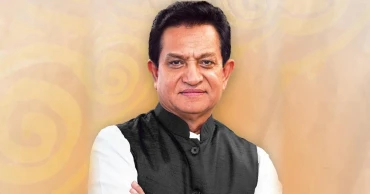
Publish list of loan defaulters who laundered money abroad in JS: AK Azad
Independent MP AK Azad on Monday (February 12, 2024) demanded a list of those who have laundered money abroad taking loans from banks be placed in Parliament.
Azad, who was elected MP for the first time, came up with the demand while participating in the discussion on the thanksgiving motion on the President’s speech.
He said that Prime Minister Sheikh Hasina is totally against corruption and Awami League's manifesto also cited that.
“First of all, good governance will have to be established in the banking sector,” Azad said.
Read more: Bangladesh Bank sets an 11-point roadmap to realise default loans
Welcoming Bangladesh Bank's roadmap for reforming the banking sector, Azad, also President of Newspapers Owners Association of Bangladesh (NOAB), said the amount of defaulted loans in Bangladesh is around Tk 1,45,633 crore.
“But in reality, the amount is much more. But through write off, the amount of debt is shown less. Those who have taken loans and invested in factories and failed to repay, may be exempted subject to investigation,” he said.
He demanded to bring to justice those who did not invest loan money in any business, and instead laundered the money.
“They made home at Begum Para, and second homes. Their list should be published in the parliament,” he demanded.
Read more: Bank MDs working under increased stress due to default loans, board interference: Experts
He also commented that Bangabandhu's dream will not be realised unless they are brought under the law.
The independent MP said that those who looted banks are responsible for the rise in commodity prices and inflation.
Azad said that he wants to be accountable to the countrymen and voters through this parliament.
Azad also said he wants to make the parliament effective and lively through constructive criticism of the government.
He expected cooperation of the Speaker in this regard.
Read more: Businesses should get opportunities to turn around before wholesale declaration of loan defaulters: FBCCI President
2 years ago

Curbing inflation without destabilising macroeconomic situation presents challenge for budget: Selim Raihan
Economist Dr Selim Raihan believes the National Budget of Bangladesh for the fiscal year 2023-24 is being presented at a difficult time, when it will be a challenge to devise policies to manage inflation while also maintaining a stable macroeconomic situation,
Dr Selim Raihan is Professor at the Department of Economics, University of Dhaka, and the Executive Director of the South Asian Network on Economic Modeling (SANEM).
Talking with UNB on the upcoming budget, Dr Raihan pointed out two major challenges--controlling inflation and macroeconomic management for the upcoming budget.
“Higher inflation for a long time creates instability in the domestic markets and lower-income people are affected severely,” he said.
Read more: No new pay scale, govt employees to get 20% dearness allowance in new budget
The government’s measures to cut inflation have not proved effective, so new measures to reduce inflation need to be included in the budget, he opined.
Dr Raihan said the monetary policy is not working to curb inflation as there is a mismatch with interest rates - the continued delay in withdrawing the interest rate caps also prolongs inflation.
Besides, a big challenge of domestic market management is that government agencies could not implement effective market management against monopoly businesses.
As a result, prices of many essential items are higher in the domestic market relative to the global market. Notably, prices of some items increase in Bangladesh at the same time that there is a downward trend in the international market, said Dr Raihan.
Read more: No let-up in safe drinking water scarcity in Khulna’s Dacop
Regarding macroeconomic management, he said reducing the defaulted loans and achieving the revenue collection target are big factors for stability.
Forex reserves management and foreign exchange rate fluctuation also worked for instability of the macroeconomic situation, which are required to make it stable, he said.
The International Monetary Fund (IMF) gave conditions for reducing defaulted loans to a desired level, but the latest update revealed no headway in that regard, which Dr Raihan said was alarming.
The IMF’s desired target of increasing the tax GDP ratio by 0.5 percent each year, till the 2025-26 fiscal, is also proving a challenge for the National Board of Revenue.
Read more: Inflation, revenue shortfall, dollar crisis the major challenges for economy ahead of election-year budget
The SANEM chief said although the revenue collection target increased every year in the budget, in the absence of any coherent plan and institutional capacity-building initiatives for NBR, there is almost no progress towards attaining those targets. In fact, the revenue collection shortfall keeps getting wider, he pointed out.
Dr Raihan suggested joint initiatives of Bangladesh Bank and the Ministry of Finance to reduce the defaulted loans, saying the central bank alone cannot handle the issue.
He also sought the central bank’s effective measures to ensure good governance in the banking sector, averting the pressure of any influential group.
Dr Raihan also suggested increasing allocation and coverage under the social safety net, to ease the woes of vulnerable groups.
Read more: Bank default loans surge to Tk1.31 lakh crore: BB
3 years ago

Sonali Bank writes off Tk 2,728 crore of Hall-Mark, 19 other defaulters
Sonali Bank Limited, a state-owned bank, has written off Tk 2,728 crore of its top 20 defaulters, including Hall-Mark, due to non-recovery.
Sources said the bank has set a target of recovering Tk 272 crore, or 10 per cent of the loan cancelled this year but the latest data says the bank could not achieve even 8 percent of the target even after eight months.
When contacted, Managing Director of Sonali Bank Md Ataur Rahman Prodhan told UNB that the loans have been written off as per rules.
Also read: SC cancels Hallmark chairman’s bail; asks her to surrender
“We’re trying to recover the loans …our teams are working in this regard. Writing off does not mean the loans won’t be repaid. It’s just keeping the loans in a separate balance sheet,” Ataur Rahman Prodhan said.
Bangladesh Bank (BB) introduced a loan writing-off system in 2002 and then rule was amended in April 2019. As per the amended rule, a bank can write off its loan which is treated as bad loan for three consecutive years. It was five years previously, says Sonali Bank.
According to the central bank, Sonali Bank has written off the highest amount of default loans of Tk 6,995 crore among the public banks.
Of the total defaulted loans of the state-owned bank, 38 percent are with 20 defaulters, the BB data shows.
Hall-Mark is among the 20 defaulters which have got its Tk 1,229 crore written off out of Tk 3,000 crore.
Sources at the Bangladesh Bank said Sonali Bank could not yet overcome the burden of the huge scam since not a single penny could be recovered. Hall-Mark's loan scam had shaken the banking sector, casting a long-lasting burden on Sonali Bank’s investment.
Also read: Two govt panels to probe alleged special treatment to jailed Hallmark GM
Not only Hall-Mark, but also 18 others of the top 20 defaulters of Sonali Bank failed to repay 'zero' amount as of August this year.
The other defaulters that got their default loans written off from Sonali Bank are: New Rakhi Textile Mills Limited (Tk 123 crore), Jasmi's Vegetable Oil (Tk105.55 crore), Fair Expo (Tk 96.30 crore), Alpha Tobacco (Tk 96.3 crore), One Spinning Mills (Tk 93.90 crore), Imperial Dyeing and Hosiery (Tk 90.13 crore), Rokeya Textile Mills (Tk 82.65crore) ,Sahil Fashion (81.18 crore), Imam Traders (Tk 80.85 crore), Sumi's Sweater (Tk76.7 crore), Riverside Leather and Footwear (Tk73.76 crore), Unity Knit (Tk 71.13 crore), Siddique Traders (Tk 69. 26 crore), KPF Textiles (Tk 68.56 crore), Moon Knitwear (Tk 67. 64 crore), AR Khan Sizing and Fabrics (Tk 66.86 crore), Jadu Spinning Mills Limited (Tk 50.34 crore), Sahil knitwear (Tk 57.68 crore) and Mask Sweater's (Tk 48.86 crore).
4 years ago
Outstanding loans of bank directors hit Tk 171,616 cr: Minister
The outstanding loans of bank directors in the country now stand at Tk 171,616.1247 crore at the end of September 2019, which is 11.21 percent of the total loans disbursed by all banks.
6 years ago