national election in bangladesh

Rights groups warn of shrinking democratic space in Bangladesh
Global human rights organisations have expressed concern that the targeting of politicians, activists, major media outlets and cultural institutions in Bangladesh, amid heightened political tensions ahead of the 2026 national election, signals a troubling erosion of the rule of law and a shrinking space for free expression, civic discourse and democratic participation.
"We stand in solidarity with Bangladesh’s journalists, media workers, artists, and diverse communities," said the organisations in a joint statement shared by the Human Rights Watch (HRW) on Monday (December 22, 2025).
The organisations reiterated their commitment to defending freedom of expression, accountability, and the rights of communities to participate safely and freely in civic and cultural life—both offline and online.
The signatories to the statement are Access Now, Article 19, Committee to Protect Journalists (CPJ), Human Rights Watch (HRW), International Truth and Justice Project (ITJP), Journalists for Democracy in Sri Lanka (JDS) and Tech Global Institute.
Read more: Canadian envoy Ajit Singh highlights importance of press freedom
They strongly condemned the violent attacks on December 18, 2025 on the offices of Prothom Alo and The Daily Star, two of South Asia’s oldest and most reputed media institutions, and the vandalism of Chhayanaut, one of Bangladesh’s most respected cultural and educational institutions.
These apparently coordinated acts of violence represent a grave escalation in attacks against independent media, journalists, activists, and cultural spaces in Bangladesh, said the rights bodies.
"We are also deeply alarmed at the credible reports of public beating to death and burning of Dipu Chandra Das in Mymensingh’s Bhaluka Upazila on the same night, following allegations that he made “derogatory remarks” on religion," the statement reads.
These incidents followed the death of Sharif Osman Hadi, a political activist and leading figure of Bangladesh’s 2024 July Uprising, who was shot in broad daylight in the country’s capital on December 12 and died on December 18, 2025.
"We are particularly alarmed by verified reports indicating that journalists and staff were trapped inside the burning premises of the two news outlets, facing imminent risks to their lives," the joint statement says.
Read more: Journalists to enjoy greater freedom after election: Khosru
Any failure to respond promptly and effectively in such circumstances engages the state’s fundamental duty to protect life, the organisations said.
Besides, they said, the forced temporary suspension of both print and online editions of the newspapers marks an unprecedented disruption to Bangladesh’s media landscape and underscores the severity of the threat faced by independent journalism, while the harassment and physical intimidation of journalists present at the scene reflects the growing boldness of those who seek to undermine media freedom in the absence of effective state protection.
The attack on Chhayanaut also signals a broader pattern of hostility toward cultural institutions and practitioners, revealing an increasingly unsafe environment for artistic expression and diversity of opinion.
"These developments point to a dangerous convergence of online and offline violence, coupled with long-standing patterns of coordinated harassment and state-sanctioned surveillance that have fostered a culture of impunity," said the rights bodies.
There has been a documented pattern of attacks on freedom of thought and expression through abuse of the legal system, and intimidation and attacks of bauls, journalists, media workers, and artists throughout this year, the statement said.
A number of these attacks appear to have been fueled by hate speech and explicit calls to violence online apparently posted by some prominent personalities with large followings on social media platforms, and further amplified by their followers and affiliated networks, it mentioned.
Read more: Intimidation or bloodshed cannot halt Bangladesh’s march to democracy: Prof Yunus
The continued circulation of such hate content highlights the technology sector’s failure to meet their human rights responsibilities, and their chronic underinvestment in user safety in the Global Majority, they said.
These incidents further illustrate a failure of the state to respond promptly and effectively to online hate and incitement, despite well-documented and recurring patterns of hate speech and violent mobilization.
While the interim government has promoted extensive cyber law reforms—proposals that have drawn criticism from civil society groups for lacking substance, practicality, and adequate consultation—the persistent spread of incitement to violence online exposes a profound enforcement failure and raises serious concerns about the efficacy of this government’s commitments to online safety.
Bangladesh has binding obligations under international human rights law, including the International Covenant on Civil and Political Rights (ICCPR), as well as constitutional guarantees that protect freedom of expression, media freedom, cultural life, political and civic participation, and personal security.
These obligations require the state to do everything they reasonably can to prevent, protect against, investigate, hold accountable those responsible, and remedy violations committed by both state and non-state actors.
These failures must be understood in the context of the recent developments in Bangladesh.
Read more: Attacks on Daily Star, Prothom Alo a direct assault on democracy: Fakhrul
The organisations called on the interim government of Bangladesh to:
Ensure immediate and effective protection for journalists, media workers, media houses, cultural and intellectual institutions, and their practitioners across the country, including through the deployment of adequate security measures where credible threats exist.
Conduct swift, independent, and transparent investigations into the attacks on Prothom Alo, The Daily Star, and Chhayanaut, as well as other journalists, media workers, and artists, and ensure that all perpetrators, planners, and instigators are held accountable through due process of law and victims or next-of-kin have access to effective remedies.
Engage technology companies and social media platforms to implement proactive, proportionate and timely interventions against hate speech and incitement to violence, and which are responsive to emerging crises, and work with civil society and human rights groups to put in place safeguards that protect user safety and free expression during the election.
Publicly and unequivocally condemn all acts of violence, intimidation, and harassment against journalists, media outlets, and cultural and intellectual institutions, and reaffirm the state’s commitment to protecting freedom of expression and cultural life.
Guarantee a safe and enabling environment for journalism, cultural expression, and civic participation—both offline and online—particularly in the lead-up to the 2026 national election.
Align national laws, policies, and practices with Bangladesh’s constitutional guarantees and its international human rights obligations, including under the ICCPR, to safeguard freedom of expression, media freedom, and personal security.
Read more: Attacks on institutions threaten restoration of democracy: Rizvi
9 months ago
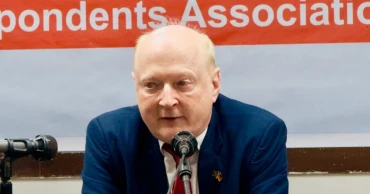
Germany wants to see ‘credible, participatory’ polls in Bangladesh
German Ambassador Dr Rüdiger Lotz on Wednesday highlighted the importance of a “free, fair, credible and participatory” election in Bangladesh with a high outcome, and hoped that the political parties will refrain from violence amongst each other during the election campaign.
“I think it's important to have a free, fair, credible and participatory election and an election with a high outcome. I would like to see of course a peaceful election campaign where parties refrain from political violence amongst each other,” he said.
The German Ambassador made the remarks at ‘DCAB Talk’ hosted by the Diplomatic Correspondents Association, Bangladesh (DCAB) at the Jatiya Press Club (JPC). DCAB President AKM Moinuddin and General Secretary Md Arifuzzaman Mamun also spoke at the event.
Talking about the upcoming national election, scheduled for February next year, Ambassador Lotz said this is something that has an importance that goes far beyond Bangladesh, a country that returns from “autocracy to democracy” and has an impact all over Asia and in the truest sense in the world democracy.
Explaining what he meant by participatory election, the envoy said participatory means people have the chance to participate in the elections and a plurality of parties can participate, making sure that “no one is hindered from participating” in the elections.
Regarding expected voter turnout, the Ambassador referred to Chief Adviser Prof Muhammad Yunus who had mentioned a threshold of 60% which would be the goal to reach.
“That's very reasonable. Of course we cannot influence that but I think high voter turnout is a very important element,” Ambassador Lotz said, highlighting the importance of an election process where no one is intimidated, where people can freely express their opinion and where the election result is counted in a way that is correct.
The German Ambassador who submitted his credentials in August said he always likes the expression that Prof Yunus has used - a joyful election and that is really a moment of joy to see.
He, however, said they all know there are challenges on the way to come to that point. “You will have our support, the European Union will most likely also send an observer mission - a very big one - because it's a big and an important country.”
Rizvi slams Hasina over reported gold recovery from bank vaults
Ambassador Lotz said this is an important basis as they share values of how a government should be formed. “When I came here and started to talk to people, I was really amazed about the openness of people and I don't talk only about the economic and political elite. When you talk to ordinary people, people are willing to express their opinion and that is something which shows how strong the democratic roots in the country actually are.”
Responding to a question, the Ambassador said voter turnouts are different in different countries and in many Western countries they differ from 50pc to 80pc or so and that does not really put into question the legitimacy of the elections.
“I think the higher the turnout the better. And I think as a mark that somehow indicates a good turnout,” he added.
Ambassador Lotz said they are convinced together with their European partners that the country needs free and fair and credible elections.
“We have the impression that the country all in all is in a good way to achieve that. One line I always have when talking also to people back home - you will have the biggest democratic elections in the world in 2026,” he added.
Regional Cooperation
The Ambassador said the region needs regional cooperation and in Europe they have had very positive experiences with regional cooperation.
He said the European Union, as a form of regional working together, is really working closely together. “I think we have come pretty far in Europe when it comes to this form of cooperation.”
Ambassador Lotz, however, said now every region in the world is different and has other historic experiences.
“So we cannot completely copy one system but I think all over the world there are probably few regions in the world who have so little regional cooperation like South Asia. And this is something which I think the region as a whole must see as a challenge that should be addressed and no matter who governs,” he added.
The Ambassador said there are geographical realities that will always be here. “Your neighbor will always be India. China will always play a major role. That is not so surprising and I think that will stay like that.”
He said all other foreign policy decisions are the independent decisions of a sovereign government after the elections.
National Reconciliation
The German Ambassador said what the country needs in the long run or in the short run is eventually a process of “national reconciliation” and a national dialogue.
“If I may say so, I say that has been missing here for many years. The country has to come together. Now I understand that it's difficult in a situation where the representatives of the former regime are not willing to admit that something went profoundly wrong,” he said.
Ambassador Lotz said this is something they are not there yet but he could imagine that after the elections and in the upcoming time after the elections, there must be at the time when it comes really to the need to get into such form of national reconciliation.
Responding to a question, the Ambassador said it is important in general that political parties stay committed to the reform process and stay committed to the reform process also after the elections.
“I see the July Charter and the whole process as an attempt really to have a clear commitment whoever governs to continue this reform process. So far I see there is a broad willingness to go in this direction,” he said.
This is something they discussed also internally with leaders of political parties and they will continue to do so because, Ambassador Lotz said, adding that it is really the key for this country that this reform process that started in August 2024 is going on even further.
Hasina’s Trial
Asked what would be Germany’ position if convicted former Prime Minister Sheikh Hasina seeks shelter in Germany, the Ambassador said they have not received any question or any wish in that direction.
“So, I think if that would ever happen, we would start a discussion process but it's such a theoretical question whether we would be willing or not and I think I'm not in a position to answer that,” he added.
When it comes to the legal procedure, Ambassador Lotz said, it is of key importance to have a legal way to confront the injustice of the past, abuse of power by the past regime. This is important for any country after such a political change. “So yes, that has to happen.”
He said the European Union and Germany have always been against the death penalty without exception. “So of course we are also in this case against the death penalty.”
Dhaka writes to Delhi afresh seeking Hasina’s extradition
10 months ago
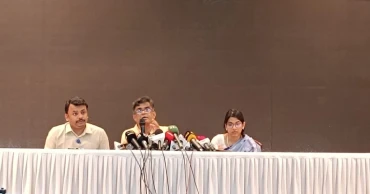
Forces from inside-outside country may work to thwart election: Prof Yunus
Chief Adviser Prof Muhammad Yunus on Wednesday warned that the upcoming 13th parliamentary election would face challenges as many forces from home and abroad would act to thwart the polls.
“Many forces from inside and outside the country will work to spoil the election. Many powerful forces, not minor ones, will attempt to thwart the election. Sudden attacks may come. This election will be challenging. No matter how many obstacles come our way, we must overcome them,” Press Secretary Shafiqul Alam quoted him as saying at a high-level meeting.
The high-level meeting on election preparations, presided over by the Chief Adviser, was held at the State Guest House Jamuna in the city.
EU to send election observer team to Bangladesh: Miller tells Prof Yunus
Shafiqul Alam briefed reporters at the Foreign Service Academy in the afternoon after the meeting.
During the meeting, the four issues -- election-time posting of field-level officials, checking misinformation and disinformation in social media, training of election officials and security-- were mainly discussed.
The Chief Adviser warned that there will be social media propaganda during the next election. “Various types of propaganda will be carried out in a planned manner from inside and outside the country to spoil the election,” he was quoted as telling the meeting.
Prof Yunus said AI-generated images and videos would also be circulated online and social media. Immediate action must be taken to prevent the spread of such contents, he said.
He emphasised raising public awareness to make the upcoming election fair and festive one. People need to understand electoral guidelines, polling station procedures, how to cast their votes and what to do in case of any disturbances, he said.
Prof Yunus calls for preserving all records of National Consensus Commission
In this context, Prof Yunus suggested that the Election Commission and the Cultural Affairs Ministry produce more TVCs, documentaries, and short videos explaining these processes and rapidly disseminate them on YouTube and social media, so people can prepare themselves in advance.
11 months ago
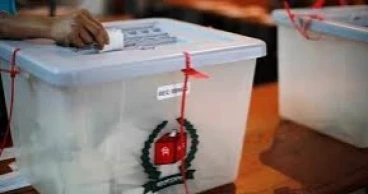
Concerns grow over ‘administrative preparations’ for Bangladesh election
With Bangladesh’s 13th parliamentary election expected in the first half of February 2026, election experts are increasingly voicing concern over the administrative preparations to conduct a credible national vote.
As the countdown to the polls continues, questions are mounting about the government’s logistical planning, transparency and capacity to ensure an election that is free, fair and acceptable both domestically and internationally.
Former Secretary AKM Abdul Awal Majumder, Public Administration Expert Mohammad Firoz Mia and newly appointed Senior Secretary of the Ministry of Public Administration Ehsanul Haque talked to UNB on the issue.
The interim government has reaffirmed its determination to hold the election within the stipulated timeframe, ‘under any circumstance’, but analysts warn that the credibility of the process will hinge on the effectiveness and neutrality of the civil administration, they said.
Although the Election Commission (EC) is formally tasked with organising the polls, its success at the field level will largely depend on the efficiency, morale and impartiality of the bureaucracy. This has given rise to a pressing question: is the current administrative machinery adequately prepared to deliver a free and fair election?
EC seeks round-the-clock police deployment for Nirbachan Bhaban ahead of election
Over the past 15 months, the civil administration has been struggling to regain its footing. Frequent transfers, promotions, and contractual appointments have reportedly created confusion and a crisis of confidence among officials. Many within the bureaucracy are said to be apprehensive about potential repercussions if they act with full impartiality.
Public administration experts, however, maintain that the situation can still be salvaged, provided there is sincerity and political goodwill. They emphasise the urgent need to appoint qualified, courageous and neutral officials to key field positions, particularly District Commissioners (DCs) and Upazila Nirbahi Officers (UNOs).
Strengthening the morale of law enforcement agencies and ensuring their impartial conduct are also viewed as critical to restoring public confidence in the electoral process.
According to experts, despite a demoralised and divided bureaucracy, a credible election remains possible if the government takes decisive corrective measures and empowers competent officials at the field level.
Former Secretary AKM Abdul Awal Majumder told UNB that despite the weaknesses within the bureaucracy, “good elections are possible if bold steps are taken.”
BNP eyes broader political alliance to foster national unity ahead of election
He pointed, “The people had confidence in the caretaker governments during the 1991, 1996 and 2001 elections, but the current government does not have that credibility. Fair elections will depend largely on the field administration — their competence, impartiality and strength of conviction.”
“If the government genuinely conveys a message of neutrality and allows field officials to work independently, then good elections are still achievable,” he added.
Public administration expert Mohammad Firoz Mia echoed similar sentiments, saying that the current bureaucracy lacks the capacity to conduct elections comparable to those of 2008.
“It is crucial to restore morale. Fair elections will not be possible unless officials are freed from fear,” he told UNB.
He cautioned that administrative efficiency alone would not suffice if political actors remain uncooperative. “Curbing election brokers and political interference at the field level remains a major challenge.”
Political parties, including the BNP, NCP, and Jamaat-e-Islami, have all expressed scepticism about the neutrality of the administration.
BNP has alleged that officials loyal to Jamaat are being placed in influential positions, while Jamaat claims that 70–80 per cent of bureaucrats are under the sway of a particular political party.
BNP leader Abdul Moyeen Khan pointed out that about 10 lakh personnel are required to operate some 42,000 polling stations nationwide. “This enormous operation depends entirely on the government administration. The real question is — will they act impartially or not?” he said.
The government insists that it remains firmly committed to holding a free and impartial election.
Chief Adviser Dr Muhammad Yunus has announced that all administrative transfers and postings ahead of the polls will be made under his direct supervision. “Deputy Commissioners will be appointed after careful selection of qualified officials.”
Meanwhile, Ehsanul Haque, the newly appointed Senior Secretary of the Ministry of Public Administration, told UNB, “Our directive is clear …this will be a fair election.”
Haque said he is personally taking responsibility to ensure the field administration performs its duties with complete impartiality.
11 months ago
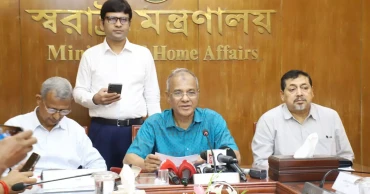
What should I do with safe exit alone? Home Adviser
In response to a statement that advisers are seeking a ‘safe exit’, Home Affairs Adviser Lt Gen (retd) Jahangir Alam on Sunday said he has no reason to do so.
“My sons and daughters are in the country. What am I supposed to do alone about the safe exit? If anyone wants it, that is their personal matter — but what would I do with a safe exit?” he told reporters after a core committee meeting on the law and order situation at the Secretariat.
Regarding the recovery of stolen firearms, the adviser said he might provide an update at the next meeting after consulting with the Inspector General of Police (IGP).
“Measures are being taken so that no one can create instability during the next general election period. Not all weapons are recovered immediately — that’s why law enforcement agencies exist. If every weapon were recovered, there would be no need for them,” he said.
The adviser expressed the hope that the upcoming general election would be held smoothly.
Advisers in no need of 'safe exit': Asif Nazrul
When asked whether the trial of accused army personnel would take place while they remain in military custody, or if the ministry had issued any directives, he said, “Whatever the law prescribes will be followed.”
Directives have been issued to deputy commissioners, superintendents of police, Upazila Nirbahi Officers and officers-in-charge to perform their duties impartially during the upcoming national election at the field level, he said.
To ensure security during the parliamentary polls, all risky polling stations will be brought under CCTV surveillance with effective monitoring, he said, adding that an adequate number of body-worn cameras will also be provided for law enforcers and election officials.
Rizwana dismisses ‘safe exit’ speculations, vows lifelong commitment to Bangladesh
Those who performed duties during the 2014, 2018 and 2024 national elections will be avoided as much as possible this time, the adviser said.
Law enforcement patrols and intelligence monitoring will be intensified to prevent any deterioration of law and order centring the election, and training for law enforcement personnel will be completed as quickly as possible, he added.
Meanwhile, some 1,50,000 police members will receive election duty training across 130 venues in 28 batches. Training for the first batch (6,500 officers) has been completed, while the second batch is underway.
The final phase of police training began on 5 October 2025 and is expected to be completed by 15 January 2026, he said.
“To ensure a smooth voting process, any individual or group attempting to create chaos will be identified and brought under the law. A coordinated action plan will be adopted to guarantee a free and neutral election,” he said.
Regarding Ansar and VDP personnel, Jahangir Alam said around 5,85,000 members — 13 for each of the 45,000 polling centres — will receive pre-election training.
Among them, 1,35,000 will receive armed training and 4,50,000 unarmed. The training will conclude by mid-January.
Ansar Battalion members will also serve as striking forces, with 3,157 new recruits currently undergoing training, he said.
A total of 1,100 platoons, each consisting of 33,000 members, from the Border Guard Bangladesh (BGB) will be deployed across the country.
Training for 60% of BGB members has already been completed, and the rest is expected to finish by 31 December this year, he said.
In addition, around 80,000 armed forces personnel will also be deployed for the polls, he added.
The government is taking all necessary measures to prevent any deterioration of law and order centring the demarcation of constituencies, he said.
1 year ago
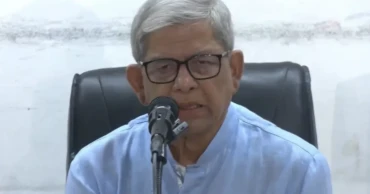
BNP to ensure political, economic reforms if voted back to power: Fakhrul
BNP Secretary General Mirza Fakhrul Islam Alamgir on Monday said the party is committed to ensuring both political reforms and economic progress if it earns the people’s mandate to govern again.
“If BNP gets the responsibility of running the state with support from people, then undoubtedly, under the leadership of our leader and acting chairman Tarique Rahman, BNP will bring about political changes in Bangladesh on the one hand and economic growth on the other. Bangladesh will surely move forward further,” he said.
Mirza Fakhrul Islam said this while talking to reporters after paying homage to BNP founder and Martyred President Ziaur Rahman by placing wreaths at his grave in the capital’s Sher-e-Bangla Nagar, marking the party’s 47th founding anniversary day.
National polls to take place on schedule, says BNP leader Fakhrul
Senior BNP leaders accompanied him in offering prayers and Fateha at the grave of Ziaur Rahman who founded the BNP on September 1, 1978.
About reforms, the BNP Secretary General said his party has fully supported the recommendations made by the reform commissions (formed by the interim government). And with the BNP’s 31-point programme, his party has taken steps to bring about a radical transformation in Bangladesh’s politics, he added.
BNP happy with EC’s election roadmap, says Fakhrul
“The challenge before us is to provide all-out cooperation and assistance to ensure that the election, announced to be held in February 2026, takes place in a fair manner,” he said.
Fakhrul recalled BNP’s struggles for democracy over the years.
“BNP fought long and hard to restore democracy time and again in the country. Repeated attempts were made to destroy the party, but BNP, like a phoenix bird, has risen again, inspired by the ideals of Ziaur Rahman and Khaleda Zia,” he said.
He said false cases were filed against some 6 million BNP men in the last 15 years, while around 20,000 BNP men were killed and 1700 BNP leaders and activists were forcibly disappeared and killed.
Mentioning that a ruthless fascism was established, he claimed the sole aim of this fascism is to annihilate BNP.
BNP Secretary General Mirza Fakhrul Islam Alamgir said it was by the grace of Allah and through the struggles of the people and students that the nation has been able to break free from what he described as Prime Minister Sheikh Hasina’s ‘fascist rule’.
1 year ago

EC clears action plan for national election in February
The Election Commission (EC) has approved its action plan for the 13th parliamentary election likely to be held in February 2026, with a formal announcement expected soon.
“Everything for the action plan has been finalised. It has been approved,” Election Commissioner Md Anwarul Islam Sarker told the media on Wednesday.
EC officials said the action plan, earlier referred to as the electoral roadmap by the EC secretary, will be unveiled shortly.
PR system possible if only law is amended: CEC Nasir
Later in the afternoon, EC senior secretary Akhtar Ahmed is scheduled to brief the media on overall issues following the conclusion of hearings on the re-demarcation of parliamentary constituencies.
The action plan issue is also expected to be addressed in the briefing.
According to EC officials, the roadmap outlines key preparatory activities, including political party registration, re-demarcation of parliamentary constituencies, reforms to the Representation of the People Order (RPO), updating electoral rules and guidelines, IT-supported voter registration and postal ballot system for expatriates and procurement of essential election materials.
On August 14, EC Secretary Akhtar Ahmed said the roadmap would provide a clear picture of the commission’s preparations for the polls.
He also said it would specify major electoral tasks and their timelines, including schedules for dialogues with civil society members and journalists, as well as deadlines for amendments and reforms to electoral laws.
Only elected govt can amend constitution: Rizvi
Earlier, this month, Chief Election Commissioner (CEC) AMM Nasir Uddin said the next national election is likely to be held in the first half of February and the EC has already intensified its preparations across the country.
1 year ago