Constitution Reform Council
Bangladesh’s newly elected MPs to take oath on Tuesday
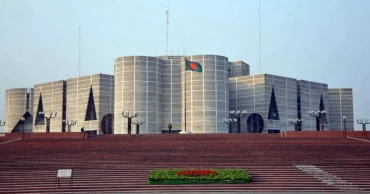
Newly elected MPs are set to take oath as members of the 13th parliament and also the Constitution Reform Council on Tuesday.
Chief Election Commissioner AMM Nasir Uddin will administer the oath in line with the Constitution as the posts of Speaker and Deputy Speaker of the 12th Parliament are currently vacant.
The swearing-in ceremony will be held at the oath-taking room of the Jatiya Sangsad.
BNP’s MPs-elect will take oath at 10am, while those of Jamaat-e-Islami will do so at 12pm, said Parliament Secretariat Secretary Kaniz Moula.
“Both oaths of the elected MPs as members of parliament and as members of the Constitution Reform Council will be held at a time (the same event),” she told UNB on Monday evening.
Besides, the Election Commission on Monday wrote to the Parliament Secretariat asking to take necessary measures as the Chief Election Commissioner will administer the oath of newly elected members of the 13th parliament and also members of the Constitution Reform Council at 10am on Tuesday.
EC Senior Secretary Akhtar Ahmed wrote the letter to the Secretary of Parliament Secretariat.
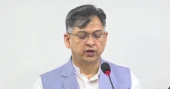
However, BNP Standing Committee member Salahuddin Ahmed on Monday raised constitutional concerns regarding the oath of the Constitution Reform Council, casting uncertainty over whether such an oath can legally be administered now.
DMP issues traffic guidelines for oath-taking ceremony
“If the Constitutional Reform Council is incorporated into the Constitution through an amendment, and if a specific oath format is included in the Third Schedule of the Constitution with a designated authority to administer that oath—only after all these conditions are met could such a process take place,” he said.
While the Third Schedule of the Constitution specifies the oaths for various offices, including that of Members of Parliament, it does not mention any oath for members of a Constitution Reform Council, he said.
Responding to questions from journalists, Salahuddin Ahmed, also a newly elected MP, said the constitutional responsibility of the Election Commission is to conduct the national parliamentary and presidential elections.
Officials at the Parliament Secretariat said newly elected MPs will sign the oath book and provide fingerprints, images and digital signatures for preparation of their digital identity cards following the ceremony.
The 13th parliamentary election and referendum on the July National Charter (Constitutional Reform) Implementation Order 2025 were held on Thursday last (February 12) in 299 out of the country’s 300 constituencies amid festivity and peaceful atmosphere.
On Friday last, the EC published a gazette of 297 elected MP candidates. The election results of two other constituencies – Chattogram-2 and 4-- were withheld as per the court orders. Besides, the election to Sherpur-3 was earlier cancelled following the death of a contesting candidate.
But BNP Chairman Tarique Rahman has left Bogura-6 seat for by-election as he is set to take oath as a member of parliament from Dhaka-17 constituency.
In the election, Bangladesh Nationalist Party (BNP) secured 209 parliamentary seats, while Bangladesh Jamaat-e-Islami won 68.
Besides, National Citizen Party-NCP settled victory in six constituencies, independent candidates in seven constituencies, Bangladesh Khelafat Majlish in two, Islami Andolan Bangladesh in one, Bangladesh Jatiya Party-BJP (led by Andaleeve Rahman Partho) in one, Ganaodhikar Parishad in one, Ganasamhati Andolan in one and Khelafat Majlish in one parliamentary seat.
So, the BNP-led electoral alliance sealed victory in a total of 212 constituencies, while the Jamaat-led electoral alliance won in 77 constituencies.
According to the July National Charter (Constitutional Reform) Implementation Order 2025, a Constitution Reform Council shall be formed with the representatives elected in the general election, which could apply all authorities related to the constitutional reform.
The representatives elected in the election shall act as the members of the parliament and also members of the Council simultaneously.
The Constitution Reform Council shall complete the implementation of the July National Charter and the Constitutional Reforms in line with the mandate gained through the referendum within 180 working days since the formation of the council and then the tenure of the council will end immediately.
The Order also states that the authority entitled to administer the oath of MPs will likewise administer the oath of members of the Constitution Reform Council.
According to the Constitution, newly elected MPs must take their oath, typically administered by the Speaker within three days of the gazette notification. Due to the resignation/absence of the 12th Parliament Speaker, the Chief Election Commissioner (CEC) or a President-nominated person will administer the oath.
Maldives' President, FM to join oath-taking ceremony
The Article 148 (2A) states, ”If, within three days next after publication through official Gazette of the result of a general election of members of Parliament under clause (3) of article 123, the person specified under the Constitution for the purpose or such other person designated by that person for the purpose, is unable to, or does not, administer oath to the newly elected members of Parliament, on any account, the Chief Election Commissioner shall administer such oath within three days next thereafter, as if, he is the person specified under the Constitution for the purpose.”
Tenures of all Parliaments
The tenure of first parliament was from 07-04-1973 to 06-11-1975 (2 years 6 months and 30 days), the second parliament from 02-04-1979 to 24-03-1982 (2 years 11 months 22 days), the third parliament from 10-07-1986 to 06-12-1987 (1 year 4 months 26 days), the fourth parliament from 15-04-1988 to 06-01-1990 (1 year 8 months 22 days), the fifth parliament from 05-04-1991 to 24-11-1995 (4 years 7 months 19 days), the sixth parliament from 19-03-1996 to 30-03-1996 (11 days), the seventh parliament from 14-07-1996 to 13-07-2001 (4 years 11 months 29 days), the eight parliament from 28-10-2001 to 27-10-2006 (4 years 11 months 29 days), the ninth parliament from 25-01-2009 to 24-01-2014 (4 years 11 months 30 days), the 10th parliament from 19-01-2014 to 28-01-2019 (5 years 9 days), the 11th parliament from 30-01-2019 to 06-01-2024 (4 years 11 months 7 days) and the 12th parliament from 10-01-2024 to 06-08-2024 (6 months 27 days).
8 months ago
Chief Adviser breached signed July Charter, says Salahuddin
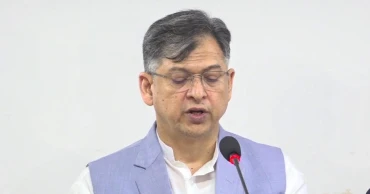
BNP Standing Committee member Salahuddin Ahmed on Thursday said the Chief Adviser has violated the July National Charter through his outlines on the implementation of the charter in his speech to the nation.
“The Chief Adviser himself signed the July Charter. In his speech, he violated the charter by including matters beyond the signed charter and adding new elements that were not mentioned in it,” he told UNB giving his initial reaction to Prof Yunus' address to the nation.
“If we analyse his speech alongside the signed charter, we will see that he has grossly breached it.” the BNP leader added.
Earlier in the day, Chief Adviser Prof Muhammad Yunus announced that the national election and the referendum on the July Charter will take place on the same day.
In a televised address to the nation, he said a meeting of the Council of Advisers had approved the July National Charter (Constitution Amendment) Implementation Order, 2025. “To implement the July Charter, this order includes several important provisions. These include holding a referendum on the constitutional amendment proposals of the charter and, subsequently, the formation of a Constitution Reform Council,” he said.
Later, speaking to reporters at his Gulshan residence, Salahuddin said the interim government and the July National Consensus Commission have created the current political crisis by going beyond the signed July National Charter.
He said the order issued by the government to implement the July National Charter (Constitutional Reform) included ‘many new and personal ideas’ that were never part of the original signed charter.
“We have already made it clear through our party’s press briefing that we will not agree to any matter imposed outside the signed July National Charter, and it will not be binding on the political parties that signed it,” the BNP leader said.
He alleged that several issues have been forcefully added, and political parties were being asked to say ‘yes or no’ to matters not included in the signed charter. “Many of the provisions in the order issued today (Thursday) are new and reflect their (govt’s) personal preferences.”
The BNP leader warned that such steps could lead to division instead of unity. “Some may be happy with this, but are we heading towards disunity in the nation? Are we creating divisions instead of harmony? Will the Chief Adviser take responsibility for that?”
He said the party would review the Chief Adviser’s address to the nation in its forum and issue a formal reaction.
Responding to a question about how the July Charter was violated, Salahuddin said the document was signed in a historic event witnessed by the entire nation. “The printed copies of the signed charter are available to all. Each section contains clear notes on proposals, consent, and notes of dissent from different parties.”
“This was not a conventional note of dissent. It was specifically stated that if any party mentions its differing views in its election manifesto and wins the people’s mandate, it can implement those issues accordingly. Has that principle now been abandoned? If the Chief Adviser goes beyond his own signed document, it amounts to a breach of the charter,” he clarified.
Referring to the proposed ‘Constitution Reform Council’, Salahuddin said the idea was never discussed or agreed upon in the National Consensus Commission.
He questioned the intention behind including such new ideas in the order without the consensus of the political parties.
The BNP leader said the Election Commission, under the Constitution, is responsible for conducting parliamentary and presidential elections.
“The MPs elected through that process will take oath as members of parliament — not as members of any Constitution Reform Council… Setting a timeframe, forming a council, and proposing constitutional reforms within 180 days are new ideas. Do they have the authority to do that?” Salahuddin asked.
He questioned whether dictating the next parliament through such orders has any legal basis. “Is this not interference in the sovereign authority of parliament?”
In Bangladesh, the BNP leader said, there is only one sovereign body — the National Parliament — as per the Constitution. “No court can interfere in discussions or proceedings inside parliament. So imposing such obligations would amount to interfering in the sovereignty of parliament.”
Salahuddin also said the idea of forming a constituent assembly or a reform council was contradictory. “If there had been any national consensus to form such a council, the Constitution would first need to be amended to empower the Election Commission for that purpose. Are we back in the pre-independence situation where we need a constituent assembly again? Bangladesh already has a Constitution. These ideas are conflicting.”
Replying to a question, he said both the government and the National Consensus Commission were responsible for the ongoing crisis. “They formed reform commissions first, then a National Consensus Commission. After nine months of discussions, the National Charter was prepared and signed. Why are you going beyond it now?”
The BNP leader said the crisis began when the consensus commission, chaired by the Chief Adviser himself, made recommendations to the government going beyond the signed charter. “He signed it as the Chief Adviser and then made recommendations to himself.”
He reiterated that BNP wants only the signed July Charter to be implemented. “The charter was prepared and signed based on consensus, including the Chief Adviser’s signature. Let’s just implement that.”
11 months ago