Secretariat meeting
Govt reviewing body camera purchase plan: Finance Adviser
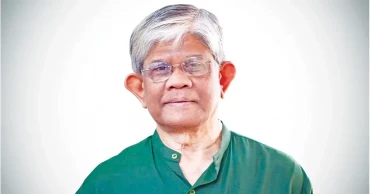
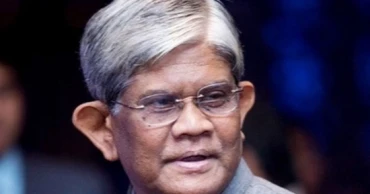
Finance Adviser Dr Salehuddin Ahmed on Tuesday (November 18) said the government is reviewing the proposed procurement of body cameras to ensure transparency, rational planning and appropriate use in sensitive operational areas.
The initial proposal sought a very large number of body cameras, prompting the committees to ask the authorities concerned to revisit the plan, pricing and procurement method, he told reports after meetings of the Advisers Council Committee on Economic Affairs and the Advisers Council Committee on Government Purchase at the Secretariat.
He said the revised plan should adopt a more rational, need-based approach.
“The procurement should be rational. We suggested that body cameras be used in particularly sensitive and critical areas, not everywhere,” he said, adding that the Home Ministry shares the same view.
The adviser said the purpose of introducing body cameras is to strengthen monitoring, improve accountability and support evidence-based action.
Read more: Govt to decide on body camera purchase for police within days: Finance Adviser
“The idea is not to deploy body cameras indiscriminately but to ensure they serve their intended purpose where sensitivity and oversight are crucial,” he added.
On whether the number of cameras will be reduced, Dr Salehuddin said rationalisation is likely.
“The number will be reduced, but I cannot say by how much at this stage. We will be able to comment once the revised proposal is submitted,” he said.
He added that the revised proposal will be placed very soon.
On September 23, the government approved procurement of around 40,000 body cameras for police personnel ahead of the national election scheduled for February.
The cameras are to be procured through the United Nations Development Programme (UNDP) to ensure quality, transparency and neutrality. Dr Salehuddin earlier said buying through UNDP would help avoid controversies over quality and pricing as international tenders would be floated and responsibility placed with the agency.
Read more: Govt okays procurement of new firearms for Ansar and VDP
11 months ago
Govt okays procurement of 17,050 shotguns for Ansar and VDP
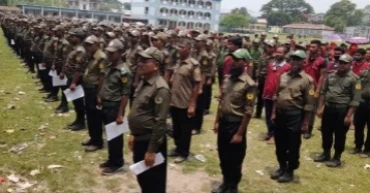
The government on Tuesday approved a proposal to procure 17,050 shotguns for Ansar and Village Defence Party (VDP) in order to replace their old and outdated firearms.
The decision was taken at the meeting of the Advisers Council Committee on Government Purchase held at the Bangladesh Secretariat.
Finance Adviser Dr Salehuddin Ahmed, who chaired the meeting, told reporters that the existing firearms used by Ansar and VDP have become very old, making replacement essential to ensure operational effectiveness.
“We will procure around 17,000 12-bore shotguns for Ansar and VDP as the existing ones have become very old. The price we are getting is cost-effective and we found the purchase to be economically viable, so it has been approved,” he said.
He noted that the procurement proposal was evaluated on the basis of competitive pricing.
Responding to a query on whether the purchase has any connection to the upcoming national election, Dr Salehuddin said the procurement is not election-related.
“This has nothing to do with the election. It is not an election issue. Ansar has long been in need of updated shotguns and this procurement was overdue,” he stated.
The proposal will now move through detailed scrutiny and procedures under the Cabinet Committee on Government Purchase (CCGP).
According to official sources, the estimated cost of each shotgun has been set at USD 146.
The total expenditure for the procurement is estimated at Tk 35.62 crore.
At a meeting of the Cabinet Committee on Economic Affairs held on November 9, the proposal to procure 17,050 units of 12-bore shotguns for the Bangladesh Ansar and Village Defence Party through the direct purchase method received policy approval.
After inviting proposals under the direct purchase method, four companies submitted bids for supplying the shotguns.
Upon completion of all evaluation procedures and price negotiations, Turkey-based Bay Galatal was recommended as the lowest responsive bidder.
Subsequently, a decision was taken to procure 17,050 units of 12-bore shotguns from the company.
Read more: IMF satisfied with Bangladesh’s reform progress but flags key challenges: Salehuddin
11 months ago
IMF satisfied with Bangladesh’s reform progress but flags key challenges: Salehuddin
Finance Adviser Dr Salehuddin Ahmed on Tuesday (November 18) said the International Monetary Fund (IMF) has expressed satisfaction with Bangladesh’s ongoing economic reforms although reiterated concerns over several structural challenges that require closer attention.
“They said the situation is overall good but they are monitoring the challenges. We are working under a plan but they feel that taking some steps a little faster would bring better outcomes,” he told reporters after meetings of the Advisers Council Committee on Economic Affairs and the Committee on Government Purchase at the Secretariat.
He noted that the IMF is particularly concerned about the speed of policy implementation especially surrounding interest rate adjustments.
“Increasing the policy rate by the central bank cannot be done suddenly. Everyone knows that. We have to ensure supply-side improvements at the same time,” he said.
Dr Salehuddin also mentioned that the IMF has raised issues related to the banking sector.
“They have taken five banks under observation which they consider a major challenge,” he said, adding that the government needs to undertake tough reforms to strengthen financial governance.
On revenue administration, the adviser said the IMF is satisfied with the current progress of the National Board of Revenue (NBR) but expects reforms to continue steadily. “The process has become principled but manpower restructuring and capacity enhancement will take time,” he said.
Read more: Bangladesh’s reserves still remain above $31 billion after ACU payment
He added that while it may not be possible to achieve a complete turnaround within the current government’s tenure substantial groundwork and structural preparations would be completed.
“We may not reach the final conclusion but the logical framework and preparatory work will be done,” he assured.
Responding to a question on whether the IMF has set any new conditions, Dr Salehuddin said no fresh conditions were imposed.
“This was more like a consultation. They expressed satisfaction with the measures we have taken so far. The economic situation is largely under control and the remaining time will be used for consolidation,” he said.
The $4.7 billion IMF loan programme, approved in January 2023, aims to support Bangladesh’s economic stability, strengthen fiscal reforms, and enhance resilience amid global economic pressures.
Several tranches have already been disbursed while further installments remain tied to policy performance benchmarks and structural reforms.
The IMF will delay disbursing the sixth tranche until the next national election and the new elected government assumes office.
Read more: Bangladesh economy in ‘waiting vortex’; experts urge credible elections
The interim government that assumed power on August 8, 2024 three days after the Awami League regime was ousted amid a mass uprising announced that the next general election would be held in February.
Finance ministry officials said that theyare expecting the releases of the sixth and the seventh tranches in June, 2026.
On June 23, the IMF approved the release of the fourth and fifth tranches amounting to $1.3 billion, taking the overall amount of disbursement to $3.6 billion.
In June 2025, the IMF also increased the overall loan amount to $5.5 billion from $4.7 billion under the loan programme that began in 2023 under the AL regime in 2023 to meet the balance of payment shortage.
The progarmme period has also been extended by six months to January 27, 2027 from July 2026, following requests from Dhaka.
The interim government has already reduced the balance of payment pressure.
Driven by higher remittance and export earnings, the country’s gross foreign exchange reserves increased to $32 billion on October 16, the highest in 31 months.
The latest IMF mission is also linked to the Article IV report, an annual consultations with its member countries on overall economy, on Bangladesh.
Read more: Jamaat-e-Islami holds meeting with IMF on economy and tax system
11 months ago