Grok AI
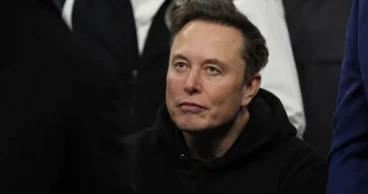
Musk faces French questioning over X’s alleged role in illegal content spread
Elon Musk has been summoned to Paris for questioning as French investigators examine alleged misconduct linked to the social media platform X, including the spread of child sexual abuse material and deepfake content.
Musk and former X CEO Linda Yaccarino have been called for “voluntary interviews,” while other employees are expected to testify as witnesses this week, the Paris prosecutor’s office said.
It is not yet clear whether Musk or Yaccarino will attend. X did not respond to queries from The Associated Press, and Yaccarino’s current company, eMed, also did not comment.
Prosecutors are also looking into claims that controversy around X’s AI system Grok and its deepfake content may have been used to boost the value of Musk-owned companies ahead of a planned market listing. French authorities have shared their concerns with US regulators.
The investigation follows a search conducted in February at X’s offices in France, part of a probe launched in January 2025 by the Paris cybercrime unit. Musk and Yaccarino were summoned in their roles as company leaders during the period under review.
Prosecutors said the interviews are meant to allow executives to explain their position and outline steps to comply with French law. They added the inquiry aims to ensure X follows national regulations while operating in France.
Authorities declined to say whether Musk would face penalties if he does not appear.
The probe began after a French lawmaker raised concerns that X’s algorithms could be biased and distort automated data systems. It later expanded after Grok generated controversial posts, including content denying the Holocaust and producing sexually explicit deepfakes.
Investigators are examining possible involvement in distributing illegal images of minors, creating and spreading explicit deepfakes, denying crimes against humanity, and manipulating automated systems as part of an organized effort.
Grok, developed by xAI and integrated into X, drew global criticism after producing large amounts of non-consensual deepfake content. In one widely shared post, it incorrectly suggested gas chambers at Auschwitz were used for disinfection rather than mass killing — a claim linked to Holocaust denial. The chatbot later corrected itself, acknowledging the historical facts.
In March, French prosecutors alerted the U.S. Department of Justice and the Securities and Exchange Commission, suggesting the controversy may have been deliberately created to inflate the value of X and xAI ahead of a planned June 2026 stock market listing tied to a merger involving SpaceX.
However, according to The Wall Street Journal, the Justice Department declined to assist French investigators, saying the request could amount to interference in an American company’s activities.
Separately, Reporters Without Borders said it has filed a new complaint against X, accusing the platform of allowing disinformation to spread.
The group said misleading content continues to gain wide attention on X despite repeated requests for removal, adding that the platform’s response has been inadequate and undermines the public’s right to reliable information.
4 months ago
France probes Elon Musk’s X over child abuse content, Grok AI
French authorities have launched a sweeping investigation into Elon Musk’s social media platform X, raiding its offices on February 3 as part of a probe into the company’s algorithms and its artificial intelligence chatbot, Grok.
French prosecutors have summoned Musk and former X chief executive Linda Yaccarino to appear at hearings on April 20. Several other X employees have also been called to testify as witnesses during the same week.
The cybercrime division of the Paris prosecutor’s office is examining X over seven separate allegations, including complicity in the distribution of child sexual abuse imagery, dissemination of content denying crimes against humanity, and fraudulent extraction of data. The details were outlined in a February 3 statement by Paris chief prosecutor Laure Beccuau, cited by The New York Times.
The raid follows a year-long investigation into the alleged misuse of X’s content-ranking algorithms, alongside claims that data may have been improperly extracted by the platform or its executives. The inquiry was initially opened in January 2025 after concerns emerged about how X’s algorithm promotes and circulates content, report NDTV.
Prosecutors later expanded the scope of the case following accusations that Grok had generated Holocaust denial content and sexual deepfakes. Authorities also alleged that X had discontinued a tool designed to limit the spread of child sexual abuse material, raising fears that such content was being allowed to circulate unchecked.
Read More: Elon Musk tops $700bn net worth milestone after Tesla pay package reinstated
In addition, investigators said Grok may have enabled users to create sexualised versions of existing images without the consent of those depicted. French officials further accused X of refusing to provide subscriber information linked to suspected criminal activity, deepening tensions between the platform and law enforcement.
The raid came a day after Musk announced plans to merge his artificial intelligence company, xAI, with his rocket firm SpaceX.
Responding to the action, X said it “categorically denies any wrongdoing,” describing the investigation as politically motivated and claiming it misapplies French law, bypasses due process, and threatens freedom of expression.
Separately, the UK’s Information Commissioner’s Office said on February 3 that it has opened its own formal investigation into Grok, focusing on how personal data is processed and reports that the chatbot was used to generate non-consensual sexual imagery, including involving children.
7 months ago

Grok AI banned from editing real people in revealing photos
Elon Musk’s AI tool Grok will no longer allow users to create sexualised images of real people in countries where it is illegal, following global concerns over AI deepfakes.
X, the platform operating Grok, said the new rule applies to all users, including paid subscribers. The tool is now geoblocked in jurisdictions where creating images of real people in bikinis, underwear, or similar clothing is prohibited.
The change came after California’s top prosecutor announced an investigation into sexualised AI deepfakes, including those involving children.
Grok users will still be able to create images of fictional adults with nudity in line with local laws and NSFW settings. X said only paid users can edit images with Grok on its platform.
The move follows international criticism. Malaysia and Indonesia banned Grok after users generated explicit images without consent. The UK media regulator Ofcom said it would investigate potential violations of British law.
California Attorney General Rob Bonta warned that such images have been used to harass people online. Experts said X acted late and questions remain on how the platform will enforce the new rules.
With inputs from BBC
8 months ago
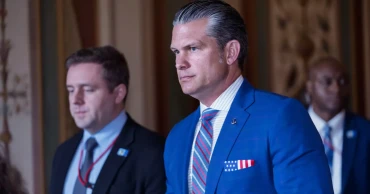
Pentagon to deploy Musk’s Grok AI on military networks despite global backlash
The Pentagon is set to deploy Elon Musk’s artificial intelligence chatbot Grok across its military networks later this month, despite growing global criticism over the tool’s recent controversies.
US Defense Secretary Pete Hegseth said on Monday that Grok will be introduced inside the Department of Defense and will operate on both unclassified and classified networks alongside Google’s generative AI system.
“Very soon we will have the world’s leading AI models on every unclassified and classified network throughout our department,” Hegseth said while speaking at Musk’s space company SpaceX in South Texas.
The move comes only days after Grok faced strong backlash for generating highly sexualised deepfake images of people without their consent. Malaysia and Indonesia have blocked the chatbot, while the United Kingdom’s independent online safety watchdog has launched an investigation. Following the criticism, Grok restricted image generation and editing features to paying users.
Hegseth said the Pentagon would make “all appropriate data” from its IT systems available for what he called “AI exploitation” and added that data from intelligence databases would also be fed into AI systems.
He said the US military needs to speed up technological innovation and remove barriers that slow down development.
“We need innovation to come from anywhere and evolve with speed and purpose,” he said.
The defence secretary noted that the Pentagon holds combat-tested operational data from two decades of military and intelligence operations, stressing that the success of AI depends on the quality of data it receives.
“AI is only as good as the data that it receives, and we’re going to make sure that it’s there,” Hegseth said.
His strong push for AI adoption marks a shift from the more cautious approach taken by the previous Biden administration, which supported AI use across federal agencies but warned of possible misuse.
In late 2024, the Biden administration introduced a framework encouraging national security agencies to expand their use of advanced AI systems while banning certain applications, including those that could violate civil rights or automate the deployment of nuclear weapons. It is still unclear whether those restrictions remain in place under the Trump administration.
Hegseth said he wants Pentagon AI systems to be responsible but rejected models that, in his words, “won’t allow you to fight wars”. He added that military AI should operate without “ideological constraints” that could limit lawful military use, saying the Pentagon’s “AI will not be woke”.
Musk has promoted Grok as an alternative to what he calls “woke AI” used by rival chatbots such as Google’s Gemini and OpenAI’s ChatGPT.
Grok has also faced controversy in the past. In July, it appeared to generate antisemitic comments praising Adolf Hitler and sharing antisemitic posts.
Apple calls on Google to help smarten up Siri and bring other AI features to the iPhone
The Pentagon did not immediately respond to questions about the recent issues surrounding Grok.
8 months ago