Radish
Plenty on fields: Why vegetables so expensive in Dhaka?
Winter has brought a bumper vegetable harvest across the country, supported by smooth transportation and abundant supply, yet Dhaka’s consumers are seeing little relief at the markets.
Visits to several city markets showed that vegetable prices remain stubbornly high, even as farmers complain they are barely recovering production costs, raising fresh questions about possible market manipulation and the role of middlemen in the supply chain.
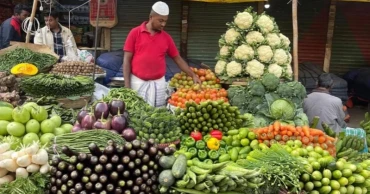
Dhaka’s kitchen markets are actually awash with winter vegetables, but prices show little sign of easing even in what is traditionally the cheapest season of the year.
While consumers continue to pay inflated rates, farmers across producing districts say they are selling their produce at throwaway prices, pointing to a widening gap between farm-gate and retail prices driven largely by middlemen.
Major wholesale markets in the capital receive winter vegetables from Bogura, Naogaon, Chuadanga, Sirajganj, Rajshahi, Jashore and other districts.
Traders say more than 50 truckloads of vegetables arrive in Dhaka every day from Bogura alone during the peak season.
Despite ample supply, winter vegetables costly in Lalmonirhat
Wholesalers at Karwan Bazar said supply is higher than last year, yet prices have not come down. By late January, wholesale prices were on average Tk 20 per kg higher than the same period a year ago.
“Last year at this time, cauliflower sold at Tk 15–20 per kg wholesale. This year it is Tk 30–35,” said Latif Munshi, a vegetable trader at Karwan Bazar, adding, “We are buying at higher prices from upstream traders, so we have no option but to sell at higher rates to retailers.”
Anwar Mia, a trader at the Swarighat wholesale market, echoed the sentiment. “Prices of cabbage, tomato, cucumber, carrot, bottle gourd—almost all winter vegetables—are higher than last year. There is no supply shortage, but increased intermediary costs are pushing prices up.”
The picture is starkly different at the production level.
In Bogura’s Sherpur upazila, vegetable grower and trader Naim Meyajan said he cultivated cauliflower on nearly 10 bighas of land. While early varieties fetched good prices between September and November, prices collapsed once peak harvesting began in December.
“Wholesalers bought fields early at Tk 80,000 to Tk 100,000 per bigha against a production cost of around Tk 50,000. But when the main harvest started, there were no buyers for fields. I had to take cauliflowers to market where prices fell to Tk 5 per kg,” he said.
Farmers at Fulbari and Mohasthan haats in Bogura said prices of most vegetables started falling sharply by late December.
In many cases, they were forced to sell produce at an inflated ‘maund’ calculation—60 kg instead of the standard 40 kg—yet still failed to recover costs.
Early winter vegetable cultivation gains momentum across Khulna division
In Dhaka, however, prices moved in the opposite direction. Cauliflower that sold at Tk 25 per piece in late December is now priced at Tk 40–50 depending on size. At Shantinagar kitchen market, cabbage is selling at around Tk 50 per piece.
By contrast, in Sirajganj’s Ullapara upazila, farmer Bhobesh Ghoshal said he sold cabbage at Tk 6–10 per piece in January. “Those same cabbages are being sold in Dhaka at Tk 20 or more”.
A visit to the Jatrabari wholesale hub shows cabbage trading at Tk 25–30 per piece wholesale, before reaching consumers at Tk 50. For key winter vegetables, the price gap between farmers and consumers ranges from Tk 30 to Tk 40 per unit.
Tomato prices show an even sharper disparity. Early varieties arrive in Dhaka from Chattogram, while seasonal tomatoes mainly come from Rajshahi. In both phases, retail prices in Dhaka have ranged between Tk 100 and Tk 150 per kg.
In Rajshahi’s Godagari upazila, tomato farmer Moktar Hossain said he is currently selling tomatoes at Tk 40 per kg, down from Tk 50–80 during the early season. “Middlemen are selling those tomatoes in Dhaka at Tk 60 per kg, and prices keep rising along the chain.”
At wholesale markets in Dhaka, tomatoes are sold to retailers at Tk 80–90 per kg and finally reach consumers at Tk 100–120. The cumulative price difference from farm to table stands at Tk 50–70 per kg.
Radish prices, though relatively lower, reflect a similar pattern. In retail markets, radish sells at Tk 30–40 per kg. In Cumilla’s Gomti char area, farmer Sohrab said radish is sold in bundles rather than by weight.
“One bundle of 8–10 radishes sells for Tk 30, which is roughly Tk 10 per kg,” he said. “But consumers are paying at least Tk 20 more per kg in Dhaka.”
According to a study by the Food and Agriculture Organization (FAO), more than 700,000 kg of vegetables are sold daily in Dhaka. Even assuming a conservative price gap of Tk 20 per kg between farmers and consumers, the additional daily burden on consumers stands at around Tk 15 million—amounting to nearly Tk 500 million over January due to elevated prices.
Commenting on the situation, Consumers Association of Bangladesh (CAB) President AHM Shafiquzzaman blamed market syndicates and weak oversight.
“A group of traders is taking advantage of the pre-election period by forming syndicates and destabilising the vegetable market. Vegetables have been selling at high prices for nearly a month, but there is no effective monitoring. Extortion at different stages of the supply chain is also pushing prices up,” he said.
Shafiquzzaman warned that prices could rise further during Ramadan, expressing doubts about official assurances of market stability. “Government data is often unreliable,” he said.
Calling for decisive action, he urged the authorities to dismantle syndicates of middlemen, ensure fair prices for farmers and protect consumer rights through stricter market regulation.
Former Jahangirnagar University vice-chancellor and agricultural economist Abdul Bayes, however, advised that ensuring fair prices for both consumers and farmers in the agricultural market should not rely solely on government intervention; instead, marginal farmers must be empowered.
Vegetable prices soar in Manikganj amid inclement weather
Emphasising the formation of farmers’ cooperatives, Bayes said, “A single farmer from Bogura cannot bring 100 kilograms of cauliflower to Dhaka to sell. But if 100 farmers from the same area form a cooperative, they can collectively bypass middlemen and bring their produce directly to the market. This would allow farmers to secure better prices from wholesalers, while consumers would be able to buy vegetables at lower prices.”
He also noted that NGOs could play an important role by supporting farmers in forming such cooperatives.
Besides, Bayes said, if the government can dismantle syndicates in wholesale markets, foster competition, and curb extortion along supply chains, long-term market instability in the vegetable sector could be brought under control.
7 months ago