Bangladesh Railways

Bangladesh Railway sets sights on new locomotives to revamp services: Sheikh Moinuddin
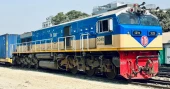
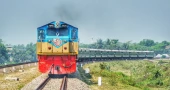
The government is taking steps to purchase a new fleet of modern locomotives to make Bangladesh’s rail services more efficient and profitable, said Sheikh Moinuddin, Special Assistant to the Chief Adviser on Road Transport, Bridges and Railways.
“We expect to complete the tender process within a month,” he said in an interview with UNB.
“Passenger demand is not an issue — people want to travel by train. But we’re facing a shortage of locomotives which limits the frequency and reliability of services,” Moinuddin said.
“If we can address that by procuring more locomotives, train operations will increase, travel will become more convenient, and costs will come down,” he said, adding that the ministry is moving ahead with a plan to buy more locomotives than currently required to ensure long-term service stability.
Despite a notable decline in operational losses in recent years the railway sector has yet to become fully profitable, he said.
Govt plans rail link for all economic zones starting with Mirsarai
In many countries, Moinuddin said, public transport systems are not directly profit-making but efficient management and reduced operational costs can make them sustainable. “We need better administrative efficiency and more effective policy decisions to achieve that.”
About other major infrastructure development plans he said a master plan includes reducing the Dhaka-Chattogram route distance by around 80 kilometers. “Work has already started in parts of Ishwardi to straighten the railway line which will significantly reduce travel time.”
Regarding other projects, Moinuddin said the renovation of the old line under the Jamuna Train Project is underway and new project activities are expected to begin next month.
He ruled out the immediate introduction of high-speed or underground trains. “Our infrastructure isn’t ready for that yet. Discussions are ongoing about a Green Railway initiative but it will take more time,” he said.
Bangladesh Railway has been struggling with inadequate rolling stock, outdated signaling systems and delays in completing major projects.
At present, the railway has 1,788 coaches, nearly half of which (47%) have exceeded their service life. Only 295 locomotives are operational.
Dhaka-Ctg highway’s 10-lane expansion shelved; focus shifts to railway
Against a required workforce of 47,600 in the railway, only 24,000 are currently employed.
Over the past five years till 2024, more than 2,000 accidents have occurred, resulting in over 150 passenger deaths and around 500 injuries.
In the past four months alone, 160 railway accidents and sabotage incidents were reported nationwide, causing 18 fatalities and 200 injuries.
The Ministry of Railways’ 2022-23 annual report states that 315 passenger trains are currently operating nationwide, with 143 of them introduced in the last 15 years. During this period, 843 kilometres of new railway tracks have been laid, and 1,391 kilometres of existing lines have been repaired.
In 2024, the railway recorded a reduction in losses by over 20% due to improved ticketing systems and increased freight operations.
Revenue from Bangladesh Railway is insufficient to cover its operational expenses, placing a financial burden that limits its growth and development.
The 20-Year Railway Master Plan proposes 235 projects valued at Tk 2,33,944 crore.
Key initiatives include extending the railway network by 2,877 kilometres, linking 44 districts, and standardising gauge systems to improve efficiency. The plan also emphasises integrating rail with road and inland water transport to establish a unified national transportation network.
11 months ago
High demand, higher losses: Bangladesh Railway's financial strain deepens
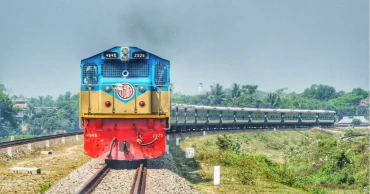
Bangladesh Railway, a popular mode of transport known for its low fares and comfort over long distances, remains mired in heavy financial losses, prompting questions about its operational efficiency.
Railway sources said around 350 trains, including intercity, local and freight services, operate every day across the country, carrying an average of 80 to 90 million passengers annually.
In the 2023–24 fiscal year, Bangladesh Railway recorded losses of over Tk 1,400 crore. Weak management, poor revenue collection, outdated freight operations, and slow modernisation efforts have been identified as the key reasons behind the losses.
Passenger transport remains the main focus of the railway’s operations, with most revenue generated from ticket sales.
Experts believe that limited investment in freight transport, which is considered commercially more profitable, has held back the organisation’s earnings.
At Kamalapur Railway Station in Dhaka, Masud, a businessman from Brahmanbaria, shared his experience. He finds train travel more comfortable than buses for long distances but noted difficulties in getting tickets and frequent delays in service.
Railway officials, requesting anonymity, said each ticket sold includes a subsidy of around 40 to 50 percent. Staff shortages, outdated engines and coaches and weak signaling systems also limit operational capacity.
Dhaka eyes $500m budgetary support, $250m for railways from Tokyo: Shafiqul Alam
Train fares have remained unchanged since 2016, although fuel prices have increased multiple times. Operational costs have grown significantly, driven by higher fuel expenses and increased administrative costs following the 2015 pay scale revision.
The number of trains between major routes such as Dhaka–Chattogram and Dhaka–Khulna via the Padma Bridge could be increased in response to passenger demand. Expanding services on these routes would lead to higher maintenance costs.
Countries like India, China, and those in Europe have boosted railway revenues through expanded freight services. Analysts say similar steps in Bangladesh could reduce operational losses and improve overall financial health.
Stakeholders are calling for long-term planning and efficient management to transform the railway into a sustainable and financially sound organisation while continuing to serve the public.
Mohammed Shahid Miah, president of the National Committee to Protect Shipping, Roads and Railways, said poor planning is a major reason the railway has yet to turn a profit.
He pointed out that popular routes such as Dhaka–Mymensingh and Dhaka–Jamalpur do not have enough trains, while some less-used routes are overserved. This imbalance leads to higher costs without corresponding revenue.
Ashis Kumar Dey, president of the Shipping and Communication Reporters Forum, said that insufficient cargo transport is another major factor contributing to financial losses. He identified operational weaknesses as a barrier to achieving revenue targets.
Ashis Kumar recommended adding more coaches to intercity trains departing from Dhaka on Thursdays and Fridays, and returning on Saturdays and Sundays, to increase passenger volume and income.
A senior railway official said retirement benefits are a major financial burden. These costs are paid directly from the operational budget, unlike other government departments where pensions are covered by a separate welfare fund.
Japan to provide $1.063 billion for budget support, railways
In the 2023–24 fiscal year, the railway spent about Tk 946 crore on retirement benefits, which increased to nearly Tk 1,000 crore in the 2024–25 fiscal year.
According to the same official, the railway earned Tk 1,925 crore in revenue during FY 2023–24. This figure dropped to around Tk 1,800 crore in FY 2024–25, mainly due to disruptions during the anti-discrimination movement in July and August last year, when train operations were limited for around six weeks.
Manpower shortage also affects the railway's performance.
Of the approved 47,000 posts, only about 23,000 are currently filled. Increasing manpower would improve service quality and allow expansion to more destinations, potentially attracting more passengers and increasing revenue.
Bangladesh Railway Director General Afzal Hossain said rising operational and maintenance costs, along with unchanged fares, make subsidies necessary. Freight transport remains a profitable area, though its volume has declined, he said.
British era-Railways Act to be updated
He added that as a service-oriented institution, the railway prioritises the public interest, ensuring convenient and comfortable journeys rather than focusing solely on profit.
1 year ago
Train services resume after 7hr of suspension in Joypurhat
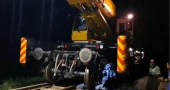
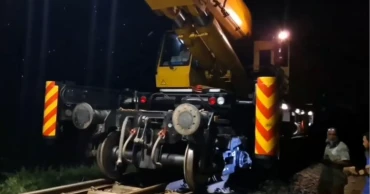
Train movement on Santahar-Parbatipur rail route resumed early Thursday after seven hours of suspension due to derailment of an oil-carrying wagon in Joypurhat on Wednesday night.
The Parbatipur–bound wagon veered off the tracks around 9:45pm in Puranapail area of Joypurhat Sadar upazila, said Habibur Rahman, Traffic Inspector of Bangladesh Railway’s Transport and Commercial Department.
Following the derailment, train operations on the route were suspended, affecting movement of several trains including the Dhaka-bound intercity Nilsagar Express, Khulna-bound Simanta Express and local trains headed to Parbatipur.
Prolonged rainfall causes severe waterlogging in Kurigram
Passengers of these trains were left stranded at various stations.
A rescue crane was brought in from Parbatipur to remove the wagon.
The services on the route resumed around 5am on Thursday.
1 year ago

Railway urges not to setup cattle markets near tracks without prior approval
The Bangladesh Railway authorities urged all concerned to refrain from setting up cattle markets on or near railway tracks, land without prior approval ahead of Eid-ul-Azha.
In a letter sent to the deputy commissioners of districts where such temporary markets are likely to be set up, the Railways ministry requested necessary steps to prevent unauthorised use of railway property, according to a press release issued on Friday.
The letter said cattle markets are often set up adjacent to railway tracks or on railway-owned land without adequate safety measures.
This poses serious risks to public safety and train operations, potentially disrupting railway schedules during the Eid rush — an outcome the authorities emphasised must be avoided.
The districts identified as having a higher likelihood of such temporary cattle markets include Moulvibazar, Bogura, Dinajpur, Gopalganj, Faridpur, Rajbari, Kushtia and Chuadanga.
The letter further stated that the government is committed to protecting public property and ensuring safety.
DNCC to collaborate with volunteers for conservation, greening of 33 canals in Dhaka
It reiterated the government's firm stance against unauthorised cattle markets on or near railway land.
It said if local circumstances necessitate setting up such markets near railway lines, several conditions must be strictly adhered to, said the release.
Prior approval from the railway authorities is mandatory, lessees managing the markets must erect strong fencing using bamboo or other suitable materials at a safe distance from the railway tracks and this fencing must be installed in a manner that ensures unhindered train movement and public safety.
Besides, local police and railway officials must coordinate under the supervision of the district administration to ensure safe train operations and the smooth movement of the public.
1 year ago
Bangladesh’s Trains: Lifeline for millions, yet stuck by challenges
Shahidur Rahman, hailing from Chattogram, frequently travels between Dhaka and his hometown as his family resides in the port city while he lives in the capital. His preferred mode of transport is always the train.
“Yeah, I like trains; my family does too. In Dhaka, I reside in Uttara and prefer using the Dhaka Metro whenever I travel to the downtown area,” Shahid shared, expressing his enthusiasm for train journeys.
However, Shahidur lamented a significant challenge: “I cannot purchase tickets from the counter, not even online. I have to rely on black marketeers who, ironically, are quite ‘humble’ and deliver the tickets to my home.”
Like Shahid, many Bangladeshis are fond of train travel. But the country’s railway system has yet to meet passenger expectations, despite considerable government investment.
While Bangladesh has spent thousands of crores of taka on railway projects, challenges persist, hampering the system’s ability to serve the growing demand effectively.
The current fiscal year’s Annual Development Programme (ADP) includes 34 projects costing Tk 1.46 lakh crore, alongside 32 pending projects awaiting approval with a combined cost of Tk 1.39 lakh crore.
Challenges Facing Bangladesh Railway
Many railway projects suffer from delays and inadequate planning, resulting in staff shortages and outdated equipment. The lack of a unified strategy undermines the effectiveness of new initiatives, official sources said.
They said Bangladesh Railway also struggles with a shortage of engines, coaches and manpower, limiting its ability to expand services and run new lines efficiently.
The revenue generated by Bangladesh Railway is inadequate to cover operational costs, creating a financial strain that inhibits growth and development. Reports of misappropriation of funds and insider trading further erode public trust and hinder progress, according to officials wishing to remain anonymous.
Expert Opinion
Despite being a popular mode of transport, Bangladesh’s railway sector struggles due to inefficiency and government monopoly, Dr M Shamsul Hoque, Civil Engineering professor at Buet, told UNB.
He attributes this to a lack of service-oriented mindset among government officials, who focus on infrastructure for personal gains rather than improving services. Unlike water, road, and air transport, where private entities play a key role, railways remain entirely government-controlled, leading to mismanagement and dependency on subsidies.
Read: Benapole, Sundarbans Express trains’ routes to remain unchanged
Dr Hoque stressed that globally, railways generate revenue through container transport, offsetting losses in passenger services. “In Bangladesh, this potential remains untapped due to the absence of accountability and professionalism.”
He criticised previous governments for self-serving practices, such as misusing development funds for foreign trips.
To improve, Dr Hoque recommends structural reforms, transparency, and partial privatisation of railway services. Introducing public hearings, as seen in the US, could ensure accountability by holding officials and politicians responsible for failures. “If you cannot deliver, step aside,” he said, stressing the need for a professional approach to unlock the sector’s potential.
Adviser’s Perspective
When asked about new initiatives, Railways Adviser Muhammad Fouzul Kabir Khan told UNB, “We cannot change what happened in the past, but we are working to address future challenges. Now there is a shortage of locomotives, and we are working on procuring them. Efforts are also being made to increase the number of coaches and enhance the capacity of workshops and repair facilities.”
The adviser mentioned plans to introduce commuter train services on several routes, including the Joydebpur-Dhaka route. Services on the Narsingdi-Dhaka and Narayanganj-Dhaka routes are expected to be launched on March 26.
Read more: Freight trains to be operational from Monday; commuter from Tuesday
He also noted that an additional pair of trains would be introduced on the Dhaka-Cox's Bazar route to meet high demand.
“While railway lines and stations were expanded earlier, the number of engines and coaches was not increased. We are trying to make the best possible use of our limited resources,” the adviser added.
Dhaka Metro Rail: A Game-Changer
The newly operational Dhaka Metro Rail is transforming urban commuting. With MRT Line 6 currently in operation and five lines planned, the metro system aims to mitigate Dhaka’s notorious traffic congestion and reduce air pollution.
Designed to serve over 60,000 passengers per hour, the metro offers speed, safety and convenience, quickly becoming a preferred choice for urban mobility.
Commuters’ Experience
Trains are an indispensable mode of transport for countless commuters across Bangladesh.
M Jahangir Alam, a journalist residing in Mirpur, Dhaka said, “Taking the train means I can spend more time in my professional work and family instead of being stuck in traffic.”
Similarly, Kaiser Ahmed, a Dhaka University student, shared, “The train is my gateway to education. It’s affordable and reliable, making my daily commute manageable.”
Both Jahangir and Kaiser said rail transport is not only cost-effective but also eco-friendly, consuming significantly less energy than road vehicles to transport equivalent volumes of passengers or freight.
Opportunities for Growth
Encouragingly, the government allocated Tk 18,072 crore for the Ministry of Railways for the fiscal year 2024–25.
Investments are directed towards modernising infrastructure, improving intercity services, and enhancing container movement.
Read more: Commuter trains to run on short routes from Aug 1: Railway DG
The inauguration of new routes via the Padma Bridge in December will significantly boost connectivity in the southwestern regions.
The 20-Year Railway Master Plan outlines 235 projects worth Tk 2,33,944 crore. This includes expanding the network by 2,877 kilometres, connecting 44 districts, and standardising gauge systems to streamline operations. Integration with road and inland water systems is also prioritised, creating a cohesive national transport framework.
Lessons from Global Leaders
Bangladesh has much to learn from global railway leaders.
Japan’s Shinkansen sets the gold standard for safety and efficiency, while India’s dedicated freight corridors highlight the benefits of specialised goods transport.
China’s Belt and Road Initiative demonstrates the potential of integrated rail networks for trade, and Europe’s success in shifting freight from roads to rail showcases the environmental and logistical advantages of rail transport.
Revitalising Bangladesh Railway requires a strategic approach focused on infrastructure upgrades, rationalising gauge systems, and integrating multimodal transport. Strengthening operational efficiency, enhancing employee productivity, and fostering greater transparency are essential to turning Bangladesh Railway into a world-class transport service, experts said.
With rising public demand and increased government focus, the railway is poised to play a transformative role in the nation’s development journey. Ensuring its modernisation and efficiency will not only enhance mobility but also secure its position as a cornerstone of national progress, according to the experts.
1 year ago

Rail ticket money lost: A probe body investigates
After a substantial amount of ticket sales money went missing from the secure cash box of a running train on the Noakhali-Laksam route, a 4-member probe body was formed by the East Zone management of Bangladesh Railways to investigate the incident.
5 years ago

Train fares not increasing: Railways Minister
Railways Minister Md Nurul Islam on Monday said Bangladesh Railways has not taken any decision to increase train fares.
6 years ago
.jpg)
Indian envoy meets FM
Indian High Commissioner to Bangladesh Riva Ganguly Das has met Foreign Minister Dr AK Abdul Momen at his office and discussed issues of mutual interest.
6 years ago
.jpg)
11 pairs of passenger trains resume operation
Eleven pairs of intercity trains resumed operations from Wednesday, Bangladesh Railway said.
6 years ago
Steps to be taken to stop railway privatisation: Minister
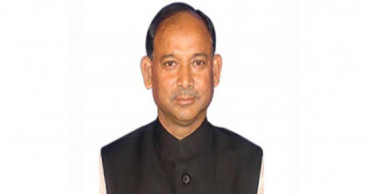
Railways Minister Md Nurul Islam Sujan on Saturday said steps will be taken to stop privatisation of railway to ensure good governance.
6 years ago