TIB failed to recognise
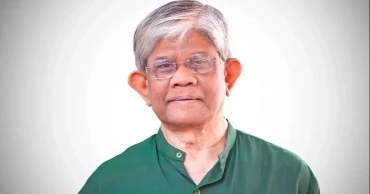
TIB failed to recognise work on reforms: Finance Adviser
Finance Adviser Dr Salehuddin Ahmed on Tuesday said Transparency International Bangladesh (TIB) has failed in many cases to properly recognise the government’s ongoing reform initiatives, arguing that not all reforms are immediately visible.
He made the remarks while speaking to reporters at the Secretariat after a meeting of the Advisers’ Council Committee on Government Procurement.
Responding to a question about a recent TIB observation that the interim government’s reform and development efforts were less substantive than they appeared, Dr Salehuddin said the organisation’s assessment overlooked several fundamental changes.
Read More: Banking sector reform can’t be done overnight: Salehuddin
“TIB cannot see everything. They do not have divine vision or perfect sight. Even if they want to see, they cannot always see many things,” he said.
He stressed that reforms should not be judged only by legislation, pointing to procedural and administrative simplifications carried out by the government.
“Do not just look for reform laws. We have simplified many processes. For example, earlier one had to seek permission under the outward wage scheme. We are not saying it is automatic now, but the process has been eased. Why do people not see what we have done?” he asked.
When journalists noted that Dr Salehuddin had previously praised TIB and that organisations often face criticism once governments come to power, he rejected the suggestion that he was attacking the watchdog.
“No, no — I am not criticising or defaming TIB. I still acknowledge their role. But I am saying: look at the fundamental issues. If someone does not want to see, then many things can be ignored,” he said.
He added that he had never engaged in baseless criticism while outside government and had always focused on core policy issues.
Referring to the fact that TIB Executive Director Iftekharuzzaman had been a member of the government’s reform commission, the finance adviser said public expectations regarding reforms were understandably high.
“People definitely have expectations. We also thought we would carry reforms forward smoothly. But reform requires cooperation and a proper process,” he said.
Drawing on his experience within the administration, Dr Salehuddin said systemic weaknesses and procedural flaws made reform implementation extremely difficult.
Read More: Pay Commission recommendations need review before implementation: Dr Salehuddin
“I have seen from inside how flawed the processes are — more than you can imagine. Still, we have pushed many things through the Ministry of Finance. The finance secretary and others worked quickly. I provided immediate solutions where possible,” he said, adding that several advisers were frustrated due to institutional constraints.
He said his background in the civil service had helped him navigate the system more effectively than many others.
“I was trained in the civil service. I know how things work. Not everyone has that experience. Without cooperation, reform becomes very difficult,” he said.
Frankly acknowledging the challenges, Dr Salehuddin said working within Bangladesh’s administrative framework was particularly demanding.
“This is a very difficult place to work. The processes are extremely complicated, with too many interventions. Untangling them is like solving a knot,” he said.
When asked whether bureaucracy was the main obstacle, he said it was certainly a major factor, but not the only one.
“There is definitely a bureaucratic element. But the system itself and the laws that were drafted earlier were not done properly,” he said.
Citing the banking sector as an example, he said governance standards had weakened over time.
“During my time, two or three directors from the same family were allowed in a bank. Later, that number suddenly increased to six or more. This is moving backwards instead of forwards,” he added.
Read More: Long-term energy strategy prepared to ensure fuel security: Salehuddin
7 months ago