Bangladesh Educaiton
Bangladesh plans skills-based education for thousands of out-of-school children
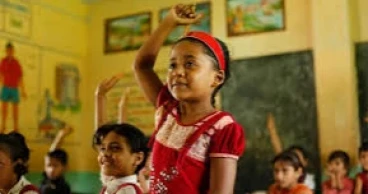
For thousands of children left behind by poverty, migration, disability or family hardship, the classroom has long been out of reach in Bangladesh. Now, a new government move seeks to reopen that door—this time with skills at its core.
The Ministry of Primary and Mass Education has taken a fresh move to bring out-of-school children with learning through a skills-oriented alternative education programme, aiming not only to restore their right to education but also to prepare them as productive members of the future workforce.
A Development Project Proposal (DPP) titled “Alternative Learning Opportunities for Out-of-School Children” has been sent to the Planning Commission for approval.
Govt rolls out e-learning in 12 CHT schools
If cleared, the project will be implemented by the Bureau of Non-Formal Education (BNFE) from January 2026 to December 2028 in selected upazilas of all 64 districts.
With an estimated cost of Tk 158.73 crore, the project will be largely government-funded, with Tk 147.03 crore coming from the national exchequer and Tk 11.70 crore provided by UNICEF as project assistance.
Learning beyond the classroom
The initiative is designed to offer quality, non-formal primary education to children who have either dropped out of school or never enrolled at all.
But unlike traditional catch-up programmes, this one places strong emphasis on practical, livelihood-oriented skills alongside basic literacy and numeracy.
Officials involved in the project say the goal is twofold: to help children re-enter mainstream education and to gradually equip them with competencies suited to the demands of a changing, skills-driven economy.
Under the programme, children will receive flexible, non-formal primary education combined with basic skills training.
Life under threat: Feni schools continue classes in unsafe buildings
Key activities include mapping surveys to identify target children, delivery of education and skills modules, monitoring and evaluation, and the provision of learning and training materials.
Progress—and persistent gaps
Bangladesh has made significant strides in expanding access to primary education over the past decades.
The country achieved the Millennium Development Goal of universal primary enrolment, reduced dropout rates and steadily improved completion levels.
Free and compulsory primary education remains a constitutional commitment, and literacy rates have risen accordingly.
According to the Planning Commission, about 22.10 percent of people aged 15 and above are still illiterate.
Data from the Bangladesh Bureau of Statistics’ Labour Force Survey 2022 shows that 28.7 percent of working individuals have no formal education, while another 24.5 percent completed only some or all of primary schooling.
Only around one-third reached the secondary level.
These figures point to a persistent deficit in human resource development particularly among those who missed out on education early in life.
A second chance with dignity
Policymakers see the proposed project as a way to prevent children from falling permanently behind.
By offering flexible learning pathways and linking education with practical skills, the programme aims to make learning relevant, dignified and economically meaningful.
A senior Planning Commission official said the initiative could play a critical role in reintegrating excluded children into the education system.
“Once implemented, the project will provide skill-based, quality non-formal primary education to out-of-school children, helping them return to mainstream education and preparing them for the modern world,” the official said.
Education experts said investment in out-of-school children is as much a humanitarian obligation as it is a development priority.
Without such support, they warn, vulnerable children remain at high risk of child labour, chronic poverty and social marginalisation.
By nurturing their potential early through learning that blends education with skills, the initiative aims to turn a lost opportunity into a second chance, and to help build a more skilled, inclusive workforce for Bangladesh’s future.
7 months ago