defence talk
Leaders urge stronger defence as Munich security talks continue
World leaders on Saturday intensified calls for a stronger and more self-reliant Europe as the second day of the Munich Security Conference got underway, against the backdrop of deepening geopolitical tensions and the ongoing war in Ukraine.
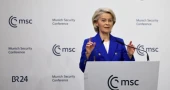
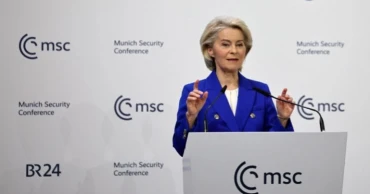
Addressing the conference, European Commission President Ursula von der Leyen said the European Union must fully activate its mutual defence commitments under its founding treaty, stressing that collective defence was not optional but a binding obligation. She said Europe had a duty to stand together in the face of aggression, calling it a defining principle of the bloc.
British Prime Minister Keir Starmer warned that Russia’s aggression extended far beyond Ukraine, threatening Europe’s security, social cohesion and economic stability through disinformation, cyberattacks and sabotage. He said Moscow was continuing to rearm even as the war dragged on, underscoring the need for Europe to strengthen its military capabilities.
Starmer said Europe must build credible hard power to deter aggression and, if necessary, be ready to fight to protect its people, values and way of life. He argued that the path ahead was clear and required greater investment, coordination and resolve in defence.
US Secretary of State Marco Rubio, speaking earlier, urged European allies to adapt to what he described as a new direction in the transatlantic relationship under the administration of US President Donald Trump. While expressing strong cultural and historical ties with Europe, Rubio said the United States wanted allies capable of defending themselves and called for a renewal of the partnership to meet current global realities.
Rubio was critical of the effectiveness of global institutions, saying the United Nations had played virtually no role in resolving major conflicts, including the war in Gaza. He said reforms were needed to ensure international bodies could respond more effectively to modern crises.
Dutch Foreign Minister David van Weel said Europe had been slow to recognise that the post-Cold War world order was already under strain, noting that the inability of the UN Security Council to resolve conflicts had exposed the system’s weaknesses. He said recent US statements had jolted Europe into confronting a harsher global reality and the need to take greater responsibility for its own defence.
On the opening day of the conference, French President Emmanuel Macron called for a strong and capable Europe, while German Chancellor Friedrich Merz acknowledged growing strains between Europe and the United States but said the alliance must adapt rather than fracture.
The 62nd edition of the conference, being held at the Bayerischer Hof in Munich, has brought together more than 60 heads of state and government, dozens of international organisation leaders and delegates from over 115 countries, with security in Europe, Ukraine and the future of the transatlantic alliance dominating discussions.
With inputs from ALJAZEERA
5 months ago