Iran School Strike
Iranian families struggle with school closures despite ceasefire
Families across Iran are facing ongoing difficulties as schools remain closed, even after airstrikes have stopped under a fragile ceasefire.
In Tehran, finance manager Mahnaz Ataei now takes her 7-year-old child to work and supervises his online classes while managing her job. Schools have been shut nationwide since the war began on Feb. 28, following attacks involving the United States and Israel, and authorities have yet to announce when in-person classes will resume.
Although the immediate threat of airstrikes has eased, daily life remains disrupted. Many parents say balancing work and children’s online education has become a major challenge, similar to the difficulties seen during the COVID-19 pandemic.
Ataei said her work suffers as she tries to focus on both her job and her child’s lessons, adding that she worries about whether he is learning properly.
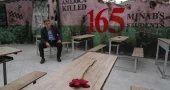
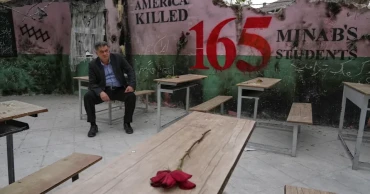
The conflict has killed at least 3,000 people in Iran, including over 165 in a strike on an elementary school. The ceasefire is expected to expire soon, with tensions still high over key issues such as Iran’s enriched uranium. Concerns also remain about the impact of a possible US naval blockade on the country’s already struggling economy.
Many families who fled Tehran during the attacks are now returning, but the situation remains uncertain. Roya Amiri, a homemaker, recently came back to the capital after staying with relatives in a crowded house with about 15 people.
She said the displacement disrupted routines and created tension, especially among children. Her younger son, who has a respiratory illness, also faced difficulties getting medicine.
Schools initially closed after the attacks and briefly resumed online classes before the Nowruz holiday. Virtual learning restarted on April 4.
Despite fears of renewed violence, Amiri said she preferred returning home. If conflict resumes, she plans to stay in Tehran.
Another parent, Reza Jafari, said he moved his family to stay with relatives to escape the stress of explosions. While children adapted quickly to the new environment, adults struggled with lack of privacy, financial pressure and disrupted sleep.
Meanwhile, working parents like architect Padideh Teymourian and her husband Amir Ramezani have had to reorganize their daily lives around their 6-year-old daughter’s online preschool.
Teymourian said her office does not allow remote work, forcing her to take daily leave to help her daughter. Her husband adjusted his work schedule to stay home during the day, often returning late at night.
The couple said the situation has created both financial and emotional strain, with little time left for family life.
“We are just trying to get through each day until things return to normal,” Ramezani said.
5 months ago
At least 153 killed after strike hits school in southern Iran
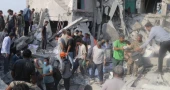
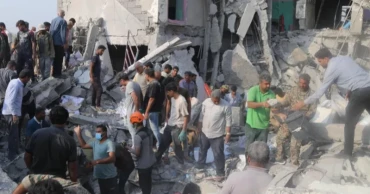
At least 153 people, including children, were killed after a reported missile strike hit a girls’ school in southern Iran, Iranian authorities said, blaming the United States and Israel for the attack.
According to Iranian officials, the strike hit a school in the town of Minab, located near a base of the Islamic Revolutionary Guard Corps. The Islamic Revolutionary Guard Corps has been targeted in previous attacks.
The US military’s United States Central Command said it was reviewing reports of the incident, while Israel’s military said it was not aware of any Israeli operations in the area.
Iran’s Red Crescent said at least 201 people have been killed and 747 injured in air strikes across Iran since Saturday. Red Cross and Red Crescent officials in Geneva said emergency response teams were dispatched to the school following the incident.
An official said the school in Hormozgan province was struck by three missiles and is located about 600 metres from the IRGC base.
The BBC has verified videos from the scene showing smoke rising from a damaged building as crowds gathered and people screamed in panic. However, the death toll could not be independently confirmed, as international media face severe restrictions on access to Iran.
Iranian President Masoud Pezeshkian condemned the incident, calling it a “barbaric act” and accusing the attackers of adding “another black page” to their record.
In a statement carried by US media, Centcom spokesman Tim Hawkins said the protection of civilians was a top priority and that all possible precautions were being taken to minimise unintended harm.
Iranian social media users reacted with anger, with some blaming foreign powers for the strike, while others held the Iranian authorities responsible, citing the lack of air raid warnings, shelters and internet access.
The attack came amid sustained US and Israeli air strikes on multiple Iranian cities, which continued into Sunday following the killing of Iran’s Supreme Leader Ali Khamenei and several senior commanders, sharply escalating tensions across the Middle East.
With inputs from BBC
6 months ago