US-Iran talks
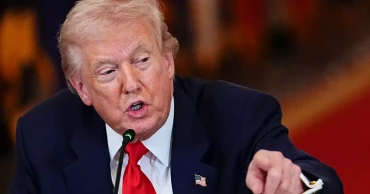
Trump announces Iran talks on Monday
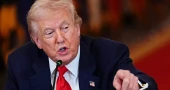
U.S. President Donald Trump said Sunday that negotiations with Iran will begin Monday afternoon, noting that Saudi Arabia, the United Arab Emirates (UAE) and Qatar had asked the United States to call off planned strikes because "they think there's a deal."
"There's a deal on (the Strait of) Hormuz, and then there will be a deal on the nuclear, or you might call it the denuclearization of Iran," Trump told reporters on Air Force One en route to Joint Base Andrews.
Claiming that Iran had also asked the United States to pull back the planned strikes, Trump said that "now what we're doing is we're talking to them in the form of a negotiation."
Saudi Crown Prince and Prime Minister Mohammed bin Salman Al Saud spoke on the phone with Trump on Saturday and "expressed concern and asked for clarity" about the proposed plan of action against Iran, a U.S. official told news outlet Axios.
Pakistan, Qatar, the UAE, Türkiye and other countries have also called on the United States and Iran to de-escalate tensions and avoid further conflict.
1 month ago
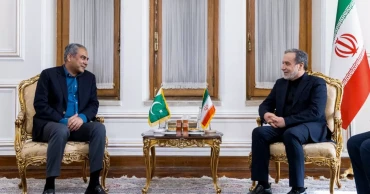
US-Iran talks set for today in Switzerland as Tehran claims Hormuz closure amid Lebanon conflict
US and Iranian negotiators are set to meet in Switzerland on Sunday discuss key details of an interim agreement aimed at ending the ongoing conflict, as tensions remain high over fighting in Lebanon and Iran's claim that it has again closed the Strait of Hormuz.
Iran said the strategic waterway was shut in response to continued Israeli military operations in Lebanon, warning that progress in negotiations would be difficult without a halt to the violence. However, the United States rejected the claim, insisting that maritime traffic through the strait remains uninterrupted.
US President Donald Trump warned that Washington could impose tolls on vessels using the Strait of Hormuz if a final agreement with Iran is not reached within 60 days. Under the interim deal, ships are allowed toll-free passage during the negotiation period.
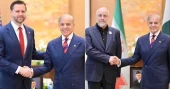
The talks, mediated by Pakistan and Qatar, are expected to focus on Iran’s nuclear programme, regional security issues and steps toward a broader ceasefire. US Vice President JD Vance arrived in Switzerland alongside senior American negotiators, while Iran’s delegation is led by Parliament Speaker Mohammad Bagher Qalibaf and includes Foreign Minister Abbas Araghchi.
Iranian Foreign Ministry spokesperson Esmail Baghaei said negotiations on a permanent agreement would depend on all parties fulfilling their commitments under the interim accord, warning that failure to do so could jeopardise the entire understanding.
Meanwhile, the Strait of Hormuz remains a key point of contention. Iran’s military command claimed the waterway had been closed because of what it described as a US failure to uphold commitments related to ending the conflict. The US military disputed the assertion, saying commercial shipping continues normally and that dozens of vessels carrying more than 17 million barrels of oil passed through the strait on Saturday.
The interim agreement, signed earlier this week by Trump and Iranian President Masoud Pezeshkian, provides a 60-day window for negotiators to reach a comprehensive nuclear deal and includes provisions for lifting restrictions on Iran’s oil exports and unfreezing billions of dollars in Iranian assets.
In Lebanon, Israeli airstrikes on Saturday reportedly killed at least 16 people, including two children, according to Lebanese media and officials. Hezbollah said it would observe a ceasefire if Israel does the same, while an Israeli military official indicated that forces had received updated instructions to cease offensive operations and remain in a defensive posture.
The latest escalation has pushed the death toll in the Israel-Hezbollah conflict beyond 4,000, according to Lebanon’s health ministry. Diplomatic efforts to secure a broader ceasefire are expected to continue in Washington next week through US-backed talks involving Lebanon and Israel.
2 months ago
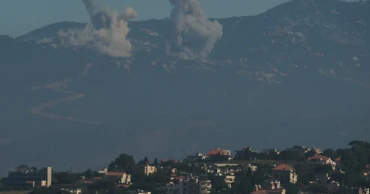
US-Iran talks postponed as Israel-Hezbollah fighting intensifies in Lebanon
Planned talks between the United States and Iran were postponed on Friday after renewed fighting between Israeli forces and Hezbollah in southern Lebanon, raising fresh concerns about the durability of a preliminary agreement aimed at ending the recent Iran conflict.
Iranian officials cancelled a scheduled trip to Switzerland for negotiations with US representatives, insisting that hostilities in Lebanon must cease before discussions can proceed, according to regional officials and a source familiar with the matter. US Vice President JD Vance also delayed his planned visit.
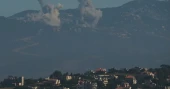
The postponement came as Israeli airstrikes targeted multiple locations in southern and eastern Lebanon overnight, while Hezbollah reported fierce clashes on the ground. Lebanon’s Health Ministry said at least 21 people were killed, while Israel reported the deaths of four soldiers.
The confrontation between Israel and the Iran-backed Hezbollah movement remains one of the most sensitive aspects of the broader Iran-US agreement. Although neither Israel nor Hezbollah is a party to the deal, the accord is intended to halt regional hostilities, including fighting between the two sides.
The interim agreement has already helped restore stability in Iran and the Gulf region and facilitated the reopening of the Strait of Hormuz, a key global energy route that had been severely disrupted by Iranian attacks and threats.
Future negotiations are expected to focus on securing a permanent settlement to the conflict and addressing concerns over Iran’s nuclear programme, which was at the centre of the war involving Israel, the United States and Iran that began on February 28.
According to the Israeli military, four soldiers, including a lieutenant colonel, were killed in an attack on a tank near the southern Lebanese city of Nabatiyeh. Five other soldiers were wounded in a separate drone attack.
In response, Israel launched airstrikes against what it described as Hezbollah infrastructure in Nabatiyeh and other areas, accusing the group of violating the ceasefire. Additional strikes were reported in Lebanon’s eastern Bekaa Valley, including the village of Douris.
Israeli Prime Minister Benjamin Netanyahu vowed a strong response, saying Hezbollah would pay a heavy price for attacks on Israeli soldiers and territory.
Hezbollah confirmed targeting Israeli tanks, saying its actions were retaliation for Israeli ceasefire violations. The group said Israeli troops had attempted to advance toward the strategically important Ali al-Taher hill overlooking Nabatiyeh.
The renewed violence has displaced residents in parts of southern Lebanon, with many fleeing their villages amid fears of further escalation.
Disagreements over Israel’s continued military presence in southern Lebanon also remain unresolved. Iran has repeatedly demanded a full Israeli withdrawal, while Netanyahu has maintained that Israeli troops will remain in a security zone for as long as security conditions require.
The latest developments have added strain to relations between Washington and Jerusalem, with reports indicating growing criticism from US President Donald Trump toward Netanyahu’s handling of the situation.
Sources familiar with the negotiations said Iran refused to begin the Switzerland talks while Israeli military operations in Lebanon continued. The White House had earlier attributed Vance’s postponed trip to logistical reasons.
Regional officials said mediators are working to reschedule the talks, although uncertainty remains over when discussions can resume.
Meanwhile, shipping activity through the Strait of Hormuz has improved significantly, with the United States reporting that more than 12.5 million barrels of oil passed through the waterway on Wednesday. However, analysts say it could take weeks or months before energy exports fully return to normal levels.
Iran’s newly established authority overseeing the strait announced Friday that vessels would be required to register with it, although security, safety and environmental service fees would be waived during the 60-day period outlined in the interim agreement.
Negotiators still face major challenges in reaching a comprehensive nuclear accord. Iran insists its nuclear programme is for peaceful purposes, although the International Atomic Energy Agency says Tehran possesses highly enriched uranium that could potentially be used to produce nuclear weapons.
Under the interim agreement, negotiators have 60 days—subject to extension—to reach a final nuclear deal. The framework includes incentives for Iran, such as the eventual lifting of international sanctions and a proposed $300 billion fund for post-war reconstruction.
The United States has already eased some restrictions by allowing Iran to resume oil exports and by lifting its blockade on Iranian ports. The agreement also envisages the release of frozen Iranian assets, although the timing remains uncertain.
2 months ago
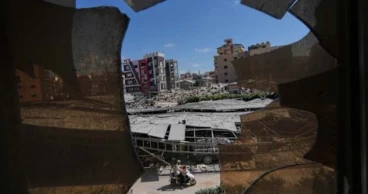
Israeli forces launch fresh strikes in southern Lebanon as US-Iran talks delayed
Israel's military said on Friday that its forces carried out overnight strikes on targets across southern Lebanon, while Hezbollah reported heavy fighting in the area.
The latest clashes came as planned talks between the United States and Iran in Switzerland, aimed at finding a lasting solution to the Iran conflict, were postponed.
Israel's presence in southern Lebanon and its continued military operations against the Iran-backed Shiite group Hezbollah have been among the key issues under discussion.
Israeli officials have argued that the military must maintain control of the area and continue operations against Hezbollah, accusing the group of launching attacks into northern Israel.
The delay in the talks followed a report by pan-Arab satellite channel Al-Mayadeen, which is politically aligned with Hezbollah, saying that Iran had postponed sending its delegation to Switzerland because of Israel's ongoing military campaign in Lebanon.
3 months ago
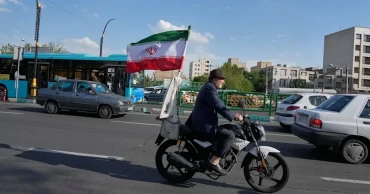
Uncertainty surrounds possible US-Iran talks as ceasefire extension leaves tensions high
Uncertainty continues over the next steps for possible US-Iran talks after US President Donald Trump said Washington had extended the ceasefire in the conflict at Pakistan’s request, while waiting for what he called a “unified proposal” from Tehran.
Iran has not yet responded to Trump’s announcement. Both sides have also warned they could resume fighting if no agreement is reached.
In a social media post on Tuesday, Trump said Iran does not want the Strait of Hormuz closed because it relies on the route to export crude oil. He also earlier indicated that the US military would maintain pressure on Iranian ports.
The developments come as tensions remain high across the wider region. Israel and the Iran-backed Hezbollah group in Lebanon exchanged fire on Tuesday, despite a recent 10-day ceasefire. Talks in Washington are expected later this week.
The conflict has already caused heavy casualties, with thousands killed in Iran and Lebanon and deaths also reported in Israel and Gulf Arab states, along with losses among soldiers and US personnel in the region.
In a separate development, Iran’s paramilitary Revolutionary Guard opened fire on a container ship in the Strait of Hormuz on Wednesday, damaging the vessel, according to the British military’s United Kingdom Maritime Trade Operations (UKMTO).
UKMTO said the incident occurred around 7:55am when a Guard gunboat fired without first contacting the ship. No injuries or environmental damage were reported.
Iranian media outlets linked to the Revolutionary Guard confirmed the incident, with one describing the move as enforcement of Iran’s control over the Strait of Hormuz.
The narrow waterway, through which a large share of global oil shipments passes, is widely regarded as an international shipping route despite lying between Iranian and Omani waters.
The incident follows recent US actions in the region, including the seizure of an Iranian-linked ship and the boarding of an oil tanker associated with Iran’s oil trade in the Indian Ocean, further heightening tensions.
4 months ago

Global markets rise, oil steady as uncertainty lingers over US-Iran talks
Global stock markets moved higher on Tuesday, with Wall Street also set to open stronger, while oil prices remained mostly unchanged amid ongoing uncertainty over talks between the United States and Iran.
Futures for the S&P 500 rose 0.4% before trading began, while Dow Jones futures gained 0.6%. Nasdaq futures also edged up 0.4%.
In the oil market, US benchmark crude slipped 14 cents to $87.28 per barrel. Brent crude, the international standard, fell 47 cents to $95.01 per barrel.
The conflict involving Iran has disrupted oil shipments through the Strait of Hormuz, a key route that carries about one-fifth of the world’s oil supply daily, pushing energy prices higher in recent weeks.
US President Donald Trump has called on Iran to allow safe passage through the strait and has imposed a blockade on Iranian ports. However, Iran has taken a firm stance, refusing to negotiate under pressure.
Iran’s chief negotiator and parliamentary speaker, Mohammed Bagher Qalibaf, said in a social media post that Tehran would not engage in talks “under the shadow of threats.”
Despite this, Trump said he still plans to send a delegation led by Vice President JD Vance to Islamabad for discussions. However, Iran has indicated it will not participate unless the US softens its position. Trump also signalled that extending the current ceasefire, which expires Wednesday, is “highly unlikely.”
Analysts say the situation remains fragile, with both sides facing pressure to reach an agreement before the truce ends.
Even so, oil prices remain below earlier highs, when Brent crude had surged to $119 per barrel at the peak of tensions. The S&P 500 is also still trading above its pre-conflict level.
In corporate news, Apple shares were little changed after the company announced that CEO Tim Cook will step down on Sept. 1, handing over the role to John Ternus. Cook will continue as executive chairman after leading the company for 15 years.
Shares of UnitedHealth Group jumped more than 7% in premarket trading after the company reported better-than-expected first-quarter earnings and raised its full-year profit forecast.
Investors are also watching developments in Washington, where Kevin Warsh, Trump’s nominee for Federal Reserve chair, is set to appear before the Senate Banking Committee. He is expected to face tough questions, particularly from Democrats over his financial disclosures.
In Europe, Germany’s DAX rose 0.6%, while France’s CAC 40 added 0.2%. Britain’s FTSE 100 remained unchanged.
Asian markets also closed higher. Japan’s Nikkei 225 climbed 0.9%, supported by gains in technology stocks. South Korea’s Kospi surged 2.7%, while Taiwan’s Taiex rose 1.8%.
Hong Kong’s Hang Seng index gained 0.5% and Shanghai’s Composite index edged up 0.1%. However, Australia’s S&P/ASX 200 slipped slightly by less than 0.1%.
4 months ago
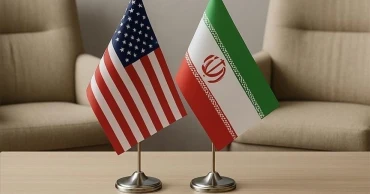
Pakistan, Iran yet to confirm second round of US-Iran talks
Six hours have passed since U.S. President Donald Trump said negotiators would head to Pakistan on Monday for more talks with Iran, but neither Iran nor host Pakistan have confirmed it.
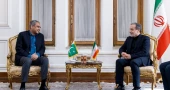
Pakistan has kept up the diplomacy today, with its prime minister holding a 45-minute call with Iran’s president and Pakistan’s foreign minister speaking with his Iranian counterpart.
But while authorities have begun tightening security in Islamabad, the only player that has openly committed to another round of talks is the Trump administration.
4 months ago
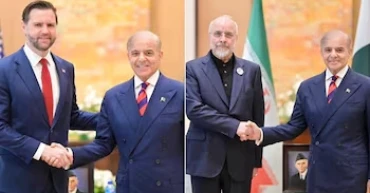
Diplomats push for fresh US-Iran talks as blockade enters first full day
Diplomats worked through back channels on Tuesday to arrange a new round of talks between the United States and Iran, as Washington enforced its blockade of Iranian ports and Tehran warned of possible retaliation across the region.
US President Donald Trump said a second round of talks could take place “over the next two days,” suggesting Islamabad as a possible venue. UN Secretary-General António Guterres also said it is “highly probable” negotiations will resume.
The first round of talks held in Pakistan last weekend failed to produce a deal, with Iran’s nuclear programme remaining a key sticking point. A US official said discussions on fresh talks are ongoing but no schedule has been finalised.
Pakistan’s Finance Minister Muhammad Aurangzeb said efforts to mediate between the two sides are continuing, adding that “our leadership is not giving up.”
The blockade, now in its first full day, is aimed at pressuring Iran, which has continued exporting oil—largely to Asia—since the conflict began on February 28.
A US official said forces enforcing the blockade are operating in the Gulf of Oman, monitoring vessels leaving Iranian ports before intercepting them after they pass through the Strait of Hormuz.
US Central Command said no ships passed through the blockade in the first 24 hours, while six vessels complied with orders to turn back.
The standoff over the vital waterway—through which about one-fifth of global oil flows in normal times—has raised fears of renewed hostilities and further economic fallout. Oil prices have surged as maritime traffic remains severely disrupted.
Meanwhile, separate talks between Israeli and Lebanese envoys in Washington were described as “productive,” with both sides agreeing to pursue direct negotiations, though major differences remain over Hezbollah and the ongoing conflict in southern Lebanon.
The war, now in its seventh week, has killed thousands across the region and displaced more than a million people, particularly in Lebanon, intensifying international calls for a broader ceasefire.
5 months ago
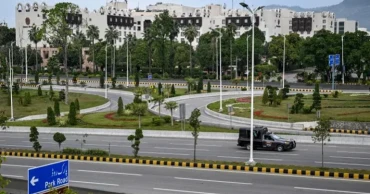
Inside Islamabad’s Serena Hotel hosting US-Iran talks
The five-star Serena Hotel in Islamabad — known for its luxury and tight security — has been selected as the venue for high-stakes talks between the United States and Iran, despite concerns given past attacks in the capital.
At first glance, the choice may seem unusual, particularly as one of Islamabad’s deadliest militant attacks occurred in 2008 at the nearby Marriott Hotel.
However, officials say Serena’s reputation for robust security and strategic location makes it a suitable option, reports Al Jazeera.
Trump says US ‘clearing out’ Strait of Hormuz
Behind its scenic gardens and distinctive Moorish-style architecture lies a carefully managed security system.
Experts and former officials note that the hotel has long experience in hosting high-profile guests under strict protection.
Former Islamabad police chief Tahir Alam Khan said many of the hotel’s security personnel are retired professionals, ensuring a high level of expertise. He added that the design — with entry and exit points set away from the main compound — strengthens safety.
Its proximity to key government sites, including the prime minister’s residence and parliament, also adds to its appeal.
According to a government source, the hotel’s expansive 6-hectare complex, featuring over 400 rooms, conference facilities and office spaces, can comfortably accommodate large delegations such as those from Washington and Tehran, each comprising over 150 members.
Another former police chief, Kaleem Imam, highlighted the hotel’s layered security screening and strong coordination with state agencies as key factors behind its selection.
5 months ago
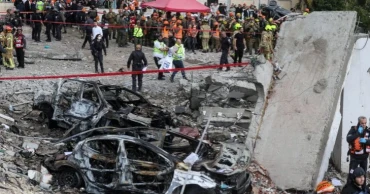
Tehran refuses negotiations; Israeli air strikes kill 31 in Lebanon
Iran has dismissed reports of renewed nuclear negotiations with the United States as Israeli strikes continue across Lebanon and Iran.
Ali Larijani, secretary of Iran’s National Security Council, denied claims in US media that Tehran had made a fresh push for talks.
He said Iran will not negotiate with the US at present as the country is defending itself and that its armed forces did not initiate the conflict.
Trump, who a day earlier had encouraged Iranians to “take over” their government, signaled Sunday that he was open to dialogue with Iran’s new leadership, reports AP.
A spokesperson for Iran’s foreign ministry told Al Jazeera that the country attempted diplomatic engagement twice: during the interrupted 2025 negotiations and again now, while facing renewed US-Israeli attacks.
Iranian retaliatory strikes have hit Tel Aviv, Jerusalem, and Beit Shemesh, killing at least nine in central Israel.
Israel announces ‘offensive campaign against Hezbollah’
The Israeli army’s chief of staff, Eyal Zamir, said in a meeting following Hezbollah rocket fire on Israel, “We have launched an offensive campaign against Hezbollah.”
Lebanese authorities reported that Israeli air attacks on the country have so far killed at least 31 people and wounded 149 others.
According to Lebanon’s National News Agency, Israeli air attacks hit the southern suburbs of Beirut and southern Lebanon, leaving 20 dead and 91 wounded in the capital’s suburbs and 11 dead and 58 wounded in the south.
Israel launched the strikes after Hezbollah fired rockets at northern Israel, widening the conflict triggered by joint US-Israel attacks on Iran. Forced displacement threats from Israel have caused hundreds of thousands of people to flee their homes in southern Lebanon.
Trump said US attacks on Iran will continue until all Washington’s objectives are achieved and vowed to avenge the deaths of three American soldiers.
Iran has continued strikes on US assets across the Gulf, killing one person in Bahrain, with Iraq and Kuwait also reporting Iranian raids following the killing of Supreme Leader Ayatollah Ali Khamenei and up to 40 top officials.
US embassy in Kuwait warns of ongoing missile and drone threats
The US embassy in Kuwait said there is a “continuing threat of missile and UAV attacks” over the country. “The US Embassy in Kuwait urges US citizens in Kuwait to shelter in place, review security plans in the event of an attack, and to stay alert in case of additional future attacks,” it said in a statement, adding that embassy personnel are sheltering in place.
Two killed in US-Israeli attacks on Iran’s Sanandaj
The Iranian Fars news agency reported that at least two people were killed in an “enemy attack” on the central city of Sanandaj. It said the city was targeted by enemy missiles, destroying several residential buildings near the police station. The Tasnim news agency said US and Israeli forces dropped six missiles on different parts of the city, including densely populated neighbourhoods. Footage verified by Al Jazeera showed fire and huge clouds of smoke in the sky during one attack.
Trump has turned ‘America First’ to ‘Israel First’, Larijani says
Larijani said in a post on X that Trump has plunged the Middle East into chaos with his “delusional fantasies and now fears more American casualties.” He added, “He turned his self-made ‘America First’ slogan into ‘Israel First’ and sacrificed American soldiers for Israel’s power-hungry ambitions.” He said it is American soldiers and their families who will pay the cost, adding that Iran will continue to defend itself.
Oil prices soar, stock markets fall amid regional conflict
Crude oil prices rose sharply while stocks fell as investors weighed the fallout from US-Israeli attacks on Iran. Brent crude rose as much as 13 percent in Asia on Monday morning before stabilising, with the international benchmark up by about 5 percent at $76.48 per barrel as of midday Tokyo time. Asian stock markets opened lower, with Hong Kong’s Hang Seng Index and Japan’s Nikkei 225 down about 2 percent and 1.5 percent, respectively. In the US, stock futures fell significantly outside regular market hours, with futures tracking the S&P 500 and Nasdaq Composite both down about 0.7 percent, signalling a volatile day ahead on Wall Street.
6 months ago