iran new supreme leader
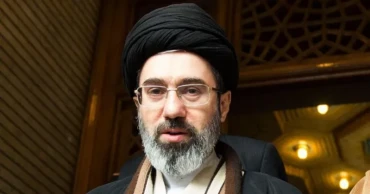
Iran’s new supreme leader faces toughest test amid war
Mojtaba Khamenei has assumed power as Iran’s supreme leader at a time when the country faces one of its most serious crises in decades, following the assassination of his father Ali Khamenei during the initial phase of the ongoing war involving the United States and Israel.
Mojtaba Khamenei, 56, becomes the third supreme leader since the Iranian Revolution. His appointment by the Assembly of Experts comes as the Islamic Republic confronts mounting military pressure and internal divisions.
Supporters of the clerical establishment quickly took to the streets to celebrate the decision, chanting religious slogans and pledging loyalty to the new leader. Security forces also vowed to defend the leadership and the political system.
Iranian state television broadcast footage of missiles launched during the conflict bearing messages dedicated to Mojtaba Khamenei, symbolising the military’s support for the new commander-in-chief.
However, not all reactions inside the country have been supportive. Some Iranians who had previously joined protests against the late leader voiced opposition, with reports of anti-government chants directed at Mojtaba Khamenei in parts of Tehran.
Analysts say Mojtaba Khamenei is widely seen as a continuation of his father’s hardline approach to governance. The cleric spent decades working closely with his father and is believed to have gained deep insight into the workings of Iran’s security and political institutions.
He is also considered closely aligned with the powerful Islamic Revolutionary Guard Corps, which was created after the 1979 revolution to protect the Islamic Republic and now wields extensive political, military and economic influence.
Mojtaba reportedly joined the IRGC as a teenager before pursuing religious studies in the city of Qom.
The new leader’s rise to power comes amid an intensely personal and political conflict. In the Israeli strike on the supreme leader’s compound, Mojtaba reportedly lost several family members, including his mother Mansoureh Khojasteh Bagherzadeh, his wife Zahra Haddad-Adel and a son.
Reports also suggested that Mojtaba himself may have been injured in the attack, although Iranian authorities have not provided details and he has not appeared publicly since the strike.
His leadership has already drawn sharp criticism from US President Donald Trump, who earlier described Mojtaba Khamenei as “unacceptable” and warned that he might not remain in power for long.
Israeli officials have also issued threats against Iran’s new leadership, with Defence Minister Israel Katz saying that any successor to the late supreme leader would remain a potential target.
Despite the hardline image surrounding Mojtaba Khamenei, some figures close to him have suggested he could pursue a different approach. Iranian political figure Abdolreza Davari has described him as “progressive” and compared him to Mohammed bin Salman, who expanded certain social freedoms while maintaining firm political control.
However, analysts say there are currently few signs of such reforms, particularly as Iran remains deeply entangled in a widening regional conflict that has strained relations across the Middle East and triggered global economic concerns.
Observers note that Mojtaba Khamenei’s leadership will now be defined by whether he can navigate the war and maintain control over Iran’s political system during what many describe as an existential moment for the Islamic Republic.
With inputs from BBC
3 hours ago
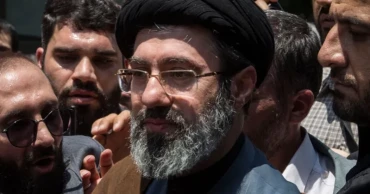
Iranians divided over Mojtaba Khamenei becoming supreme leader
Iranians appear sharply divided over the appointment of Mojtaba Khamenei as the new supreme leader following the killing of his father, Ali Khamenei, during the opening phase of the war involving the United States and Iran.
Some pro-government supporters have taken to the streets to celebrate Mojtaba’s rise to power, while others say the leadership change will not bring meaningful reform to the country’s political system.
Mojtaba Khamenei, 56, was selected by the Assembly of Experts, an 88-member body tasked with choosing Iran’s supreme leader.
Several residents in the capital Tehran told the BBC that the selection signals continuity rather than change.
“Even the smallest chance of reform within the system is gone,” said a man in his 30s in Tehran, adding that the Assembly of Experts could not have chosen anyone closer to the late leader.
“For supporters of the system, nothing will change — they don’t even need to change their slogans,” he said.
For years, Mojtaba Khamenei was widely believed to wield considerable influence behind the scenes during his father’s rule. Analysts expect him to maintain the same hardline policies that characterised the late leader’s tenure.
Some Iranians expressed fears that the new leader could adopt an even tougher stance.
A woman in her 20s in Tehran said she believed Mojtaba would be “more oppressive than his father,” while another resident warned that the war and his father’s death could make his rule more vengeful.
“They killed his father and he won’t forget it,” said a man in his 30s. “If he cannot retaliate against the United States, ordinary people may suffer.”
Despite criticism from some quarters, Iranian state television has broadcast large rallies supporting the new leader in cities including Qom and Mashhad, Mojtaba’s birthplace.
Footage aired by the state-run channel IRINN showed crowds waving Iranian flags and holding posters featuring Mojtaba Khamenei alongside his father.
Supporters praised the decision, saying it would ensure continuity of leadership.
“We are certain the path will continue under his leadership,” one supporter said at a rally in Tehran’s Enghelab Square.
However, social media videos verified by BBC Persian showed some protests as well, with demonstrators chanting slogans opposing Mojtaba Khamenei while others shouted religious slogans in support.
Mojtaba Khamenei largely stayed out of the public spotlight during his father’s rule, though leaked US diplomatic cables published by WikiLeaks described him as a powerful figure behind the scenes and a key gatekeeper to the late supreme leader.
He has also been accused by critics of influencing presidential elections and maintaining close ties with the powerful Islamic Revolutionary Guard Corps and the paramilitary Basij.
His appointment comes as the United States and Israel continue military strikes inside Iran amid the ongoing conflict.
US President Donald Trump has already criticised Mojtaba’s leadership, saying he was “unacceptable” and suggesting that any successor chosen without Washington’s approval “would not last long.”
Israeli officials have also warned that they would continue targeting Iran’s leadership if the conflict escalates further.
Analysts say Mojtaba Khamenei now faces the most serious test of Iran’s leadership since the Iranian Revolution, as the country grapples with war, internal divisions and growing international pressure.
With inputs from BBC
3 hours ago