Prime Minister's Adviser on Education and Primary and Mass Education Mahdi Amin
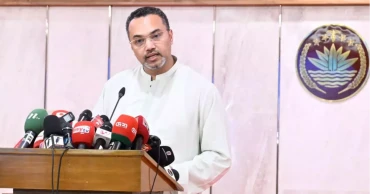
‘Zero tolerance’ on SSC question leaks; fraudsters to face strict action: Mahdi Amin
Prime Minister's Adviser on Education and Primary and Mass Education Mahdi Amin has said the government maintains a “zero-tolerance” policy on question paper distribution, warning that strict legal action will be taken against anyone involved in spreading rumours or fraud in the name of leaking SSC examination questions.
In a Facebook post on Sunday, he said social media platforms are being monitored round the clock to prevent misinformation, while cyber surveillance and digital tracking have been strengthened to identify and stop malicious activities through digital platforms.
Govt dismisses SSC question leak claim as rumour, urges people to stay alert
Mahdi Amin, also the Prime Minister’s Office spokesperson, advised students not to fall into such dishonest traps in the hope of securing better results, saying the government’s efforts to build a culture of “joyful learning” are completely incompatible with such fraudulent practices.
He said four members of a fraud syndicate have been arrested by the Counter Terrorism and Transnational Crime (CTTC) unit for cheating SSC examinees by taking money in the name of providing question papers.
Citing police, the adviser said the arrested individuals had attempted to disrupt a transparent, fair and well-managed examination system for illegal financial gain. They also spread rumours of question paper leaks, creating panic, frustration, anxiety and moral confusion among students and guardians.
He cited a private television channel’s report on the alleged leak, saying the analysis clearly shows that it was not an actual question leak, but rather a well-planned fraud operation.
Mahdi Amin also said due to lack of real evidence, the TV channel later withdrew its report on its own.
Despite various global challenges, the government’s visible progress and positive initiatives within just two months have been widely appreciated, and in this context, a group has been trying to spread misinformation and confusion, which is unfortunate, he said.
According to one examinee quoted in the report, the fraudsters repeatedly delayed sending the so-called question paper at night, giving excuses such as “technical problems” and “it will be sent shortly.” Yet the next day, they claimed the questions had already been provided, the adviser said, adding that this clearly indicates that they had no real access to the question paper.
He said the syndicate first attracted students with tempting advertisements, collected money, delayed delivery and eventually disappeared by shutting down their groups.
Another tactic involved collecting the actual question paper after the exam had started and replacing the previously uploaded fake images with the real ones, so they could later claim that their leaked questions had matched the original, Mahdi Amin said. “This deceptive method was designed to trap more students and create the false impression that the syndicate had genuine access to leaked papers.”
Meanwhile, misleading campaigns have already spread across social media. Several fact-checking platforms have also confirmed that this was not a question paper leak, but a planned fraud scheme.
Despite various technological challenges, the authorities are making every effort to ensure maximum security of question papers so that no leak occurs under any circumstances, the adviser said, seeking cooperation and responsible behaviour from all stakeholders to make these efforts successful.
He said the government remains committed to reforming the education sector and wants everyone to contribute from their respective positions to building the nation.
During the 16 years of fascist rule, Bangladesh’s education system was severely damaged, Mahdi Amin said. “Teachers’ dignity and status were undermined, distorted history and controversial content were included in textbooks, and political loyalty was prioritised over merit. This weakened critical thinking and rationality among future generations.”
On the other hand, ensuring quality education is a key priority of the present government elected by the people, he said.
Under the directive of Prime Minister Tarique Rahman, multiple initiatives have been taken to build skilled human resources and implement a competency-based education system, the adviser said, hoping that a merit-based and discrimination-free Bangladesh will be established through a quality education system.
5 hours ago