crimes in Kurigram
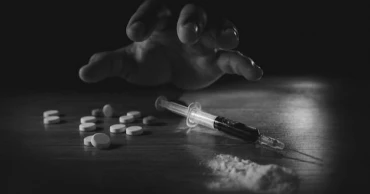
Border drug flow fuels addiction, crimes in Kurigram’s Phulbari
The recent suicide of a 35-year-old trader in Phulbari upazila of Kurigram has spotlighted a worsening drug crisis in the bordering upazila where easy access to narcotics is drawing youths into addiction and related crimes.
Chandan Kumar Ravidash of Kurushafarusha village took his own life on May 8 after a prolonged struggle with substance abuse.
A goldsmith by profession, he had built a small jewellery business in Balarhat Bazar and was supporting a family with three young children.
His family said addiction steadily eroded his life draining his income, straining relationships and leaving him increasingly unstable despite repeated attempts at rehabilitation.
“Drugs destroyed my son. We tried everything to save him, but couldn’t,” said his father, Dinesh Kumar Ravidash. “Now his children are left without a father. No parent should have to endure this.”
Kishore Kumar Bhattacharya, a fellow trader, said Chandan was once known as a polite and cheerful man. “We still cannot accept his death. Addiction slowly ruined him,” he said.
A wider, hidden crisis
Chandan’s death reflects a broader pattern. On the same day, a widow in Naodanga area also died by suicide, reportedly driven by despair over her only son’s addiction.
Local sources say many youths from across the upazila are currently receiving treatment in rehabilitation centers.
For poor, agriculture-dependent families, the cost—often around Tk 40,000 per month—is a heavy burden, forcing some to sell land or assets.
A resident from Gorokmondol, who requested anonymity, said, “My younger brother is addicted. We are trying to save him, but the cost of treatment is extremely difficult for us.”
Abdul Majid Manik, a resident of Naodanga union, said he had to send his son to rehabilitation twice and even hand him over to police at one point. “Without collective social resistance, it is impossible to control this problem,” he said.
A sharp rise in drug abuse in Phulbari upazila of Kurigram is sparking growing concern, as addiction spreads rapidly among young people and begins to take a heavy toll on families and the wider community.
Residents say narcotics have become increasingly accessible in border are, drawing in youths, including school and college students.
The fallout is evident in a parallel rise in crimes such as theft and mugging, leaving parents, teachers, and community leaders deeply concerned.
Despite ongoing anti-drug drives by law enforcement agencies, locals said there has been little visible improvement. Many are now calling for tougher, more coordinated action to stem the crisis.
Authorities warn of growing threat
Local public representatives and educationists said the situation is becoming increasingly alarming.
Abdul Hanif Sarker, principal of Naodanga School and College, said drug use among students is rising.
“We are running awareness campaigns, but without stronger social resistance, it is difficult to eliminate this,” he said, adding that addiction is also pushing many youths into criminal activities.
Naodanga Union Parishad Chairman Md Hasen Ali blamed lack of family awareness. “When a child suddenly brings expensive items home, families often do not question the source. This negligence is dangerous,” he said.
Police say anti-drug operations are ongoing, while the upazila administration has proposed setting up a permanent checkpoint in Balarhat to curb drug trafficking.
Upazila Nirbahi Officer Dilara Akter said administrative efforts alone are not enough. “Families must be more vigilant about their children where they go and who they associate with,” she said.
Local people fear that without immediate and effective action, the future generation of Phulbari could face a devastating crisis.
National backdrop adds urgency
The situation in Phulbari reflects a broader national concern
A total of 82 lakh people, almost 5% of the population in Bangladesh, use illegal drugs for recreational purposes, according to the findings of a nationwide survey.
Professor Md Shahinul Alam, vice-chancellor of Bangladesh Medical University (BMU), disclosed the survey at a dissemination meeting titled “Estimation of the Number and Category of Persons Abusing Drugs and Associated Factors:
The study was conducted under the supervision of the Department of Narcotics Control (DNC) and Bangladesh Medical University and Research and Management Consultants Limited (RMCL) jointly conducted the survey between February and June 2025.
The study identified cannabis as the most commonly used drug, with nearly 61 lakh users nationwide. This was followed by methamphetamine or Yaba (about 23 lakh), alcohol (around 20 lakh), codeine-based cough syrup, sleeping pills and heroin.
Around 39,000 people were found to inject drugs, placing them at high risk of HIV, hepatitis and other infectious diseases.
Researchers found that drug users spend an average of Tk 6,000 per month on drugs.
The study also revealed that drug abuse largely begins at a young age, with about 33 percent of users first taking drugs between the ages of 8-17, while 59 percent started between 18- 25.
5 months ago