social media
UK plans voluntary overnight social media curfew for older teens
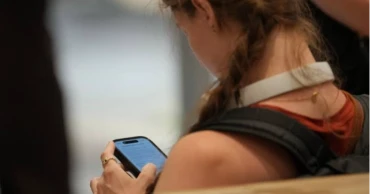
The UK government on Wednesday announced plans to introduce a voluntary six-hour overnight social media curfew for 16- and 17-year-olds, aiming to reduce the harmful effects of excessive screen time among teenagers.
Under the proposal, social media platforms would automatically activate a curfew from midnight, although teenagers would be able to turn the setting off if they choose.
The Labour government also said features designed to keep users online for longer, such as autoplay videos, would be disabled by default for users aged 16 and 17.
The latest proposal follows last month's announcement of a social media ban for children under 16, expected to take effect next spring. The planned ban would apply to platforms including Snapchat, TikTok, YouTube, Instagram, Facebook and X, but would not cover messaging services such as WhatsApp and Signal.
The new measures, announced during the final weeks of Prime Minister Keir Starmer's government, will require parliamentary approval. His expected successor, Andy Burnham, is widely expected to continue with the plans.
Online Safety Minister Kanishka Narayan rejected suggestions that teenagers would simply disable the optional curfew. He said evidence from a recent pilot programme involving more than 300 teenagers and their parents across the UK showed a significant drop in overnight social media use, along with improvements in sleep and concentration.
Narayan also said that when some platforms introduced similar default settings last October, more than 90 percent of teenagers chose to keep them enabled.
"The evidence is clear, and I don't think it's fair to assume teenagers will all switch the settings off," he told Sky News.
The opposition Conservative Party criticised the proposal.
Laura Trott, the party's education spokesperson, questioned the effectiveness of a voluntary curfew, saying it "makes no sense."
"Either the government believes 16- and 17-year-olds should use social media or it doesn't. A curfew they can simply turn off is unlikely to make any real difference," she said.
The National Society for the Prevention of Cruelty to Children (NSPCC), the UK's leading children's charity, welcomed the move but said it would not be enough on its own.
NSPCC Chief Executive Chris Sherwood said the measures could improve young people's online experience but warned that stronger action would still be needed to address addictive platform designs that encourage excessive screen time and affect children's wellbeing.
Rachel de Souza, England's Children's Commissioner, described the proposal as a positive step, saying many young people want to reduce their social media use but struggle to do so.
She added that she would closely monitor how the curfew is implemented to ensure it is effective.
2 months ago
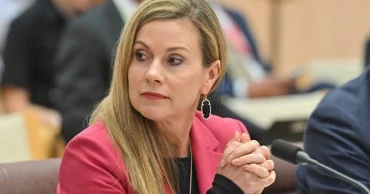
Australia PM criticizes Senate delay to tougher child social media ban measures
Australian Prime Minister Anthony Albanese has criticized senators for delaying proposed changes to the country's world-first social media ban for children, warning that the hold-up could allow technology companies to destroy documents that may be used as evidence against them.
The government this week introduced amendments to strengthen the powers of Australia's online safety regulator, eSafety Commissioner Julie Inman Grant, to enforce the ban that prevents children under 16 from holding accounts on platforms such as Facebook, Instagram and YouTube.
The proposed changes would allow the commissioner to demand documents from social media companies, in addition to information, about the steps they are taking to keep children off their platforms. Under the current law, she can only request information.
However, the opposition Liberal Party and the Greens referred the bill to an eight-week Senate inquiry on Thursday, delaying its passage. The ruling Labor government does not have a majority in the Senate.
Albanese called the delay "outrageous," saying it gives social media platforms time to delete important records before regulators can legally demand them.
He told the Australian Broadcasting Corp. that if the bill had passed immediately, the commissioner could already have started requesting documents and issuing fines where necessary.
The amendments would also allow the commissioner to seek information from third parties, including providers of age-verification technology, to check whether platforms' claims about preventing children from accessing their services are accurate.
The bill also proposes doubling the maximum penalty for companies that fail to take reasonable steps to keep children off their platforms, increasing the fine to 99 million Australian dollars (about $68 million).
Greens Senator David Shoebridge, who has consistently opposed the social media ban, questioned the need to double a penalty that has never been imposed.
He argued that increasing fines alone would not necessarily make children safer online.
Opposition communications spokesperson Senator Sarah Henderson said the proposed changes were still not strong enough.
She described the social media ban as poorly designed, rushed and ineffective, saying Parliament should examine the amendments carefully and consider stronger measures.
Australia's Parliament passed the original legislation in 2024 with broad bipartisan support, giving the 10 affected social media platforms more than a year to implement the restrictions.
The Australian law has drawn global attention, with several countries monitoring its progress as they consider introducing similar child safety measures.
The government initially said more than five million children's accounts had been removed, deactivated or restricted after the ban became law.
However, the eSafety Commission reported in March that about 70% of children who had accounts on restricted platforms when the ban took effect on Dec. 10 were still using Facebook, Instagram, Snapchat and TikTok.
In April, Inman Grant said she was considering legal action against Facebook, Instagram, Snapchat, TikTok and YouTube, arguing they had failed to take reasonable steps to prevent children from accessing their services.
She said the remaining restricted platforms, including X, Kick, Reddit, Threads and Twitch, had shown more satisfactory progress.
Communications Minister Anika Wells said she had been receiving monthly updates from the eSafety Commission since March and that the government had not seen the improvements it expected.
2 months ago
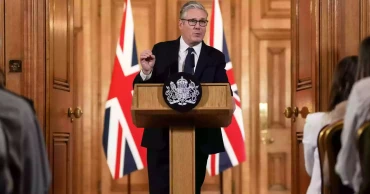
UK to ban under-16s from major social media platforms
Britain will ban under-16s from using a range of social media platforms, Prime Minister Keir Starmer announced on Monday, calling it a “big moment” for the country as the government moves to strengthen online protections for children.
Starmer said he would push back against technology companies if they resist the new rules, which aim to shield children from harmful content and reduce excessive screen time. He said he was “not prepared to compromise on the safety and happiness of our children.”
The decision places the United Kingdom among a growing number of countries tightening rules on children’s access to social media. Australia, Canada, Brazil and Indonesia have already introduced or proposed age-based restrictions, while countries including France, Spain, Denmark, Thailand and South Korea are exploring similar measures.
The UK plan is expected to go further than Australia’s approach, which prevents under-16s from holding social media accounts and allows penalties for tech companies that fail to comply.
Under the British rules, the ban will apply to platforms such as Snapchat, TikTok, YouTube, Instagram, Facebook and X. However, messaging apps like WhatsApp and Signal will not be included.
The government also plans to restrict strangers from contacting children on gaming and livestreaming platforms. The measures are expected to come into force early next year.
Starmer, who has been in office for nearly two years and faces political pressure at home, said the policy could form part of his long-term legacy. He is seeking to introduce major reforms amid speculation of possible leadership challenges within his party.
The prime minister, who has two teenage children, said success would mean a sharp fall in children using social media and a wider cultural shift in how young people grow up.
He said the government is confident the ban will work, despite concerns raised by some children’s rights advocates.
The move follows a public consultation that received 116,000 responses from parents, children and the tech industry. More than 90% supported restricting social media use for under-16s, according to the government.
Esther Ghey, mother of 16-year-old Brianna Ghey, who was killed in 2023 by two teenagers exposed to harmful online content, said the ban could help save lives but must be backed by wider support measures, including after-school programmes.
The policy could also create friction with the United States, which has warned against broad regulations that may affect free speech and place heavy burdens on American tech firms, according to the US Embassy in London.
Starmer said he expected to discuss the issue with world leaders, including US President Donald Trump, at the G7 summit in France starting Monday.
He said leaders generally agree on the need to protect children online, though differences remain over how far regulations should go.
However, some experts have raised concerns. University of Cambridge professor Jon Crowcroft said such bans may be well-intentioned but could push children toward less safe online spaces and are difficult to enforce effectively.
3 months ago
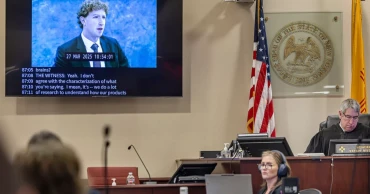
New Mexico seeks tighter child safety rules on Meta apps
New Mexico prosecutors are calling for major changes to Meta’s social media platforms, including Facebook and Instagram, to better protect children, as the second phase of a landmark court trial begins.
Opening arguments are set for Monday in a three-week bench trial that will decide whether Meta’s platforms create a public nuisance under state law by harming users, especially children.
In the first phase of the case, a jury ordered Meta to pay $375 million in civil penalties. It found that the company knowingly harmed children’s mental health and hid information about child sexual exploitation on its platforms.
Now, prosecutors are asking the court to force Meta to redesign key features of its apps. Their proposals include limiting addictive design tools, improving age verification systems, strengthening privacy settings for minors, and increasing safeguards against child exploitation.
They also want changes to how content is recommended, arguing that current algorithms push users toward endless engagement. Features such as infinite scrolling, push notifications, and visible “like” counts are also being targeted as drivers of compulsive use.
Another proposal would require child accounts to be linked with a parent or guardian and introduce a court-supervised monitor to track Meta’s compliance with safety improvements over time.
Meta has said it will appeal the jury’s verdict and warned it may suspend Facebook and Instagram services in New Mexico if forced to follow what it calls unrealistic requirements.
Legal experts say the case is unusual in how it challenges long-standing protections for internet companies. Eric Goldman of Santa Clara University said the legal theory of “public nuisance” is rarely applied to online platforms and may not fit well in this context.
New Mexico Attorney General Raúl Torrez said the verdict in the first phase weakened the protection tech companies have long relied on under Section 230 of the U.S. Communications Decency Act, which limits liability for user-generated content.
The case comes amid growing scrutiny of Big Tech, with another jury in Los Angeles also recently finding Meta and YouTube responsible for harms to children.
Prosecutors argue the court order could force a broader rethink of how social media companies operate, not just Meta. They say the goal is to address what they describe as a youth mental health crisis linked to platform design.
Meta, however, says it already invests heavily in child safety and claims many of the proposed measures are unnecessary or unworkable. The company also argues it is being unfairly singled out while many other apps used by teenagers face less regulation.
It has invoked free speech protections, saying the proposed rules could restrict expression and interfere with parental authority.
“The state’s proposed mandates infringe on parental rights and stifle free expression for all New Mexicans,” Meta said in a statement.
The trial is the first to reach court among more than 40 similar lawsuits filed by U.S. state attorneys general against Meta over youth mental health concerns. Many of those cases are being handled in federal courts.
Experts say the outcome could have wider implications for how social media companies are regulated in the future, especially if courts approve stricter requirements such as mandatory age verification.
The first phase of the trial included six weeks of testimony from educators, mental health experts, investigators, Meta executives and former employees.
4 months ago
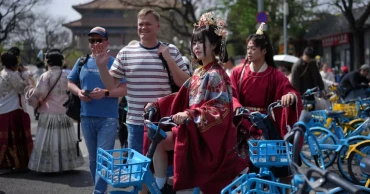
Becoming Chinese’ meme highlights growing global appeal of Chinese culture
A new social media trend dubbed “becoming Chinese” is gaining global attention, with young people increasingly embracing elements of Chinese lifestyle and culture.
In recent months, many users in their 20s have been posting videos showing how they are adopting habits seen as typically Chinese. These include drinking hot water with goji berries, eating dumplings, wearing slippers indoors, or visiting China and praising its modern cities. The trend, often referred to as “Chinamaxxing,” has attracted millions of views online.
China has long tried to boost its global influence through cultural diplomacy, but this viral trend appears to be achieving what official efforts could not. Even Chinese Ambassador to the United States Xie Feng recently mentioned the phenomenon while promoting a visa-free transit policy and encouraging Americans to visit China.
The trend reflects a broader rise in the global popularity of Chinese culture, products and everyday practices. Experts say this growing appeal shows how China is gaining “soft power” — influence through culture and lifestyle rather than politics or military strength.
Shaoyu Yuan, a professor at New York University, said Chinese culture is becoming more familiar and widely accepted worldwide through entertainment, consumer products and daily habits.
China’s influence is supported by its strong position in industries such as manufacturing, social media and consumer goods. Its tech platforms, including the algorithms behind TikTok, and competitive local brands are helping spread Chinese culture globally.
However, the trend has also sparked debate, particularly among Chinese communities in the West. Some say the sudden popularity of Chinese culture does not erase past discrimination.
Elise Zeng, a Chinese American from New York, said many people still remember facing racism, especially during the COVID-19 pandemic when Asians were targeted over the virus. She said such experiences cannot be overlooked simply because Chinese culture is now considered trendy.
Others see the trend more positively. Sherry Zhu, a social media user whose videos helped popularize the meme, said cultural exchange can help reduce misunderstandings and build greater appreciation over time.
The growing interest in Chinese culture is also linked to the success of its entertainment and consumer industries. Products like Labubu dolls, music by Chinese artists and major releases such as the animated film “Ne Zha 2” and the video game “Black Myth: Wukong” have gained international popularity.
Digital tools like Chinese map apps are also attracting attention for their advanced features, further boosting the country’s cultural reach.
While China’s government has long promoted its global image through initiatives like the Belt and Road project and Confucius Institutes, these efforts have faced criticism in some countries.
Experts say cultural influence is more effective when it spreads naturally rather than through official promotion.
“Cultural influence travels further when people choose it themselves,” Yuan said.
5 months ago
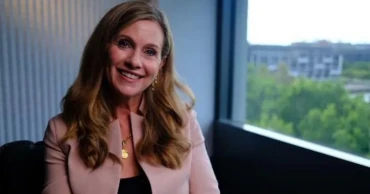
The Australian woman tasked with keeping kids off social media
Julie Inman Grant, head of Australia’s eSafety Commission, faces weekly torrents of online abuse, including death and rape threats. The 57-year-old says much of it is directed at her personally, a consequence of her high-profile role in online safety.
After decades in the tech industry, Inman Grant now regulates some of the world’s biggest online platforms, including Meta, Snapchat, and YouTube. Her latest task was enforcing a pioneering law that bans Australians under 16 from social media, a move that has drawn global attention.
The law, which came into effect on December 10, covers ten platforms. Many parents support it, believing it gives them backing in managing their children’s online activity. Critics, however, argue children need guidance rather than exclusion, and that the ban may unfairly affect rural, disabled, and LGBTQI+ teens who rely on online communities. Tech companies too have voiced reservations, saying a ban is not the solution, even though they plan to comply with the law.
Inman Grant says delaying social media access can help children build critical thinking and resilience. She compares online safety to water safety: children need to learn to navigate risks, whether it’s predators or scams, much like learning to swim safely in the ocean. She acknowledges her own initial hesitation over a full ban, but eventually supported it while shaping how the law is applied.
At home, Inman Grant’s three children, including 13-year-old twins, have been a test case for the policy. She sees social media restrictions as a way to allow kids to grow without having mistakes broadcast widely.
Born in Seattle, USA, she grew up near tech giants Microsoft and Amazon. She briefly considered a career with the CIA but moved into tech, advising a US congressman on telecommunications before joining Microsoft. In the early 2000s, a Microsoft posting brought her to Australia, where she later became a citizen and joined Twitter and Adobe. Her experience inside tech companies gave her insight into their workings, preparing her for her regulator role.
Appointed eSafety Commissioner by Malcolm Turnbull, she has expanded the office’s reach, quadrupled its budget, and increased staff. Her work has earned
recognition across political lines, though it has also drawn sharp criticism abroad, particularly from the US, where she has been called a “zealot” for global content takedowns.
Her office has handled cases ranging from livestreamed violence to AI-related threats, with Inman Grant warning that harmful content can normalize or radicalize users. She now sees artificial intelligence as the next pressing challenge in online safety.
Having served nearly a decade, Inman Grant says she may step down next year but remains committed to global online safety, potentially helping other countries build similar regulatory frameworks.
With inputs from BBC
7 months ago
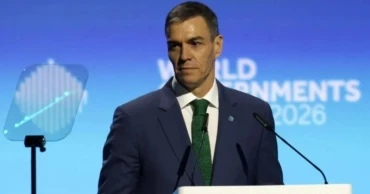
Spain moves to ban social media use for children under 16
Spain has announced plans to ban children under the age of 16 from using social media, joining a growing number of European countries seeking tighter online protections for minors.
Prime Minister Pedro Sánchez made the announcement at the World Governments Summit in Dubai on Tuesday, saying children must be shielded from what he called the “digital Wild West.”
The proposed ban, which still requires approval from parliament, is part of a broader package of digital reforms. These include holding senior executives of social media companies legally responsible for illegal or harmful content shared on their platforms.
Australia became the first country in the world to introduce such a ban last year, and several nations are now closely watching its outcome. France, Denmark and Austria have said they are considering similar age limits, while the UK government has launched a consultation on whether to restrict social media use for under-16s.
Sánchez said social media exposes children to addiction, abuse, pornography, manipulation and violence, arguing that young users are being left alone in spaces they are not ready to navigate.
Under the proposed Spanish law, platforms would be required to introduce strong and effective age verification systems, going beyond simple check boxes. The changes would also criminalise the manipulation of algorithms to boost illegal content and disinformation for profit.
The prime minister said the government would no longer accept claims that technology is neutral, stressing that platforms and actors behind harmful content would be investigated. A new system would also be created to monitor how digital platforms fuel hate and social division, although details were not provided.
Read More: UK to consult on possible social media ban for under-16s
Spain also plans to investigate and prosecute crimes linked to platforms such as TikTok, Instagram and Grok, the AI tool linked to X. The European Commission and the UK have already launched investigations into Grok, while French authorities recently raided X’s offices as part of a cybercrime probe.
Passing the law could prove challenging, as Sánchez’s left-wing coalition lacks a parliamentary majority. However, the main opposition People’s Party has expressed support, while the far-right Vox party has opposed the move.
Reacting to the announcement, X owner Elon Musk criticised Sánchez, calling him a “tyrant and traitor.”
Meanwhile, France continues to push for tougher rules, with President Emmanuel Macron aiming to ban social media for under-15s by the start of the next school year in September.
#With inputs from BBC
7 months ago
Snap settles social media addiction lawsuit ahead of trial
Snapchat’s parent company, Snap, has reached a settlement in a high-profile social media addiction lawsuit just days before the case was set to go to trial in Los Angeles.
The settlement terms were not disclosed. At a California Superior Court hearing, lawyers confirmed the resolution, and Snap told the BBC that both parties were “pleased to have been able to resolve this matter in an amicable manner.”
Other tech giants named in the lawsuit, including Instagram owner Meta, TikTok parent ByteDance, and YouTube owner Alphabet, have not settled.
The lawsuit was filed by a 19-year-old woman, identified only by her initials K.G.M., who claimed that the platforms’ algorithmic designs left her addicted and negatively impacted her mental health.
UK to consult on possible social media ban for under-16s
With Snap now settled, the trial will proceed against Meta, TikTok, and Alphabet, with jury selection scheduled for 27 January. Meta CEO Mark Zuckerberg is expected to testify, while Snap CEO Evan Spiegel was slated to appear before the settlement.
Meta, TikTok, and Alphabet did not respond to BBC requests for comment regarding Snap’s settlement.
Snap remains a defendant in other consolidated social media addiction lawsuits. Legal experts say the cases could test a long-standing defense used by social media companies, which relies on Section 230 of the Communications Decency Act of 1996 to avoid liability for content posted by third parties.
Australia cracks down on child social media use, 4.7 million accounts taken down
Plaintiffs argue that the platforms are intentionally designed to foster addictive behavior through algorithms and notifications, contributing to mental health issues such as depression and eating disorders. Social media companies maintain that the evidence presented so far does not establish responsibility for these alleged harms.
#With inputs from BBC
7 months ago
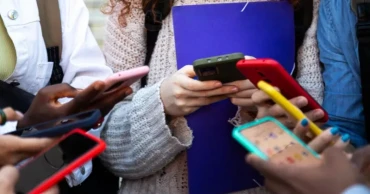
UK to consult on possible social media ban for under-16s
The UK government has announced plans to consult on whether social media use should be banned for children under 16, alongside steps to tighten controls on mobile phone use in schools.
As part of “immediate action”, Ofsted will be given authority to review schools’ phone-use policies during inspections, with schools expected to become “phone-free by default”. Staff may also be advised not to use personal devices in front of students.
The move follows growing political and public pressure, including a letter from more than 60 Labour MPs and calls from Esther Ghey, the mother of murdered teenager Brianna Ghey. “Some argue that vulnerable children need access to social media to find their community,” she wrote. “As the parent of an extremely vulnerable and trans child, I strongly disagree. In Brianna's case, social media limited her ability to engage in real-world social interactions.”
The Department of Science, Innovation and Technology said the consultation will “seek views from parents, young people and civil society” and assess stronger age-verification measures. It will also consider limiting features that “drive compulsive use of social media”. The government is expected to respond in the summer.
Technology Secretary Liz Kendall said existing online safety laws were “never meant to be the end point”, adding: “We are determined to ensure technology enriches children's lives, not harms them and to give every child the childhood they deserve.”
Opposition parties and education unions offered mixed reactions. Conservative leader Kemi Badenoch criticised the move as “more dither and delay”, while Liberal Democrats warned the consultation could slow action. Teaching unions broadly welcomed the shift but raised concerns about Ofsted’s role and the wider impact of screen time.
Read More: Australia cracks down on child social media use, 4.7 million accounts taken down
The issue is also being debated in the House of Lords, though experts and child safety organisations remain divided on whether age-based bans are effective.
7 months ago

From posters to punchlines: How Bangladesh’s politics got 'Meme-ified'
Bangladesh now stands at a threshold where the familiar theatre of politics is being rewritten before our very eyes. Once, the story was told through posters plastered on cracked walls, festoons strung across narrow lanes, and the blare of megaphones cutting through the night.
Now, the script has changed. The new battlefield is the screen; the new weapons are memes. Laughter slices deeper than slogans. Irony pierces harder than pamphlets.
Once, citizens gathered in town squares, markets, or outside city halls to speak up, protest, and debate. They held signs, chanted slogans, and faced one another. Today, that stage has mostly shifted - into our phones. Social media is now the battlefield, the meeting place, the soapbox all in one.
In this new “public square,” comment threads, TikTok videos, meme pages, and viral posts have replaced physical rallies. Political stories, grievances, and loyalties are born, spread, and challenged in real time - often by ordinary people, not just by the powerful.
This change brings both hope and danger. On the bright side, a single meme or clever post can circle the country overnight. Voices once ignored - students, artists, the quiet observers - can now speak and be heard.
It is now obvious that the great battle for power is no longer fought only in the streets — it is being waged in the feeds of the masses.
The ‘Youthquake’ that lit the fire: July 2024
The turning point came with the student uprisings of July 2024. Streets thundered with chants, but the internet raged with a parallel storm. Memes seared authority with biting wit, hashtags outpaced the speed of slogans, and protest art became the new graffiti—spray-painted not only on the walls, but also across screens.
What once was dismissed as jest turned into a clarion call, it was not just mere annotation anymore. It was mobilization. And in that moment, the internet was not just a witness to history, it became history’s weapon.
Our soil is especially ripe for this transformation because Bangladesh is a young country. Youth make up about one-third of our population. Among registered voters, more than 30 percent are under 35.
But until recently, many of those young people stayed away from elections. A survey found that 54 percent of youths had never voted in a general election. Another study reported 75 percent of youth said they had never participated in a national election.
Then came July 2024. The student uprisings shook things, and young people poured into streets and into screens. Hashtags, meme pages, comment threads - politics became a conversation again, not just a grand show by old parties. Some who had never voted before began reading debates in comments, watching candidate profiles, sharing sarcastic memes about corruption, inequality, demand for change.
The mix of memes and youth has created new fault lines. The young are less patient with old speeches, more drawn to sharp humor, more likely to share than just listen. In a filtered feed, one clever meme can travel faster and wider than a campaign leaflet ever could.
Satire sharpens its edge: DUCSU 2025
The tide swelled in 2025 through the Dhaka University Central Students Union (DUCSU) and hall union elections. Campaigns abandoned hollow chants and embraced parody. Posters mocked currency. Slogans dripped with sarcasm, and memes that were once laughed off as simple jokes began to carry real weight, almost like political manifestos.
But every sword casts a dreadful shadow as well. With satire came smear. Falsehoods spread like wildfire, targeting candidates, especially women, with venomous precision. The Election Commission intervened with warnings. It felt as if online missteps could carry the same weight as tampering with ballots.
A sobering truth emerged - satire was no longer just harmless fun. It had become a fatal double-edged weapon, capable of ending someone’s career as easily as saving it.
Faceless army: The bot Invasion
Yet hidden behind the scene, a silent power directs the show. Bot armies, silent and relentless, amplify narratives, drown dissent and create illusions of consensus. A candidate’s popularity, or its perception at least, can be inflated in minutes. Critics can be buried beneath waves of coordinated noise.
For the common voter scrolling through their feed, the line between genuine support and engineered approval has all but disappeared. Humor may lighten the meme wars, but distortion fuels them. And in this strange new arena, the opponent may not be another citizen; but an ‘Army of Shadows’.
Election 2026: Rules of war rewritten
As the nation steels itself for the 13th general election in 2026, the Election Commission has laid down a new code of combat. The old order is gone.
Posters, festoons, and PVC banners - all summarily banished. Billboard ads, once towering symbols of influence, cut down to just twenty per constituency. Every social media handle must now be declared, every message subject to scrutiny. A single misleading post could summon not applause but imprisonment and a fine sharp enough to cripple a campaign.
Clearly, the age of poster wars has ended. The age of meme wars has begun.
No longer will victory belong to those who command the walls of a city. It will belong to those who command its feeds. Candidates who wield satire with skill and algorithms with precision will surge forward. Those clinging to the relics of the old world will fade into irrelevance.
But the danger is stark as one careless meme can undo a career. One viral punchline can crown a leader. The margin between triumph and ruin has never been so thin.
Warnings from Abroad
Look abroad for signs of what may come. In Germany’s 2021 federal election, researchers documented how campaigns and disinformation used social media to sway voters. Platforms struggled to stem the tide of fake news flooding timelines. One study found that extra ad impressions on social media could shift vote shares by a few percentage points. (OUP Academic)
Meanwhile, in Tanzania, ahead of its 2025 election, the government blocked access to X (formerly Twitter) after alleged “cyberattacks” — raising questions about whether this new “public square” can be shut down at will.
These examples reveal both the promise and peril of digital politics: memes and algorithms can spark change, but they can also be captured, censored, or twisted by those in control.
Perils of the ‘new age’
Yet the odyssey ahead is artful. The imposed regulations on ‘harmful content’ may become a stern shackle for dissent. Legions of bots could shake the very foundations of democracy, turning honest debate into a battlefield of deception. It is certain that the eco-friendly reforms will save the environment, but there lies risks of sidelining candidates who lack digital muscle to compete.
Thus, the stage of Bangladeshi politics has been transformed. The festoon and the poster, once the lifeblood of campaigns, now surrender to social media, memes and hashtags. What once simply entertained has become a calculated strategy. What once adorned walls now shapes destinies.
As the countdown to the 2026 election continues, one thing is clear - the real fight won’t be in crowded squares or noisy rallies, but in the digital feeds where stories are crafted, sharpened, and spread. And make no mistake, that battle is already underway.
The streets may still reverberate with echoes, but the screens will be the dominant medium, for sure. And, in this kingdom of pixels and punchlines, the victor will not be the one who shouts the loudest, but the one who makes the world laugh, click and believe.
11 months ago