technology

AI-driven public services: Bangladesh eyes a smarter, more efficient future
From government offices to classrooms, hospitals to farms, Bangladesh is preparing to take a broader leap into the age of Artificial Intelligence, with the government placing AI at the centre of its development and modernisation strategy.
The ambition goes beyond simply introducing new technology.
According to the budget document for the 2026-27 fiscal year, the government is undertaking a series of initiatives to deploy AI-based technologies to address inefficiencies and complexities in public services, enabling faster decision-making, improved data analysis and enhanced service quality.
The document says wider use of AI across government agencies is expected to make administrative processes more efficient, transparent and timely, while improving citizens’ access to public services.
The government is also pursuing AI-driven initiatives to develop smart cities and make citizen services more user friendly.
As part of its broader digital transformation agenda, AI is being incorporated into the education system to equip students with the skills required for future workplaces.
Beyond education, the government plans to expand AI applications in the health, agriculture and public service sectors, aiming to create a technology-driven and service-oriented Bangladesh.
The budget document also highlights the rapid growth of Bangladesh’s electronics industry, describing it as one of the country’s fastest-growing and most promising sectors after the ready-made garments industry.
It says the availability of affordable digital devices is essential for the development of the country’s ICT sector. To achieve this, the government intends to encourage domestic production of electronic devices, making them more accessible to citizens while creating opportunities for exports.
Through appropriate policy support, the government expects Bangladesh to emerge as one of the world’s leading electronics manufacturing hubs within the next five years.
The budget also places strong emphasis on harnessing the country’s youthful population, describing young people as Bangladesh’s greatest asset and a major force for future economic growth.
To capitalise on their talent and innovation, the government plans to promote startups, freelancing and digital entrepreneurship through technology-based training and skills development programmes designed to prepare young Bangladeshis for the global labour market.
The government believes the expansion of the ICT and automation-based economy will generate new employment opportunities and enable young entrepreneurs to become key contributors to economic development.
As part of these efforts, it has initiated work on a modern startup policy and plans to consolidate various startup funds into a unified financing mechanism to improve access to funding for innovative businesses.
The government’s broader objective is to build an innovative and self-reliant Bangladesh by empowering its youth and fostering a vibrant technology ecosystem.
The budget document says that with adequate policy support and investment, Bangladesh’s talented young innovators will be capable of establishing world-class technology hubs comparable to Silicon Valley in the United States, Shenzhen in China, Singapore and Dubai.
1 month ago

Balenciaga debut, bold designs and technology define Paris couture week
Paris Haute Couture Week ended on Thursday after four days of dramatic fashion shows that highlighted three major themes — the human body, fantasy and technology — as designers unveiled creations blending traditional craftsmanship with modern innovation.
One of the week's biggest highlights was designer Pierpaolo Piccioli's first haute couture collection for Balenciaga, presented on Wednesday before celebrities including Demi Moore, Cynthia Erivo and Gigi Hadid.
Piccioli's collection featured oversized gowns, hooded feather designs and a dramatic finale with Hadid wearing a creation covered in rooster feathers. He received a standing ovation after appearing on the runway with his entire atelier dressed in white coats.
The show marked Balenciaga's biggest haute couture presentation since the fashion house revived its couture line in 2020.
Around 30 fashion houses, including five making their couture debut, explored different ways of presenting the human form. Some designs revealed the body, while others hid or reshaped it with dramatic silhouettes and sculptural garments.
At Armani Privé, designer Silvana Armani presented a collection titled "Boudoir" that focused on elegance rather than revealing clothing. The show featured embroidered garments, tailored jackets and subtle details that balanced modesty with style.
Oscar-winning actress Cate Blanchett attended the show alongside Rosamund Pike and **Anna Wintour>.
At Schiaparelli, designer Daniel Roseberry experimented with body-inspired creations, including sculpted corsets, silicone details and inflatable elements, giving the collection a futuristic appearance.
Piccioli at Balenciaga and Dutch designer Iris van Herpen took a different approach by using oversized shapes and delicate handcrafted materials that almost completely concealed the human figure.
Fantasy was another major theme throughout the week, with designers presenting collections inspired by fairy tales, classic Hollywood and nature against the backdrop of a summer heat wave and global uncertainty.
Elie Saab showcased glamorous evening wear inspired by Truman Capote's famous 1966 Black and White Ball and old Hollywood stars such as Elizabeth Taylor and Richard Burton.
Zuhair Murad presented richly decorated designs inspired by gardens, flowers and butterflies, while Stéphane Rolland paid tribute to late singer Dalida with an almost entirely white collection.
At Chanel, new designer Matthieu Blazy transformed the Grand Palais into a fairy-tale setting with giant beanstalks, pea-pod-shaped heels and golden eggs. At Dior, Jonathan Anderson presented sculptural designs inspired by American artist Lynda Benglis.
Technology also played a central role during the week as designers explored new materials while emphasising the value of hand craftsmanship.
Schiaparelli used unusual handmade materials including baked fish scales, painted surfaces and hand-shaped silicone.
Van Herpen experimented with science by exposing one dress to a particle accelerator before the show. The garment was intended to produce electrical effects on the runway, although the experiment affected the fabric before the presentation.
Balenciaga also introduced garments made with laboratory-grown Amsilk silk, which the fashion house says is stronger than steel.
Despite the growing use of technology, designers across Paris couture week stressed that traditional handcraft remains at the heart of haute couture, combining innovation with the artistry that defines the world's most exclusive fashion collections.
2 months ago

Technology fuels growing security threats in UK, senior police officials warn
British counterterrorism officials have warned that technology and online platforms are increasingly being used by hostile states, extremist organisations and far-right groups to threaten the United Kingdom, making online security a growing challenge.
Speaking on Thursday, Vicki Evans, the Metropolitan Police's senior national coordinator for counterterrorism, said tackling online threats has become a "constant battle" and stressed that police cannot address the problem without stronger cooperation from technology companies.
While Islamist extremism continues to pose the biggest security threat, officials said risks linked to far-right extremism and hostile foreign states have risen sharply over the past five years.
Laurence Taylor, head of counterterrorism policing, said hostile state activity has become one of the fastest-growing security concerns facing Britain.
Evans said police have uncovered more than 20 Iran-linked plots in 2025, including alleged assassination attempts, kidnappings and other serious crimes targeting the UK. Authorities are also investigating whether arson attacks on Jewish sites earlier this year were connected to Iran.
She added that Russia has continued to organise surveillance operations across Britain, targeting individuals and institutions, seeking to identify people viewed as enemies by Moscow and recruit others to spread Russian narratives or carry out activities on its behalf.
Across Europe, Russia has reportedly recruited dozens of people through messaging platforms such as Telegram to carry out acts of vandalism and arson, including an attack on a London warehouse storing communications equipment intended for Ukraine.
Authorities said Dylan Earl, who led that plot, was recruited through Telegram by the Wagner Group, a mercenary organisation designated as a terrorist group by the UK government.
Evans also revealed that police have arrested teenagers as young as 15 in connection with proxy operations linked to hostile states. She warned that anyone could become a target, particularly through online platforms.
"This isn't something happening somewhere else," she said. "It's happening here—in our communities, workplaces and online spaces."
Taylor said Britain's national terrorism threat level was raised from "substantial" to "severe" in April, partly because cases involving far-right extremism have increased significantly.
He said police have seen a rise in online content promoting racism, misogyny and extreme homophobia, creating an environment where extremist views are becoming more common and less likely to be challenged.
As an example, Taylor referred to the case of 18-year-old Alina Burns, who was sentenced to nearly 20 years in prison in May after attacking a stranger with an axe. Police said the attack was motivated by far-right extremist beliefs.
Officials also expressed concern about the growing online radicalisation of children and teenagers.
Taylor said 22-year-old Alfie Coleman, who was sentenced on Wednesday to 13 and a half years in prison for attempting to buy a gun from an undercover MI5 officer, had been radicalised online from the age of 14.
Evans said extremist groups are deliberately creating online content that appeals to young people by combining propaganda with gaming footage, music and historical images. Some are encouraged to imitate violent acts seen in video games or compete in carrying out harmful activities online and offline.
She warned that some online groups encourage cybercrime, violent extremism, serious assaults, child sexual abuse and even terrorism.
Evans also raised concerns about the widespread availability of violent and graphic online content that, while legal, can distort young people's understanding of what is acceptable and make them more vulnerable to manipulation by extremist groups and hostile states.
Although the UK government has proposed banning social media use for children under 16, Evans said that measure alone would not be enough. She called for technology companies to take greater responsibility for limiting harmful content, noting that laws often struggle to keep pace with rapidly evolving online platforms.
She warned that young people can quickly become drawn into harmful online content, making early intervention essential.
2 months ago

Polymarket seeks to rebuild trust as it returns to the US market
Prediction market platform Polymarket is trying to rebuild its reputation as it returns to the US market after spending four years operating outside the country.
The company is investing heavily in marketing and new partnerships while assuring regulators, policymakers and customers that its US business will operate under stricter rules than its international platform, which has faced criticism in recent years.
Polymarket has worked with social media influencers to promote its services on TikTok and other platforms. Its account on X has attracted millions of followers, while the company has signed partnership deals with Major League Baseball, several sports teams and media organisations including CNBC and CNN.
The company says its prediction markets offer a more accurate way to measure the likelihood of future events than traditional opinion polls or expert commentary.
Polymarket left the US market in 2022 after settling federal charges over operating an unregistered derivatives exchange. Although Americans were officially barred from using its international platform, many continued to access it through other means.
The offshore platform later drew criticism over allegations of insider trading and allowing bets linked to wars and other violent events.
Polymarket officially returned to the US at the end of 2025 after acquiring derivatives exchange QCEX, giving it the regulatory licence needed to operate in the country.
Company executives say the US business is completely separate from its international platform. They have also recruited compliance, regulatory and surveillance experts to ensure the platform follows US laws.
"Trust is the product we are building here," Dan Lee, head of US operations at Polymarket, said in an interview. Lee joined the company earlier this year after working at Coinbase.
Among the recent appointments is Megan McGrath, formerly of Robinhood, who has become Polymarket's chief compliance officer. The company has also hired former officials from the US Department of Justice and the FBI to oversee enforcement and market surveillance.
Lee said earning public trust will be critical to the success of Polymarket's US operations.
Both the US and international platforms allow users to trade on the probability of future events, including politics, sports, weather and current affairs.
However, the two services operate differently. The international platform is built on blockchain technology and requires users to trade with cryptocurrency, while the US platform is regulated by the Commodity Futures Trading Commission (CFTC) and uses traditional US dollars.
Customers will notice little difference apart from the payment method, although the US platform offers fewer contracts and operates under tighter regulations.
Todd Phillips, a prediction market researcher at the Roosevelt Institute, said the key distinction is that the US platform must comply with American laws, while the international version operates under far fewer restrictions.
The competition has also intensified since Polymarket exited the US market. The prediction market industry has expanded rapidly, with combined trading volume on Polymarket and rival Kalshi reaching $26.6 billion, according to blockchain analytics firm Dune. That compares with $9.75 billion recorded across the platforms in October last year.
Kalshi currently dominates the US market, largely because of its sports-related contracts, and was valued at $22 billion in its latest funding round.
The industry has also received support from the Trump administration. The CFTC has challenged state efforts to regulate prediction markets, arguing that federal law should take precedence. Meanwhile, Donald Trump Jr. is an investor in Polymarket through venture capital firm 1789 Capital.
Despite its return, Polymarket has faced fresh scrutiny over its promotional campaigns.
The Wall Street Journal reported that some of the company's advertisements allegedly used paid influencers who appeared to profit from trades that were not genuine. Politico also reported in June that a Polymarket executive paid at least 20 political content creators without many of them publicly disclosing the partnerships.
The company said it is investigating both its advertising and promotional activities.
Questions also remain over whether Polymarket's US business can separate itself from controversies involving its international platform.
Earlier this year, a US Army sergeant was indicted over bets related to the capture of Venezuelan President Nicolás Maduro that were placed on Polymarket's international platform.
In April, The Associated Press also reported that dozens of newly created accounts placed large bets on a US-Iran ceasefire shortly before President Donald Trump announced the ceasefire on social media, raising concerns about possible insider trading.
Lee said he believes the safeguards introduced in the US business will strengthen its credibility despite the controversies surrounding the international platform.
He added that the size of the international business often overshadows the progress Polymarket is making in establishing a trusted and fully regulated operation in the United States.
2 months ago

Experts say current AI still lacks real-world understanding
Current artificial intelligence systems such as ChatGPT, Claude and Gemini are powerful tools for writing, coding and solving maths problems, but leading AI researchers say they still fall far short of understanding the real world.
One of them is Yann LeCun, a pioneer in artificial intelligence and former chief AI scientist at Meta, who argues that today's AI cannot match even the basic understanding of a rat when it comes to interacting with the physical world.
"We don't have robots that are nearly as good at understanding the physical world as a rat," LeCun said during the VivaTech technology conference in Paris.
After leaving Meta in 2025, LeCun founded Advanced Machine Intelligence Labs (AMI Labs) with the aim of developing a new generation of AI capable of handling real-world situations, such as household chores and robotics.
According to LeCun, large language models (LLMs), the technology behind ChatGPT and similar chatbots, are excellent at tasks such as writing text, coding and solving mathematical problems because these tasks are well-defined. However, he believes they are not designed to understand how the real world works.
"They basically accumulate knowledge and reproduce it, but they are not particularly smart because they don't have a true understanding," he said.
LeCun argues that current AI models rely on statistical patterns rather than reasoning about physical reality. As an example, he said if a pen is balanced upright and released, even a young child knows it will fall over. However, no one can predict exactly which direction it will fall because the outcome depends on many unpredictable factors.
An LLM may attempt to predict one specific outcome based on its training data, but such a prediction would likely be wrong because it lacks a real understanding of the physical world.
To address this limitation, AMI Labs is developing a new AI system called Joint Embedding Predictive Architecture (JEPA).
Instead of trying to predict every possible detail, JEPA creates simplified representations of the real world, allowing AI to focus only on the information that matters. In the pen example, the system would recognise that predicting the exact direction of the fall is unnecessary.
The approach has attracted strong investor interest. Earlier this year, AMI Labs raised more than $1 billion in seed funding, one of Europe's largest early-stage investment rounds. Investors include US chipmaker Nvidia and the investment fund managing Amazon founder Jeff Bezos' private wealth.
Researchers say building AI that understands the physical world has become increasingly important as companies invest billions of dollars in humanoid robots.
Although robots have become more capable, teaching them to safely perform everyday household tasks such as ironing clothes or loading dishwashers remains difficult and expensive.
LeCun believes current language models are unlikely to solve that problem.
"LLMs are largely hopeless for robotics," he said, rejecting claims that simply making today's AI models larger will eventually produce superhuman intelligence.
His views are shared by many AI researchers.
Ingmar Posner, Professor of Applied Artificial Intelligence at the University of Oxford and director of its Applied AI Lab, believes future AI systems must be able to explain their decisions and understand cause-and-effect relationships.
"You need models that can answer questions like: What matters? What causes what? What would happen if I took a different action?" Posner said.
Posner and his research team have spent the past four years developing an alternative approach known as World Models.
The concept has existed for decades but gained renewed attention after a 2018 research paper by David Ha and Jurgen Schmidhuber suggested AI could learn by building internal simulations of the world.
Since then, companies including Google DeepMind have expanded research in this area. One version of Google's Dreamer World Model learned to collect diamonds in the video game Minecraft by imagining possible future scenarios before making decisions.
Posner's team is developing what he calls a "mechanistic world model," designed to organise knowledge so AI can efficiently recall, combine and update information when needed.
However, he cautioned that predicting when these new systems will become practical is difficult.
He noted that only a few years before ChatGPT was launched in late 2022, many researchers believed similar technology was still decades away.
Several major AI companies are now investing in world-model research. Google DeepMind is developing its Genie model, London-based Wayve has built a system called Gaia, while AI pioneer Fei-Fei Li founded World Labs in San Francisco in 2023 to develop another new AI architecture.
LeCun said AMI Labs plans to continue refining its AI system throughout this year and hopes to deploy it first in industrial applications next year.
If successful, he believes the technology could eventually evolve into general-purpose AI systems capable of handling a wide variety of real-world tasks with minimal additional training.
Despite concerns about increasingly capable robots, LeCun believes humans will continue to play the central role.
"We're still going to need humans to figure out what questions to ask, what to build and what to create," he said.
He expects future AI systems, even those that may surpass humans in some abilities, to function as assistants rather than replacements.
"Our interaction with future AI systems, even if they are smarter than us, will be like the relationship between a business leader or political leader and a team of highly capable assistants," he said.
Source: BBC
2 months ago

AI brings challenges and opportunities for office assistants
Artificial intelligence is changing the way administrative assistants work, raising concerns about future job losses while also creating new opportunities for those willing to adapt.
Secretaries and administrative assistants, a profession largely made up of women, have already seen their numbers decline over the past two decades. Now, AI tools such as ChatGPT, Claude and Microsoft Copilot are expected to automate many routine office tasks, adding to concerns about the future of the profession.
Still, many administrative professionals are embracing the technology, saying it helps them work faster and focus on more valuable responsibilities.
Deanna Danger, 43, who has worked as an administrative professional since 2003, believes adapting to new technology has always been part of the job.
"All you have to do is evolve," she said.
Danger, executive assistant to Vanderbilt University's chief information officer, began using AI at work in 2022. Today, AI tools take meeting notes for her, allowing her to actively participate in discussions instead of focusing on typing everything being said.
She said tasks that once took hours can now be completed in less than five minutes.
Despite these productivity gains, government data shows the profession has been shrinking for years. About 3.5 million people worked as secretaries and administrative assistants in the United States in 2004, with women making up nearly 97% of the workforce. By 2024, that number had dropped to around 2.1 million, even as the overall workforce grew.
The U.S. Bureau of Labor Statistics expects most administrative support jobs to continue declining through 2034, although medical secretaries and administrative assistants are projected to grow because of increasing demand in the healthcare sector.
The unemployment rate for office and administrative support workers rose to 4% in June from 3.6% a year earlier, according to the U.S. Labor Department.
Emily Rolen, lead economist for employment projections at the Bureau of Labor Statistics, said technology has steadily reduced demand for administrative workers over many years.
Word processing software, speech-to-text programs, digital scheduling tools and similar technologies have all made office work more efficient while reducing the need for some traditional administrative roles.
A January report by the Brookings Institution found that clerical and administrative workers could be among the groups most affected by AI because many have limited financial resources, fewer opportunities to switch careers and narrower skill sets. Women account for about 86% of the six million workers in these occupations.
The report also noted that many administrative workers are older than the average U.S. employee, earn below the national median wage and often enter the profession with only a high school diploma.
However, many assistants argue that the data does not reflect their ability to adapt.
Danger regularly hosts online discussions through the American Society of Administrative Professionals, where members share ways they use AI to design flyers, plan executive events, write social media posts, prepare standard operating procedures and complete other routine tasks.
Some participants have also raised concerns about data privacy, security and the lack of clear AI regulations. Many agreed that AI cannot replace human qualities such as emotional intelligence, relationship management and sound judgment.
Fiona Young, founder of AI training company Carve and a former executive assistant, said demand for AI training has increased sharply since 2023. She has trained administrative professionals at companies including Google, Amazon, Uber, Salesforce and LinkedIn.
According to Young, employers increasingly expect staff to make AI part of their everyday work rather than simply understand the technology.
Oana Manolache, founder and CEO of webinar platform Sequel.io, has strongly encouraged employees to use AI. However, she said the technology cannot replace her executive assistant, Stephanie Martinez.
Instead, Martinez uses AI to handle repetitive tasks such as note-taking and meeting preparation, giving her more time to focus on building relationships, supporting executives and making informed decisions.
Working remotely from El Salvador through Viva Talent, Martinez also used AI to analyse customer communications, identify satisfied clients and draft emails requesting product reviews, saving significant time while allowing her to focus on creative problem-solving.
Melissa Peoples, an executive assistant coach based in Austin, Texas, said many assistants want to use AI but often lack the time, training or support from employers to do so.
She added that workplace culture also plays a role. While some executives encourage assistants to develop new skills, others still treat them as support staff with limited opportunities to contribute.
Peoples said proper AI training can help administrative professionals strengthen their skills, increase their value to employers and remain competitive as AI becomes more common in the workplace.
2 months ago
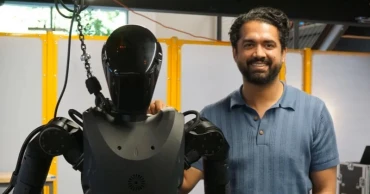
Could humanoid robots become the next soldiers on the battlefield?
Humanoid robots have long been a staple of science fiction, but some technology companies are now actively exploring whether they could one day play a role in military operations.
Inside a San Francisco robotics facility, a humanoid robot named Phantom is being trained not for combat today, but for basic tasks such as interacting with objects and understanding its surroundings. The robot, developed by startup Foundation Robotics, is designed for both civilian and military use.
The company says it is the only US-based firm currently building humanoid robots specifically for a wide range of defense applications.
Potential military roles include transporting supplies, conducting reconnaissance missions, inspecting dangerous areas, recovering equipment or injured personnel, and eventually supporting combat operations. The idea is that robots could take on high-risk tasks, reducing danger for human soldiers.
Foundation Robotics CEO Sankaet Pathak argues that humanoid robots could help keep troops out of harm's way, particularly in dangerous environments such as urban combat zones and buildings where ambushes are common.
However, the technology remains far from battlefield-ready.
The company's current model, Phantom MK-1, still faces major limitations. It lacks a battery, cannot operate in harsh weather, cannot stand up on its own after falling, and has limited hand movement and strength.
A more advanced version, Phantom MK-2, is now under development. According to the company, it will be weather-resistant, capable of operating for about six hours on a single charge, and able to recover after falling. Engineers are also working on more advanced robotic hands that could eventually handle tools and other equipment.
Foundation aims to produce up to 40,000 robots annually by the end of 2027 and eventually reduce costs to below $20,000 per unit.
The company has already secured $24 million in research contracts linked to the US military and says two of its robots are currently being tested by the Ukrainian military. While US military trials focus on handling and logistics tasks, weapon-related testing is reportedly taking place in Ukraine.
The startup drew additional attention after Eric Trump joined the company as an investor and adviser earlier this year.
Military interest in humanoid robots appears to be growing. Experts say armed forces are exploring whether such machines could assist troops in a variety of roles.
According to Dean Fankhauser of robotics advisory firm Robozaps, it is unsurprising that some companies see military applications as a business opportunity.
Modern battlefields already make extensive use of autonomous drones and robotic systems, particularly in the war in Ukraine. Some companies have also explored arming four-legged robotic systems, although they have not yet been widely deployed in combat.
Still, many robotics firms oppose weaponising humanoid robots, citing ethical concerns and the potential risks of autonomous weapons.
Pathak argues that humanoid robots offer unique advantages because they are built to operate in environments designed for humans. Existing tools, vehicles and equipment could potentially be used without significant redesign.
He insists humans should remain responsible for decisions involving lethal force, although he acknowledges there could be situations where autonomous responses are considered necessary.
Despite the growing interest, experts say significant technical barriers remain.
One of the biggest challenges is developing artificial intelligence capable of operating safely in unpredictable real-world environments. Robots must be able to interpret complex situations, adapt to changing conditions and make decisions in real time.
Phantom relies on an AI system called Cortex, which combines task-specific reasoning with broader environmental awareness. Cameras provide a 360-degree view, allowing the robot to navigate and react to its surroundings.
Yet specialists caution that current humanoid robots are still far from matching human abilities.
Fankhauser notes that many commercial humanoid robots today struggle with relatively simple tasks and remain largely untested in chaotic real-world conditions.
"If there were a conflict over Taiwan today, the idea that humanoid robots would play a major combat role is unrealistic," he said, although he believes the technology could advance significantly within the next decade.
Florida Institute for Human and Machine Cognition researcher Robert Griffin also sees potential benefits in reducing risks to soldiers but says unpredictable environments remain a major obstacle.
Tasks that humans perform naturally, such as navigating unfamiliar buildings or reacting to unexpected events, remain extremely difficult for robots.
Battery life is another major challenge. Moving on two legs and operating multiple joints consumes large amounts of energy, making long operating times difficult to achieve.
Experts say the vision of humanoid robot soldiers remains largely theoretical for now. While advances in artificial intelligence and robotics are moving quickly, turning humanoid machines into reliable battlefield assets will require overcoming major technological, practical and ethical challenges.
Source: BBC
3 months ago

Americans remain deeply attached to iPhones despite concerns over overuse
Americans continue to have a complex love-hate relationship with the iPhone, a device that has become deeply embedded in daily life while also raising concerns about overdependence.
For many users, the iPhone feels almost essential, offering instant access to a wide range of services. People use it to take and share photos on social media, play games, watch videos, listen to music, send messages, check emails, browse the internet, follow news updates, get navigation directions and even make digital payments. Making or receiving phone calls, however, has become just one of many uses.
At the same time, critics say the device often encourages excessive screen time. Constant notifications and alerts can pull users into endless scrolling, reducing attention spans and making it harder for people to disconnect.
The debate reflects a broader paradox in American life as smartphones, including those powered by Apple’s iOS and Google’s Android systems, have become almost unavoidable in modern society.
The iPhone was first introduced in 2007 by Apple co-founder Steve Jobs, who predicted it would transform everyday life. Since then, it has reshaped communication, entertainment and work habits in ways few could have fully anticipated.
Some surveys even suggest that many people would choose to sleep beside their phones rather than their partners if forced to decide, highlighting how deeply integrated the devices have become in personal routines.
Now, observers are questioning how society can balance the benefits of smartphones with their potential downsides, including whether their impact should be compared to addictive products such as cigarettes, alcohol or junk food.
For now, however, the trend appears to continue toward greater digital dependence, as daily life becomes increasingly centered around glowing screens.
4 months ago

Injection helps control blood pressure when pills fail: study
A new study suggests that a single injection given every six months could help lower blood pressure in patients who do not respond well to regular medication, offering a potential new way to manage hypertension.
The findings, published in the Journal of the American Medical Association, come from a global clinical trial led by researchers at Queen Mary University of London.
The trial, known as KARDIA-2, involved 663 adults whose high blood pressure remained poorly controlled despite taking standard medicines.
Participants who received the experimental drug zilebesiran alongside their usual treatment showed greater reductions in blood pressure compared to those who continued with standard therapy alone, researchers said.
High blood pressure is a major global health concern and a leading cause of heart attacks, strokes and death if left untreated. In the UK, it affects about one in three adults.
Dr Manish Saxena, a hypertension specialist at Barts Health NHS Trust and a lead researcher in the study, said the results highlight both the effectiveness and safety of the new treatment.
He noted that the long-lasting nature of the injection could make it easier for patients to manage their condition, as it requires only two doses a year.
Zilebesiran works using RNA interference technology to lower blood pressure. It blocks the production of angiotensinogen, a protein made in the liver that helps regulate blood pressure. Reducing this protein allows blood vessels to relax, leading to lower pressure levels. The drug is given as an injection under the skin.
Researchers are continuing to study the drug in a follow-up trial, KARDIA-3, to assess its benefits for patients with high blood pressure who also have cardiovascular disease or are at high risk.
A larger global study is also planned later this year to examine whether the treatment can reduce serious outcomes such as strokes and cardiovascular-related deaths.
The research was funded by Alnylam Pharmaceuticals, with Barts Health NHS Trust serving as a key trial site and the leading enrolment centre in Europe.
Source: Science daily
5 months ago

AI use rises at workplaces, but many employees remain hesitant
The use of artificial intelligence (AI) at workplaces in the United States is growing, but many employees are still reluctant to rely on the technology, according to a new Gallup poll.
The survey shows that while more workers are now using AI tools regularly, concerns are also increasing about the risk of job losses. Many employees who avoid AI say they prefer traditional methods, have ethical concerns or are worried about data privacy.
The poll, conducted in February, highlights a mixed picture of how AI is changing workplaces. Some workers see it as a powerful tool that improves productivity and efficiency, while others fear its negative impact.
Scott Segal, a social worker in northern Virginia, said he uses AI to gather information to help elderly and vulnerable patients access healthcare services. However, he also fears that AI could eventually replace his role.
“I think people in jobs that can be replaced should start planning ahead,” said the 53-year-old.
The poll found that about 30% of employees use AI frequently, either daily or several times a week, while around 20% use it occasionally.
Around 40% of workers said their organisations have introduced AI tools to improve operations. Among them, nearly two-thirds reported that AI has had a positive impact on their productivity and efficiency.
Managers appear to benefit more from AI than other employees. About 70% of leaders who use AI at least a few times a year said it has improved their efficiency, compared to just over half of other workers.
Among employees who have access to AI but choose not to use it, 46% said they prefer to continue working in their usual way. Around 40% cited ethical concerns, data privacy issues, or doubts about AI’s usefulness. About a quarter said they had tried AI but found it unhelpful, while roughly 20% felt they lacked the skills to use it properly.
Thuy Pisone, a contract administrator in Maryland, said she uses AI for simple tasks but avoids it for work she can already handle confidently, such as preparing presentations.
The survey also found growing concern about job security. About 18% of US workers believe their jobs could be replaced by technology, automation or AI within the next five years, up from 15% in 2025.
Workers at companies already using AI are even more worried, with 23% saying job loss is at least somewhat likely in the near future.
Despite these concerns, most workers are not overly anxious. Around 70% said they are not very concerned or not concerned at all about losing their jobs to AI.
Segal said he is considering starting a healthcare support service if AI replaces his current role, as he believes some human-centred services will take longer to be automated.
For now, he said, he is even using AI tools to plan his financial future, including retirement savings.
5 months ago