fish
Dry fish trade keeps Narail economy moving in winter
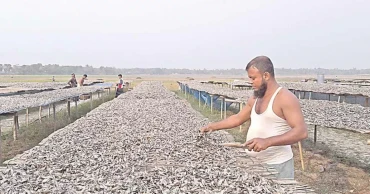
As winter settles over Narail, open fields in Shalua of Maijpara Union and Sholpur of Singasholpur Union transform into makeshift drying yards where the district’s famed dry fish season begins in earnest.
For the communities here, the annual cycle is more than a tradition — it is a vital source of income that supports hundreds of families.
Dry fish has long been considered a staple across the region, but in Narail it is an economic backbone. Fishermen, labourers, small traders, and transporters all rely on the trade, which has earned the district recognition as a notable hub for producing chemical-free dry fish.
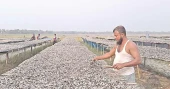
On raised bamboo macha, fish sourced daily from canals, beels, and rivers are cleaned, salted and arranged under the open sky to dry.
The process is entirely natural, a fact that locals say has boosted demand in recent years.
Read more: Fish export to India halted thru Akhaura land port
Since this dry fish is prepared without any chemicals and in a safe environment, demand is increasing day by day, villagers said.
Among those who travel to Narail for seasonal work are Md Kabir Sheikh and Kamrul Sheikh from Muksudpur in Gopalganj. They spend the winter months drying varieties such as climbing perch (koi) and glassy perchlet (chanda), along with the widely popular chapa shutki.
No chemicals are used — only salt, they said, as rows of fish dried slowly under the sun.
While the work continues smoothly, selling remains a challenge.
Fisherman Md Mosa Mia said lower water levels during winter make it easier to catch different local species, allowing producers to buy raw fish at relatively low prices. The difficulty lies in accessing the market.
“We buy the fish and make dry fish. But without a broker, it has become difficult to sell,” he said, adding, “If we could sell directly to buyers, we would earn better profits.”
Another fisherman, Alok Biswas, described the realities of production: two to three maunds of raw fish reduce to one maund after drying.
Read more: PKSF holds policy dialogue on fisheries market
“Depending on the type, one maund of dry fish is sold for Tk 7,000 to Tk 8,000,” he said.
Official target and growing reputation
Narail District Fisheries Officer Mahbubur Rahman said a target of 80 metric tonnes of dry fish production has been set for the district this year.
“Since the dry fish here is chemical-free, it is in demand not only within the district but across the country,” he said.
The Fisheries Office has been providing training and technical support to help producers maintain quality and strengthen their position in the market.
For now, as winter sunlight glints across the bamboo platforms, families continue the work that has sustained them for generations.
The methods remain simple, the challenges persistent, but for Narail, dry fish remains a lifeline — one that keeps the district’s economy moving long after the drying season ends.
Read more: Hilsa prices soar further putting this beloved fish beyond reach
9 months ago

Hilsa prices soar further putting this beloved fish beyond reach
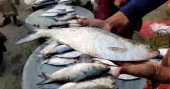
Hilsa, the pride of Bangladesh’s rivers and the heart of its culinary culture, has once again slipped beyond the reach of ordinary consumers as prices surged dramatically at the century-old Mir Kadim wholesale fish market in Munshiganj.
Within just 48 hours, hilsa prices have jumped by up to Tk 700 per kilogram, leaving both buyers and traders frustrated — each side pointing fingers over the sudden spike.
During a visit to the bustling Mir Kadim market on Friday, the scene was as lively as ever. Buyers and sellers packed into narrow lanes, where freshly caught silver hilsa shimmered under bright lights. Yet, for many who travelled long distances hoping to savour the seasonal delicacy, the excitement quickly turned to disappointment.
A one-kilogram hilsa is now priced at Tk 2,600–2,700, while the larger 1.5-kg fish are selling for Tk 3,200 per kg — a price bracket that has become a luxury for most households. Even the smallest hilsa, weighing just 150–200 grams, now cost Tk 650–700 per kg.
Hilsa returns to Khulna markets after 22-day ban
Consumers allege that syndicates are manipulating prices, while traders argue that the root of the crisis runs deeper.
Sand Extraction and Illegal Nets Blamed
Al Helal Royel, president of the Mir Kadim Fish Traders’ Association, said rampant and unplanned sand extraction is destroying natural breeding grounds, while the widespread use of illegal current nets is depleting fish stocks at an alarming rate.
“Fish stocks have fallen. Demand is high but supply is low — that’s why prices are increasing,” he explained.
According to the district fisheries office, Munshiganj produced 31,348 metric tonnes of fish in the past year. However, fish availability typically dips during winter, amplifying the strain on supply and pushing prices upward.
Delicious hilsa slips from table to luxury list
Other Fish Prices Also on the Rise
It isn’t just hilsa causing concern. Almost all fish varieties at Mir Kadim have seen significant price hikes.
A survey of the market revealed the following rates:
· River Pangas: Tk 800–1,000 per kg
· Farmed Pangas: Tk 150–200
· Rui: Tk 350–450
· Katla (farmed): Tk 400–500
· Katla (river): Tk 600–700
· Local boal: Tk 800–1,000
· Farmed boal: Tk 500–550
· Golda shrimp: Tk 700–1,000
· Bagda shrimp: Tk 600–700
· Aiyr: Tk 1,000–1,200
· Farmed koi: Tk 200–220
· Local koi: Tk 800–1,000
· Local sing: Tk 800–1,000
· Farmed sing: Tk 300–400
· Chitol: Tk 500–600
· Koral: Tk 600–700
Read more: Hilsa floods Chandpur markets, prices drop
Traders say the overall supply of both river and farmed fish is far from stable, contributing to the sharp rise in prices.
A Market with a Century of Legacy
Mir Kadim, one of the country’s oldest and busiest fish markets, operates through 43 wholesale sheds. Each morning, within just two to three hours, the market handles fish sales worth around Tk 1 crore. On weekends and holidays, the volume multiplies several times as buyers flock in from neighbouring districts.
But for now, the soaring prices, particularly of hilsa, have dampened spirits. What was once a common delight is increasingly becoming an occasional indulgence for many Bangladeshi families.
Read more: Hilsa Ilisha: The National Fish and Silver Pride of Bangladesh
9 months ago
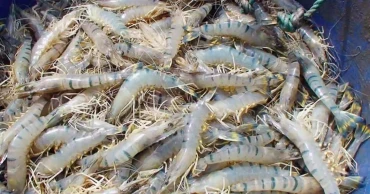
Shrimp: Khulna’s ‘white gold’ eyes Tk 22,600cr export goal
Shrimp, once known as the ‘white gold’ of Bangladesh’s southwest and a major export from Khulna, has declined due to fierce global competition and the growth of vannamei shrimp farming in neighbouring countries.
Now, after years of stagnation, the sector is showing signs of recovery as the Department of Fisheries has rolled out a series of measures aimed at restoring the industry’s lost luster, and the results are beginning to show.
According to the Export Promotion Bureau (EPB), shrimp exports from Khulna over the last five years totalled Tk 11,300 crore.
Authorities have now set an ambitious goal to double that figure within the next five years.
Department of Fisheries data reveal that the region exported 1,53,388 metric tonnes of fish between FY2020 and FY2025, generating Tk 13,456 crore in revenue. Of this, shrimp accounted for 1,02,339.629 tonnes, bringing in Tk 11,301 crore.
500 shrimp enclosures washed away after an embankment collapsed in Satkhira
In FY2024-25 alone, Khulna produced 1,23,151.17 metric tonnes of shrimp, with 19,512 tonnes exported — earning Tk 2,499 crore. The shrimp export rate for the region during the year stood at 42.19%.
To boost output, the Khulna office of the Department of Fisheries has adopted several strategic initiatives. These include advanced training in shrimp cultivation for 10,750 farmers, supplying equipment to 7,500 of them, and promoting cluster-based farming to help traditional farmers multiply their yields two- to fivefold.
Demonstrations under ‘Field Days’ are motivating farmers, while biosecurity and hygiene measures are being enforced to ensure better quality. Officials are also encouraging farmers to pursue third-party certification for improved prices in international markets.
Lipton Sardar, Divisional Fisheries Inspection and Quality Control Officer in Khulna, stressed the need for long-term, shrimp-focused projects.
“There needs to be a dedicated policy framework for shrimp, including zoning of shrimp farming areas, infrastructure development, timely supply of disease-free larvae and guaranteed access to quality feed,” he said.
He also highlighted the importance of strict testing of fry, feed, medicines and chemicals, alongside the establishment of a separate staffing structure to oversee production and quality control in shrimp-rich districts.
“Building institutional capacity to diagnose and treat shrimp diseases, while ensuring responsible practices among exporters, is essential to restore buyer confidence,” Sardar added.
Tariqul Islam Zahir, Senior Vice President of the Frozen Foods Exporters Association, said the region once had 63 shrimp processing companies, but declining production and global market demand forced 33 to close.
“Despite increased bank interest rates and rising electricity bills, some companies are still operating. The frozen shrimp sector is now beginning to recover,” he said, urging the government to provide subsidies for power and production costs.
Exporters say shrimp remains vital to the national economy. However, falling demand and prices in Europe, coupled with irregular payments from foreign buyers, have hurt earnings.
Viral outbreaks have further dented production, while the COVID-19 pandemic, the Russia-Ukraine war and domestic political turbulence compounded challenges.
Repeated shipment cancellations pushed many exporters to the brink of collapse. Yet a recent surge in exports has rekindled hope across the industry.
Stakeholders in Khulna believe that, with continued policy support and improved production standards, the ‘white gold’ can reclaim its former glory and secure an even stronger foothold in the global seafood market.
Read more: Khulna falls short of jute production target for lack of incentives
1 year ago

Study: 87% dried fish deemed safe, 13% contains pesticides
Only 13 percent of dried fish produced in Bangladesh were found to contain traces of pesticides, while the remaining 87 percent are considered safe for consumption, according to findings of a new study.
Researchers noted that even in the dried fish samples where pesticide residues were detected, the levels dropped significantly after cooking.
2-month fishing ban in Padma-Meghna to end tonight
The study, based on samples collected from five major dried fish-producing regions — Chattogram, Cox’s Bazar, Dubla Char, Chalan Beel (Natore), and Sunamganj — analyzed 405 samples in total. It found an average of 13 percent pesticide usage across the selected samples.
The study further revealed consumption preferences among regions.In Chattogram and Cox’s Bazar, Churi shutki is the most consumed variety (57% and 55% respectively) while in Chalan Beel, Taki shutki dominates (37%), and in Dubla Char, Loitta shutki is the preferred choice (46%).
The findings were presented on Wednesday at a seminar titled “Presentation of Research Results” of organised by the Bangladesh Food Safety Authority (BFSA) at its headquarters in Shahbagh.
BFSA Member Dr Mohammad Mostafa chaired the seminar, while BFSA Chairman Jakaria attended as chief guest. Dr Md Ariful Islam, senior scientific officer at the Shrimp Research Centre under the Bangladesh Fisheries Research Institute, presented the research findings.
Panel discussants included Prof Dr Md Tajul Islam Chowdhury of the Department of Agricultural Chemistry at Sher-e-Bangla Agricultural University, and Dr Md Nazmul Bari, Principal Scientific Officer at the Bangladesh Rice Research Institute. Prof Dr Mohammad Shoeb, also a BFSA member, delivered the welcome address.
Jakaria stated that the research was part of seven studies undertaken during FY 2022–23. "The results reflect the researchers’ findings and not the official position of the BFSA. These do not represent the national picture, but provide limited insight. If higher levels of concern are found in preliminary studies, BFSA will propose broader research to relevant stakeholders," he said.
He further warned that the use of pesticides in dried fish would be treated as a punishable offense.
Stressing the need for clear definitions, he said, “Many practices are socially considered adulteration but may not be scientifically so. It’s crucial to define what qualifies as adulteration. The use of pesticides in dried fish should be treated as such.”
In his welcome speech, Dr Shoeb noted that certain banned pesticides are still being used in dried fish. He referenced a recent Basel Convention proposal that seeks to prohibit 10 such pesticides, two of which are currently in use in Bangladesh.
Dr Ariful Islam stated that 60 percent of the country’s protein intake comes from fish and meat. “Most dried fish producers lack formal education, leading to improper processing. Pesticides are often used when sunlight is insufficient — typically between October and March,” he said.
He added that most pesticide use is associated with sun-drying processes. Of 260 core samples analysed, only 13 percent contained detectable pesticide levels.
Daily per capita consumption of dried fish by region was found to be 15.72g in Cox’s Bazar, 14.48g Chattogram, 7.84g in Sunagang, 9.56g Chalan Beel, dubla Char in 12.22g.
Higher concentrations of endosulfan sulfate were detected in samples from all five regions, while smaller amounts of dieldrin, heptachlor epoxide, and beta-endosulfan were also found.
Dr Nazmul Bari highlighted the widespread use of polythene in dried fish processing and called for inclusion of microplastics in future studies. He also advocated for transitioning from traditional sun-drying methods to mechanical drying for improved safety.
Speakers noted that soaking dried fish in water or saltwater for a few hours can reduce harmful effects.
Researchers develop solution to lower emissions and enhance air quality from brick industry
The seminar was attended by representatives from various private organisations, government agencies, civil society members, and media personnel.
Dialogue calls for stronger research, policy integration to build greener, resilient South Asia
1 year ago

Hilsa prices hit record high in Chandpur ahead of 22-day fishing ban
Prices of hilsa have shot up again in Chandpur markets as a 22-day ban on hilsa fishing is set to begin at midnight on Saturday, to ensure safe spawning in the freshwaters of the Padma and Meghna rivers.
The ban has sparked a rush at Chandpur’s Boro Station fish ghat, one of the country’s largest fish landing centers, where buyers have been scrambling to purchase the priced fish before the restriction takes effect.
The government ban, aimed at protecting hilsa during its spawning season, will remain in place until November 3.
Traders said hilsa weighing 1 to 1.2 kilograms is being sold for Tk2,800- 3,000 per kilogram, an all-time high. The price of smaller hilsa, weighing 500 to 900 grams, ranges from Tk 1,200 - 2,000 per kilogram.
479 MT hilsa exported to India through Benapole
“Prices were lower just a week ago. Now, even though I want to buy, I can’t because the prices have gone up by Tk500 - 700 per kilogram, said Solaiman, a buyer from Ashikati area.
At the fish landing centre, local fishermen were seen bringing in fresh hilsa, some from nearby areas, while others arrive by truck from Noakhali.
Omar Faruq, manager of the Kalu Bhuiyan fish shop, said “The upcoming 22-day ban is the reason. The number of retail buyers far outnumbers the fish supply here.”
With the ban approaching, some tourists have also flocked to the landing centre, turning their fish-buying trip into a family outing, Faruq adding the market has been busy from morning till night, and on Fridays, many tourists were spotted buying hilsa and having it fried at nearby restaurants.
479 MT hilsa exported to India through Benapole
Veteran fish traders like Nurul Islam and Mostafa Khan said they haven’t seen prices this high in over 50 years. In the city’s busiest markets, including Biponibagh and Palbazar, the story is the same.
Chandpur District Fisheries Officer Golam Mehedi Hasan explained the practice of imposing the ban. "Hilsa migrate from the sea to freshwater during this time to spawn. The 22-day ban covers a 70-kilometer stretch from Shatnol in Matlab Uttar Upazila to Char Bhairabi in Haimchar Upazila."
All fishing, transporting, selling, and stocking of hilsa in this area will be prohibited durning the ban.
Despite increased production—reaching 571,342 tonnes in the fiscal year 2022-23, up from 566,593 tonnes the previous year—the demand for hilsa remains high in Bangladesh, keeping prices elevated in the local market.
In the fiscal year 2023-24, Bangladesh exported 664.86 tonnes of hilsa to India, generating $7.71 million, according to the Department of Fisheries. The previous year saw exports of 1,376.42 tonnes of hilsa, worth $13.68 million.
Read more: 10 Tasty Ilish Recipes for Bangladeshi Kitchen
1 year ago
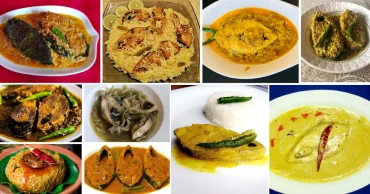
10 Tasty Ilish Recipes for Bangladeshi Kitchen
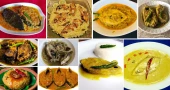
Hilsa, or Ilish, is a beloved delicacy in Bangladesh. It is renowned for its unique flavour and tender texture. Its rich taste and aroma make it an exclusive choice for traditional Bangladeshi dishes, cherished by food lovers nationwide. Let’s delve into different and exclusive Ilish recipes to savour.
Nutrients and Health Benefits of Hilsa Fish
Ilish is rich in omega-3 fatty acids, which promote heart health and reduce inflammation. It provides high-quality protein essential for muscle repair and growth. The fish is a good source of vitamins B12 and D, supporting brain function and bone health. Additionally, Ilish contains selenium, which boosts the immune system, and essential fatty acids that maintain healthy skin. Consuming Ilish can contribute to well-being and a balanced diet.
Read more: Healthy Alternatives to Cakes and Cookies: 7 Delicious and Nutritious Swaps
10 Mouthwatering Ilish Recipes to Try at Home
Ilish Paturi
Ingredients
4 pieces Ilish fish (3-cm-thick pieces), 40 grams mustard seeds (soaked 2 hours), 8 pieces green chillies, 40 grams grated coconut, 50 grams yoghurt (beaten), 24 grams salt, 2 g sugar, 2 g turmeric powder, and 20 g mustard oil.
2 years ago

Vegetable prices down slightly but fish and meat cost higher
The prices of winter vegetables except potato decreased slightly as the supply increased but meat and fish prices were still high in the kitchen market of the capital on Friday.
Though the prices of vegetables have decreased, it was selling Tk 20 to 30 per kg higher compared with the same period of the last year. Comparatively, vegetables and all other commodities are exactly higher this year, than recent previous years, said Harun-Ur Rashid, a retired employee of the government.
Talking with the UNB at Karwan Bazar kitchen market, he said potato, tomato, and carrot prices usually remain between Tk20 to 40 per kg during this time of season. But these items are selling between Tk60 to 70 per kg based on quality.
Record jump in prices of onion, potatoes, and vegetables: CAB blames syndicated business
These additional prices have become a burden for retired and fixed-income groups. Thus decreasing the prices of vegetables by Tk10 to 20 per kg iscnot bringing any relief to the consumers, he said.
However, almost all winter vegetables were selling between Tk40 to 70 per kg in the Karwan Bazar on Friday.
Potato was selling at Tk60 to 70 per kg, onion at Tk70 to per kg-based quality, garlic at Tk220 per kg, and ginger at Tk200 to 240 per kg in different markets of the capital.
On the other hand, discomfort remains in the fish and meat market. Broiler chicken was selling at Tk200-220 per kg, and Sonaly chicken (Pakistani variety) at Tk320-340 per kg. Beef, which was sold at Tk 650 in many places a couple of weeks ago, is now being sold at Tk 700 per kg everywhere.
Vegetable prices go up in Dhaka citing short supply after rain damaged fields
Per dozen brown eggs (hens) at Tk135 to140, 5-10 taka less white eggs. Duck eggs were selling for Tk 180 to 190 per dozen while eggs of indigenous domestic rearing chicken were selling at Tk210 per dozen.
The prices of fish are higher now compared with a few months ago. However, Tilapia, pangas, and carp were selling between Tk220 to 260 per kg. Among other fish, the price of medium size weighing 1.5 kg to 2 kg farming Rui, Katla, and Mrigel fish was selling at Tk 300 to Tk 400 per kg. Also, Pabda, Tengra, Koi, sheat (Boal),, chital, and Hilsa fish are not below Tk600 per kg.
The bigger size fish prices like coral, Boal, and river pangas were selling between Tk700 to 1100 per kg at Karwan Bazar.
Asked about the price hike, Director General of the Directorate of National Consumers Rights Protection (DNCRP) AHM Shafiquzzama told UNB that his office will launch a drive against the unusual price hike of these essentials.
Winter is coming, vegetable prices will come down: Agri Minister
He also said that a few months ago he asked different ministries and directorates to take steps to increase the supply of essentials including onions and potatoes to control prices.
Shafiquzzama said during a visit to different cold storage in different districts he found enough stock of potatoes, despite the price increase.
If the higher price of onion and potato continue, the government will decide to import those items, he said.
Consumers Association of Bangladesh vice-president SM Nazer Hossain said consumers in Bangladesh are having a hard time amid record prices of commodities due to higher inflation.
Farm egg, broiler chicken, and cultured fish are key protein sources for millions of poor in the country, he said.
Prices of all such products have increased forcing a vast population to cut their protein and other nutrition-rich food intake, Nazer said.
2 years ago

10,000 fishermen likely to gather at Dublar Char as dried fish processing season starts
A total of 10,000 fishermen from coastal areas are expected to gather at Dublar Char, popularly known as “Shutki Polli” or Dried Fish Village, as dried fish processing season kicked off.
Every year, several thousand fishermen and hired hands flock to the area to catch fish and make shutki (dried fish).
According to the forest department, this year, the authorities concerned have given permission to erect 108 makeshift houses and 78 depots for accommodation of fishermen and preservation of dried fish.
Bagerhat's Dublar Char abuzz as fish drying season begins
The fishermen will catch fish using 1500 trawlers in the Sundarbans. They will process the fish and keep those under the sun for drying.
Dublar Char is already buzzing with workers and traders after the authorities issued permits to fishermen to catch fish.
Thousands of Dublar Char fishermen take oath together with PM on Victory Day
Last year, the government earned Tk 6 crore revenue from Dublar Char and this year, a Tk 7 crore target has been set.
Different species of fish including Loitta, Faissa, Koral, Pomfret, Chhuri, Tuna and many more are being processed at Dublar Char. The demand of dried fish from the area is high as they are processed without using chemicals and formalin.
Dublar Char comes alive as Sutki fish season gets underway
Rabiul Islam, a fisherman from Rampal upazila, said he came to Dublar Char on Friday and spent a busy day making makeshift houses with bamboo, polythene and hogla (long dry grass used for sheds).
Shahid Mallik, president of Matsyajibi Samity, said thousands of fishermen have already reached the area while many went to the sea to catch fish.
Dilip Majumdar, officer-in-charge of Alorkol camp, said the fishermen are busy erecting makeshift houses and it takes two to three days to complete.
Some fishermen were busy processing their catch under the open sky, he said.
Rana Deb, assistant forest conservator of Sundarbans East zone, said the dried fish processing season began on November 3 and will continue till March 31, next year.
The fishermen will live in Alorkol, Majherkella, Narikelbaria and Shelar Char for five months.
Sheikh Mahbub Hasan, assistant conservator of Forests under Sharankhola Range, said the forest department has been asked to remain vigilant so that no one in the guise of fishermen can commit crimes on Dublar Char.
2 years ago

Demand for salted hilsa up in north Bangladesh
Hilsa, despite being the national fish of Bangladesh, is mostly out of low-income people's reach, but they can savour the delectable taste of dried, salted hilsa as it is becoming popular in northern parts of the country due to its affordable price.
Every year, the workers at Chandpur Boro Station Fisheries Ghat process the unsold hilsa fish. They are now busy cutting up the fish and putting salt in them.
Dried salted hilsa or "nona ilish" is catching on in Mymensingh, Tangail, Kurigram, Sherpur and Manikganj districts, and demand is consistently up.
22-day ban on hilsa fishing begins tomorrow
At the fisheries ghat, many hilsa remain unsold as they go soft during the season. Some traders purchase these at average price and process them with salt. The dried salted fish are sold at Tk 900-1200 per kg.
The workers also separate the eggs from the fish, and the eggs are sold at Tk 2500-2600 per kg. Last year, per kg hilsa eggs were sold at Tk 1400.
173 tonnes of Hilsa exported to India in 3 days through Benapole port
Ramjan Bepari, a trader, said that he has been running his business for the past 30 years and every year, he comes from Mymensingh during the hilsa season and lives in the area.
He bought unsold hilsa, weighing between 700 and 1000 grams, from the wholesale market at a cost of Tk 700 to 800 per kg.
This year, he set a target to process 3000-3500 maunds of hilsa. This dried salted hilsa will remain edible for the next six months, he claimed.
Like Ramjan, many traders, including Anwar Hossain, Zakir Hossain and Chari Gazi, have come to Chandpur for the same purpose.
Some 100 women and 150 men are involved in processing hilsa fish. They are happy with the daily wages they get.
Delay ban on catching hilsa by a month: Barishal fishing community
Dr Anisur Rahman, a renowned hilsa expert at the Fisheries Research Institute in Chandpur, said that hilsa can be preserved with salt for six months.
Hilsa eggs can also be preserved the same way through ensuring the right temperature in the refrigerator.
Some 25-30 lakh people are now involved in processing hilsa fish, and they are earning profits.
2 years ago

Despite ample supply, Hilsa still out of reach of the average buyer
The price of hilsa, a treat Bengalis look forward to during the monsoon, is still high despite ample supply in the wholesale markets of Chandpur district.
The national fish of Bangladesh is still out of reach of the average buyer.
During a recent visit to Chandpur Boro Station fisheries ghat, this correspondent found people busy loading and unloading hilsa as 2,000-2,500 maunds of the fish are coming from the southern districts of the country every day on average.
Read more: Hilsa Ilisha: The National Fish and Silver Pride of Bangladesh
Transportation of hilsa starts from 10 am till afternoon through trucks, pick-up vans and trawlers at the wholesale markets and some 500 workers in the ghat area are involved in loading and unloading the fish.
Hilsa, weighing 700-900 grams each, are of decent sizes too.
People from Dhaka’s Karwanbazar, Azampur, Abdullahpur, Uttara; Gazipur’s Tongi; Tangail; Kishoreganj; Jamalpur, Mymensingh; Sreemangal; and Sylhet come to the wholesale market in Chandpur and take hilsa via trucks and train.
One kg hilsa is being sold at Tk 1,500 while in the retail market it is being sold at Tk 1,800-2,000 and hilsa weighing 500-700 grams is being sold at Tk 900-1,100. The silver fish weighing 900 grams is being sold at Tk 1,400-1,500.
2-month ban on Hilsa fishing to end Sunday midnight
3 years ago