International Monetary Fund
'Significant work remains' in reforming financial, fiscal, and exchange rate sectors: IMF
The International Monetary Fund (IMF) has emphasized that Bangladesh requires extensive reforms across three critical sectors, including financial, fiscal, and foreign exchange.
According to the global lender, significant work remains to be done in each of these areas to ensure economic stability.
Krishna Srinivasan, Director of the IMF's Asia and Pacific Department, made these remarks on Thursday while responding to questions from Bangladeshi journalists at a press conference in Washington, D.C. The briefing was attended by media representatives from India, Nepal, Sri Lanka, and South Korea, among other nations.
The briefing took place on the sidelines of the World Bank-IMF Spring Meetings, which commenced on April 13 and are scheduled to conclude on April 18. A 14-member Bangladeshi delegation, led by Finance and Planning Minister Amir Khosru Mahmud Chowdhury and Bangladesh Bank Governor Md. Mostaqur Rahman, is currently attending the meetings.
Reflecting on his visit to Bangladesh on March 24, where he met with Prime Minister Tarique Rahman and the Finance Minister, Srinivasan shared his impressions of the new government's capacity for reform.
"I visited Bangladesh and held meetings with the Prime Minister and other high-level officials. We discussed the challenges ahead," Srinivasan stated.
"I noted that a government with a strong majority has the opportunity to undertake ambitious reform agendas. They have listened to our suggestions; now we must wait and see how they respond," he opined.
The IMF Director expressed concern over Bangladesh's revenue collection performance. "In terms of revenue mobilization, Bangladesh has not performed well. It remains at a low level and has seen further deterioration over the last three years," he noted.
Regarding the release of the next loan tranche, he mentioned that discussions are ongoing, and updates would be provided in due course.
Highlighting the situation in Sri Lanka, Srinivasan pointed out that under its IMF-supported program, the country has made significant strides in increasing its tax-to-GDP ratio over the last three years, gradually building financial buffers. He noted that Sri Lanka is now in a relatively better position to support citizens affected by energy price shocks.
Srinivasan warned that because Bangladesh has a small revenue base, the government faces greater pressure when trying to provide social safety nets. "The people of Bangladesh are suffering. Therefore, it is crucial that whatever resources Bangladesh possesses are utilized with maximum target-based efficiency," he urged.
He advised Bangladesh to focus on increasing revenue collection while addressing other barriers in the financial sector to boost both short-term and long-term growth. Like other Asian nations, Bangladesh has been impacted by global energy shocks, and Srinivasan concluded that policy support and program discussions are active, with the outcome depending on how effectively these dialogues progress.
5 months ago
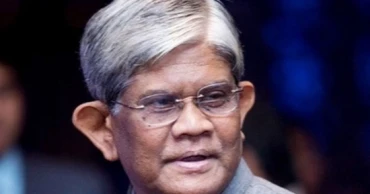
IMF satisfied with Bangladesh’s reform progress but flags key challenges: Salehuddin
Finance Adviser Dr Salehuddin Ahmed on Tuesday (November 18) said the International Monetary Fund (IMF) has expressed satisfaction with Bangladesh’s ongoing economic reforms although reiterated concerns over several structural challenges that require closer attention.
“They said the situation is overall good but they are monitoring the challenges. We are working under a plan but they feel that taking some steps a little faster would bring better outcomes,” he told reporters after meetings of the Advisers Council Committee on Economic Affairs and the Committee on Government Purchase at the Secretariat.
He noted that the IMF is particularly concerned about the speed of policy implementation especially surrounding interest rate adjustments.
“Increasing the policy rate by the central bank cannot be done suddenly. Everyone knows that. We have to ensure supply-side improvements at the same time,” he said.
Dr Salehuddin also mentioned that the IMF has raised issues related to the banking sector.
“They have taken five banks under observation which they consider a major challenge,” he said, adding that the government needs to undertake tough reforms to strengthen financial governance.
On revenue administration, the adviser said the IMF is satisfied with the current progress of the National Board of Revenue (NBR) but expects reforms to continue steadily. “The process has become principled but manpower restructuring and capacity enhancement will take time,” he said.
Read more: Bangladesh’s reserves still remain above $31 billion after ACU payment
He added that while it may not be possible to achieve a complete turnaround within the current government’s tenure substantial groundwork and structural preparations would be completed.
“We may not reach the final conclusion but the logical framework and preparatory work will be done,” he assured.
Responding to a question on whether the IMF has set any new conditions, Dr Salehuddin said no fresh conditions were imposed.
“This was more like a consultation. They expressed satisfaction with the measures we have taken so far. The economic situation is largely under control and the remaining time will be used for consolidation,” he said.
The $4.7 billion IMF loan programme, approved in January 2023, aims to support Bangladesh’s economic stability, strengthen fiscal reforms, and enhance resilience amid global economic pressures.
Several tranches have already been disbursed while further installments remain tied to policy performance benchmarks and structural reforms.
The IMF will delay disbursing the sixth tranche until the next national election and the new elected government assumes office.
Read more: Bangladesh economy in ‘waiting vortex’; experts urge credible elections
The interim government that assumed power on August 8, 2024 three days after the Awami League regime was ousted amid a mass uprising announced that the next general election would be held in February.
Finance ministry officials said that theyare expecting the releases of the sixth and the seventh tranches in June, 2026.
On June 23, the IMF approved the release of the fourth and fifth tranches amounting to $1.3 billion, taking the overall amount of disbursement to $3.6 billion.
In June 2025, the IMF also increased the overall loan amount to $5.5 billion from $4.7 billion under the loan programme that began in 2023 under the AL regime in 2023 to meet the balance of payment shortage.
The progarmme period has also been extended by six months to January 27, 2027 from July 2026, following requests from Dhaka.
The interim government has already reduced the balance of payment pressure.
Driven by higher remittance and export earnings, the country’s gross foreign exchange reserves increased to $32 billion on October 16, the highest in 31 months.
The latest IMF mission is also linked to the Article IV report, an annual consultations with its member countries on overall economy, on Bangladesh.
Read more: Jamaat-e-Islami holds meeting with IMF on economy and tax system
10 months ago

IMF team meets BNP, discusses reforms in financial, social sectors
A delegation from the International Monetary Fund (IMF) met BNP leaders on Sunday (9th November 2025) and discussed various issues, including reforms in the financial and social sectors.
The IMF team, led by Chris Papageorgiou, its Bangladesh Mission chief, held the meeting at the BNP Chairperson’s Gulshan office, said BNP Media Cell member Sayrul Kabir Khan.
BNP Standing Committee member Amir Khosru Mahmud Chowdhury led the four-member party delegation.
The other members were BNP Chairperson’s Advisory Council members Md Ismail Zabihullah and Dr Ziauddin Hyder, and BNP Organising Secretary Shama Obaed.
Sayrul said both sides discussed the preliminary findings of the IMF’s ongoing mission review report.
Salahuddin slams govt for 7-day ultimatum on referendum consensus
“The key issues of discussions included value-added tax (VAT) harmonisation and the reduction of exemptions under a new technical assistance programme, increasing corporate tax to improve the GDP-to-tax revenue ratio, reforming the banking sector, and raising social sector spending, which the BNP delegation highlighted as one of the party’s key policy priorities,” he said.
Sayrul said the BNP delegation stressed that reforms in the financial, tax, and social sectors are essential to ensure sustainable economic stability in Bangladesh. “They said the BNP believes that long-term growth is not possible without an accountable and transparent financial management system.”
He said the IMF team appreciated the BNP’s reform-focused policy priorities and constructive approach.
The meeting ended with both sides expressing hope for continued policy dialogue and greater cooperation in the future, Sayrul added.
IMF Chief highlights importance of bold reforms in banking sector
10 months ago
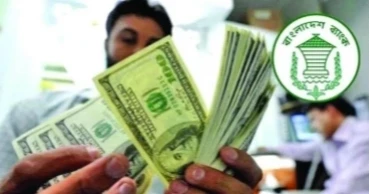
Bangladesh's forex reserves exceed $30bn
Bangladesh’s foreign exchange reserves climbed to $30.51 billion on Thursday, reflecting a renewed strength in the country’s external sector.
But, officials said, under the International Monetary Fund's (IMF) Balance of Payments and International Investment Position Manual (BPM6), the reserve is calculated at $25.51 billion.
The usable portion of this, according to the same method, stands at $19.80 billion, said the Bangladesh Bank officials.
The boost in reserves follows a notable rise in remittance inflows through formal channels, largely attributed to the change in government after the Awami League’s departure from office.
This surge in remittances has brought much-needed relief to the foreign exchange market, easing pressure on the reserve position.
However, the central bank has not sold any dollars from its reserves over the past 10 months. The increase is also supported by the inflow of over $5 billion in loans for budgetary support, debt servicing, and reforms in the banking and revenue sectors.
Backed by IMF, remittances, Bangladesh’s Forex reserves hit $27.3 billion
Besides, the IMF is expected to release a $900 million loan, taking into account the country’s repayment capacity.
A further $1.5 billion in loans from the World Bank, Asian Infrastructure Investment Bank (AIIB), Japan and the OPEC Fund is anticipated to be added to the reserves by the end of this month.
The officials expect this inflow to push the total reserves to around $32 billion by month-end.
1 year ago
Bangladesh may opt out of IMF loan programme if more conditions imposed
Dhaka, May 3 (UNB) – Bangladesh will pull out of the loan programme if the International Monetary Fund (IMF) imposes additional conditions for the release of upcoming tranches of the US$4.7 billion loan, warned Chief Adviser’s Special Assistant Anisuzzaman Chowdhury.
He made the statement on Saturday while speaking at a budget seminar held at the Bangladesh Agricultural Research Council in Farmgate, Dhaka.
“Bangladesh will withdraw if the IMF imposes more conditions for loan releasing. Because if all the conditions of the organisation are followed, the economy will become weak,” said Anisuzzaman.
At the seminar ahead of Bangladesh's final recognition as a developing country next year, agricultural economists urged the government to raise the agriculture budget with clear targets.
They also recommended reducing VAT on the import of raw materials used in poultry feed production, and called for easier access to loans and incentives for farmers.
Faced with dwindling foreign exchange reserves, Bangladesh signed a US$4.7 billion loan agreement with the IMF on January 30, 2023.
Tariffs, oil prices and other uncertainties weighing down Mideast economies, IMF says
The first tranche of US$476.27 million was disbursed three days later. This was followed by a second instalment of US$682 million on December 16 of the same year. The third instalment of US$1.15 billion was received on June 24 last year.
The IMF is scheduled to release the loan in six instalments by 2026. Although Bangladesh has so far received three, uncertainty now surrounds the disbursement of the fourth and fifth instalments.
1 year ago
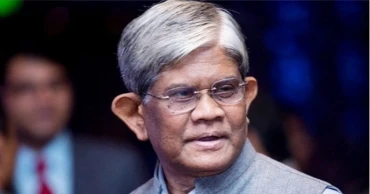
VAT hike on products aimed at revenue growth, not IMF conditions: Adviser
The decision to raise VAT and taxes on various products has been taken to boost government revenue rather than to meet International Monetary Fund (IMF) conditions, Finance Adviser Dr Salehuddin Ahmed said on Thursday.
Speaking to journalists after a meeting of Advisers Council Committee on Government Purchase at the Secretariat, the adviser said the adjustments were necessary to fill revenue gaps created by significant tax exemptions on certain goods.
Salehuddin Ahmed said that the hike in VAT on 43 items would not affect the prices of essential commodities or burden ordinary citizens.
He said that higher taxes have been imposed on luxury items, such as three-star and higher-rated hotels, while sparing establishments of standard quality. "The objective is to ensure a balanced revenue collection system that does not inconvenience the general population," he said.
IMF again eases foreign exchange reserve target for Bangladesh
The adviser, however, expressed optimism about economic stability in the coming year, adding that banks would receive sufficient support to maintain liquidity. "We aim to allocate increased budgetary resources to education and health, strengthening these vital sectors," he said.
The proposal, which has been sent for presidential approval, will be implemented through an ordinance once authorised.
While the adjustments target luxury goods, concerns persist regarding their potential impact on the broader economy.
1 year ago
IMF suggests upward policy rate in 2025 to restrain inflation: BB
With Bangladesh facing higher inflation for a long time, the International Monetary Fund (IMF) has advised keeping the policy interest rate on the rise until inflation decreases.
Bangladesh Bank Spokesperson and Executive Director Huseara Shikha hinted this while talking to reporters at her office on Tuesday.
She said this ahead of a delegation led by IMF mission Chief Chris Papadakis, scheduled to visit Bangladesh from December 3 to 17 to review the IMF conditions.
The IMF says that inflation in Bangladesh is currently above 11 percent. It will remain around 10 percent throughout 2025, and after that, the international donor agency believes it may come down to 6 to 7 percent.
The fourth tranche of the US $4.7 billion loan program depends on fulfilling the conditions given by the global lender.
Read: BB Governor projects inflation reduction in 8 months
The IMF imposed conditions on Bangladesh for providing this loan.
Although almost all the conditions given by the lender are on track to be met, it is well behind the revenue collection target. However, the installment has already been released after showing progress in fulfilling most of the conditions.
Earlier, in January 2023, the IMF approved a $4.7 billion loan for Bangladesh. It was supposed to provide this loan to Bangladesh subject to conditions.
The IMF delegation is reviewing each installment of this loan, which was given in seven installments, before releasing it.
1 year ago
IMF advises Bangladesh Bank to disclose full report on banks’ financial health
The visiting International Monetary Fund (IMF) delegation has advised Bangladesh Bank to disclose detailed and complete information regarding bad and risky loans fin the public interest.
Meeting sources said that the visiting IMF delegation gave this suggestion in the meeting held with the BB officials on Sunday (April 28).
In the meeting, the IMF asked to make the financial health of the banks and the inspection report open to the customers. At the same time, it urged to increase the number of inspections to prevent irregularities-corruption and loan scams.
Officials concerned in the meeting said that bad loans or risky assets are increasing in banks due to various irregularities including big loan scams. Several banks have weakened which also acknowledged by the BB Governor.
Therefore, the IMF believes that the deposits of those banks which are in trouble are also at risk. In such a situation, the global lender suggested that the banks should disclose the full report of risky assets to the customers.
Read more: DUJ, DRU, TIB condemn ban on journalists entering Bangladesh Bank
According to the IMF Officials, “If these reports are published, the customers will be able to make informed decisions about keeping their deposits.”
In the meeting, the IMF sought to know whether the central bank's inspection of banks' financial health is continuing or not. Clarification has also been sought as to whether inspection reports are disclosed to customers or not.
In addition, the IMF delegation suggested increasing the quality and number of inspections to prevent irregularities, corruption and loan scams, sources said.
When asked about the meeting with the BB, the executive director and spokesperson of the BB Mesbaul Haque said that the meetings with the IMF are ongoing. This meeting will be held step by step till May 8. He did not agree to make any comment other than that and said the details will be given in future.
Read more: Islamic Banking in Bangladesh: Commendable contribution to the country’s economic growth
2 years ago

Bangladesh among 30 countries with the highest purchasing power parity in the world
Bangladesh has ranked 26th among 30 countries with the highest Purchasing Power Parity (PPP) in the World.
According to finance website, Insider Monkey, Bangladesh has a per capita GDP of $9.41 thousand based on purchasing power parity. In 2021, the country's GDP was little more than $1 trillion. In three years, it has risen to $1.6 trillion, making Bangladesh one of the world's fastest-growing economies today. GDP (PPP): $1,573,205,815,650, as per Insider Monkey.
People’s purchasing capacity has increased, says state minister Shafiqur
Top 10 countries with the highest purchasing power parity in the world:
1 China
GDP (PPP): $35,102,468,294,640
2. United States
GDP (PPP): $28,212,584,701,080
3. India
GDP (PPP): $13,837,886,095,650
4. Japan
GDP (PPP): $6,693,210,775,800
5. Germany
GDP (PPP): $5,737,921,135,920
6. Russia
GDP (PPP): $5,180,512,624,880
7. Indonesia
GDP (PPP): $4,706,381,666,640
8. Brazil
GDP (PPP): $4,533,438,662,610
9. France
GDP (PPP): $4,161,339,481,020
10. United Kingdom
GDP (PPP): $3,967,703,923,320
Govt's main task is to tame price hike and boost people's purchasing power: PM Hasina at Tungipara
What is PPP?
Purchasing Power Parity (PPP) is a macroeconomic concept used to compare the relative value of currencies between different countries. Value refers to how much purchasing a currency can do compared to different countries. So, to find that out, economists apply PPP, which is the exchange rate at which one country’s currency would be converted into another to purchase an identical basket of goods and services. The PPP metric is usually used to measure economic productivity and standards of living between countries, according to Insider Monkey.
In other words, utilising purchasing power parity, GDP is translated to a common baseline currency (international dollars), allowing for more realistic comparisons of nations and their worldwide positions.
Tackling inflation to protect people’s purchasing power key challenge: DCCI
Methodology
For its list of the ‘30 Countries with the Highest Purchasing Power Parity in the World’, Insider Monkey calculated the PPP using the GDP per capita by PPP of the 50 top countries with the largest economies in the world and their population. It then shortlisted the top 30 and compiled the list in ascending order. The base data for GDP per capita and population has been sourced from the International Monetary Fund and the CIA’s database and is accurate to 2024, the finance website said.
2 years ago

AI could threaten 40% of global jobs, IMF warns
The International Monetary Fund (IMF) has sounded an alarm, indicating that nearly 40% of global employment could be endangered by the burgeoning influence of artificial intelligence (AI). This stark warning, reported by CNN, underscores the seismic shifts anticipated in the global job market.
IMF Chief Kristalina Georgieva, in a recent blog post, stressed the critical necessity for governments worldwide to fortify social safety nets and roll out comprehensive retraining programmes. This proactive approach aims to mitigate AI's potentially dramatic effects on employment.
Davos 2024: Can AI provide solutions, as Global leaders confront $88.1 trillion debt crisis?
Highlighting a key concern, Georgieva pointed out the potential for AI adoption to aggravate existing inequalities, a trend that requires immediate policy intervention to avert escalating social tensions. This issue is set to be a central theme at the upcoming annual meeting of the World Economic Forum (WEF) in Davos, Switzerland, where AI's role in the economy will be a focal point.
According to the IMF's analysis, advanced economies might witness the most significant impact, with up to 60% of jobs at risk. Although AI promises to enhance productivity in about half of these roles, the remainder faces a stark reality of diminishing demand, lowered wages, and potential unemployment as AI assumes roles traditionally held by humans.
UN chief warns of risks of artificial intelligence
Emerging markets and lower-income countries are not immune to these challenges. Here, 40% and 26% of jobs, respectively, may feel the impact. Georgieva raised concerns about these regions' lack of infrastructure and skilled workforces, factors that intensify the risk of AI deepening existing economic divides.
Georgieva also warned of an escalating risk of social unrest, especially if younger, tech-savvy workers leverage AI for productivity gains, leaving their older counterparts struggling to adapt.
China warns of artificial intelligence risks, calls for beefed-up national security measures
At Davos, the implications of AI on employment are a key discussion topic. Prominent figures, including Sam Altman, CEO of ChatGPT-maker OpenAI, and Microsoft's Satya Nadella, are slated to address the impact of generative AI technologies.
Despite these challenges, Georgieva did not overlook AI's positive potentials, noting its capacity to significantly boost global output and incomes. She argued that with thoughtful planning, AI could be a transformative force for the global economy, stressing the importance of channeling its benefits for the collective good.
Amidst concerns over job displacement, some economists are optimistic, suggesting that AI's widespread adoption may ultimately enhance labor productivity. This could potentially lead to a 7% annual increase in global GDP over the next decade.
2 years ago