Arab Spring
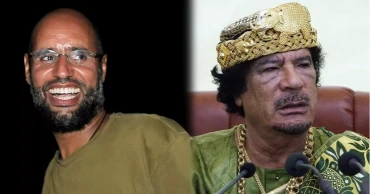
Who was Saif al-Islam Gaddafi, Muammar Gaddafi’s political heir
Saif al-Islam Gaddafi, the most prominent son of former Libyan leader Muammar Gaddafi and once widely viewed as his political successor, has been killed in western Libya, according to figures close to him.
Saif al-Islam, 53, was killed in the city of Zintan, where he had been living since 2011. His political adviser Abdullah Othman and lawyer Khaled el-Zaydi confirmed his death on Tuesday.
A statement issued by his political team said he was assassinated after four masked attackers broke into his home in Zintan, reports Al Jazeera.
Before the 2011 uprising, Saif al-Islam was regarded as Libya’s second-most powerful figure and the likely heir to his father’s rule. During the Arab Spring protests and the ensuing civil war, he remained a central figure, facing repeated accusations of torture and violent repression of opponents.
In early 2011, he was placed under United Nations sanctions and barred from international travel. That March, NATO launched airstrikes on Libya after the UN authorised military action to protect civilians.
In June 2011, Saif al-Islam said his father was prepared to hold elections and step down if defeated, an offer rejected by NATO as the bombing campaign continued.
Later that month, the International Criminal Court issued an arrest warrant against him for crimes against humanity.
After Muammar Gaddafi and his son Mutassim were killed in Sirte in October 2011, Saif al-Islam was captured and held in Zintan.
Libyan authorities eventually secured the right to try him domestically rather than extradite him to The Hague.
In 2014, he appeared by video link at a Tripoli court while still detained in Zintan. A year later, he was sentenced to death in absentia. In 2017, he was released under an amnesty declared by eastern Libyan authorities, though the ICC warrant against him remained in force.
Son of late dictator Gadhafi is killed in Libya
He largely stayed out of public view for years before giving a rare interview to The New York Times in July 2021, accusing Libyan authorities of fearing elections. Later that year, he made his first public appearance since the war and registered as a presidential candidate in Sebha.
Although initially barred, he was later reinstated as a candidate, but the election was never held amid Libya’s prolonged political instability and rival administrations.
Western-educated and fluent in English, Saif al-Islam cultivated an image as a reformist within his father’s authoritarian system. He earned a PhD from the London School of Economics in 2008 and played a visible role in Libya’s efforts to rebuild relations with Western governments.
He was involved in negotiations over Libya’s nuclear programme, compensation agreements linked to major international attacks, and the release of foreign medics imprisoned in Libya. He also promoted international initiatives, including a one-state proposal for the Palestinian-Israeli conflict and peace talks in the Philippines.
Despite presenting himself as a modernising figure, his legacy remained deeply controversial due to his role during the 2011 conflict.
7 months ago
Egypt frees pro-democracy activist imprisoned for four years
Egypt on Friday freed a pro-democracy activist who spent over four years in prison and rose to local prominence as one of the faces of the country's 2011 uprising, his lawyer said.
6 years ago