US stock
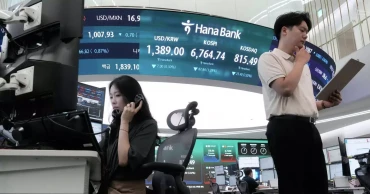
Asian shares mostly fall as bond market pressure intensifies
Asian shares mostly declined and oil prices slipped Monday as investors remained cautious ahead of a key gathering of top US economic officials at Jackson Hole later this week.
US stock futures also edged lower.
Japan’s Nikkei 225 fell 0.5% to 65,678.45, while South Korea’s Kospi dropped 3.5% to 6,664.36. Hong Kong’s Hang Seng Index declined 2.1% to 25,465.23 and the Shanghai Composite lost 0.7% to 3,877.30.
Australia’s S&P/ASX 200 bucked the regional trend, rising 0.5% to 9,107.40. Taiwan’s Taiex fell 0.5%.
Markets are awaiting the US inflation report for July, due Wednesday. The personal consumption expenditures (PCE) price index is the Federal Reserve’s preferred inflation gauge and, like the consumer price index, has indicated that inflation remains above 3%.
The Fed has struggled to bring inflation back to its 2% target. Inflation had moved closer to the goal in early 2025 before rising again following the introduction of broad US tariffs. It increased further in early 2026 after the Iran war disrupted oil shipments through the Strait of Hormuz.
Bond markets have also remained under pressure. Last week, rising Treasury yields prompted an unusual intervention by the US Treasury Department and raised concerns that higher borrowing costs could weaken consumer spending.
Treasury Secretary Scott Bessent announced that the government would double its purchases of longer-term bonds in an effort to reduce yields and mortgage costs. However, the 10-year Treasury yield climbed back to 4.73% Friday, its highest level in more than a year, and stood at 4.71% early Monday.
The 30-year Treasury yield also rose and remained close to its highest level since 2007.
Higher bond yields can weigh on economic activity and reduce the value of various investments.
Investors will closely watch Federal Reserve Gov. Kevin Warsh’s speech at the annual Jackson Hole gathering later this week for clues about interest rates and other policies.
On Friday, the S&P 500 gained 0.4%, marking only its second rise in six sessions after reaching a record high last week. The Dow Jones Industrial Average advanced 1%, while the Nasdaq composite rose 0.4%.
Strong corporate earnings have helped support US stocks, with most companies reporting better-than-expected spring profits.
Uncertainty over when oil tankers will again be able to move freely out of the Persian Gulf has also unsettled markets, pushing oil prices higher and raising inflation concerns.
The situation remained uncertain Monday after Iran’s new top security official warned that Tehran would regard support for fresh US economic measures against Iran as an “act of war.” Iran’s president, meanwhile, defended a memorandum of understanding with the United States as the best way to resolve the stalled conflict.
Brent crude fell 1.4% to $93.10 a barrel early Monday, while US benchmark crude dropped 1.6% to $85.63.
Bitcoin, which often benefits from lower interest rates and increased liquidity, was trading near $77,000 early Monday, according to CoinDesk.
In currency trading, the US dollar bought 158.89 Japanese yen, down from 158.94 yen late Friday. The euro was unchanged at $1.1678.
1 month ago

US stocks retreat from record highs amid tariff tensions with Canada
U.S. stocks dipped on Friday, pulling the S&P 500 back from its all-time high as the Trump administration ramped up tariff threats against Canada.
The S&P 500 was down 0.3% in midday trading, a day after reaching a record. The benchmark index is on track for its first weekly loss in three weeks. The Dow Jones Industrial Average fell 331 points, or 0.7%, and the Nasdaq composite slipped 0.1%, both also poised to end the week lower.
Bond yields rose, with the 10-year Treasury yield increasing to 4.41% from 4.34% late Thursday.
In a letter to Canadian Prime Minister Mark Carney on Thursday, President Donald Trump announced a sharp increase in tariffs on Canadian imports, raising rates to 35%, up from the previous 25%. The move further strained trade relations with Canada, a historically close ally.
The White House’s strategy aims to pressure countries into trade deals through tariff threats. Although Wednesday was set as the original deadline, the negotiation window has been extended to August 1. So far, only the UK and Vietnam have reached deals with the U.S.
Trump also floated the possibility of 200% tariffs on pharmaceutical imports and imposed a 50% tariff on copper, aligning it with steel and aluminum duties.
Despite earlier market disruptions caused by tariff policies, recent market reactions have been relatively calm. “Markets appear to believe that Trump will again back down,” said Paul Ashworth, chief North America economist at Capital Economics. “We are not so sure.”
Asian markets mixed as Trump administration pushes new tariff deadlines
Attention is now shifting to corporate earnings. Levi Strauss rose 9.2% after strong earnings and an improved outlook. PriceSmart climbed 4.6% following solid Q3 results and potential expansion plans in Chile.
Next week, major banks including JPMorgan Chase, Wells Fargo, and Citigroup will report earnings, with S&P 500 companies expected to post 5% earnings growth for Q2— the slowest pace since Q4 of 2023.
Financials, health care, and communication services weighed on markets Friday. Visa fell 2.4%, Gilead Sciences lost 3.7%, and Meta declined 1%. Nvidia, however, gained 1.2%.
Airline stocks dipped despite strong earnings from Delta Air Lines: Delta dropped 1.9%, United 4.2%, and American 4.2%.
T-Mobile shares slipped 0.7% after the U.S. Justice Department allowed its $4.4 billion acquisition of U.S. Cellular to proceed. U.S. Cellular gained 3.2%.
Red Cat Holdings surged 19.8% following orders from Defense Secretary Pete Hegseth to ramp up drone production.
European markets also traded lower after mostly down sessions in Asia.
Meanwhile, bitcoin hit a new all-time high Friday, briefly surpassing $118,000 before settling near $116,683. The rally coincides with Nvidia reaching a $4 trillion valuation and anticipation ahead of U.S. Congress’ Crypto Week beginning July 14.
1 year ago

Asian shares are mostly higher, tracking US rally into record heights
Asian shares are mostly higher after U.S. stocks added to their records with the close of a second straight winning month.
U.S. futures and oil prices were lower.
Japan’s Nikkei 225 fell 1.4% to 39,910.83 despite positive results of the central bank's quarterly Tankan survey of large manufacturers, which showed a better than expected improvement in business sentiment.
The Shanghai Composite index added 0.4% to 3,458.56 after China’s official manufacturing purchasing managers index, or PMI, rose to a three-month high of 49.7 in June while the PMI for services and other non-manufacturing businesses also rose to a three-month high of 50.5.
Hong Kong's stock market was closed on Tuesday.
South Korea’s KOSPI Composite Index rose 0.8% to 3,095.67 after the government reported that exports bounced back in June, helped by strong demand for semiconductors, ships and health products.
Australia's S&P/ASX 200 edged up 0.1% to 8,545.10
The PSEi in Manila, Philippines, rose 0.4%. On Monday, Wall Street resumed its upward climb.
The S&P 500 rose 0.5% to 6,204.95. It has staged a stunning recovery from its springtime sell-off of roughly 20%. The Dow Jones Industrial Average added 0.6% to 44,094.77, and the Nasdaq composite gained 0.5% to 20,369.73.
Stocks got a boost after Canada said it would rescind a planned tax on U.S. technology firms and trade talks with the United States resumed. On Friday, U.S. President Donald Trump had said he was suspending those talks to retaliate for the tax, calling it “a direct and blatant attack on our country.”
German minimum wage set to rise by about 14% over the next 18 months
U.S. stocks have bounced back on hopes that Trump will reach deals with other countries to lower his painful high tariffs and avert trade wars that could stifle the economy and send inflation higher.
Many of Trump’s announced tariffs have been postponed and are due to kick back into effect on July 9.
The U.S. stock market recovery could raise the risk Trump will resume escalating tariffs, similar to what happened in 2018-2019, according to strategists at Deutsche Bank led by Parag Thatte and Binky Chadha.
GMS’ stock jumped 11.7% after the supplier of specialty building products said it agreed to sell itself to a Home Depot subsidiary in a deal that would pay $110.00 per share in cash. That would give it a total value of roughly $5.5 billion, including debt.
Less than two weeks ago, another company, QXO, said it was offering to buy GMS for $95.20 per share in cash. After the announcement of the Home Depot bid, QXO’s stock rose 3.9%, and Home Depot’s stock slipped 0.6%.
Hewlett Packard Enterprise rallied 11.1% and Juniper Networks climbed 8.4% after saying they had reached an agreement with the U.S. Department of Justice that could clear the way for their merger go through, subject to court approval. HPE is trying to buy Juniper in a $14 billion deal.
Bank stocks were also solid after the Federal Reserve said on Friday that they are financially strong enough to survive a downturn in the economy. JPMorgan Chase climbed 1%, and Citigroup gained 0.9%.
In the bond market, Treasury yields fell ahead of several major economic reports later in the week. The highlight will be Thursday’s jobs report. It’s often the most anticipated economic data of each month, and it will come a day earlier than usual because of Friday’s Fourth of July holiday.
In other dealings early Tuesday, benchmark U.S. crude oil lost 22 cents to $64.89 per barrel, while Brent crude, the international standard, fell 21 cents per barrel to $66.53.
The U.S. dollar dipped to 143.69 Japanese yen from 144.04 yen. The euro rose to $1.1778 from $1.1787.
1 year ago
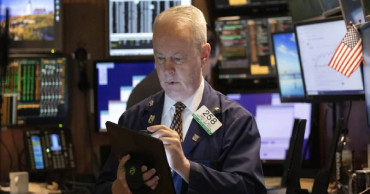
US stock indexes slip, but rush for safety slows
U.S. stocks mostly fell on Tuesday, but the big rush for safety that coursed through global markets after the United States killed a top Iranian general on Friday slowed.
6 years ago
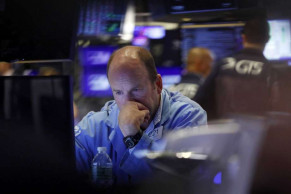
US stock indexes end mixed to close out a volatile month
Dhaka, Aug 31 (AP/UNB) - Major U.S. stock indexes ended little changed Friday after a listless day of trading ahead of the Labor Day holiday weekend capped a solid week of gains for the market.
7 years ago