agricultural land
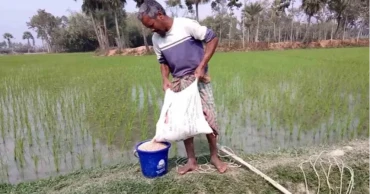
Overuse of chemical fertilisers threatens soil health in northern Bangladesh
Soil fertility in eight districts of northern Bangladesh is steadily deteriorating, raising concerns about long-term agricultural productivity, according to a new research report by the Rangpur Divisional Soil Resource Development Institute (SRDI).
Researchers say that fertility loss, nutrient imbalance, and increasing soil acidity are spreading rapidly across the region, with organic matter, the foundation of healthy soil, falling to its lowest recorded levels in some areas.
“The decline is so severe that even heavy application of chemical fertilisers is failing to translate into higher productivity,” the report warns.
Researchers estimate that fertilisers worth hundreds of crores of taka are wasted annually, as crops are unable to absorb essential nutrients.
The SRDI conducted tests on soil samples from 38 upazilas across five districts in the Rangpur division. Md. Saifur Rahman, chief scientific officer of the institute, said healthy soil must contain adequate levels of nitrogen, phosphorus, potassium, sulfur, zinc, calcium, magnesium, boron, molybdenum, iron, manganese, copper, chlorine and organic matter to sustain crop production.
Read more: Enough fertilizer in stock to last till December: Agriculture Secretary
“Fertilisers should be applied based on soil health tests and nutrient requirements. This ensures satisfactory crop yields while preventing qualitative deterioration of the soil caused by arbitrary fertiliser use, which can reduce production,” he said.
The alarming soil condition is not confined to the north, he noted, but is also seen across other regions of Bangladesh.
Fertiliser Misuse
Md Sirajul Islam, additional director of the Rangpur Agricultural Extension Department, highlighted the widespread use of chemical fertilisers. “At least 20 types of fertilisers, both legal and illegal, are being used in agriculture. Farmers are most familiar with seven, including urea, molybdenum, magnesium, phosphorus, boron, potassium, and sulfur,” he said.
Farmers often rely on estimates rather than scientific measurement, resulting in imbalanced or inadequate application.
“Proper application is essential for soil health,” he said, warning that the issue affects not only the Rangpur and Rajshahi-Barendra regions but also districts across other river basins.
Experts pointed out that about 80% of farmers directly involved in agriculture are uneducated and apply fertilisers without guidance, exacerbating the decline in soil health.
Read more: Shahjalal Fertilizer Factory resumes production after five-month closure
Alarming Decline of Essential Nutrients
SRDI scientists say a healthy crop requires 16 essential nutrients, 13 of which must come from the soil. Latest tests, however, show nine of these nutrients are now at minimum or critical levels in many parts of northern Bangladesh.
Organic matter has dropped to 1–2% instead of the ideal 5%, soil pH has fallen to 4.4–5.5 rather than 6.0–7.5, nitrogen levels are 0.09–0.18% against a recommended 0.27–0.36%, and sulphur is far below the optimum 22–30 ppm.
Biological Systems under Threat
Excessive chemical use, coupled with reduced application of cow dung, compost, crop residues and other organic materials, has sharply reduced soil biodiversity. Beneficial organisms such as earthworms, which naturally mix soil layers and maintain fertility, have declined significantly.
“This breakdown of biological processes is damaging the soil’s long-term health,” said Saifur Rahman.
Although Bangladesh has 39 fixed soil-testing laboratories and several mobile labs, the majority of farmers never have their soil tested. Experts warn that without accessible soil testing and proper fertiliser use training, the country could face significant drops in food production in the coming years.
Read more: Hidden hands in the fields: Dealers blamed for artificial fertiliser shortage in north
Looming National Crisis
The SRDI report cautions that if current trends continue, Bangladesh may face reduced yields in staple crops, increased pest outbreaks, and a rising dependence on fertiliser imports. These challenges could make cultivation costlier and reduce farmers’ profit margins.
10 months ago
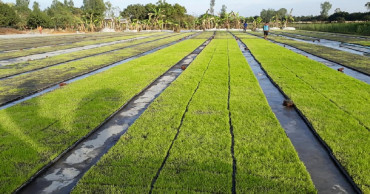
New cultivation method promises low cost, high yield for paddy farmers
With a steady rise in population and a subsequent decline in agricultural land and labour, the government has turned to technology to meet the growing demand for food.
One of the new methods being promoted by the government promises to cut paddy production cost by half and a 15 to 30 percent increase in production.
Another goal of this unique project is to reduce the rising number of unemployment among the young generation by encouraging them to use modern technology and machines, cutting short the hardship of paddy cultivation process.
This method uses machines to produce seedlings and cultivate them using the rice transplant machines. The process will enable farmers to use less water in the production process and cut cost.
The Rural Development Academy, in collaboration with the Department of Agricultural Extension (DAE) and Bangladesh Agricultural Development Corporation (BADC), recently held an exhibition at Chawkerhat in Birol upazila to promote the process.
6 years ago