DMP
Dhaka may see shift in crime patterns ahead of national election: DB
Dhaka may witness a shift in its crime patterns in the coming weeks ahead of the national election as the intelligence agencies are apprehending a rise in acts of sabotage, arson attacks and politically-driven violence.
In recent weeks, parts of the capital have experienced scattered incidents of crude bomb explosions, arson on vehicles and attempts to spread fear which the law enforcers see as early indicators of pre-election unrest.
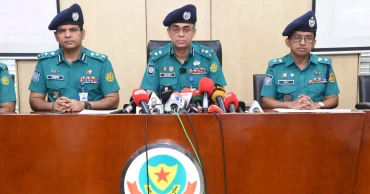
Additional Commissioner of DMP’s Detective Branch (DB) Shafiqul Islam said political groups which have been facing restrictions on activities may try to carry out bomb and arson attacks in Dhaka ahead of the polls to create an environment of fear.
Read more: Awami League using looted money for acts of sabotage: Rizvi
He said the government’s main mandate is to hold a free, fair and acceptable election and attempts may be made to derail or discredit that process.
Intelligence Monitoring Strengthened
The DB chief said several people linked to the recent arson and crude bomb blast incidents have been arrested who have given important clues about ongoing sabotage plans.
“Interrogations have revealed the names of several instigators. They are being brought under the ambit of law,” he added.
To prevent similar attacks, DB has strengthened surveillance through CCTV networks, human intelligence, electronic intelligence and coordinated field operations across the capital.
Social Media Under Watch
With the election approaching fast, law enforcers expect a spike in disinformation, manipulated videos and fabricated content on social media.
Police submits chargesheets in 106 cases linked to July 2024 uprising
Shafiqul Islam said a 24/7 monitoring committee made up of representatives from Directorate General of Forces Intelligence (DGFI), National Security Intelligence (NSI) and other agencies is working to detect and address harmful content in real time. Any adverse material is being handled immediately, he said.
Petty Crimes Stable
According to DB, petty crimes such as theft and mugging remain generally under control in Dhaka.
Shafiqul Islam said a few recent killings were linked to internal disputes among underworld groups.
He stressed that these incidents do not reflect the city’s wider homicide trend and intelligence assessments show no major rise in petty crimes.
Another senior official at DMP headquarters preferring not to be named said communal incitement and rumor campaigns may increase before the polls.
He said political rallies may also carry a higher risk of clashes, prompting agencies to increase intelligence deployment before each event.
Why Acts of Sabotage Rise
Intelligence officials say targeted violence often rises before elections as political tension increases.
Arson attacks on busy routes are often planned to cause maximum public fear.
Suspect in Pallabi Jubo Dal leader murder dies after arrest
Crude bombs are also used to create pressure and send political signals without large-scale damage, the DMP official said.
He said sudden confrontations may escalate tensions and disrupt the electoral environment while propaganda campaigns on social media may attempt to mislead voters.
On preparedness, he said law enforcement agencies have already intensified preventive steps.
These include increased patrols on major transport routes, deployment of more plainclothes intelligence officers in politically sensitive zones, active automated systems for cyber monitoring and focused surveillance in trouble-prone areas.
DB officials said enhanced surveillance, quick arrests and coordinated intelligence actions are expected to keep the overall situation under control.
Read more: Saboteurs to be declared ‘Unwanted’ in Dhaka: DMP Commissioner
1 day ago
How untrammelled expansion combined with poor civic sense turns Dhaka into a nightmare for traffic police
There can be few jobs as unrewarding as that of a Bangladeshi traffic sergeant. This is particularly true if you happen to be posted in its overpopulated, unplanned capital.
By its very nature, the job entails long hours spent outdoors, which in this part of the world exposes you to very hot and humid conditions, apart from putting you in the thick of both air and noise pollution.
On top of all that, you must deal with an unruly, irreverent populace that puts no premium on the civic sense to abide by traffic laws and can even be openly hostile to people in uniform when pulled up for their actions.
On October 31, 2025, at approximately 11pm, Sergeant Md. Zahid Hossain Mintu and Constable Shahidul Haque of the Ramna Traffic Division were on night duty at Moghbazar Crossing.
At that time, a private car was coming from the direction of Moghbazar Railway Gate towards Mintoo Road. When Constable Shahidul Haque Sahed, under the direction of the on-duty sergeant, signaled the car to stop, the driver ignored the signal and attempted to speed away.
Read more: How to Get Traffic Updates in Dhaka: Useful Apps and Sources
With the help of other traffic officers, the vehicle was eventually stopped. When asked to show vehicle documents, the occupants - Mahbub Hasan Siam (20), son of Md. Kabir Hossain, and Khairul Alam (20), both residents of Keraniganj, began shouting on the road, forcibly grabbing Constable Shahidul Haque by his police uniform, and alleging that he was a “fake police officer,” while using abusive language.
Their actions constitute an offense under Section 75 of the Dhaka Metropolitan Police Ordinance. Legal action was also taken against the vehicle under the Road Transport Act, 2018. Subsequently, the two accused were produced before the Special Metropolitan Magistrate, Ramna, who sentenced them to 15 (fifteen) days of simple imprisonment.
This is just one story that demonstrates the challenges faced by the Traffic Division of Dhaka Metropolitan Police in the course of performing their duties.
Disobeying the traffic rules everywhere has now become almost normalised in the city, despite the Traffic Division’s best efforts to impose some order on the roads. As Dhaka expands further, experts warn that without comprehensive traffic management reforms and long-term planning, the capital’s roads will soon reach a breaking point — making everyday life even more difficult for millions.
Recent traffic‐enforcement drives by the DMP illustrate the scale of the problem. In early November 2025, the Traffic Division filed 2,580 cases over just two days across various parts of the city, with 676 vehicles dumped and 176 towed in that period.
On Nov 8, 2025 they reported filing 1,037 cases in a single day, towing 96 vehicles and dumping 277. Another earlier drive on October 21 saw 1,658 cases, with 398 vehicles dumped and 130 towed.
Meanwhile, nationally, BRTA data shows alarming accident and fatality numbers: in 2023, the authority recorded 5,024 deaths in road accidents and 7,495 injuries involving 7,837 vehicles.
The urban crawl
City‐officials point out that Dhaka, where amenities were originally planned and designed for a much smaller population, now accommodates over 20 million residents, while thousands of new vehicles join the roads each month.
According to BRTA statistics, in one recent dataset, Dhaka alone had over 43,398 buses, 42,968 covered vans, and a large volume of other vehicle types registered within its metropolitan area while the average traffic speed on Dhaka’s roads has fallen from about 21 km/h in 2006 to just 5 km/h in 2024.
Commuters are bearing the brunt. “I leave home at 7am and still end up late to the office. The traffic feels endless,” said Mahmud Hasan, a private‐sector employee travelling from Mirpur to Motijheel. The toll is not just time: health costs, fuel waste, and lost productivity mount steadily.
Read more: Traffic police back to work after one week
Despite continued investments—such as the mega projects like elevated expressways and metrorails—the results remain patchy. Without coordinated, long-term traffic management initiatives—covering road‐space reallocation, public transport strengthening, parking regulation, the harnessing of technology, and behavioural change—the capital’s roads risk pushing everyday life closer to breaking point.
Autorickshaws pose dilemma
Another persistent problem is the unregulated movement of autorickshaws and battery-powered three-wheelers. Though these vehicles serve as an essential mode of transport for short distances, their sheer number and frequent violations of traffic rules make them a major source of gridlock. Many operate beyond their permitted zones, occupy key intersections, and often stop abruptly to pick up passengers — severely disrupting traffic flow.
“Auto-rickshaws are convenient but undisciplined,” said a private car driver Shahin. “Many drivers ignore signals, drive against the flow, and use roads where they are banned. Without strict regulation, they will keep adding to the chaos.”
According to DMP reports, unauthorized three-wheelers and easy bikes continue to enter restricted areas such as key city corridors, despite repeated drives. Traffic authorities have seized hundreds of such vehicles in recent operations, but enforcement remains difficult due to their large numbers and high commuter
Equally troubling is footpath encroachment, which forces thousands of pedestrians onto already congested roads. In many areas — including Gulistan, New Market, Mirpur, and Farmgate — sidewalks remain occupied by makeshift shops, tea stalls, and parked motorcycles. Hawkers have virtually taken over walkways in commercial hubs, leaving little space for foot traffic.
According to DMP officials, the lack of usable sidewalks increases the number of pedestrians walking on the roads, reducing vehicle speed and increasing the risk of accidents.
“We conduct eviction drives almost every week, but the vendors return within days,” said a DMP zone officer from the Traffic South Division. “As long as there’s no coordinated rehabilitation plan for hawkers, the problem will continue.”
Read more: DMP Chief calls for traffic police involvement in road accident investigations
9 days ago
Bangladesh sees crime spike ahead of polls; police stress preparedness
As Bangladesh approaches its national elections scheduled for February 2025, crime statistics indicate a rise in criminal incidents across the country, but police insist that the apparent deterioration in law and order does not reflect the real situation.
A senior official at the Police Headquarters, preferring not to be named, said the force is “fully prepared” to ensure nationwide security during the polls.
He cautioned that comparisons between past and present crime figures could be misleading.
“Earlier, many crime incidents were not recorded at local police stations. Now, almost every incident is being documented. So when you compare the two periods, it may seem like crime has increased. But in reality, law and order is better in many areas than before,” he said.
The official also highlighted the role of social media in timely case registration. “In the past, cases were often not recorded properly and on time. Now, when an incident occurs, social media becomes active instantly, compelling the police to register cases promptly and accurately,” he added.
Crime Trends
According to police headquarters statistics, October saw 319 murders nationwide, slightly up from 297 in September but just below 321 cases in August.
Dacoity cases rose to 56 from 50 the previous month, while robbery increased to 180 from 169. Burglary incidents remained high at 301, compared with 295 in September and 311 in August.
Kidnappings jumped to 110 in October, up from 96 in September and 90 in August. Theft incidents also increased, standing at 931 compared with 888 in September and 956 in August. These figures indicate that criminal activity continues to affect both urban and rural areas.
Amir Khosru alleges plot to delay 13th parliamentary polls
Particularly concerning is the persistently high number of crimes against women and children, with 1,985 incidents recorded in October, virtually unchanged from 1,904 in September and 1,904 in August.
Police sources noted that violent and organised crimes are not only frequent but also increasingly sophisticated, with criminal syndicates reportedly impersonating law-enforcement officers to commit robberies and abductions.
Election Preparedness
Police officials stressed extensive preparations for the upcoming polls. “A total of 150,000 police personnel are being trained in phases. Training for around 50,000 members has already been completed. The rest will finish on schedule,” a Dhaka Metropolitan Police (DMP) official said.
The procurement of body-worn cameras is underway, expected to be purchased through the Direct Procurement Method (DPM) due to time constraints. “We expect to be fully ready to carry out our responsibilities during the polls,” the official added.
Home Adviser Lieutenant General (retd) Md Jahangir Alam Chowdhury described the law-and-order situation as “satisfactory,” noting that while it is “not excellent, it’s not bad either.”
Speaking after a meeting with field-level law enforcement officials at Barishal Police Lines, he emphasised that a fair election relies not only on law enforcement but also on the Election Commission and political parties.
Ahead of the elections, Police Headquarters has instructed the Criminal Investigation Department (CID), Special Branch (SB), and DMP to submit lists of honest, neutral, and administratively efficient police inspectors for appointment as officers-in-charge (OCs) at police stations across the country.
The directive, issued on 16 November by the Personnel Management–2 wing of PHQ, states that deploying “competent, impartial and professionally credible” police station chiefs is crucial to ensuring a peaceful and fair parliamentary election.
Officials said the neutrality of OCs will play a vital role in maintaining law and order during the election period.
Govt reviewing body camera purchase plan: Finance Adviser
11 days ago
DMP chief orders use of firearms to stop arson attacks in Dhaka
Dhaka Metropolitan Police (DMP) Commissioner Sheikh Md Sajjat Ali on Sunday (November 16) instructed police personnel to open fire on anyone attempting to torch vehicles or carry out petrol bombs or crude bomb attacks in the capital.
The order was issued through a wireless message in the afternoon, said a police officer, posted in a police station, requesting anonymity as he was not authorised to comment publicly.
Commissioner Sajjat Ali later told the media that the directive was issued in light of recent arson attempts targeting public transport and law enforcement.
He said that the directive was given through a wireless message to open fire if anyone sets fire to a bus or throws a crude bomb with the intent to cause loss of life. “This is permitted under the existing laws.”
SC seeks army deployment ahead of verdict in Hasina case
According to police sources, the instruction applies in situations where miscreants ignite buses, throw crude bombs with lethal intent, or attempt to attack police by hurling explosives from moving motorcycles.
The directive comes amid a fresh wave of unrest allegedly linked to the Awami League (AL), which has been barred from political activities. It had earlier called for protests and a ‘Dhaka Lockdown’ from November 10 to 13.
The party launched the programme ahead of the expected verdict by the International Crimes Tribunal in a case against Sheikh Hasina over charges related to the July uprising.
Since November 10, many incidents of arson attacks on buses and trains, along with crude bomb explosions, have been reported in Dhaka and other districts.
The verdict in the case against Sheikh Hasina is scheduled to be pronounced on Monday, prompting the Awami League to declare a two-day ‘complete shutdown’ beginning today (Sunday).
Read more: New iron-grey Bangladesh police uniform stirs mixed public reactions
18 days ago
Tensions rise as ICT going to set verdict date in Hasina case
Bangladesh has been placed on high alert ahead of the International Crimes Tribunal-1’s (ICT-1) pronouncement of the verdict date on Thursday (13th November 2025) in a case against ex-PM Sheikh Hasina and two others over crimes against humanity during last year’s July uprising.
The tribunal fixed the date on October 23 after the prosecution and defence completed their closing arguments before the three-member ICT-1 headed by Justice Md Golam Mortuza Majumder.
Tensions have escalated across the country over the tribunal’s announcement of verdict date as the Awami League called for a nationwide ‘lockdown’ on Thursday through social media in protest against the trial.
In the lead-up to the verdict date, several incidents of arson and crude bomb explosions were reported in different parts of the country, including Dhaka, raising public fears of renewed violence.
Law enforcement agencies, including police, the Rapid Action Battalion (RAB), and Border Guard Bangladesh (BGB), have been deployed across the capital and other major cities to maintain order.
Read more: 14 platoons of BGB deployed in Dhaka, adjoining districts
Dhaka’s usually congested roads appeared unusually calm on Wednesday, with significantly lighter traffic during office hours amid growing public anxiety and security concerns.
Additional police personnel have been stationed at all entry and exit points in the capital.
At a press conference on Wednesday, Dhaka Metropolitan Police (DMP) Commissioner Sheikh Md Sajjat Ali said the force was fully prepared to avert acts of sabotage associated with the lockdown.
Fourteen platoons of the BGB have been deployed in Dhaka and surrounding districts since Wednesday morning.
Sheikh Hasina fled to India on August 5, 2024 amid mass uprising and the country has since experienced deepening political turmoil.
The Detective Branch (DB) of Dhaka Metropolitan Police conducted simultaneous drives across the capital in the past 24 hours till Wednesday morning, arresting 44 more leaders and activists of the Awami League and its affiliated organisations.
In this much-discussed case, the prosecution sought the maximum punishment for Sheikh Hasina and ex-home minister Asaduzzaman Khan Kamal on five charges of crimes against humanity.
Read more: Sheikh Hasina and family members can't vote from abroad: EC official
Relatives of victims, including the father of martyr Abu Sayed testified in the case, along with key witnesses including Nahid Islam, Convener of National Citizen Party (NCP) and Amar Desh editor Dr Mahmudur Rahman.
In total, 54 witnesses testified in the trial.
According to the charges, the then Awami League government, along with its party leaders, loyal administrators, and members of law enforcement agencies, committed crimes against humanity to suppress the student-led July–August uprising.
Two international crimes tribunals are currently trying these allegations.
On July 10, the tribunal formally indicted Sheikh Hasina, Asaduzzaman Khan Kamal and former IGP Abdullah Al-Mamun, beginning the trial.
Former IGP Al-Mamun turned state witness and gave testimony revealing details of the incidents.
Besides this case, Sheikh Hasina faces two other cases before the International Crimes Tribunal—one over enforced disappearances and killings during the Awami League’s 15 and a half years in power and another over the 2013 killings at Hefazat-e-Islam rally at Dhaka’s Shapla Chattar.
Read more: Tension rises in Dhaka ahead of planned ‘lockdown’ amid fears of violence
22 days ago
Govt vows to protect interfaith unity, communal harmony
The interim government has reiterated its unwavering commitment to safeguarding interfaith unity and communal harmony, declaring that any attempt to disrupt the nation’s religious coexistence will be met with the full weight of the law.
Security has been stepped up in all churches and religious establishments of all faiths in the capital, said the Chief Adviser's press wing.
The Dhaka Metropolitan Police (DMP) has arrested a 28-year-old man in connection with a series of recent cocktail attacks in the capital, the press wing said on Monday (10th November 2025).
Murder reports rise as suppressed cases surface during interim govt: CA’s press wing
Initial police investigation has identified him as a member of Chhatra League, the outlawed student wing of the deposed Awami League whose activities have been banned by the government.
The suspect is being interrogated regarding multiple incidents, including the cocktail explosions on the premises of Kakrail’s St. Mary’s Cathedral and St. Joseph School, a Catholic-run famous educational institution.
The DMP, in coordination with the Rapid Action Battalion (RAB), has intensified a citywide manhunt to apprehend all individuals involved in these heinous and cowardly acts of violence, the government said.
Read more: Cocktail explosion near NCP office in Banglamotor, 5 detained
24 days ago
Can automated traffic enforcement bring order on Dhaka streets?
With speeding vehicles, reckless driving and weak traffic enforcement turning roads into perilous stretches, Bangladesh’s rapid urbanisation — most evident in the chaotic streets of Dhaka — has made road safety a growing national concern.
Although Automated Traffic Enforcement Systems (AES) promises stricter monitoring, faster penalties, and more disciplined roads and many countries have already embraced such systems with proven results Bangladesh is only beginning to test the technology.
As part of the pilot project, an automated case system targeting speed control has been introduced on the Dhaka Elevated Expressway with video-based enforcement quietly operational since the first week of July this year.
During a visit to the expressway, vehicles were found generally adhering to the speed limits and traffic rules.
Drivers appeared more cautious under the new monitoring system.
Ripon, a private car owner, said, “Driving violating the speed limit can bring hassle as the cameras are recording everything. It is a very good initiative, as it will help drivers avoid unnecessary competition on the roads. Driving on the expressway feels safer than before.”
Officials at the Dhaka Metropolitan Police (DMP) said the plan includes installing red-light cameras, speed detectors, automatic number plate recognition (ANPR) systems, and AI-powered monitoring tools at major intersections and in busy areas.
“Manual policing alone cannot manage Dhaka’s traffic anymore. Automated enforcement will help us penalise violations like speeding, wrong-lane driving, and red-light jumping in real time,” said a senior DMP traffic official requesting anonymity as the project is still under review.
Globally, AES has shown impressive results.
New York City recorded a 60% reduction in speeding near school zones, Singapore reported a 25% decrease in congestion after introducing electronic road pricing, and Dubai saw a 45% drop in road fatalities after adopting smart cameras.
Dhaka commuters get no respite from traffic gridlocks
In India, cities such as Delhi, Bengaluru, and Hyderabad use AI-enabled detection cameras, while an e-challan system issues instant SMS fines linked to vehicle registration. Bengaluru’s pilot AES saw traffic signal violations drop by 30% in its first year.
More recently, AI-powered traffic cameras in Ho Chi Minh City recorded over 3,100 violations between September 1 and October 3, in an early test of the city’s automated enforcement system.
In Bangladesh, the initiative will be integrated with the BRTA’s e-challan system to automatically issue digital fines.
The Safe City Surveillance Hub, currently used mostly for crime monitoring, is expected to serve as the central command centre for the new system.
Pilot installations are planned for high-risk areas including Farmgate, Shahbagh, Bijoy Sarani, Moghbazar, and Airport Road, where signal violations and speeding frequently contribute to congestion and accidents.
“It’s good in theory, but I hope the system is transparent and tickets are issued correctly. Otherwise, it will create frustration,” said Mintu, a Dhaka-based car owner.
“All laws are implemented for private car owners; it should be the same for commercial vehicles. Removing rickshaws and auto-rickshaws should be a priority for hassle-free driving,” he added.
Bus driver Sumin Mia noted that many drivers are unaware of traffic rules adding that AES alone cannot solve the city’s traffic chaos without public awareness campaigns.
According to DMP data, over 4,000 road crashes were reported in Dhaka last year, with speeding and signal violations accounting for nearly 40% of cases.
The project faces challenges, including infrastructure upgrades, data privacy concerns, and public awareness.
Authorities have not yet announced a formal launch date or budget but officials indicated the first phase of AES could roll out by mid-2026.
Professor Dr Md Shamsul Hoque, Director of the Accident Research Institute (ARI) at BUET, said, “AES alone will not bring improvement unless the entire transport system is organised. Thousands of vehicles operate daily without registration. Developed countries have comprehensive databases, which makes enforcement easier. The automated system in Gulshan detects major violations daily but enforcement cannot be instant. The project should be reviewed if it does not function effectively.”
Battery-run autorickshaws, slow-moving vehicles banned from Dhaka's main roads: DMP
Md Mozammel Haque Chowdhury, Secretary General of Bangladesh Jatri Kalyan Samity (Passengers’ Welfare Association), said, “Without transparency and accountability in institutions responsible for road safety, no real improvement is possible. Urgent reforms in this crucial sector are necessary; otherwise, people will continue to suffer in daily travel.”
The Road Safety Foundation has identified a number of persistent risk factors behind rising road accidents across the country, calling for urgent improvements in infrastructure, traffic management and community behaviour.
The organisation said faulty road design, poor maintenance and the absence of essential safety measures, including signs, lane markings, dividers and warning boards, remain major contributors to fatal crashes.
RSF analysed around 37,000 road accidents using both media reports and the foundation’s own data and examined accident types and severity to classify areas according to risk and the findings were released on Saturday.
High-speed traffic without proper enforcement and reckless movement of mixed vehicles on the same route also heighten the risk, it added.
The organisation urged authorities to undertake comprehensive corrective measures at dangerous spots nationwide. These include redesigning risky road sections, ensuring proper maintenance, and installing necessary signage and lane separation facilities to guide traffic safely.
It also stressed the need for stricter enforcement of speed control through technology, along with dedicated service lanes or dividers to separate different categories of vehicles.
Read more: How to Get Traffic Updates in Dhaka: Useful Apps and Sources
1 month ago
DMP assures smooth, festive celebrations of Durga Puja
Dhaka Metropolitan Police (DMP) Commissioner Sheikh Md Sajjat Ali on Thursday said this year’s Durga Puja will be celebrated in a festive atmosphere.
He made the remarks while addressing a preparatory meeting with stakeholders at the DMP headquarters ahead of the Sharadiya Durga Puja.
The commissioner said the overall law-and-order situation remains stable and, as in previous years, the largest religious festival of the Hindu community will be observed smoothly through the joint efforts of all concerned.
In the beginning of the meeting, DMP Joint Commissioner (Operations) Md Shahidullah presented the security plan, noting that puja will be held at 258 mandaps across the capital.
In addition to mandap-based security, a separate traffic management plan will be implemented, he said, adding that comprehensive measures will also be in place on the day of immersion.
Additional Commissioner (Admin) Md Sarwar urged the authorities to repair and clean roads near puja mandaps for the convenience of visitors, while also emphasising fire safety guidelines.
Additional Commissioner (Crime and Operations) SN Md Nazrul Islam underscored the need for installing CCTV cameras around the mandaps and stressed that no venue should remain unprotected.
3-tier security measures taken ahead of Durga Puja: IGP
He also cautioned against the spread of misinformation or disinformation on social media during the festival.
Leaders of Bangladesh Puja Udjapan Parishad, Mahanagar Puja Udjapan Parishad, Bangladesh Hindu-Buddhist-Christian Oikkya Parishad and Ramakrishna Mission, who attended the meeting, expressed satisfaction over the DMP’s preparations and thanked the authorities.
Additional commissioners of the DMP, as well as representatives of the armed forces, intelligence agencies and service organisations, were also present.
2 months ago
DB arrests 3; seizes 5,000 Yaba tablets
Detectives have arrested three suspected drug peddlers with 5,000 Yaba tablets from the Kaptanbazar area in the capital on Thursday.
The arrestees have been identified as Ehsan Ullah, 40, Abdul Gafur, 50, and Md Sabir, 37.
Acting on a tip-off, a team from the Illegal Arms Recovery and Narcotics Control Unit conducted the drive around 8:45 AM on Thursday, said Talebur Rahman, Deputy Commissioner (Media) of the DMP.
During the operation, the trio was arrested and 5,000 Yaba tablets were recovered from their possession.
Businessman Mithu sent to jail over health sector graft
The arrestees are active members of an organised drug syndicate and, during primary interrogation, admitted to collecting Yaba tablets from Cox’s Bazar and distributing them across different areas of Dhaka.
A case has been filed under the Narcotics Control Act with Wari Police Station.
The arrestees have been sent to court.
2 months ago
18 police officials suspended for long absence
The government has suspended 18 police officials, including sensational Detective Branch (DB) officer Mohammad Harun-or-Rashid, for their absence in the workplaces for long without permission from the authorities concerned.
A notification, signed by Nasimul Goni, senior secretary to the Police-1 Section under Public Security Division of the Ministry of Home Affairs, was issued on Monday.
Mohammad Harun-or-Rashid, additional police commissioner of Dhaka Metropolitan Police (DMP) and former DB Chief, Sanjit Kumar Roy, joint police commissioner of DMP, Rifat Rahman Shamim, additional DIG at Chattogram Range DIG Office, Kazi Ashraful Azim, superintendent of police at Chattogram Range DIG Office, Hasan Arafat, additional SP at Police Training Centre of Khulna, Syed Nurul Islam, DIG of Bangladesh Police Academy at Sardah, Md. Asaduzzaman, SP at Bangladesh Police Academy, Mohammad Zayedul Alam, additional DIG, APBN and Specialized Training Centre in Khagrachhari, Mohammad Farid Uddin, additional DIG, APBN (Chittagong Hill Tracts), Shyamal Kumar Mukherjee, additional DIG at Rajshahi Range DIG Office, Ayesha Siddika, supernumerary additional DIG at Rajshahi Range DIG Office are among the suspended police officials.
They also include Rajon Kumar Das, additional SP at 8 APBN in Cox’s Bazar, Mirza Salauddin, additional SP at Police Staff College in Dhaka, Md. Habibullah Dalal, assistant SP at Police Staff College, Rashedul Islam, additional Deputy Police Commissioner at Barishal Metropolitan Police, Md. Moniruzzaman, additional DIG at Dhaka Tourist Police, Md Abu Maruf Hossain, former Deputy Police Commissioner at Rangpur Metropolitan Police but currently with Anti-Terrorism Unit in Dhaka, and Md Ashrafuluzzaman, DIG (Commandant).
The suspended officials will, however, get allowances and other facilities during the suspension, the notification says.
3 months ago