Prison
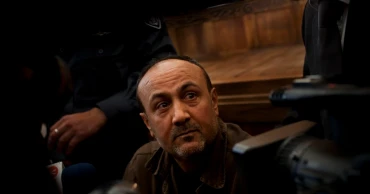
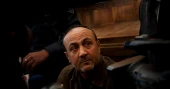
Far-right Israeli minister confronts Barghouti in prison
A video circulating widely on Friday shows Israel’s far-right National Security Minister Itamar Ben-Gvir berating prominent Palestinian leader Marwan Barghouti inside a prison, vowing that Israel will confront and “wipe out” anyone acting against the country.
Barghouti, in his mid-60s, is serving five life sentences over his role in attacks during the Palestinian uprising, or intifada, in the early 2000s. Polls have consistently ranked him as the most popular Palestinian leader, and he has rarely been seen since his arrest more than two decades ago.
Aid Organizations Urge Israel to Stop ‘Politicizing’ Humanitarian Assistance in Gaza
It was unclear when the footage was recorded. In it, Ben-Gvir, known for provocative encounters with Palestinians, tells Barghouti he “will not win.” He repeated the remarks in a post on X sharing the video. His spokesman confirmed the visit and its authenticity, denying any threat was made.
Barghouti’s wife, Fadwa, said in a Facebook post that her husband appeared frail but remained connected to the Palestinian people. Israeli authorities say Palestinian inmates are held under the bare minimum conditions allowed by law.
1 year ago
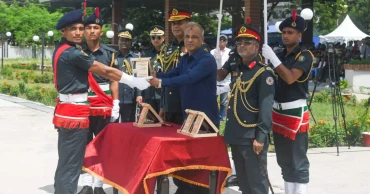
Prisons to be transformed into correctional facilities: Home Adviser
Country’s prisons will be transformed into rehabilitation centres for their inmates, said Home Affairs Adviser Lt Gen (retd) Md Jahangir Alam Chowdhury on Tuesday.
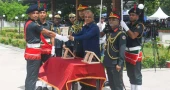
He made the announcement while addressing the passing-out parade of the 14th batch of Deputy Jail Superintendents and the 62nd batch of male and female prison guards at Rajshahi Prison Training Centre.
Prisoner dies at Gopalganj hospital after falling ill in jail
Highlighting the interim government's reform-oriented approach under Chief Adviser Professor Muhammad Yunus, the adviser said initiatives are underway to establish ‘Correctional Industrial Parks.’
These will offer inmates skill development opportunities and income-generating activities, enabling them to support their families while in custody, he said.
Emphasising the pivotal role of prison guards, Adviser Jahangir Alam said their responsibility in maintaining discipline and treating inmates with humanity.
He described the basic training not just as professional preparation but also as a foundation for instilling honesty, patriotism and ethical values.
Pointing at the new recruits, he urged them to adopt in the spirit of anti-discrimination and remain committed to their duties with integrity and dedication.
He stressed the importance of a transparent and accountable prison administration, where Deputy Jail Superintendents act as key executives.
To improve prison security, the home adviser announced the deployment of advanced technologies including mobile jammers, separate internet systems, body scanners, luggage scanners and circuit detectors.
Besides, the government plans to introduce the Bangladesh Jail Medal to honour bravery and performance and has taken policy steps to provide lifelong rations to retired prison staff.
The event concluded with a parade inspection, oath-taking ceremony and awards distribution.
Inspector General of Prisons Brig. Genl Syed Mohammad Motaher Hossain, Divisional Commissioner Khondkar Azim Ahmed, DIG of Rajshahi Range Mohammad Shahjahan, RMP Police Commissioner Mohammad Abu Sufiyan, District Deputy Commissioner Afia Akhtar, Superintendent of Police Farzana Islam, and Commandant of Rajshahi Jail Training Center Mohammad Kamal Hossain, among others, were present at the event.
Deputy Superintendents Khadija Khatun Lima and DM Nusrat Al Islam received top honours from their batch.
Unlike India, we pursue diplomatic solutions: Home Adviser
Later, the Adviser visited Rajshahi Central Jail.
1 year ago
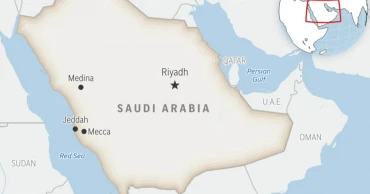
British banking analyst jailed in Saudi Arabia for 10 years over 'unknown tweet'
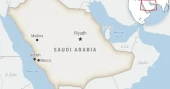
A British Bank of America analyst has been sentenced to a decade in a Saudi Arabian prison apparently over a since-deleted social media post, according to his lawyer.
The family of Ahmed al-Doush, 41, believes the charges against him stemmed from a deleted 2018 tweet about Sudan that did not mention Saudi Arabia and his relationship with the son of a Saudi critic in exile, Amnesty International said in a statement Tuesday.
The father-of-four was sentenced Monday after being accused of violating terrorism and anti-cyber crime laws.
“The exact tweet is unknown,” Haydee Dijkstal, al-Doush’s international counsel, posted Tuesday on X. “His trial and detention involved fair trial and due process violations." The lawyer said the U.K. government "should stand firmly against a British national’s imprisonment for allegedly exercising his free speech rights.”
The Saudi Arabian government did not respond to requests for comment.
“We are supporting a British man who is detained in Saudi Arabia and are in contact with his family and local authorities,” a spokesperson for the Foreign Office in London said in a statement.
Bangladesh to benefit from new SAUDIA fleet expansion
Al-Doush, a British national, was arrested in August 2024 at a Riyadh airport where he was waiting for a flight to Manchester, England, with his family following a holiday. His wife has since given birth to their fourth child.
“I rarely speak to my husband, but in the few snatched conversations we have managed, it is clear that Ahmed is struggling,” al-Doush’s wife, Amaher Nour, said ahead of her husband’s sentencing, citing his thyroid problems and distress after nine months of detention.
The developments came while U.S. President Donald Trump was in Saudi Arabia, where several dual nationals with Western ties and Saudis have been detained in recent years over social media posts that could be viewed as critical to Saudi Crown Prince Mohammed bin Salman, the country’s de facto ruler.
In 2021, a Saudi-American dual national was sentenced to more than 19 years in prison by Saudi Arabia on terrorism-related charges stemming from tweets.
Saad Almadi, now 75, was jailed in connection with tweets he had posted over the past several years in the U.S. He was released in 2023 but has been banned from leaving the kingdom.
On Wednesday, the kingdom’s foreign minister Prince Faisal bin Farhan Al-Saud was asked during a press conference if Almadi's case had been discussed during Trump's trip.
UK High Court hears legal challenge over British government's role in arming Israel
1 year ago

7 Bangladeshis, including JMB member Rahmatullah, handed over by India after serving 4 years in prison
Seven Bangladeshi, including Rahmatullah, a member of the banned militant group Jamaat-ul-Mujahideen Bangladesh (JMB), were handed over to Bangladesh by Indian authorities after serving a four-year prison sentence in India.
According to Officer-in-Charge (OC) Rusel Mia of Benapole Land Port Police Station, the individuals had traveled to India in search of employment but were arrested by Indian police for illegal entry.
After completing their prison terms, they were released into the custody of an NGO through a general diary, facilitated by travel permits from the home ministries of both countries.
Rahmatullah, who is linked to a 2012 prison van attack in Trishal, Mymensingh, which resulted in the death of a policeman, was also among those returned.
Benapole Check Post Immigration Officer-in-Charge Imtiaz Ahsanul Kader Bhuiyan said that Rahmatullah, a resident of Narayanganj, has an arrest warrant against him in Narayanganj.
He was handed over to Narayanganj Police Station for further legal proceedings. Rahmatullah is also an accused in Anti-Terrorism Act cases filed at Darussalam Police Station in Dhaka in 2012 and Trishal Police Station in Mymensingh in 2014, he said.
According to police sources, Rahmatullah fled to India after the 2012 attack and the police officer’s murder. He was later arrested by Kolkata police on charges of illegal entry and sentenced to prison.
Task force conducts operation against illegal sand extraction in Feni river
The Bangladesh government confirmed his detention through the Ministry of Home Affairs. Following his release, he was brought back to Bangladesh under a special travel permit, jointly issued by both governments.
The other six Bangladeshis also completed their four-year prison sentences. Among them, one was a woman from Dinajpur and the five men were from Patuakhali district.
1 year ago

Student gets 8 years in prison for criticizing Ukraine war
A court in Moscow sentenced a student activist to 8 1/2 years in prison for social media posts criticizing Russia’s war in Ukraine, the latest step in a sweeping crackdown on dissent unleashed by the Kremlin.
Dmitry Ivanov, 23, was convicted of spreading false information about the Russian army, which was made a criminal offense under a new law that Russian lawmakers rubber-stamped a week after Moscow sent troops into Ukraine.
The legislation has been used to prosecute individuals who deviate from the government’s official narrative of the conflict that the Kremlin insists on calling “a special military operation.”
Prominent opposition politicians, such as Ilya Yashin, who is serving an 8 1/2 prison term, and Vladimir Kara-Murza, who is in jail awaiting trial, also were charged with spreading false information about the military.
Also Read: A year into Ukraine war, bodies dug up in once occupied town
Ivanov was charged over a number of social media posts in his Telegram channel that called Russia’s campaign in Ukraine a “war” and talked about Russian forces attacking civilians and civilian infrastructure in Ukraine, committing war crimes in the Kyiv suburbs of Bucha and Irpin, and targeting the Zaporizhzhia Nuclear Power Plant. Most were reposts from other sources.
At the time of his April 2022 arrest, Ivanov was a student at Lomonosov Moscow State University, one of Russia’s top universities also known as the MSU. He ran a popular Telegram channel called Protest MSU, which was launched in 2018 to cover student protests against the construction next to the university’s main building of a fan zone for the Russia-hosted World Cup soccer tournament.
Ivanov initially was jailed for 10 days on the charge of organizing an unauthorized rally. Authorities jailed him again on the same charge for 25 days, and then he was arrested over the social media posts.
Also Read: Russians mark Ukraine war anniversary with flowers, arrests
While in custody, the student missed his final exams and failed to submit his final dissertation. He was expelled from the university.
During Ivanov’s trial, in an unusual twist the court approved a defense request to subpoena Russian Foreign Minister Sergey Lavrov, Russian Defense Ministry spokesman Igor Konashenkov and Russia’s ambassador to the U.N., Vasily Nebenzya.
Ivanov’s lawyers argued that since the authorities had used the officials’ statements to prove that Ivanov’s social media posts contained false information, they should be deposed in court.
However, neither of the three complied with the subpoenas to appear in court.
In his final address to the court last week, Ivanov rejected the charges against him as “looking absurd” and said the crime he was prosecuted for “shouldn’t exist at all.”
“The investigation, in trying to accuse me of spreading ‘fakes,’ has built one big fake (itself). Literally the entire indictment, from the first to the very last word, contradicts the reality,” Ivanov said. “I, in the meantime, stand by every word I wrote a year ago.”
3 years ago

Iran sentences Belgian aid worker to prison, lashes
Iran has sentenced a Belgian aid worker to a lengthy prison term and 74 lashes after convicting him of espionage in a closed-door trial, state media reported Tuesday.
The website of Iran’s judiciary said a Revolutionary Court sentenced 41-year-old Olivier Vandecasteele to 12.5 years in prison for espionage, 12.5 years for collaboration with hostile governments and 12.5 years for money laundering. He was also fined $1 million and sentenced to 2.5 years for currency smuggling.
Under Iranian law, Vandecasteele would be eligible for release after 12.5 years. The judiciary website said the verdicts can be appealed.
Iran has detained a number of foreigners and dual nationals over the years, accusing them of espionage or other state security offenses and sentencing them after secretive trials in which rights groups say they are denied due process.
Critics accuse Iran of using such prisoners as bargaining chips with the West, something Iranian officials deny. Vandecasteele's conviction comes after an Iranian diplomat in Belgium received a 20-year prison sentence in 2021 over masterminding a thwarted bomb attack against an exiled Iranian opposition group in France.
Iran has not released any details about the charges against Vandecasteele. It is unclear if they are related to anti-government protests that have convulsed Iran for months or a long-running shadow war with Israel and the U.S. marked by covert attacks on Iran's disputed nuclear program.
The nationwide protests began after the death in police custody of 22-year-old Mahsa Amini, who was detained for allegedly violating Iran's strict Islamic dress code. Rallying under the slogan “Women, life, freedom,” the protesters say they are fed up with decades of social and political repression. Iran has blamed the protests on foreign powers, without providing evidence.
Vandecasteele's family said last month that he has been detained in an Iranian prison for months and has been on a hunger strike. They said he was deprived of access to a lawyer of his choice and is suffering from serious health problems.
Belgium has urged its nationals to leave Iran, warning that they face the risk of arbitrary arrest or unfair trial.
“Iran has provided no official information regarding the charges against Olivier Vandecasteele or his trial,” Belgium's Foreign Minister Hadja Lahbib said in a statement. “We will summon the Iranian ambassador today, given the information that is circulating in the press.”
“Belgium continues to condemn this arbitrary detention and is doing everything possible to put an end to it and to improve the conditions of his detention,” she said.
The anti-government protests, which have continued for nearly four months with no sign of ending, are one of the biggest challenges to the Islamic Republic since the 1979 revolution that brought it to power.
At least 520 protesters have been killed and more than 19,300 people have been arrested, according to Human Rights Activists in Iran, a group that has been monitoring the unrest. Iranian authorities have not provided official figures on deaths or arrests.
Iran has executed four people after convicting them of charges linked to the protests, including attacks on security forces. They were convicted in Revolutionary Courts, which do not allow those on trial to pick their own lawyers or see the evidence against them.
London-based Amnesty International has said such trials bear “no resemblance to a meaningful judicial proceeding."
Norway and Denmark summoned Iranian ambassadors this week to protest the executions and Iran's handling of the demonstrations.
"What is happening in Iran is completely unacceptable and must stop," Norway’s Foreign Minister Anniken Huitfeldt said. “We have strongly condemned the executions. ... We have called on Iran to end the use of the death penalty and to respect human rights.”
In Denmark, Foreign Minister Lars Løkke Rasmussen called the executions “completely unacceptable" and said the European Union should impose additional sanctions on Iran.
Separately on Tuesday, the state-run IRNA news agency said Iran’s intelligence ministry arrested six teams of operatives linked to Mossad, Israel's chief intelligence and secret-service agency.
Without providing evidence, the report said the spy teams planned to assassinate an unnamed high-ranking military official and had carried out several sabotage operations in the country’s big cities.
The report also said security forces identified 23 alleged members of these teams and had arrested 13 of them who were in the country.
3 years ago

Naogaon: 10, including 5 brothers, get life in prison for 2013 murder
A Naogaon court on Wednesday sentenced 10 people, including five brothers, to life imprisonment for the 2013 murder of a farmer over the ownership of a deep tube well in Badalgachhi upazila.
Judge Ferdous Wahid of Naogaon Additional District and Sessions Judge Court-2 gave the order during a hearing in the presence of the accused. He also fined them Tk20,000 each, in default of which they will have to serve two more years in jail, state lawyer Md Abdu Baki said.
The court, however, cleared three people of charges as they were not proven guilty, he added.
Read more: 5 get life term for murder in Faridpur
The lifers are Kamruzzaman, his brothers Wahed Ali, Shamsuzzaman, Rocket and Dablu; Abdul Hamid and his brother Enamul Hoque; Mosharraf Hossain, Bajlur Rahman and Emdadul Hoque from the village Durgapur.
Bajlur's wife Karima Begum, Enamul's wife Joly Akter and Md Jibon Ahmed of the same village were cleared of charges.
According to the case statement, two groups of villagers had been at loggerheads over the ownership of the deep tube well in Durgapur. A group of armed men led by Kamruzzaman swooped on farmer Ujjal Hossain and three others over it, leaving them critically injured, on May 9, 2013.
Read more: 7 get life term for murder in Chattogram
Ujjal succumbed to his injuries while undergoing treatment at Rajshahi Medical College Hospital four days later.
On the following day, the village's Deep Tube Well Association General Secretary Majharul Islam filed a murder case accusing 13 people at Badalgachhi Police Station.
3 years ago

Fire in Iranian prison where anti-govt activists are kept: State media
A huge fire blazed Saturday at a notorious prison where political prisoners and anti-government activists are kept in the Iranian capital, injuring at least nine people, according to state media. Online videos and local media reported gunshots, as nationwide protests entered a fifth week.
Iran’s state-run IRNA reported there were clashes between prisoners in one ward and prison personnel, citing a senior security official. The official said prisoners set fire to a warehouse full of prison uniforms, which caused the blaze. He said the “rioters” were separated from the other prisoners to de-escalate the conflict.
Read:Iranians living abroad march on streets supporting anti-government protests at home
The official said that the “situation is completely under control” and that firefighters were extinguishing the flames. Later, Tehran prosecutor Ali Salehi said that “peace” had returned to the prison and that the unrest was not related to the protests which have swept the country for four weeks.
IRNA later reported nine people had been injured, without elaborating. It published video showing burnt debris scattered around a building, with firefighters spraying down the blaze’s embers.
Footage of the fire circulated online. Videos showed shots ringing out as plumes of smoke rose into the sky amid the sound of an alarm. A protest broke out on the street soon after, with many chanting “Death to the Dictator!” — a reference to Supreme Leader Ayatollah Ali Khamenei — and burning tires, circulating videos showed.
Witnesses said that police blocked roads and highways to Evin prison and that at least three strong explosions were heard coming from the area. Traffic was heavy along major motorways near the prison, which is in the north of the capital, and many people honked to show their solidarity with protests.
Riot police were seen riding on motorbikes toward the facility, as were ambulances and firetrucks. Witnesses reported that the internet was blocked in the area.
The U.S.-based Center for Human Rights in Iran reported that an “armed conflict” broke out within the prison walls. It said shots were first heard in Ward 7 of the prison. This account could not immediately be corroborated.
The prison fire occurred as protesters intensified anti-government demonstrations along main streets and at universities in some cities across Iran on Saturday. Human rights monitors reported hundreds dead, including children, as the movement concluded its fourth week.
Demonstrators also chanted “Down with the Dictator” on the streets of Ardabil in the country’s northwest. Outside of universities in Kermanshah, Rasht and Tehran, students rallied, according to videos on social media. In the city of Sanandaj, a hotspot for demonstrations in the northern Kurdish region, school girls chanted, “Woman, life, freedom,” down a central street.
The protests erupted after public outrage over the death of 22-year-old Mahsa Amini in police custody. She was arrested by Iran’s morality police in Tehran for violating the Islamic Republic’s strict dress code. Iran’s government insists Amini was not mistreated in police custody, but her family says her body showed bruises and other signs of beating after she was detained.
At least 233 protesters have been killed since demonstrations swept Iran on Sept. 17, according to U.S.-based rights monitor HRANA. The group said 32 among the dead were below the age of 18. Earlier, Oslo-based Iran Human Rights estimated 201 people have been killed. Iranian authorities have provided no death toll for weeks.
Iranian authorities have alleged without providing evidence that the unrest is a Western plot, trying to downplay the demonstrations.
Read:US imposes more sanctions on Iran over Mahsa Amini's death
Public anger in Iran has coalesced around Amini’s death, prompting girls and women to remove their mandatory headscarves on the street in a show of solidarity. Other segments of society, including oil workers, have also joined the movement, becoming one of the greatest challenges to Iran’s theocracy since the country’s 2009 Green Movement.
Riots have also broken out in prisons, with clashes reported between inmates and guards in Lakan prison in the northern province of Gilan recently.
Evin Prison, which holds detainees facing security-related charges and include dual citizens, has been charged by rights groups with abusing inmates. The facility has long been known for holding political prisoners as well as those with ties to the West who have been used by Iran as bargaining chips in international negotiations.
Siamak Namazi, an Iranian-American who had been furloughed from prison while serving a 10-year sentence on internationally criticized spying charges, was recently sent back into Evin. His 85-year-old father, Baquer Namazi, was freed and allowed to leave the country.
A lawyer for Namazi, Jared Genser, wrote on Twitter early Sunday that Siamak Namazi “is safe and has been moved to a secure area of Evin Prison.” He did not elaborate.
In 2018, the prison was slapped with U.S. sanctions. “Prisoners held at Evin Prison are subject to brutal tactics inflicted by prison authorities, including sexual assaults, physical assaults and electric shock,” the U.S. Treasury Department wrote in a statement after announcing the sanctions in 2018.
The U.S. State Department was following the reports “with urgency” and was in contact with the Swiss as the protecting power for the U.S., spokesman Ned Price said in a tweet Saturday. “Iran is fully responsible for the safety of our wrongfully detained citizens, who should be released immediately,” he said.
President Joe Biden, on a trip to Oregon, said the Iranian “government is so oppressive” and that he had an “enormous amount of respect for people marching in the streets.”
Commercial strikes resumed Saturday in key cities across the Kurdish region, including Saqqez, Amini’s hometown and the birthplace of the protests, Bukan and Sanandaj.
The government has responded with a brutal crackdown, arresting activists and protest organizers, reprimanding Iranian celebrities for voicing support, even confiscating their passports, and using live ammunition, tear gas and sound bombs to disperse crowds, leading to deaths.
In a video widely distributed Saturday, plainclothes Basij, a paramilitary volunteer group, are seen forcing a woman into a car and firing bullets into the air amid a protest in Gohardasht, in northern Iran.
Widespread internet outages have also made it difficult for protesters to communicate with the outside world, while Iranian authorities have detained at least 40 journalists since the unrest began, according to the Committee to Protect Journalists.
4 years ago

Saudi doctoral student gets 34 years in prison for tweets
A Saudi court has sentenced a doctoral student to 34 years in prison for spreading “rumors” and retweeting dissidents, according to court documents obtained Thursday, a decision that has drawn growing global condemnation.
Activists and lawyers consider the sentence against Salma al-Shehab, a mother of two and a researcher at Leeds University in Britain, shocking even by Saudi standards of justice.
So far unacknowledged by the kingdom, the ruling comes amid Crown Prince Mohammed bin Salman’s crackdown on dissent even as his rule granted women the right to drive and other new freedoms in the ultraconservative Islamic nation.
Al-Shehab was detained during a family vacation on Jan. 15, 2021, just days before she planned to return to the United Kingdom, according to the Freedom Initiative, a Washington-based human rights group.
Al-Shehab told judges she had been held for over 285 days in solitary confinement before her case was even referred to court, the legal documents obtained by The Associated Press show.
The Freedom Initiative describes al-Shehab as a member of Saudi Arabia’s Shiite Muslim minority, which has long complained of systematic discrimination in the Sunni-ruled kingdom.
“Saudi Arabia has boasted to the world that they are improving women’s rights and creating legal reform, but there is no question with this abhorrent sentence that the situation is only getting worse,” said Bethany al-Haidari, the group’s Saudi case manager.
Leading human rights watchdog Amnesty International on Thursday slammed al-Shehab’s trial as “grossly unfair” and her sentence as “cruel and unlawful.”
Read: : Khashoggi killing: CIA did not blame Saudi crown prince, says Trump
Since rising to power in 2017, Prince Mohammed has accelerated efforts to diversify the kingdom’s economy away from oil with massive tourism projects — most recently plans to create the world’s longest buildings that would stretch for more than 100 miles in the desert. But he has also faced criticism over his arrests of those who fail to fall in line, including dissidents and activists but also princes and businessmen.
Judges accused al-Shehab of “disturbing public order” and “destabilizing the social fabric” — claims stemming solely from her social media activity, according to an official charge sheet. They alleged al-Shehab followed and retweeted dissident accounts on Twitter and “transmitted false rumors.”
The specialized criminal court handed down the unusually harsh 34-year sentence under Saudi counterterrorism and cybercrime laws, to be followed by a 34-year travel ban. The decision came earlier this month as al-Shehab appealed her initial sentence of six years.
“The (six-year) prison sentence imposed on the defendant was minor in view of her crimes,” a state prosecutor told the appeals court. “I’m calling to amend the sentence in light of her support for those who are trying to cause disorder and destabilize society, as shown by her following and retweeting (Twitter) accounts.”
The Saudi government in Riyadh, as well as its embassies in Washington and London, did not respond to a request for comment.
Leeds University confirmed that al-Shehab was in her final year of doctoral studies at the medical school.
“We are deeply concerned to learn of this recent development in Salma’s case and we are seeking advice on whether there is anything we can do to support her,” the university said.
Al-Shehab’s sentencing also drew the attention of Washington, where the State Department said Wednesday it was “studying the case.”
“Exercising freedom of expression to advocate for the rights of women should not be criminalized, it should never be criminalized,” State Department spokesperson Ned Price said.
The U.S. Commission on International Religious Freedom expressed concern on Twitter Thursday that the kingdom targeted al-Shehab “for her peaceful activism in solidarity w/political prisoners,” as well as for her Shiite identity.
Last month, U.S. President Joe Biden traveled to the oil-rich kingdom and held talks with Prince Mohammed in which he said he raised human rights concerns. Their meeting — and much-criticized fist-bump — marked a sharp turn-around from Biden’s earlier vow to make the kingdom a “pariah” over the 2018 killing of Saudi journalist Jamal Khashoggi.
During her appeal, al-Shehab said the harsh judgement was tantamount to the “destruction of me, my family, my future, and the future of my children.” She has two young boys, aged 4 and 6.
She told judges she had no idea that simply retweeting posts “out of curiosity and to observe others’ viewpoints,” from a personal account with no more than 2,000 followers, constituted terrorism.
4 years ago

At least 13 killed in Ecuador prison riot
At least 13 inmates were killed and another two injured in a prison riot on Monday in the Ecuadorean city of Santo Domingo following a fight among inmates in the prison.
The National Police, the Armed Forces and the Ministry of Public Health were called to the emergency and the situation was brought under control, the National Comprehensive Care Service for Persons Deprived of Liberty said in a report.
The same prison was hit by violence on May 9, resulting in the death of 44 inmates.
Read: Earthquake shakes Ecuador’s coast, teen killed by power line
The Ecuadorean prison system has been afflicted with a serious crisis due to confrontations between rival drug trafficking gangs.
In 2021, the country saw a wave of prison riots that left more than 300 inmates dead. The government has declared a crackdown on drug trafficking.
4 years ago