Bangladeshi students
Erasmus Mundus Scholarship 2026: How to Apply from Bangladesh
The Erasmus Mundus Joint Masters Scholarship (EMJM) is one of Europe’s most competitive and fully funded master’s scholarships, offering students the chance to study in multiple countries under a single degree programme. In recent years, Bangladeshi applicants have shown remarkable success in securing this scholarship, proving that with proper planning and strong motivation, studying in Europe is not just a dream—it is achievable. Let's dive into the prospects and detailed application process of the 2026 Erasmus Mundus Scholarship for Bangladeshi students.
What is the Erasmus Mundus Scholarship? Why should Bangladeshi students apply?
The Erasmus Mundus Scholarship is awarded for the Erasmus Mundus Joint Master’s Programmes, which are unique not only because they are fully funded but also because of the structure of the degree. Anyone can apply for this—fresh graduates, job holders, and even final-year students (depending on programme requirements).
Students in the programme receive joint, double, or multiple degrees, depending on the chosen course. Unlike traditional master's programmes, Erasmus Mundus requires students to study at least two to four universities across two to four European countries, offering global exposure and diverse academic experience.
Read more: Top 10 International Scholarships for Women to Study Abroad
The benefits are extensive. The scholarship provides:
- €1,400 or TK200,000 monthly stipend - Full tuition fee waiver- Travel support- Insurance coverage- Cultural and academic mobility opportunities.
One of the greatest advantages for Bangladeshi applicants is that Erasmus has no application fee, does not prioritise CGPA, and welcomes students from any university background. Instead, selection focuses on motivation, potential, and programme alignment.
Erasmus promotes diversity, giving equal opportunities to students from public, private, and national universities. Beyond funded study, it offers global networking, internships, post-study work pathways, and long-term European residency—making it a truly life-changing opportunity.
Read more: 10 Affordable European Countries for Bangladeshi Undergraduate Students in 2026
Where to Find Erasmus Mundus Programs
Finding the right Erasmus Mundus program is the first and most important step in the application process. The official Erasmus Mundus Catalogue is the most reliable platform for exploring available programmes, and it can be accessed here:
https://www.eacea.ec.europa.eu/scholarships/erasmus-mundus-catalogue_en
On this website, applicants can search based on field of study, language of instruction, mobility structure, and partner universities. Filters help narrow down options aligned with one’s academic profile and future goals.
After shortlisting, applicants should carefully review the curriculum, university locations, internship or research components, language requirements, and the application deadline. Alongside the official source, shortlisted lists from trusted scholarship platforms—such as those featuring programmes like MIPDaL, NOHA, MARIHE, GEM, PlantHealth, MAGMa, EMABG, and the Journalism track—can offer additional clarity and help cross-check requirements.
Many Erasmus alumni suggest applying to three to five well-matched programmes rather than submitting many unfocused applications. This approach allows candidates to prepare stronger, personalised applications and significantly improves their chances of selection.
Read more: Norway Study 2026: 10 Affordable Universities for Non-EU, Bangladeshi Students
Common Eligibility Requirements
Erasmus Mundus eligibility varies by programme, but most follow similar criteria. Applicants must have a bachelor’s degree of at least 3–4 years in a relevant field, and final-year students may also apply if the programme permits proof of enrolment or expected graduation. English proficiency is required and can be demonstrated through IELTS, TOEFL, or a Medium of Instruction (MOI) certificate—meaning you can apply even without IELTS if the programme accepts MOI.
There is no fixed CGPA requirement, which makes the programme accessible to a wider range of students. Instead, selection committees focus on your motivation, relevant academic or professional background, clarity of goals, research or project experience, and extracurricular involvement. As a result, even applicants with an average CGPA can succeed if they present a strong and compelling overall profile.
Required Application Documents
- Academic transcript and degree certificate: Official academic records are required, and final-year students may submit provisional results or enrolment proof.
- Passport / National ID: This must be valid, as it will be needed later for visa processing.
- Curriculum Vitae (CV): Preferably in Europass format, highlighting relevant academic, professional, and extracurricular experiences.
- Motivation Letter / Statement of Purpose: A personalised and original statement explaining why you are applying and how the programme fits your goals.
- Recommendation letters (2): Two recommendation letters are required, and they should be written by professors or supervisors who can evaluate your academic or professional abilities.
- Proof of English proficiency: IELTS, TOEFL, Duolingo, or Medium of Instruction (MOI), depending on the programme’s requirement.
- Proof of residence / nationality: Sometimes required for scholarship eligibility, residency verification, or administrative purposes.
Read more: How to Use ChatGPT and Other AI Tools to Improve Your IELTS Writing and Speaking Preparation
Application Process
As a Bangladeshi student applying for the Erasmus Mundus application, first you need to explore programmes through the official catalogue and trusted scholarship platforms. After research, shortlist three to five programmes that align with your academic background and long-term goals. Carefully read each programme’s curriculum, mobility path, deadlines, language requirements, and funding details.
Then prepare the necessary core documents. If needed, schedule language tests early. Submit applications through the official portals, ensuring accuracy and completeness. After submission, wait for results, and if shortlisted, attend interviews if required. Once selected, accept the offer and begin the visa and travel preparation process.
Common Deadlines
Most Erasmus Mundus deadlines fall between October and January, though some programmes close earlier in December or extend to February or March. Since documents like recommendation letters, transcripts, and language test results require time, it is best to start preparing 3–4 months earlier for a smoother, stronger application experience.
Read more: Top 10 Countries Offering Post-Study Work Visas for International Students
Important Tips to Strengthen Your Application
- Write a motivation letter that aligns with the specific program’s curriculum and goals
- Highlight any relevant experience — internships, research, volunteering, community work, projects
- Keep your CV concise and focused; do not pad it with irrelevant information
- Connect with alumni or current students via social media or forums — they can give realistic advice
- Prepare well ahead of time — gather documents, schedule language tests, request recommendation letters 2–3 months before the deadline
- Be honest yet confident — show your real passion and clear goals
Final Words
Erasmus Mundus is an incredible opportunity for students who dream of studying abroad with full financial support while gaining exposure across multiple countries. With careful planning, strong motivation, and relevant preparation, applicants from Bangladesh and around the world can build a competitive profile—regardless of CGPA or financial background.
The key is to start early, choose programmes aligned with your interests, and prepare authentic, personalised application materials. From language requirements to documentation, each step brings you closer to a life-changing academic and cultural experience. If studying in Europe has been your dream, Erasmus Mundus is one of the most rewarding pathways to make it a reality.
Read more: How Bangladeshi Students Can Attest Certificates Online Before Going Overseas
9 months ago

10 Affordable European Countries for Bangladeshi Undergraduate Students in 2026
European nations have a rich legacy of top-standard education, offering globally recognised degrees. Beyond this academic excellence, some European countries charge low tuition fees for non-EU international students. For Bangladeshi undergraduate students, this combination of quality and affordability creates a rare opportunity for global learning. Let’s explore the 10 European countries where HSC-passed Bangladeshi students can do higher studies with comparably low tuition and affordable living costs.
Top 10 Budget-friendly European Study Destinations for Bangladeshi HSC-passed Students
.
Germany
Public universities across Germany remain tuition-free, even for international students outside the EU, making the country one of the most affordable study destinations in Europe. Private universities, however, charge tuition fees ranging in the vicinity of EUR 5,000 and 7,000 per semester, still lower than those in many other countries. These figures translate from BDT 7,09,800 to 9,93,720 (EUR 1 = BDT 141.96).
An exception exists in the state of Baden-Württemberg, where non-EU students pay EUR 1,500 (BDT 2,12,940) per semester. All students must also cover an administrative charge of EUR 200 – 500 (BDT 28,392 – 70,980) per semester, which includes campus administrative costs, student services, and a semester ticket for unlimited local public transport.
Read more: Top 10 Countries Offering Post-Study Work Visas for International Students
Average monthly living expenses range from EUR 900 to 1,200 (BDT 1,27,764 – 1,70,352) for rent, food, insurance, and transportation. In larger cities, a monthly budget of around EUR 1,000 (BDT 1,41,960) is generally sufficient.
Romania
When it comes to affordability, Romania stands out as one of Europe’s most cost-effective destinations for higher education. Public universities charge a fee set roughly at EUR 2,300 and 3,000 per academic year (BDT 3,26,508 – 4,25,880), while private universities average around EUR 9,000 (BDT 12,77,640) annually.
Living expenses typically range between EUR 300 and 600 (BDT 42,588 – 85,176) per month, covering accommodation, food, transportation, and leisure.
Hungary
Degree programmes offered in Hungary are known for their reasonable tuition structure, with most courses costing in the EUR 1,200 and 5,000 (BDT 1,70,352 – 7,09,800) range per year. Programs in Medicine and Dentistry fall into a higher bracket, roughly set at EUR 12,000 and 16,000 annually (BDT 17,03,520 – 22,71,360). At privately funded institutions, tuition begins at nearly EUR 2,500 (BDT 3,54,900) and can rise depending on specialisation and reputation.
Read more: How Bangladeshi Students Can Attest Certificates Online Before Going Overseas
Monthly expenses usually lie within the EUR 600 and 1,000 (BDT 85,176 – 1,41,960) range, influenced largely by city and lifestyle choices.
Poland
In Polish state-owned universities, tuition for undergraduate studies typically falls between EUR 2,000 and 8,000 per annum (BDT 2,83,920 – 11,35,680). Privately run institutions may charge higher fees, though more reasonable options are also available.
Average monthly costs hover around EUR 350 – 550 (BDT 49,686 – 78,078) in most cities. In major urban centres such as Krakow and Warsaw, students generally require EUR 500 – 850 (BDT 70,980 – 1,20,666) to meet living expenses.
Lithuania
Higher education in Lithuania offers competitive pricing, with annual fees for bachelor’s programs generally within EUR 3,500 – 5,000 (BDT 4,96,860 – 7,09,800). Actual figures may fluctuate depending on the institution and academic field.
Read more: Study in Lithuania: Application Process, Visa, Scholarships, Costs, and Benefits
Monthly living costs for international students usually remain moderate, ranging from EUR 350 (BDT 49,686) to EUR 700 (BDT 99,372) for accommodation, food, and daily essentials.
Slovenia
Non-EU/EEA students benefit from cost-effective study options in Slovenia, making quality higher education more accessible. Tuition costs generally fall close to EUR 2,000 and 11,000 per year (BDT 2,83,920 – 15,61,560) for bachelor’s programmes in Slovenia.
Students typically require a monthly budget of EUR 400 – 700 (BDT 56,784 – 99,372) to cover accommodation, food, transportation, and utilities.
Italy
Affordable academic opportunities are available for students outside EU/EEA in Slovenia, without compromising on educational standards. Tuition at public universities in Italy typically varies from EUR 500 to 4,000 annually (BDT 70,980 – 5,67,840), while private institutions and business schools start close to EUR 10,000 (BDT 14,19,600) annually.
Read: Higher Studies in Italy: Application Process, Costs, Student Visa, Scholarships, and Benefits
Read more: Study in South Korea: Admission, Visa, Costs, Scholarships, and Opportunities for International Students
Monthly expenses average between EUR 900 and 1,300 (BDT 1,27,764 – 1,84,548), covering rent, meals, transportation, and general living needs.
Austria
Undergrad programs in Austria remain relatively economical at public institutions, where tuition is about EUR 726 per semester (BDT 1,03,063). There is a small student union fee, amounting to approximately EUR 1,500 annually (BDT 2,12,940). Privately operated universities charge considerably more, with fees ranging from EUR 5,000 to over 20,000 per year (BDT 7,09,800 – 28,39,200).
The average student’s living expenditure is around EUR 1,200 monthly (BDT 1,70,352), though costs tend to rise in major cities such as Vienna.
Czech Republic
Earning a bachelor’s degree in the Czech Republic typically costs within the EUR 3,000 and 10,000 (BDT 4,25,880 – 14,19,600) range a year. Privately run institutions charge more, usually EUR 3,000 – 20,000+ annually (BDT 4,25,880 – 28,39,200), depending on the discipline.
Read more: How To Prepare For Higher Studies Abroad After HSC
Monthly living costs average EUR 500 – 750 (BDT 70,980 – 1,06,470), though expenses are higher in major cities like Prague or Brno due to accommodation prices.
Luxembourg
In budget-friendly criteria, Luxembourg is a bit behind, although the country is quite prosperous in terms of scholar rankings. Tuition at public universities averages around EUR 5,200 per year (BDT 7,38,192), while private institutions range from EUR 10,000 to 25,000 (BDT 14,19,600 – 35,49,000) annually.
Living overheads generally fall between EUR 1,200 and 1,800 (BDT 1,70,352 – 2,55,528) per month, depending on lifestyle and housing options. A notable advantage is the country’s free nationwide public transport system, which significantly reduces daily commuting costs.
In a Nutshell
The 10 affordable European countries present excellent prospects for Bangladeshi undergraduate students seeking accessible, high-quality education in 2026. Among these, Romania, Poland, and Lithuania stand out as the most economical choices. Luxembourg, however, ranks slightly higher in cost due to its premium living standards. Meanwhile, Germany, Hungary, Slovenia, Italy, Austria, and the Czech Republic offer moderately priced yet academically strong options. Together, these destinations open meaningful pathways for ambitious students from Bangladesh to pursue global education at reasonable expense.
Read more: Higher Studies in England: Application, Study Cost, Scholarship, and Other Scopes
10 months ago
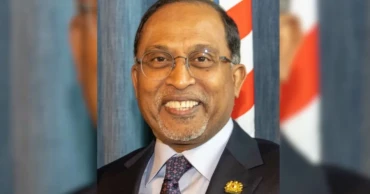
Malaysia dismisses claim of 10,000 Bangladeshi students getting ‘graduate pass’
Malaysian Higher Education Minister Datuk Seri Dr Zambry Abd Kadir has rejected as false and baseless a claim that 10,000 Bangladeshi students in Malaysia would be granted a “graduate pass” to allow them to work in the country.
He clarified that during the recent visit of Bangladesh’s interim government Chief Adviser Prof Dr Muhammad Yunus, no agreement was signed that would commit Malaysia to provide such work opportunities for Bangladeshi students, reports Malaysian newspaper the Star.
Zambry also urged Kedah’s industry and investment, higher education, science, technology and innovation committee chairman Dr Haim Hilman Abdullah to exercise greater caution before making public remarks especially on matters concerning higher education.
"Based solely on a newspaper report in Bangladesh, he has made the allegation that I have agreed to consider providing ‘graduate passes’ to 10,000 Bangladeshi students in Malaysia to enable them to work here. The allegation is completely untrue and inaccurate,” he said in a statement on Saturday.
Bangladeshi workers to enjoy similar social benefits, protection like Malaysians: Shafiqul Alam
He further described Haim Hilman’s claim that Malaysians were worried because the government had supposedly agreed to the arrangement as highly irresponsible.
"As someone with an academic background, he should have made statements based on true, accurate and authentic facts, not speculation or spreading information carelessly. Academic principles demand information that has integrity, accuracy and truth,” he added.
Zambry warned that Haim Hilman should not create misleading perceptions by sharing inaccurate details. "The culture of producing 'content' to be made viral on social media with incorrect facts must be stopped immediately," he added.
Prof Yunus returns home from Malaysia
Earlier, Haim Hilman had posted a two-minute and 19-second video on TikTok claiming that 10,000 Bangladeshi students would be given employment opportunities in Malaysia.
1 year ago
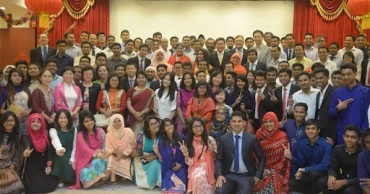
China emerges as a favourite destination for Bangladeshi students seeking higher education
With a growing reputation for quality education and affordable tuition, China has emerged as a popular destination for Bangladeshi students pursuing higher studies, drawing thousands to its top universities in fields such as engineering, medicine, business, and technology.
China offers a wide range of opportunities for international students, with one of the main attractions being the availability of scholarships.
The Chinese government, along with numerous universities, provides generous scholarships such as the China Government Scholarship, Belt and Road Scholarship, and various Provincial Scholarships. These often cover tuition fees, accommodation, and even monthly living expenses.
The quality of education in China has also improved significantly, with many Chinese universities now ranked among the best in the world. Bangladeshi students have the opportunity to learn from experienced professors, access modern laboratories, and interact with peers from diverse international backgrounds.
Times Higher Education Ranking: NSU is among top 5 universities in Bangladesh
In response to a question about the facilities available to international students in China, Professor He of Minzu University said that studying in China is considerably more affordable than in many European countries, primarily due to the low tuition fees.
He further noted that most students—particularly undergraduates—live on campus and are supported through a structured tutorial system.
When asked whether there are any specific scholarships or financial aid options available for Bangladeshi students, Professor He said that while China offers a wide range of scholarships, he was unsure if there is any financial aid programme tailored specifically for Bangladeshi students.
Speaking to UNB, Md Ataur Rahman Sobuj, a BSc student at Beijing Jiaotong University, remarked that China is one of the greatest countries in the world.
Times Higher Education Ranking: NSU is among top 5 universities in Bangladesh
He said, "I've been living here since 2018 and doing everything smoothly. I only had to pay around Tk 40,000 in my first year of diploma. Later, I got a Tk 1 lac scholarship due to my good result in the first year, and I did not have to pay any money for the diploma. Now, I am doing my BSc, and I also secured a China Government Scholarship."
1 year ago
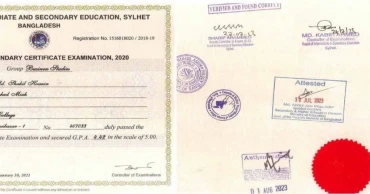
How Bangladeshi Students Can Attest Certificates Online Before Going Overseas
Bangladesh Government has simplified the document attestation process necessary for citizens going abroad by introducing a digital approach. This streamlined system allows students to authenticate their credentials from the comfort of their homes, eliminating the need for in-person visits. Launched on October 1, 2024, the online service offers numerous benefits, including time-saving, convenience, and accessibility. Let’s explore how Bangladesh government's online certificate attestation system works.
Prerequisites and Steps of Attesting Certificates Online
.
Required Documents
A National Identity Card (NID) or birth registration certificate issued online is essential for all study-related attestation categories. Since the procedure is entirely online, the relevant documents must be available in digital format for upload. All documents should be scanned in advance and saved on a computer in JPEG, JPG, or PNG format, ensuring the file size does not exceed 1 MB (megabyte).
Step-by-Step Process to Attest Certificates Online
.
Registration on the MyGov Platform
The process begins by visiting the official MyGov website at ‘www.mygov.bd’. The signup procedure requires the applicant to enter a user name with a valid mobile number or email address. This initial registration is completed by setting up a secure password.
Read more: Sanchayapatra at Maturity: Encashment or Renewal of Bangladesh’s National Savings Certificate
Profile Verification
After account creation, a unique profile will be automatically generated for the applicant. This profile must be verified immediately using the NID, birth registration number, or birth year. Note that a single NID can only be used to verify one MyGov account.
Searching for a Specific Application
On the MyGov homepage, the first visible service is ‘certificate attestation for citizen going overseas’. Clicking this option leads to a new page offering a range of applications for attesting documents required by foreign institutions.
Additionally, users can search for a specific document attestation service by typing keywords into the homepage search bar. The most relevant application will appear at the top of the search results. Alternatively, searches can also be conducted using voice commands for added convenience.
Read more: How to Apply Online for Police Clearance Certificate in Bangladesh?
Application Procedure
Each application option provides a detailed overview of requirements, including:
- Necessary documents- Rules for uploading files- Application fees- Instructions for completing the online form- Estimated processing time
These requirements may vary depending on the type of document being attested. Processing times differ for different services. While some services are free, others may incur a specific fee. Applicants can pay this fee conveniently via online banking, credit/debit cards, or mobile payment gateways.
While filling up the application form, fields marked with a red star (*) are mandatory and the rest are optional. If applicable, the applicant can attach additional pages or files by clicking the plus (+) button.
Read more: Get Digital Birth Certificate (English) in Bangladesh: Process, documents, frees
The applicant can fill up the form over multiple sessions, as it is not mandatory to complete the whole process in a single session. Partially filled forms can be saved as drafts for later submission. These drafts can be resumed through the ‘Service Management’ option after logging in with the registered mobile number or email ID and password.
Uploading Relevant Documents
Applicants can upload all types of documents required for the attestation directly to their account. Until the uploading process is complete, the process cannot proceed to the next stage.
For efficiency, all necessary documents can be uploaded in advance, immediately after verifying the account. These stored documents will automatically be linked to respective applications as required, eliminating the need for separate uploads.
Read more: SSC, HSC Certificate Information Change or Correction Process in Bangladesh
Tracking Application Updates
After final submission, the system will assign a unique tracking number for each application. This number allows the user to monitor his/her application's progress through the ‘Service Management’ option in their personal dashboard. Regular updates on the status of the application are accessible from this dashboard.
Receipt of Verified Documents
Once the attesting process is completed, the attested document will appear on the user’s dashboard. The attested document can then be downloaded immediately after the specified number of working days.
By following this structured approach, users can efficiently complete the online attestation process for their educational certificates, ensuring a smooth transition for academic pursuits abroad.
Read more: IELTS vs TOEFL: Which is better for study abroad?
Key Takeaways
This online certificate attestation unveils a wide range of benefits for Bangladeshi students who are planning to study abroad. By creating an account for every user, the system provides a dedicated one-stop platform to save all necessary documents. However, it is essential to remember that a single NID can verify only one account, enhancing security and preventing misuse. The platform’s efficient search functionality further improves user-friendliness, allowing quick access to specific services.
Read more: How To Prepare For Higher Studies Abroad After HSC
1 year ago

Studying for Bachelor’s Degree in Hungary: Cost, Scholarships, Opportunities for Bangladeshi Students
Located in central Europe, Hungary is a landlocked country famous for its art, culture, history, and architecture. From the Danube River to the Buda Castle to St. Stephen’s Basilica, Hungary brings a mix of nature and culture like its neighbors.
Beyond its geographical opulence, Hungary offers some of the best higher education opportunities in Europe. World-class universities coupled with manageable tuition fees and post-degree work opportunities attract hundreds of students each year. Here’s a detailed guide if you’re planning to get started with your bachelor’s in Hungary.
Why Study in Hungary?
In 2023, around 30,000 international students were studying in Hungary for bachelor's, master's, and PhD. The large number of students is a testament to the ease and acceptability of higher education in the country.
Besides, Hungary has a robust history as a seat of higher education dating back to 1581 with the establishment of the University of Szeged. Today, 5 Hungarian universities are ranked in the top 1000 list of QS Ranking 2025.
Unlike major Western European study-abroad destinations, Hungary offers a much more affordable tuition and living cost. The living cost index puts Hungary among the most affordable European countries in every expenditure head.
Hungary also has a generous 12 to 14 weeks of summer break in each academic year. The long breaks allow students to engage in self-development activities, work full-time, visit home, or even travel around. Additionally, the up-and-coming startup scene and widespread internship opportunities help the graduates smoothly kickstart their careers.
Read more: Distance Learning: Top Universities Offering Online Courses for International Students
How Can Non-EU Students Apply for Bachelor's Degree in Hungary?
Unlike West European countries, Hungary doesn’t have a centralized admission system. As a result, every university has its own admission schedule, process, and requirements. Application into the bachelor’s program can be divided into the following steps:
Step 1: Find a Program
Study Portal’s bachelor's list for Hungary (https://www.bachelorsportal.com/search/bachelor/hungary) can be an effective starting point to get an idea about the disciplines, university location, program duration, tuition fees, and other aspects. Based on the overview, you can do more specialized research utilizing the specific university portals and their admission resources.
Step 2: Get the Paperwork
The next step is to organize the paperwork to apply for the bachelors. As there’s no centralized system, the document requirement varies from one university to the other. However, some of the universal documents include:
- High school diploma (SSC and HSC certificate in the case of Bangladesh) - Transcript of the diplomas - Scanned copy of passport and birth certificate (NID is also applicable) - A Europass format CV - IELTS/TOEFL score - Proof of solvency - Letter of recommendation - Writing samples
Hungary follows the Bologna Process meaning you will need a high school diploma to be eligible for a bachelors. The English proficiency requirements aren’t all that stringent in Hungary. You can apply with “Medium of Instruction” or MOI if you studied your high school in English version. And in other cases, the minimum IELTS requirement is set at 5.5 overall for most universities.
Another thing to note is that all the physical documents to be submitted to the universities need to be attested by the education and the foreign ministry.
Read more: Cheapest countries for Bangladeshi students for higher studies
Step 3: Wait for the Admission Decision
Hungarian universities notify results either by e-mail or post. Most universities offer decisions based on document screening only. Some universities may require interviews. Also, specialized programs like M.B.B.S. may require additional tests upon conditional offer. Many Hungarian universities require non-EU citizens to pay the first-semester tuition fee upfront. If there’s no such provision, then the university will issue your admission letter and admission confirmation documents for visa purposes.
Legalization process for non-EU students
The first step to getting legalized in Hungary is to get the Permanent Residence status or PR. According to Hungarian law, a person becomes eligible for PR after staying in Hungary for 3 years on a residence permit. Note that, the residence permit for PR is different from the residence permit for students. So effectively, a student will need to legally live and work in Hungary for three years after graduation to be eligible for PR. There are also PR opportunities via investment and donations. The minimum amount starts at around 250,000 euros.
To obtain citizenship status in Hungary, a person will have to stay 8 more years after receiving their PR. In total, it takes about 11 years from graduation to becoming a Hungarian citizen.
Read more: Top 10 Best Affordable Universities in Canada for International Students
2 years ago
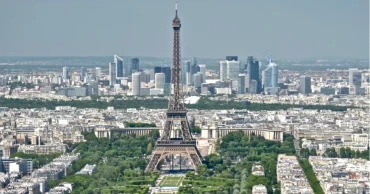
Study in France: Costs, Scholarships, and Opportunities for Bangladeshi Students
France, often dubbed the art capital of the world, offers a unique blend of tradition and modernity. Beyond its beautiful sculptures and scenic monuments, France is one of the top cosmopolitan destinations, attracting thousands of students worldwide. Every year, many Bangladeshi students dream of pursuing bachelor's degrees in France due to the high quality of education and manageable expenses. Here’s a detailed guide on subjects, costs, scholarships, and opportunities for studying for a bachelor's in France.
Why Study in France?
There are tons of reasons why students consider studying in France. First and foremost is the high quality of education. For the 2025 QS World University Ranking, 35 French universities made it to the list with 4 of them securing spots in the top 100. Apart from excellence, France has been a destination of higher education in Europe dating back to the Middle Ages. The celebrated Sorbonne University was founded in 1257 making it one of the oldest universities in Europe alongside Oxford and Cambridge University.
Historically, France had a low tuition fee for both EU and non-EU students. However, there has been a recent tuition fee hike in 2019. But it is still much lower compared to other European destinations.
The low crime rate can be another reason to explore France as your study-abroad destination. The criminality index of 5.82 puts France in 9th among 44 European countries and 1st among 11 countries in Western Europe.
Read more: Study in Australia: Scholarship Opportunities for Bangladeshi Students
France offers high-quality education in all the leading disciplines including Arts, Humanities, Law, Management, and Engineering. The cultural heritage, global perspective, wide networking opportunities, and a strong economy make France an easy choice for studying abroad.
Some of the popular programs for non-EU students include Fashion Design, Fine Arts, Business Administration, Law, Film Studies, Computer Science, and Social Sciences.
How Can Non-EU Students Apply for a Bachelor's Degree in France?
The application process for bachelors in France is divided into two options. Students who belong to EU countries are required to apply for bachelors via Parcoursup. It is the national application system for undergraduate programs in France.
Students from non-EU countries like Bangladesh, are required to apply through Etudes en France. The “Study in France” option is part of the Campus France portal which deals with all international admissions from non-EU students. Some universities offer admission directly through their platform.
Read more: Study in the Netherlands: Scholarship Opportunities for Bangladeshi Students
Here’s a step-by-step guide to getting admitted to a French university as a non-EU student.
Step 1: Choose a Program and University
The first step is to choose a program and university. Thankfully, Campus France offers a comprehensive list of programs and universities (every university that uses the Campus France admission system).
The first thing to do is to navigate to the Taught in English (https://taughtie.campusfrance.org/tiesearch/#/catalog) section of the Campus France website. From there, students can choose the level of study (L3/Bachelors), and field of study. Now, a prospective student can choose a specific region from the filter menu.
Step 2: Creating an Account in Campus France
The next step is to open an account on the Campus France portal (https://www.campusfrance.org/en/user/register). This account will be used for all application-related procedures hereon.
Read more: Higher Study in Germany: Scholarship Opportunities for Bangladeshi and Other International Students
Step 3: Filling Out Application Forms and Documents
The next step is to fill out the application form and provide the necessary information. Here the applicant will be required to provide documents like a high school diploma, transcripts, passport copy, and language proficiency test scores (e.g., DELF/DALF for French or IELTS/TOEFL for English-taught programs). A prospective student will also need to submit a motivation letter stating why he or she wants to study in France and choose that specific program.
Step 4: Attend Interview
Some students may need to sit for an online interview depending on the university.
Note that the procedure applies to non-EU students belonging to a country where the Etudes en France program is applicable. Unfortunately, Etudes en France isn’t available in Bangladesh.
In that case, students would need to apply through Demande d'Admission Préalable - DAP" (preliminary request for admission) (https://www.campusfrance.org/en/application-non-EU-student-living-outside-EU-without-etudes-en-France-procedure).
Read more: Top 10 International Scholarships for Women to Study Abroad
Students would need to fill up the White Folder (https://www.enseignementsup-recherche.gouv.fr/sites/default/files/2022-09/dossier-blanc-24403.pdf) along with other required documents and send it to the Department of Cooperation and Cultural Action at the French Embassy.
The specific steps of application and required documents may differ depending on the applicant's country. So make sure to contact the French Embassy in Bangladesh beforehand. The application deadlines for each year are announced in the Campus France portal.
2 years ago

Kyrgyz Deputy Minister of Education assures safety for Bangladeshi students
Kyrgyzstan Deputy Minister of Education Rasul Abazbek on Wednesday (May 22, 2024) assured the safety of Bangladeshi students in the country.
He gave the assurance when Bangladesh Ambassador to Kyrgyzstan (resident in Tashkent, Uzbekistan) Dr Md Monirul Islam met with him, according to a press release.
Bangladeshi students in Kyrgyzstan capital are safe: Foreign Minister
Minister of the Embassy M Nazmul Alam was present at the meeting, according to a press release.
Addressing a recent incident in Bishkek, the ambassador emphasised the need for a safe and favorable environment for Bangladeshi students studying in various Kyrgyz universities. He urged the Deputy Minister to allow online classes for the next few months, catering to the students' requests. The Ambassador also highlighted the potential for expanding bilateral cooperation in education between Bangladesh and Kyrgyzstan.
“Conveyed our concerns to Kyrgyzstan; no Bangladeshi student severely injured”: Foreign Minister
Deputy Minister Abazbek assured the ambassador that both government authorities and university administrations are committed to ensuring the safety of all foreign students, including those from Bangladesh. He also promised to positively consider the request for online classes and expressed interest in signing a Memorandum of Understanding on educational cooperation with Bangladesh.
Ambassador Islam further discussed issues related to education, security, accommodation, transportation, and food with university officials. The university authorities assured the Ambassador of their vigilance and active efforts to ensure the well-being and security of Bangladeshi students.
Mob attack in Kyrgyzstan: Panicked Bangladeshi students want to return home for a few weeks
2 years ago

South Asian students, inc Bangladeshis, endure night of horrors in Kyrgyz capital
Bangladeshi, Indian and Pakistani students have reportedly come under attack by violent mobs in Kyrgyzstan's capital, Bishkek.
Pakistan's mission in Bishkek said a few hostels of medical universities in Bishkek, where students from India, Bangladesh and Pakistan reside, have been attacked amid the violence, which broke out on Friday night.
The Kyrgyz government said four foreign citizens have been arrested following mob violence in Bishkek on the night of May 17-18 that injured at least 28 people, including several foreigners, and appeared to be directed against foreign students and migrants.
The violence prompted diplomatic reactions from Pakistan and India, who have warned their students in Bishkek to remain indoors.
The violence broke out after a video purportedly showing Kyrgyz students fighting medical students from Egypt on May 13 was widely shared online, according to Radio Free Europe.
Mobs gathered in several spots in Bishkek on Friday night after users on social media claimed those who were beaten were Kyrgyz youths.
On Saturday, a number of Bangladeshi students reached out to UNB seeking help for their safety.
“We are here, five Bangladeshi girls. We are inside our apartment right now. Some people are gathering in front of our apartment. Please help us," Samia Kabir, one of the Bangladeshi students at International School of Medicine, Kyrgyzstan, told UNB on Saturday evening.
"We have been asked by the authorities to stay inside. We hear some noises from other apartments nearby…some Pakistanis are likely to be there," Samia added.
"Our mission in Uzbekistan is looking into the matter. So far, we have not received any reports of injuries of any Bangladeshis. We are in touch with our Mission. We will share a complete report soon," a senior official at the Ministry of Foreign Affairs in Dhaka told UNB.
Meanwhile, the Ministry of Foreign Affairs of the Kyrgyz Republic in a statement said that at present the situation in Bishkek is "absolutely calm and fully under control".
"All necessary measures have been taken to ensure security and maintain peace and stability," it said.
It also asked representatives of the media, the blogging community and foreign colleagues to be guided only by official and verified information from the competent authorities of the Kyrgyz Republic.
One of the students, named Mustafa, who is living a bit far from the main city, told UNB that the number of Bangladeshi students is now over 1000 in Kyrgyzstan. He said they are relatively safer where he is than those who are living in Bishkek.
In some cases, students from Bangladesh, India, and Pakistan live in the same hostels, putting them at risk together.
External Affairs Minister S Jaishankar said the situation was "calm" in Bishkek and advised students to stay in regular touch with the Indian Embassy.
"The situation is presently calm, but students are advised to stay indoors for the moment," the Indian Consulate tweeted.
Videos of the clashes have flooded social media since Friday night.
Kyrgyzstan has long been a favoured destination for students from South Asian nations for top-notch medical training. As per the Migration Data Portal, Kyrgyzstan hosted the highest number of international students (61,418) in 2021 among the five Central Asian countries.
There are multiple reasons why students flock to Kyrgyzstan, which has the best healthcare, education, and transportation facilities among Central Asian nations.
Cheap cost of living, wide availability of Subcontinental cuisine, a good student-teacher ratio, and no entrance fees are some of the facilities that attract MBBS students.
2 years ago

Higher Education Abroad: How Bangladeshis Can Open Student Files
Every year, thousands of Bangladeshi students go abroad for higher studies. Researches show that the number of students going abroad has tripled over the last 15 years. With such a huge volume of students going abroad, there is a natural question: How are the living costs or the tuition fees transferred from Bangladesh? This is where the student file comes in.
What is a Student File?
According to the regulation of Bangladesh Bank, there is no direct channel to send money to a foreign account from an existing local savings/current account. There is also a limit on how much foreign currency can be carried in each foreign trip (US$ 12,000) as well as a limit on credit card payments.
In such a scenario, a student opting to study abroad faces an imminent challenge regarding tuition fee payment or remitting the cost of living. Some European universities require students to maintain a “Block Account” which essentially withholds the entire cost of study and disburses locally to the students as per their need.
Read more: Study in Ireland: Application process, cost for international students
A student file essentially bypasses this regulation legally where the bank remits the payment on behalf of the student. A student file is the only authorized way through which a student can send their tuition fee or remit the living cost abroad.
How to Open a Student File?
The process of opening a student file is pretty straightforward. At first, the student or their legal guardian needs to open a savings account with a relevant bank that offers the student file service. After that, the bank can entertain the request for opening a student account.
Typically, a student account can be opened on the same day as that of the application. The cost of opening a student file and the documents required vary from bank to bank.
Read more: Study in Thailand: Admission process, cost for International Students
But first, here’s what’s needed to open a savings account.
- Passport-size picture of the account holder (to be attested by the introducer)- NID/ Passport copy - Passport-size picture of the nominee - NID/Passport copy of the nominee - Utility bill copy (for address verification).
Typically, the following documents are required for opening a student file in any bank.
- All academic certificates (original and copy)- All academic transcripts (original and copy)- IELTS certificate - Copy of passport - Visa document - Acceptance letter from the university - Tuition and living cost certificate - Detailed information about the financer.
Read more: Higher Study Opportunities in Turkey for International Students: Process, Cost
Which Banks Provide Student File Service?
Several leading banks in Bangladesh provide student file service including some government banks. However, it is important to note that due to the recent dollar crunch and new regulations from Bangladesh Bank, some banks are not opening new student files but are continuing to operate the existing ones. Also, having a savings account in the relevant bank is a key prerequisite for opening a student file.
2 years ago