project
Crumbling roads in Kaliganj: Residents sound alarm over use of substandard materials
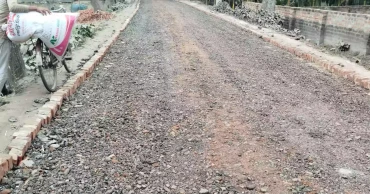
Concerns are mounting over the quality of a road reconstruction project in Kaliganj Upazila of Lalmonirhat district after allegations surfaced that substandard materials are being used in the government-funded work.
Local residents allege that low-quality brick chips are being used in the road’s base layer, casting doubt on its long-term durability.
The ongoing work involves reconstructing approximately 900 metres of road from Duhuli Bazar to Namurihat in Chawlbala Union.
Locals allege that the contractor is rushing the work using substandard and unnumbered brick chips (rabbish), ignoring repeated objections from the community.
Read more: Sylhet waterlogging mitigation project delayed again; sees 44pc cost surge
Residents are criticising the muted response of some officials and staff from the Kaliganj Upazila Engineering Office, questioning their accountability in monitoring the project.
Sources reveal that the road reconstruction is part of the Rural Road Maintenance Project, being implemented by the contractor Shan Traders, with a projected cost of Tk 7,524,690 under tender notice number 05/25-26.
The work started on December 31, 2025 and is scheduled for completion by March 31, 2026.
However, allegations suggest that the contractor is attempting to expedite the project through substandard work.
Local resident Mohammad Habib Mia expressed his frustration, saying, “They are laying the road with inferior brick chips. It will be destroyed in a short period, and we will face the same hardships as before. We have protested, but no one pays attention.”
A field visit on Monday afternoon confirmed the claims. Despite the presence of two assistant officers responsible for monitoring the project, substandard materials were being used openly.
Sub-Assistant Engineer Md. Simon, in charge of supervision, declined to comment when approached by the media.
Quilt makers race against time as bone-chilling cold grips Lalmonirhat
Attempts to reach the contractor, Mashiur Rahman, were unsuccessful, as he did not answer calls.
In response, Upazila Engineer Md Habibur Rahman Habib said instructions have been issued to remove the substandard material. If these directives are ignored, necessary action will be taken against the contractor, he added.
7 months ago
Sylhet waterlogging mitigation project delayed again; sees 44pc cost surge
A project to reduce chronic waterlogging, improve roads, and ensure safe drinking water in Sylhet City Corporation has been delayed again, increasing the cost by nearly 44 per cent.
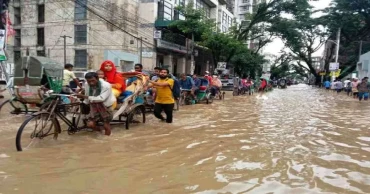
Waterlogging remains a serious problem in Sylhet city, causing long-term hardship for residents despite repeated attempts to tackle the issue.
Millions of taka have been spent, but results have largely fallen short of expectations.
Officials at Sylhet City Corporation said several plans were drawn up after the devastating 2022 floods to protect residents, but implementation has been limited.
Read more: COMFLOT West project extended by 2 years; cost nearly doubles
The cost of the project titled Alleviation of Waterlogging, Supply of Safe Water and Infrastructure Development of Sylhet City Corporation (Second Revised) has increased mainly due to prolonged implementation delays and an expanded scope of work, according to official documents.
It was originally approved at Tk 1,228.02 crore and it has now stood at Tk 1,766.05 crore, reflecting an increase of about Tk 538 crore.
The Local Government Division is the sponsoring authority while Sylhet City Corporation (SCC) is implementing the project.
According to the Planning Commission documents, the bulk of the revised cost, Tk 1,520.56 crore will come from government funds, with the remaining Tk 245.49 crore to be met from SCC’s own resources.
The project was initially scheduled for implementation between January 2020 and December 2023.
Its timeline was later extended to December 2024 under the first revision, followed by a further extension to June 2025 without any cost escalation.
Under the second revision, the completion deadline has been pushed back again to June 2026, citing the need for additional and more durable works.
Officials said the revised scope reflects Sylhet’s vulnerability to heavy rainfall and upstream hill flows, which frequently cause severe waterlogging and damage to roads.
Read more: Bangladesh Bank to launch Tk 10,000 crore bond for housing, rail projects
To ensure long-term sustainability, the project now places greater emphasis on RCC roads, drains and retaining walls instead of conventional surfacing.
Major components of the project include construction of 269.18 kilometres of roads and 363.92 kilometres of drains, along with 6.73 kilometres of retaining walls.
The plan also covers 22.75 kilometres of road dividers with tree plantation, slope protection works using CC blocks and RCC retaining walls, and construction of boundary walls stretching 12.71 kilometres.
One public toilet and 1.37 kilometres of steel railings along large drains are also included to enhance public safety.
To improve urban services, the project include installation of 236.05 kilometres of water pipelines and 263.50 kilometres of electrical works, including an expanded number of streetlights to ensure safer night-time movement in newly extended city areas.
Besides, 74 units of essential machinery and vehicles will be procured to support regular excavation and maintenance of 13 major canals and streams flowing through the city.
The revision also accounts for increased road repairs including asphalt overlay on roads already showing cracks and potholes, and reconstruction of boundary walls demolished with homeowners’ consent during road widening.
Sylhet’s Gowainghat house fire caused by short circuit, police confirm no communal link
As of June 2025, the project’s cumulative expenditure stands at Tk 2,186.51 crore, with financial progress at 92.09 per cent and physical progress at 92.50 per cent, according to official records.
The Planning Commission, in its recommendation, said successful completion of the project would significantly enhance civic amenities in Sylhet City Corporation by improving roads, drainage, footpaths and the supply of safe drinking water, thereby boosting overall urban resilience in one of the country’s most rain-prone regions.
8 months ago
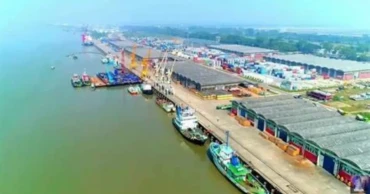
COMFLOT West project extended by 2 years; cost nearly doubles
The government has extended the completion deadline of Mongla Commander Flotilla West (COMFLOT West) infrastructure development project by two years, a move that has nearly doubled the project cost.
Originally scheduled for completion by December 2026, the strategic naval infrastructure project is now expected to be completed by December 2028, according to officials familiar with the revised Development Project Proposal (DPP).
The time extension has led to a sharp rise in the estimated cost, pushing the total project outlay from Tk 699.94 crore to Tk 1,316.62 crore.
Dream project derails; Khulna-Mongla railway struggles without freight flow
Being implemented by the Bangladesh Navy under the Defence Ministry, the project aims to strengthen maritime security and logistics in the Mongla naval region, which covers the country’s deep sea and coastal areas including the strategically important Mongla seaport in Bagerhat district.
Officials said the extension was unavoidable as delays and technical adjustments continued to drive up costs.
“The extension of the implementation period has exposed the project to global price inflation, revised rate schedules and increased construction costs,” a senior planning ministry official told UNB.
One of the major reasons behind the cost escalation is the project’s riverbank location.
Soil tests carried out during implementation revealed weaker ground conditions than initially assessed, requiring an increase in the number, length and diameter of piles for buildings and other structures.
In addition, global inflation and rising prices of construction materials, engineering equipment and furnishings further inflated the revised budget.
The project design has also been modified to reduce long-term risks and costs
As of June 2025, cumulative expenditure on the project stood at Tk 382.28 crore, with financial progress recorded at 54.61 percent and physical progress at 54 percent, officials said.
Once completed, the upgraded COMFLOT West facilities are expected to enhance the Bangladesh Navy’s operational readiness in the Mongla region by ensuring secure berthing, accommodation, medical services, supply and maintenance facilities for a growing number of naval and commercial vessels.
The project is also seen as crucial for safeguarding commercial shipping, fishing trawlers and other maritime activities linked to the country’s blue economy.
Read more: Third consignment of US wheat arrives in Mongla
“Time overruns inevitably translate into cost overruns,” one official said, adding that meeting the revised completion deadline is now critical to preventing further escalation.
The project is fully financed by government funds, adding pressure on the public exchequer at a time when development spending is already under scrutiny over delays and rising costs.
8 months ago
Bangladesh Bank to launch Tk 10,000 crore bond for housing, rail projects
Bangladesh Bank announced plans to issue the ‘Bangladesh Government Special Sukuk-1’, a Shariah-compliant bond worth Tk 10,000 crore, to finance selected national infrastructure and welfare projects.
The decision was finalised after meetings held last week by the central bank’s Shariah Advisory Committee under the Debt Management Department, which were presided over by Bangladesh Bank Deputy Governor Dr Md Kabir Ahmed.
According to the central bank, the Sukuk will have a tenure of 10 years and carry an annual profit rate of 9.75 percent.
Read more: Dhaka’s skyline transforms as flat owners reach 3.5 lakh
The bond will be issued based on the ‘Ijarah’ (leasing) method, a Shariah-compliant financing structure approved by the committee.
Proceeds from the issuance will support seven housing projects for government employees constructed by the Public Works Department.
Besides, the funds will be used for specific rail services operated under Bangladesh Railway, underscoring the government’s focus on both housing and transport infrastructure.
The ‘Special Sukuk-1’ is scheduled for issuance on January 14, 2026, through a private placement in favour of Sammilito Islamic Bank PLC.
The Sukuk represents part of Bangladesh’s ongoing efforts to leverage Shariah-compliant financing instruments to fund public projects while providing investors with profit-generating opportunities that align with Islamic finance principles.
Read more: House Rent Issues in Dhaka: A Growing Concern
8 months ago
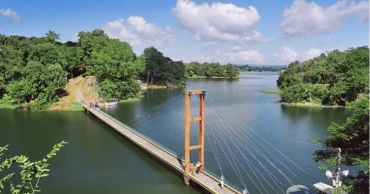
Dawn upon Rangamati: Govt steps in to protect rivers and people
The interim government has taken up a water management initiative in the hill district of Rangamati to ensure sustainable water supply, protect riverbanks and improve livelihoods in one of the country’s most environmentally fragile regions, according to officials.
They said the project, titled ‘Sustainable Water Management of the Karnaphuli and Associated Rivers in Rangamati Hill District’, will be implemented by the Bangladesh Water Development Board (BWDB) under the Ministry of Water Resources at an estimated cost of Tk 687.39 crore, fully funded by the government.
Implementation is scheduled from January 2026 to June 2030 and will cover 10 upazilas of Rangamati district, according to the project document.
Officials said the project is crucial for securing surface water availability in the hill district, where communities largely depend on rivers and streams for drinking water, irrigation, fisheries and transportation.
Read more: Govt cuts Tk 12,000cr from top development projects over slow progress
The Karnaphuli River and its associated rivers—Kachalong, Raikhyang and Shalak—serve as lifelines for the region, particularly during the dry season when water scarcity becomes acute.
According to the project outline, one of the key objectives is to restore and maintain navigability and year-round water flow in the feeder rivers of Kaptai Lake through extensive dredging.
The Kachalong, Raikhyang and Shalak rivers will be dredged to remove accumulated silt, helping to reduce sudden flooding during the monsoon while ensuring adequate water supply during the dry months.
Water resources officials said sustained water flow in these rivers is essential for maintaining water levels in Kaptai Lake, which feeds the country’s only hydroelectric power station.
Improved water availability is also expected to support fisheries, a major source of livelihood for hill communities, and enhance surface irrigation for agriculture in downstream areas.
Read more: Rangamati: IG goes where no govt has gone before, with water management initiative for Rangamati
The project also aims to excavate and re-excavate river-linked canals to improve surface irrigation and address chronic waterlogging in low-lying areas.
Many canals in Rangamati have lost their capacity due to long-term siltation, disrupting water distribution and limiting agricultural production, particularly in the dry season.
In addition to water supply, the project places strong emphasis on riverbank protection. About 13.72 kilometres of riverbank protection works will be carried out to safeguard critical infrastructure, educational institutions and settlements from erosion along the Karnaphuli and its tributaries.
Riverbank erosion has emerged as a persistent threat in Rangamati, especially during the monsoon when heavy rainfall and upstream flows cause rivers to swell and change course.
Officials said that the Karnaphuli is the only riverine communication route between Barkal upazila and Rangamati district headquarters, making bank protection vital for maintaining connectivity and access to essential services.
They said special attention will be given to the border-adjacent Thegamukh area along the India-Bangladesh frontier, where aggressive river erosion has endangered public installations, including Border Guard Bangladesh (BGB) facilities, local markets and schools.
Read more: DWASA moves to set up Tk 721cr training, research academy
Riverbank protection in this area is expected to help prevent further land loss and protect national territory.
Project documents note that changes in the river system date back to the construction of the Kaptai Dam in the 1960s, which altered the natural flow of the Karnaphuli and its tributaries.
Since then, sediment carried during the monsoon has been depositing in riverbeds and Kaptai Lake, gradually reducing water depth and flow capacity.
As a result, navigation becomes extremely difficult during February to April, often isolating remote communities and increasing transport costs for essential goods.
Farmers also suffer due to the absence of water in canals during the dry season, leading to reduced agricultural output.
The proposed interventions are based on recommendations from a feasibility study conducted by the Institute of Water Modelling (IWM) titled Feasibility Study for the Development & Management of Karnafully River Basin (With Halda River).
The study identified erosion-prone zones and highlighted the need for integrated river training, dredging and canal excavation to ensure sustainable water management in Rangamati.
Officials believe that once implemented, the project will significantly improve water security in the hill district, ensuring reliable surface water supply for domestic use, agriculture, fisheries and power generation.
Read more: A costly bridge in Manikganj waiting for roads
Improved river flow and connectivity are also expected to boost tourism, while construction activities and expanded economic opportunities will contribute to employment generation and overall socio-economic development in the region.
With climate variability increasing pressure on hill ecosystems, authorities view the project as a strategic investment to balance development needs with long-term water sustainability in Rangamati.
8 months ago
Govt cuts Tk 12,000cr from top development projects over slow progress
The interim government is slashing allocations for several major development projects in the Revised Annual Development Programme (RADP), cutting over Tk 12,000 crore from eight of the top 10 priority projects due to slow progress and fiscal constraints.
According to planning ministry sources, allocations for the Rooppur Nuclear Power Plant project will remain unchanged, while funding for the Dhaka–Ashulia Elevated Expressway will be increased.
They, however, said allocations for the remaining eight major projects are being reduced.
The National Economic Council (NEC) is expected to approve the revised ADP at its meeting on Monday, to be chaired by Chief Adviser of the interim government Professor Muhammad Yunus.
Read more: Rangamati: IG goes where no govt has gone before, with water management initiative for Rangamati
A senior official at the Planning Ministry said large projects often receive high allocations at the start of the fiscal year, but full utilisation becomes difficult due to low implementation progress.
He added that weak revenue collection has also contributed to the need for budget cuts.
Projects facing reduced allocations include MRT Line-6, MRT Line-1, MRT Line-5 (North), the four-lane highway from Hatikumrul in Sirajganj to Rangpur, the Dhaka–Sylhet four-lane highway, Matarbari Port Development, expansion of Hazrat Shahjalal International Airport, and the Bus Rapid Transit (BRT) project from the airport to Gazipur.
Read more: A costly bridge in Manikganj waiting for roads
In the current ADP, Tk 8,631 crore was allocated for MRT Line-1. Under the revised ADP, the allocation is proposed to be reduced to Tk 801 crore, a cut of Tk 7,830 crore.
The allocation for the extension of MRT Line-6 from Motijheel to Kamalapur is being reduced from Tk 1,347 crore to Tk 1,023 crore. Funding for MRT Line-5 (North) is proposed to be lowered from Tk 1,490 crore to Tk 592 crore.
The allocation for the Matarbari Port Development Project is proposed to be reduced from Tk 4,086 crore to Tk 1,085 crore.
The Dhaka–Sylhet four-lane highway project will see a reduction of Tk 55 crore, with Tk 1,668 crore proposed in the revised ADP.
The expansion project of Hazrat Shahjalal International Airport will have its allocation reduced by Tk 733 crore to Tk 306 crore.
The BRT project from the airport to Gazipur will see its allocation reduced by Tk 256 crore to Tk 168 crore.
The four-lane highway project from Hatikumrul to Rangpur will have Tk 310 crore cut, with Tk 1,562 crore proposed in the revised ADP.
Speakers question government’s role amid rising violence and election security concerns
The Rooppur Nuclear Power Plant project will retain its original allocation of Tk 10,011 crore.
Meanwhile, the allocation for the Dhaka–Ashulia Elevated Expressway project is being increased by Tk 1,134 crore, bringing its total allocation to Tk 4,476 crore in the revised ADP.
Overall, about Tk 30,000 crore is being cut from the current fiscal year’s ADP. Planning ministry officials said the revised ADP size may be set at Tk 2 lakh crore, down from the original Tk 2.30 lakh crore.
Funding from domestic sources is proposed to be reduced from Tk 1.44 lakh crore to Tk 1.28 lakh crore, while project aid will be lowered from Tk 86,000 crore to Tk 72,000 crore.
The current ADP includes 1,171 projects.
Last year, the revised ADP was reduced by Tk 49,000 crore, bringing its size to Tk 2.16 lakh crore.
Read more: DWASA moves to set up Tk 721cr training, research academy
8 months ago
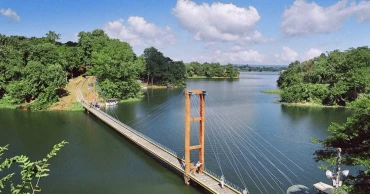
Rangamati: IG goes where no govt has gone before, with water management initiative for Rangamati
The interim government has taken up a water management initiative in the hill district of Rangamati to ensure sustainable water supply, protect riverbanks and improve livelihoods in one of the country’s most environmentally fragile regions.
The project, titled Sustainable Water Management of the Karnaphuli and Associated Rivers in Rangamati Hill District, will be implemented by the Bangladesh Water Development Board (BWDB) under the Ministry of Water Resources at an estimated cost of Tk 687.39 crore, fully funded by the government.
Implementation is scheduled from January 2026 to June 2030 and will cover 10 upazilas of Rangamati district, according to the project document.
Officials said the project is crucial for securing surface water availability in the hill district, where communities largely depend on rivers and streams for drinking water, irrigation, fisheries and transportation.
Read more: Irregularities deepen doubts over Khulna’s mega embankment project
The Karnaphuli River and its associated rivers—Kachalong, Raikhyang and Shalak—serve as lifelines for the region, particularly during the dry season when water scarcity becomes acute.
According to the project outline, one of the key objectives is to restore and maintain navigability and year-round water flow in the feeder rivers of Kaptai Lake through extensive dredging.
The Kachalong, Raikhyang and Shalak rivers will be dredged to remove accumulated silt, helping to reduce sudden flooding during the monsoon while ensuring adequate water supply during the dry months.
Water resources officials said sustained water flow in these rivers is essential for maintaining water levels in Kaptai Lake, which feeds the country’s only hydroelectric power station.
Improved water availability is also expected to support fisheries, a major source of livelihood for hill communities, and enhance surface irrigation for agriculture in downstream areas.
The project also aims to excavate and re-excavate river-linked canals to improve surface irrigation and address chronic waterlogging in low-lying areas.
Many canals in Rangamati have lost their capacity due to long-term siltation, disrupting water distribution and limiting agricultural production, particularly in the dry season.
In addition to water supply, the project places strong emphasis on riverbank protection. About 13.72 kilometres of riverbank protection works will be carried out to safeguard critical infrastructure, educational institutions and settlements from erosion along the Karnaphuli and its tributaries.
River erosion has emerged as a persistent threat in Rangamati, especially during the monsoon when heavy rainfall and upstream flows cause rivers to swell and change course.
Officials noted that the Karnaphuli is the only riverine communication route between Barkal upazila and Rangamati district headquarters, making bank protection vital for maintaining connectivity and access to essential services.
Read more: DWASA moves to set up Tk 721cr training, research academy
Special attention will be given to the border-adjacent Thegamukh area along the India-Bangladesh frontier, where aggressive river erosion has endangered public installations, including Border Guard Bangladesh (BGB) facilities, local markets and schools.
Riverbank protection in this area is expected to help prevent further land loss and protect national territory.
Project documents note that changes in the river system date back to the construction of the Kaptai Dam in the 1960s, which altered the natural flow of the Karnaphuli and its tributaries.
Since then, sediment carried during the monsoon has been depositing in riverbeds and Kaptai Lake, gradually reducing water depth and flow capacity.
As a result, navigation becomes extremely difficult during February to April, often isolating remote communities and increasing transport costs for essential goods.
Farmers also suffer due to the absence of water in canals during the dry season, leading to reduced agricultural output.
The proposed interventions are based on recommendations from a feasibility study conducted by the Institute of Water Modelling (IWM) titled Feasibility Study for the Development & Management of Karnafully River Basin (With Halda River).
The study identified erosion-prone zones and highlighted the need for integrated river training, dredging and canal excavation to ensure sustainable water management in Rangamati.
Officials believe that once implemented, the project will significantly improve water security in the hill district, ensuring reliable surface water supply for domestic use, agriculture, fisheries and power generation.
Improved river flow and connectivity are also expected to boost tourism, while construction activities and expanded economic opportunities will contribute to employment generation and overall socio-economic development in the region.
With climate variability increasing pressure on hill ecosystems, authorities view the project as a strategic investment to balance development needs with long-term water sustainability in Rangamati.
Read more: Riverbank embankment sinks into Akhira before completion!
8 months ago
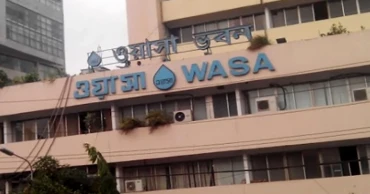
DWASA moves to set up Tk 721cr training, research academy
Dhaka Water Supply and Sewerage Authority (DWASA) is set to establish a dedicated Training and Research Academy aimed at reducing its long-standing dependence on costly local and foreign consultancy services.
The proposed project, titled ‘Dhaka Wasa Training and Research Academy Establishment’, will be implemented at Mirpur Senpara Parbata Mouza in the capital at an estimated cost of Tk 721.42 crore.
Dhaka Wasa will execute the project under the Local Government Division between October 2025 and June 2031.
Officials said the project will gradually reduce Dhaka Wasa’s reliance on external consultants by creating a skilled pool of in-house professionals capable of planning, operating and maintaining complex systems.
Read more: Dhaka WASA declares its headquarters 100% smoke-free
According to official documents, the project is designed to build strong in-house technical capacity at a time when Dhaka Wasa is implementing complex, technology-driven infrastructure projects under its Water Master Plan and Sewerage Master Plan.
Dhaka Wasa is undertaking several major projects including the construction of two water treatment plants and one sewage treatment plant, alongside the introduction of 145 District Metered Areas across the city to reduce system loss and ensure pressurised and uninterrupted water supply.
Of these, 89 DMAs have already been established while the remaining ones are under construction.
At the same time, advanced technologies such as smart water meters and Supervisory Control and Data Acquisition systems are being introduced for centralised monitoring and data management.
Officials said Dhaka Wasa’s officers and staff do not yet have adequate expertise to operate and manage these modern systems effectively.
Almost all planning, implementation, monitoring and optimisation activities are being carried out by domestic and international consultancy firms, making projects expensive and limiting long-term institutional learning.
“Due to a lack of technical knowledge and proper training facilities, Dhaka Wasa has no alternative but to rely on consultants for specialised tasks like DMA management, leak detection, SCADA operation and smart metering. This significantly raises project costs and weakens internal capacity,”a senior official told UNB.
Dhaka Wasa, Rajuk, DNCC to work jointly on wastewater of Gulshan, Banani
Dhaka Wasa currently has a training centre but its infrastructure and human resources are inadequate for advanced training and research.
Opportunities for gaining modern technological knowledge and hands-on experience remain very limited.
Although Dhaka Wasa operates microbiology and chemical laboratories mainly to test water quality, meaningful research to improve water quality standards is minimal because of the absence of proper research facilities and trained manpower.
The proposed academy aims to address these challenges by establishing an international-standard training and research institute focused on water supply and sewerage services.
Major components of the project include the construction of a training and research centre, dormitory facilities, parking areas and a pilot plant, along with the procurement of modern training and research equipment. The project also allocates funds for architectural design, construction supervision and specialised technical consultancy during the initial phase.
The financing plan includes Tk 90 crore from government funds, Tk 571.42 crore in project loans and Tk 60 crore from Dhaka Wasa’s own resources.
Once operational, the academy is expected to provide advanced training to Dhaka Wasa officials and employees in areas such as low-cost water and sewage treatment technologies, DMA establishment, leak detection, smart metering and SCADA-based system management.
Beyond Dhaka Wasa, the academy is also planned as a regional knowledge-sharing platform. It will offer training and capacity-building support to water and sewerage service providers from across Bangladesh and South Asia.
Read more: ECNEC approves Tk 35,465 cr project to modernise Eastern Refinery
“This institute will not only improve Dhaka Wasa’s operational efficiency but also help position Bangladesh as a regional centre for water management training and research,” said an official.
The Planning Commission has already endorsed the proposal noting that its successful implementation will significantly enhance the knowledge and skills of officials working in water supply and sewerage services.
8 months ago
A costly bridge in Manikganj waiting for roads
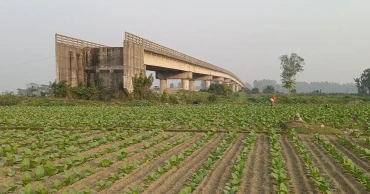
Rising gracefully over the Kaliganga River in Ghior upazila, the concrete bridge at Baikunthapur was meant to end decades of isolation for dozens of villages, yet today it stands idle, cut off from the very communities it was built to serve.
Three years after its completion, the Tk 42.34-crore structure remains unused, reminding how poor planning can turn development into despair, locals said.
Read more: A decade on, Uttara lake development still stuck in limbo
With no approach roads on either end, the 365-metre-long bridge has failed to deliver its promise of connectivity. For residents of at least 30 villages on both banks of the river, daily life remains shaped by hardship, risk and long detours.
Rather than easing communication, the bridge has become a symbol of frustration, according to villagers.
They said they continue to cross the Kaliganga by ferry boats, often at personal risk, while motorcycles, vans and rickshaws are ferried across the river one by one.
“What should have been a journey of minutes now takes hours — or requires travelling nearly 15 kilometres extra to reach essential destinations,” said Habibur Rahman of Baliabadha village.
Constructed under the Construction of Important Bridges on Rural Roads (CIBRR) project, the bridge’s construction began in 2018 following a tender process, officials said.
They said the project included approach roads, with land acquisition factored into the overall cost. While the main bridge was completed in 2022, the crucial connecting roads never materialised.
Read more: Endless delay pushes Barui Para Bridge cost to Tk 136cr; frustration grows
According to the officials, the delay stems from complications in land acquisition. About 6.20 acres of land were acquired for the approach roads, and Tk 12.10 crore was allocated to compensate affected landowners.
However, delays in distributing compensation cheques meant landowners did not hand over possession of their land, bringing construction to a standstill. “As a result, the bridge has remained idle for three years — a costly piece of infrastructure serving no practical purpose,” said an official, preferring anonymity.
8 months ago
ECNEC approves Tk 35,465 cr project to modernise Eastern Refinery
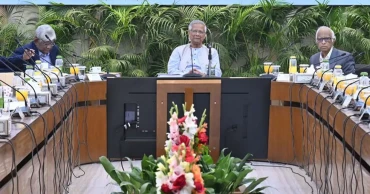
The Executive Committee of the National Economic Council (ECNEC) on Tuesday (December 23, 2025) approved a Tk 35,465 crore project to modernise and expand Eastern Refinery Limited (ERL), aiming to strengthen Bangladesh’s energy security, produce cleaner fuel and cut dependence on imported refined petroleum products.
The approval came at an ECNEC meeting held at the NEC Auditorium of the Planning Commission with Chief Adviser Professor Muhammad Yunus in the chair.
Titled “Modernisation and Expansion of Eastern Refinery Limited (ERL),” the project has been undertaken by the Energy and Mineral Resources Division and will be implemented by ERL on behalf of the Bangladesh Petroleum Corporation (BPC).
It falls under the power and energy sector and will be implemented in the Patenga area under Chattogram City Corporation in Chattogram district from December 2025 to November 2030.
Read more: Endless delay pushes Barui Para Bridge cost to Tk 136cr; frustration grows
Of the total estimated cost, Tk 21,277.59 crore will be provided as a government loan, while Tk 14,187.56 crore will come from ERL’s own resources.
According to official documents, the key objectives of the project are to further reinforce national energy security, produce cleaner and more environment-friendly petroleum products and reduce the country’s heavy reliance on imported finished petroleum products.
Under the project, a wide range of activities will be carried out, including site preparation, detailed engineering, procurement and construction involving both civil and mechanical works.
A total of 20 processing units and 18 utility and off-site units will be installed as part of the expansion.
Besides, electrical line connections will be taken from the Power Development Board (PDB), gas line connections from Karnaphuli Gas Distribution Company Limited (KGDCL), drainage infrastructure will be constructed, and computers, office equipment and other ancillary items will be procured.
Read more: Irregularities deepen doubts over Khulna’s mega embankment project
Eastern Refinery Limited, established in 1968, currently has a crude oil processing capacity of 1.5 million metric tonnes per year.
At present, ERL meets only about 20 per cent of the country’s total demand for petroleum products, with the remaining requirement being fulfilled through imports.
This results in a substantial outflow of foreign currency for importing refined fuels.
Officials said the introduction of Euro-5 fuel standards has made petroleum product specifications much more stringent.
The proposed modernised refinery will produce Euro-5 standard environment-friendly gasoline and diesel, while upgrading existing diesel, motor spirit and octane produced at ERL to Euro-5 standards.
Read more: Govt set to implement new project to digitise medical, nursing education
In the meantime, BPC has already implemented the “Installation of Single Point Mooring (SPM) with Double Pipeline” project, which will enable transportation of up to 4.5 million metric tonnes of crude oil annually.
This development has created favourable conditions for handling larger volumes of crude oil required for the expanded refinery.
The Planning Commission, in its recommendation, said that once implemented, the project would enable the country to refine 3 million metric tonnes of crude oil annually and meet around 45 to 50 per cent of national demand for petroleum products.
This is expected to enhance fuel storage capacity, save a significant amount of foreign exchange and contribute to ensuring long-term energy security for the country.
Under a Processing Agreement with Bangladesh Petroleum Corporation (BPC), ERL processes crude oil imported by BPC and delivers the finished petroleum products to the other subsidiaries of BPC for marketing and distribution.
Read more: Govt approves Tk 462.99cr Karnaphuli Tunnel connectivity project
8 months ago