fruits

Why eating fruits on an empty stomach in the morning may not be ideal
Fruits are often hailed as a vital part of any healthy diet, packed with essential nutrients like vitamins, minerals, and fibre. They are also a staple in weight-loss plans due to their low-calorie and high-nutrient profile.
When it comes to starting the day right, many wonder if consuming fruits first thing in the morning, on an empty stomach, is the best choice. Despite their many benefits, experts say that eating fruits on an empty stomach may not be as ideal as it seems.
Fiona Sampat, a clinical dietitian at Kokilaben Dhirubhai Ambani Hospital in Mumbai, recently discussed this topic in an interview with HT Lifestyle, explaining why it's not always advisable to consume fruits first thing in the morning. She also suggested some alternatives that can help kickstart the day in a healthy manner.
Many people believe that consuming fruits on an empty stomach enhances their health benefits. However, Fiona argues that there is no scientific evidence supporting this claim. In fact, eating fruits first thing in the morning can lead to a rapid spike in blood sugar levels.
This is due to the natural sugars in fruits, which can cause a sudden increase in glucose when consumed without any other food in the stomach. As a result, the body may experience a quick rise followed by a sharp drop in blood sugar, leading to fatigue, hunger pangs, and even fluctuations in glucose levels.
For those with specific health concerns, such as diabetes, this rapid blood sugar variation can be particularly problematic. Additionally, consuming fruits, especially citrus varieties like oranges or sweet lime, on an empty stomach can lead to gastric discomfort. This is because these fruits are acidic and may irritate the stomach lining, potentially causing discomfort or bloating.
"Wellness Rooms" are gaining popularity in homes
Despite the potential downsides of eating fruits on an empty stomach, Fiona emphasises that fruits should not be eliminated from the morning diet entirely.
Instead, it's important to change how they are consumed. Pairing fruits with healthy fats and proteins can help moderate the sugar spike and provide a more sustained energy boost throughout the morning.
For example, pairing fruits with nuts, seeds, or protein sources such as curd, buttermilk, milk, or lentils can help reduce the blood sugar fluctuations. This combination also provides essential nutrients that support overall health.
Studies have shown that eating fruits between meals, rather than first thing in the morning, can help reduce overall energy intake and increase feelings of fullness, which may assist in weight management.
Another key point Fiona stresses is the importance of consuming whole fruits rather than fruit juices. Juices lack the fibre and micronutrients found in whole fruits, which means they don’t offer the same health benefits.
If you're looking for healthy alternatives to start your day, Fiona suggests several options that can boost energy, digestion, and overall health. These include:
Nuts and seeds: Almonds, walnuts, unsalted pistachios, flaxseeds, and pumpkin seeds are excellent choices as they are rich in omega-3 fatty acids and provide a sustained energy boost.
Hot water concoctions: Drinks like jeera water (cumin), coriander seeds water, fennel seeds water, and turmeric water are packed with antioxidants and anti-inflammatory properties that support metabolism and digestion.
Chia seed water: Chia seeds are a great source of omega-3 fatty acids and fibre, promoting heart health, regulating blood sugar, and providing a sense of fullness.
Lemon water: A refreshing option that helps with hydration, digestion, and provides a healthy dose of vitamin C.
Milk: A protein-rich beverage that supports bone health and helps stabilise blood sugar levels.
By making a few adjustments, such as pairing fruits with healthy fats or protein, you can enjoy the benefits of fruits while avoiding blood sugar spikes.
Additionally, exploring other nutritious options in the morning can help ensure a healthy and energising start to your day.
With inputs from Indian media
1 year ago
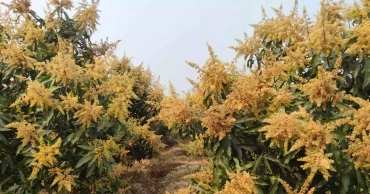
Naogaon to see bumper mango harvest worth Tk 3,500 cr this year
Naogaon, one of Bangladesh’s leading mango-producing districts, is set for a record-breaking season, with mango production expected to reach a staggering Tk 3,500 crore this year, officials said.
They said if favourable weather persists and natural disasters are avoided, Naogaon’s mango orchards are expected to yield a harvest valued at Tk 3,500 crore.
This projected bumper crop will provide a significant boost to the region’s economy, reinforcing Naogaon’s reputation as one of Bangladesh’s top mango-producing districts, said Abul Kalam Azad, deputy director of the Naogaon District Agricultural Extension Directorate.
Temperatures below 15°C for extended periods can hinder mango blossoms. However, this year’s average temperature has remained around 20°C—ideal for mango cultivation. Despite this, recent misty conditions raised concerns about fungal infections, prompting the department to advise farmers to apply fungicides for crop protection, the DAE deputy director added.
According to the Naogaon Agricultural Extension Directorate, mango cultivation in the district has grown this year, covering 30,500 hectares—200 more than last year.
In 2024, the district produced 425,000 metric tonnes of mangoes, slightly below the 431,000-tonne target. This year, if the weather remains favourable, production is expected to rise to 450,000 metric tonnes, an increase of 25,000 tonnes from the previous year.
Sapahar and Porsha upazilas are the primary mango-producing areas, with Niamatpur Patnitola, Dhamoirhat, and Badalgachi also making notable contributions to the region’s mango output.
Naogaon is known for producing a variety of high-quality mangoes, including Nag Fajli, Langra, Am Rupali, Gopal Bhog, Ashwina, Katimon, BARI Mango-4, BARI Mango-11, Guti Mango, and Fajli, all of which have strong domestic and international demand.
Rice prices surge in Khulna despite imports; poor hit hard
Farmers in Naogaon are hopeful for a bumper harvest, following a smaller yield last year. The natural cycle of mango production suggests that after a low harvest, a larger yield is typically expected in the following season. This year, almost all the trees in the orchards have sprouted blossoms, and farmers are taking proactive steps to protect them from fungal attacks. They are spraying fungicides and pesticides on the blossoms, watering the base of the trees, and, in some cases, spraying water to help nurture the crop.
As the blossoms start to form, traders and middlemen have already entered the fields to take advantage of the expected surge in mango production. These seasonal traders are negotiating with orchard owners to buy mango gardens for the upcoming harvest. Over the past few days, as the mango buds have started to form, traders have begun serious discussions with growers regarding buying and selling orchards.
Sohel Rana, an agricultural entrepreneur from the Godownpara area of Sapahar upazila, has three mango orchards spread over 200 bighas of land. He sells mangoes locally and exports them abroad. Sohel said that last year, only 50-60% of the trees in his orchard bore blossoms. This year, however, 80% of his trees have blossomed, and he expects all trees to bloom within the next 15-20 days.
Sundarbans at stake as erosion shrinks forest land
With favourable weather conditions so far, Sohel remains hopeful for a bumper harvest. He is also taking preventive measures by spraying fungicides to protect his crop from fungal infections, especially given the potential for misty weather.
Raihan Alam, a mango grower from the Barogram area of Porsha upazila, reflects on the earlier-than-usual blossoms this year. Last year, cold weather delayed the appearance of mango blossoms by 15-20 days, and many trees did not bloom until mid-March.
This year, however, the blossoms appeared much earlier, and Raihan is hopeful for a good harvest if the weather continues to be favourable.
1 year ago

Healthy Alternatives to Cakes and Cookies: 7 Delicious and Nutritious Swaps
Cakes and cookies or biscuits, with their delightful flavors and textures, have carved a special place in the ever-evolving culinary culture. Their universal appeal transcends borders, making them beloved indulgences across the globe. However, beneath their sweet charm lie potential health concerns. This article explores the health risks of Cakes and biscuits, offering seven nutritious alternatives to satisfy your cravings.
Health Risks of Cakes and Cookies
Cakes and biscuits, though tempting, come with a set of health risks that should not be overlooked. Here are the key concerns:
High Sugar and Refined Flour Content
Cakes and cookies usually contain sugar and refined flour, causing rapid spikes in blood sugar levels.
Consistent high sugar consumption can lead to insulin resistance, paving the way for diabetes, obesity, high blood pressure, and heart disease.
Read more: Natural Sweeteners: 7 Healthy Alternatives of Refined Sugar
Saturated Fats and Cholesterol Levels
These baked foods often contain solid and highly saturated fats like butter and palm oil, which can increase low-density cholesterol levels.
Margarine or butter used in cakes can contribute to raised cholesterol levels in the blood.
Dental Issues
The sugary and starchy nature of cakes and cookies can contribute to cavities and dental problems over time.
Weight Gain
Cakes are rich in carbohydrates and fats, making them calorie-dense and conducive to weight gain.
Read more: 10 Best Teas for Weight Loss
Blood Glucose Spikes
Sugar is one of the most common ingredients used in baking cakes. The sugar in cakes can lead to higher blood glucose levels, increasing the risk of developing diabetes over time.
3 years ago

Homemade Ice Cream Recipes Using Seasonal Fruits for This Summer
Ice cream is one of the coolest and yummiest frozen desserts liked by people of diverse age groups. Especially, during the hot summer days, ice cream cools the mind and body. From kids to adults, different people like different flavours of ice-creams. Season fruits can make ice-creams versatile, tastier, and healthier. Let’s find out the 7 best homemade ice cream recipes that you can prepare using seasonal fruits.
7 Best Homemade Ice Cream Recipes with Seasonal Fruits
Mango Ice Cream Recipe
You can make the best mango ice cream from flavorful smooth-fleshed mangoes.
Ingredients1 ripe mango (large), (1 1/2 pounds mangoes to prepare 2 2/3 cups mango cubes, 1/2 cup heavy cream, 5 tablespoons sugar, or more
ProcedureFirst, wash and peel off the mango and cut it into cube pieces. Then blend the mango to get mango puree. Transfer the mango puree to a bowl and add the cream and the sugar. You can add more sugar to adjust the taste.
Now pour the mixture into an ice cream machine and churn-freeze it as long as it becomes set. In the meantime, put a stainless steel bowl in the freezer. Put the ice cream quickly into the chilled bowl, cover it tightly, and keep it in the freezer no sooner had it becomes ready to enjoy.
Read More: Easy Homemade Summer Drinks to Beat the Heat and Increase Immunity
Strawberry Ice Cream Recipe
Ingredients12 ounces fresh strawberries, ¾ cup sugar, 2 cups heavy whipping cream, 1 cup milk, one teaspoon vanilla extract, 1 tiny pinch salt
ProcedureFirst, blend strawberries and sugar for 10 minutes to make a good puree. Then add cream, milk, vanilla extract, and salt to the strawberry mixture and blend again as long as the puree becomes smooth and slightly thickened.
Now take the strawberry mixture into the container of an ice cream maker and freeze following the instructions of the manufacturer. When ice cream is ready, put it in a sealable container, cover it with plastic wrap, seal the container, and freeze for 2 hours or the whole night.
Read More: Best foods, drinks to avoid heat exhaustion
Chocolate Banana Ice Cream Recipe
Ingredients4 bananas, ¼ cup cocoa powder, 2 tablespoons peanut butter, ¼ cup cow’s milk.
ProcedureFirst, peel off the bananas and cut them into small pieces. Now take a food processor and blend bananas, cocoa powder, and peanut butter to get a smooth puree. Now take puree to a container of an ice cream maker and freeze following the instructions of the manufacturer.
When ice cream is ready, put it in a sealable container, cover it with plastic wrap, seal the container, and freeze for 2 hours or the whole night. Then enjoy healthy and tasty chocolate banana ice cream.
Read More: 10 Healthy Iftar Drinks for Breaking Ramadan Fasting
3 years ago

Chittagong Hill Tracts: 'The orchard of Bangladesh'
Agriculture Secretary Md Sayedul Islam on Friday stressed the need to highlight the Chittagong Hill Tracts (CHT) as the orchard of Bangladesh.
“Cold storages need to be built to preserve the fruits grown in the CHT. Besides, the number of collection centres needs to be increased to collect and store fruits coming from the remote parts of the region,” Sayedul said.
He made the remarks during a views-exchange meeting with agricultural scientists from Chattogram and the three hill districts that comprise the CHT region, at the conference room of the Department of Agricultural Extension (DAE) in Bandarban.
Speaking as the chief guest, Sayedul pointed out various measures that need to be taken in order to boost fruit production in the CHT.
“The agricultural loan at 4 percent interest rate announced by the government needs to be ensured. State-of-the-art technologies must be used to enhance the irrigation system. Most importantly, participation of educated people is necessary for a technology and knowledge-based agricultural system,” Sayedul said.
Read: Govt will do everything to stop bloodshed in CHT: Home Minister
The secretary claimed that no other country in the world provides as much subsidy as Bangladesh in the agricultural sector.
“The government provides subsidies worth Tk 30,000 crore every year to the agricultural sector, an amount equal to the total cost of the Padma Bridge. The government is doing it for the sake of making the nation food-sufficient,” Sayedul added.
Sayedul also said that focus should be given on fruit production rather than rice production in the CHT.
“Rice is produced in most parts of the country, so we need to use CHT to grow various fruits that we have to import from other countries. The fruits grown in the CHT have the potential for export. That’s why our concern has to be ramping up fruit production in this area,” Sayedul said.
3 years ago

How to sanitise fruits & veggies: Safety tips during the pandemic
Pandemic or not, rinsing fruits and vegetables with water before eating them has always been an important habit -- as it helps remove many harmful bacteria, including salmonella, from the surface of the farm produce.
Covid-19 has only reinforced the need for washing fruits and vegetables under a running tap before consuming them. Not adhering to the practice could turn out to be a recipe for disaster -- food poisoning.
Salmonella, for instance, causes salmonellosis that can lead to an upset stomach, fever and cramps in the belly. Children, pregnant women, and the aged are the most vulnerable. And if the infection gets into your blood, it can lead to serious complications.
How to sanitise the fresh farm produce at home
First step
Wash your hands with soap and warm water for at least 20 seconds before and after handling eggs, raw meat, and seafood.
Then wash fruits and vegetables under a running tap and rub them properly. Otherwise, germs on their surface can get inside while peeling them. Don’t wash the farm produce with soap or detergents.
Also wash utensils, the cutting board, dishes and the kitchen top with hot water and liquid soap after preparing each dish and before embarking on the next one.
Make it a point not to wash raw meat and eggs just before cooking. Otherwise, germs on them can spread to other food items, utensils, and kitchen surfaces.
Read: How to identify adulterated milk at home
Second step
Wash raw meat, seafood, and eggs separately soon after bringing them home. You should wash them in the kitchen sink again but before disinfecting the utensils and the kitchen top.
You should keep the unused eggs in the original carton and inside the refrigerator.
Meanwhile, the cracked eggs should be discarded.
Final step
Using a food thermometer is the best way to ensure that foods are cooked to the right temperature.
Fix the temperature at 63°C for beef, mutton, and fish. Eggs are needed to cook until both the yolk and white become firm. Don’t put cooked food on a plate that has already been used once for keeping raw meat, seafood, or eggs.
Read: Kick-start your day with a healthy breakfast
How to sanitize your kitchen after cooking
Undoubtedly, the kitchen top is the most vulnerable area in the kitchen. It's used most of the time daily -- be it for preparing food or unpacking groceries. So, it is necessary to keep them clean all the time.
Pay attention to the leftovers
Bacteria generally tends to grow in tiny pieces of food lingering on your kitchen top. Wiping the spillover food by disinfecting your kitchen top will prevent the food residue and bacteria from building up over time accordingly.
Read: Intermittent Fasting: Health Benefits and Risks
Keep your sponge clean first
Your sponges and dishcloths harbor billions of bacteria. So you must disinfect them in a bleach solution so that you can reuse them.
Alternatively, you can wash your sponge and warm it in the microwave for 2.5 minutes. You can wash your dishcloths in the washing machine.
Keep your kitchen top dry
Salmonella spreads in a moist environment. So whatever the process you use to disinfect your kitchen top, make sure to completely dry them afterward. It can be as simple as wiping down the surface areas such as around the sink where the place is wet due to accumulating condensation.
To sum up, always disinfect the fruits and vegetables that you bring home.
Read:IKIGAI: The Japanese Secret to a Long Healthy life
5 years ago
.jpg)
Railway launches luggage van to transport vegetables
In a major boost for farmers amid the Covid-induced lockdown, Bangladesh Railway has launched a special luggage van service for transporting fruits and vegetables on the Dhaka-Panchagarh route.
Deputy Commissioner of Panchagarh, Dr Sabina Yeasmin inaugurated the train service at Panchagarh Rail Station on Monday.
Some three metric tonnes of different vegetables, including cucumber, tomato and eggplant, were transported by the wagon on the first trip.
Also read: Bangladesh Railway starts transporting sacrificial animals
Railway Lalmonirhat Divisional Manager Shah Sufi Nur Mohammad, said, "The government has taken the initiative to facilitate the farmers and traders to transport their goods easily from one district to another district. Already Bangladesh Railway operates a special train for carrying mangoes and a cattle train."
"Apart from carrying passengers, the Railway also transports oil, fertilisers and other goods. There are four wagons in the special train, each having a capacity of carrying 40 metric tonnes of vegetables.”
According to railway sources, vegetables can be transported to Dhaka by the train three days a week -- Saturdays, Mondays and Wednesdays.
Read Dhaka-Cox’s Bazar train service expected to augment tourism prospects
On this train, traders will also enjoy a 25 percent discount on the existing fee on carrying vegetables, fruits and other agricultural items while other charges will be abolished.
Panchagarh Railway Station Master Masud Pervez, said, “Traders and farmers can board the train with their products from all stations on the route."
However, Rashidul Islam and Badruzzaman Babu, two traders of Panimach Pukuri in Sadar upazila, said, "We will have to calculate our gains before using the train for transporting goods."
Also read: For Cumilla residents, unmanned railway crossings become death traps
Superintendent of Panchagarh Police Mohammad Yusuf Ali, Zila Parishad Chairman Anwar Sadat, Railway Lalmonirhat Divisional Manager Shah Sufi Nur Mohammad, Sadar Upazila Nirbahi Officer Arif Hossain were present on the occasion.
Bangladesh Railway has decided to launch the luggage van to transport vegetables from different parts of the country, Railways Minister Md Nurul Islam Sujan said in April last year.
Read Passenger train services to remain suspended during lockdown: Minister
Already eight parcel trains are operating to transport agricultural products across the country.
Meanwhile, coronavirus claimed 112 more lives in 24 hours till Monday morning, taking the death toll in the country to 10,497.
Besides, 4,271 new cases were reported during the period, raising the number of confirmed cases in the country to 723,221.
Read NID not mandatory for train travels, buying tickets
5 years ago

Jujube: the small fruit yielding big profits for Satkhira farmers
Thanks to the favourable weather conditions, bumper production of jujube, the small fruit more popular as ‘Boroi’ in the vernacular, has growers in Satkhira smiling from ear to ear.
According to the District Agriculture Extension (DAE) office, the soil of Satkhira is favorable for jujube cultivation and it has been grown commercially in the district since 2000.
Now the jujube cultivation is getting popular in the district as it is more profitable and allows farmers a quick return on their investment.
The growers have made great strides in jujube cultivation this year compared to last, and combined with the relatively high price to force them to bring more land under jujube cultivation.
This year jujube has been cultivated over a total of 660 hectares, with the authorities setting a production target of 7,000 metric tons of jujube.
Many local varieties including ‘Baukul’, ‘Applekul’, ‘Tawainkul’, ‘Narkeli’ and ‘Dhaka Ninety’ are being cultivated in the district, and the jujube of Satkhira also finds markets in other districts including Khulna, Dhaka and Chattogram after meeting the demand of people.
The farmers spent Tk 20-22,000 per bigha of land on jujube cultivation, and sell per kg of the fruit at Tk 40-50. After expenditure, the jujube growers have counted a profit of Tk 90,000 to 1 lakh.
6 years ago