Australia

Bangladesh script historic nine-wicket Test win over Australia in Darwin
Bangladesh beat Australia by nine wickets in Darwin on Sunday to secure one of the biggest Test wins in their history.
Chasing 57, Bangladesh reached 53 for 1 in 14.2 overs, with Mominul Haque unbeaten on 26 and Shadman Islam on 25.
The victory came 23 years after Bangladesh last played a Test in Australia. It also capped a remarkable turnaround after they were bowled out for 54 by a Cricket Australia XI in their tour match last week.
1 month ago
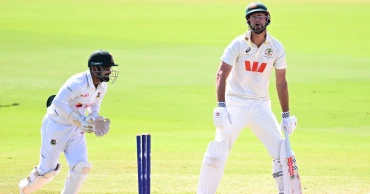
Bangladesh need 57 to beat Australia in Darwin
Bangladesh are 57 runs away from a historic Test victory after bowling Australia out for 284 in their second innings in Darwin.
Australia added 123 runs to their overnight total on Sunday but lost their last six wickets for 123 runs. Mehidy Hasan Miraz took five wickets, while Hasan Mahmud took three to finish with nine in the match.
Australia resumed on 161 for 4, with Cameron Green and Alex Carey at the crease. Green made 87 before Hasan Mahmud bowled him for the ninth wicket at 278.
Miraz had earlier dismissed Carey for 49, Beau Webster for 15 and Pat Cummins for 14, after removing Steven Smith for 44 on Saturday. He then trapped Nathan Lyon lbw for 15 to end the innings at 284.
Bangladesh had bowled Australia out for 198 in the first innings before making 426, taking a 228-run lead. Tanzid Hasan made his maiden Test century, while Najmul Hossain Shanto scored 84 and Miraz made 65.
Hasan Mahmud took six wickets in Australia’s first innings and three in the second. Taskin Ahmed took the other wicket.
Bangladesh now need 57 runs in their fourth innings to secure what would be their first Test win over Australia.
1 month ago

Miraz 65 keeps Bangladesh in control as Australia miss chances
Mehidy Hasan Miraz was unbeaten on 65 as Bangladesh reached 417 for 8 at lunch on the third day of the first Test against Australia on Saturday, stretching their lead to 219 runs.
Miraz and Taskin Ahmed added 45 without being separated in the morning session, putting on their fifth partnership of more than 40 runs in the innings.
Miraz has faced 152 balls, hitting five fours and a six. Taskin is 12 not out from 22 balls.
Australia managed only two wickets in the 23-over session, both taken by Josh Hazlewood. Hasan Mahmud and Taijul Islam were dismissed as Bangladesh lost their seventh and eighth wickets.
Australia also missed two chances off Pat Cummins. Steven Smith and Travis Head both put down catches.
Miraz finished the session in style, hitting Cameron Green for six over the boundary. His partnership with Taskin has taken Bangladesh closer to a lead of 250.
Bangladesh resumed the day on 351 for 6 after Tanzid Hasan’s 101, Najmul Hossain Shanto’s 84 and Mominul Haque’s 49 helped them build a strong position. They had started the innings 102 runs behind Australia, who were bowled out for 198 on the first day.
Australia now face the prospect of having to chase a large deficit in their second innings, with Bangladesh still two wickets away from completing their first innings.
1 month ago
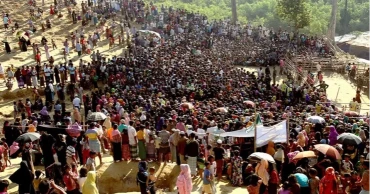
Australia commits AUD 25.25m to sustain life-saving support for Rohingyas
The Government of Australia and the UN Refugee Agency (UNHCR) on Monday announced a contribution of AUD 25.25 million to sustain life-saving assistance and protection for Rohingya refugees in Bangladesh.
This flexible, multi-year funding, part of Australia's 2026-28 humanitarian assistance package, will help ensure the continuation of essential services for one of the world's most vulnerable refugee populations and their host communities, according to a media statement.
Foreign Minister Khalilur Rahman and Australia's Assistant Minister for Citizenship, Customs and Multicultural Affairs, and Assistant Minister for International Education Julian Hill were present during the announcement.
It will enable UNHCR and partners to maintain key services across the camps, including protection activities, skills development programmes, and disaster risk reduction measures for refugees living in highly fragile and disaster-prone environments, said the statement.
“Australia continues to respond to the most significant humanitarian crises in our region, making our region safer, more stable and resilient” said Assistant Minister Julian Hill. “Australia remains committed to supporting the humanitarian needs of Rohingya in Myanmar and Bangladesh. Displaced Rohingya want to return home, but the conditions in Myanmar need to be in place for their voluntary, safe, dignified and sustainable return. These can only be met by addressing the root cause of the crisis in Myanmar.”
“Nearly nine years on, the Rohingya crisis risks fading from global attention as new emergencies emerge elsewhere,” said Juliette Murekeyisoni, UNHCR Representative in Bangladesh.
“Australia’s continued support sends a strong message that the Rohingya people have not been forgotten. Every refugee I speak to expresses the hope to return home safely, with their rights and dignity restored. Until conditions in Myanmar allow for voluntary, safe, and dignified return with full citizenship, the international community must remain steadfast in its support.”
“Australia remains committed to supporting Rohingya and their host communities in Bangladesh,” said H.E Susan Ryle, Australian High Commissioner to Bangladesh. “This latest contribution of AUD25.25 million to UNHCR will help to provide critical services to the most vulnerable, including for women, girls and people living with a disability”.
Since widespread violence and persecutions forced hundreds of thousands of refugees to seek safety in Bangladesh in 2017, around 1.2 million Rohingya refugees remain displaced there, most in overcrowded refugee camps near Cox’s Bazar.
The majority rely almost entirely on humanitarian assistance to meet their daily needs. Persistent funding gaps have deepened vulnerabilities, sometimes pushing people toward harmful coping mechanisms, including undertaking dangerous sea journeys in search of better opportunities in the region.
According to recent reports, nearly 900 Rohingya refugees went missing or died in 2025 while attempting perilous crossings in the Andaman Sea and Bay of Bengal. Australia’s ongoing assistance to Rohingya and host communities will help promote safer and sustainable coping mechanisms by supporting access to protection and essential services.
Funding shortages continue to disproportionately impact the most vulnerable, including women and girls, persons with disabilities, and older people. Since 2024, an estimated 150,000 new arrivals have joined the camps, many still lacking adequate shelter and access to basic services such as clean cooking fuel.
After years of displacement, most Rohingya refugees remain almost entirely dependent on external assistance. While meeting immediate needs is essential, expanding access to education and skills development is equally crucial for building resilience and preparing refugees for a future beyond displacement.
1 month ago

Australia plans tougher enforcement of social media ban for under-16s
Australia is preparing to tighten its laws banning children under the age of 16 from using social media, as the government admits many young users continue to access major platforms despite the restrictions.
Prime Minister Anthony Albanese said the government is reviewing whether the existing law, which took effect on Dec. 10 last year, needs to be strengthened and whether regulators have sufficient authority to enforce it effectively.
"We're working on that as a priority because this is something that other generations didn't have to deal with, which is why it's complex," Albanese told Parliament on Thursday.
Speaking to the Australian Broadcasting Corp. on Friday, he said the government was examining whether the legislation was "as strong as possible" and whether eSafety Commissioner Julie Inman Grant had all the powers needed to enforce the rules.
Australia became the first country to introduce a nationwide ban preventing children under 16 from holding accounts on social media platforms such as Facebook, Instagram and YouTube. Since then, several other countries have introduced or proposed similar restrictions.
Britain last week announced plans to stop children under 16 from accessing several social media platforms to reduce exposure to harmful content and excessive screen time.
Canada, Brazil and Indonesia have also introduced age-based rules or proposed legislation for children's social media access, while France, Spain, Denmark, Thailand and South Korea are considering similar measures.
In April, eSafety Commissioner Julie Inman Grant said she was considering legal action against Facebook, Instagram, Snapchat, TikTok and YouTube, claiming the companies had not done enough to prevent underage Australians from using their platforms.
Those platforms, along with X, Kick, Reddit, Threads and Twitch, face fines of up to 49.5 million Australian dollars (US$34 million) if they fail to take reasonable steps to remove accounts belonging to children under 16.
Experts say recent data suggests the current restrictions are not working as intended.
Lisa Given, an information sciences expert at Melbourne's RMIT University, said the government's latest move appeared to be driven by growing evidence that many children continue to use restricted platforms.
Data released by the eSafety Commissioner in March showed that seven out of 10 underage children still had accounts on Facebook, Instagram, Snapchat and TikTok after the ban came into effect.
She also cited a study published this week in the *British Medical Journal*, which found that 85% of surveyed Australian children aged 12 to 17 were still using restricted social media platforms.
"I do think it's failing," Given said, adding that many young people themselves had described the policy as ineffective.
According to ‘The Sydney Morning Herald’, Inman Grant said earlier this month that her office lacked sufficient authority to enforce the law effectively.
"What I would say is a regulator is only as good as the tools and the resources that they're given," she was quoted as saying.
The Associated Press sought comment from her office on Friday, but did not immediately receive a response.
Given said stronger enforcement powers or alternative regulatory measures may be needed, adding that courts would likely have to determine what qualifies as the "reasonable steps" platforms are legally required to take.
Albanese also said the government plans to move ahead with digital duty of care legislation, which would make online platforms more accountable for harm caused by their content and algorithms.
2 months ago
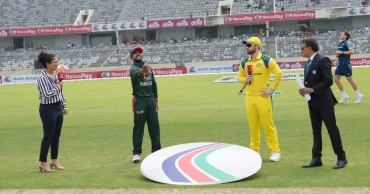
Bangladesh bat first in ODI series opener vs Australia
Australia have won the toss and asked Bangladesh to bat first in the opening match of the three-match ODI series in Dhaka on Tuesday.
With this match, Australia is playing their first ODI in Bangladesh since 2011.
Bangladesh fielded a three-bowler pace attack in that match that included Taskin Ahmed, Mustafizur Rahman and Nahid Islam.
They sidelined Rishad Hossain for this match, while Musaddek Hossain made a comeback after around four years.
Bangladesh have only one win against Australia, which came in 2005 in Cardiff.
In the last 15 years, Bangladesh played three ODIs against Australia in different venues and lost two of them, with the other match washed away due to rain.
In the last 15 years, Bangladesh has become a strong force in ODI cricket. So the chance is high for the hosts to win matches in this series.
Bangladesh: Tanzid Hasan, Saif Hassan, Najmul Hossain Shanto, Tawhid Hridoy, Litton Das (wk), Mosaddek Hossain, Mehidy Hasan Miraz (capt), Taskin Ahmed, Mustafizur Rahman, Nahid Rana, Tanvir Islam
Australia XI: Matt Short, Cooper Connolly, Josh Inglis (capt/wk), Marnus Labuschagne, Alex Carey, Cameron Green, Matthew Renshaw, Liam Scott, Xavier Bartlett, Nathan Ellis, Adam Zampa.
3 months ago

Australia confirms first day of Eid-ul-Fitr
The Australian Fatwa Council has announced that Ramadan 1447AH will end on Thursday, March 19, making Friday, March 20 the first day of Eid-ul-Fitr and the beginning of Shawwal 1447AH.
The decision was made following consultations with local and international moon observatories, using calculations of the new moon’s appearance, moonset, and visibility across Australia and neighbouring regions — a method recognised by many prominent global scholarly councils.
The Australian National Imams Council and the Fatwa Council noted that some scholars and Imams may follow alternative approaches and urged the community to respect differing opinions while fostering unity.
The Grand Mufti of Australia, Dr Ibrahim Abu Mohamad, along with member Imams, extended Eid greetings to the Muslim community. They encouraged Australians to remember Palestinians in Gaza through prayers, donations, and support, and to engage with neighbours to share the peaceful and authentic values of Islam.
The councils emphasised that the moon sighting calculations ensure an accurate and consistent start to Shawwal 1447AH while acknowledging diversity of opinions within the Muslim community.
Source: Gulf News
6 months ago

Scientists warn Australia’s “zombie tree” could disappear within a generation
Scientists have warned that a newly identified tree species in Australia, nicknamed the “zombie tree,” could disappear within a generation if urgent action is not taken.
Researchers say the tree, Rhodamnia zombi, is still alive in some places but cannot grow or reproduce normally because of a fungal disease known as myrtle rust.
Professor Rod Fensham, a botanist at the University of Queensland, said the species was first assessed in 2020 before it even had an official name. Since then, about 10 percent of the trees have died, and the remaining ones are unable to produce flowers or fruit due to the disease.
Rhodamnia zombi is a small to medium-sized rainforest tree with large dark green leaves, shaggy bark and fuzzy white flowers. It grows in the Burnett region of Queensland.
According to researchers, the bright yellow fungal pathogen repeatedly attacks and destroys the tree’s young shoots. As a result, infected trees cannot grow or reproduce properly and eventually die.
Myrtle rust was first detected in Australia in 2010 and has since threatened many plant species. Because of this risk, Rhodamnia zombi has been placed on a special list of plants considered potentially critically endangered.Fensham said the 17 species on this “Category X” list could disappear within a generation without intervention, as none appear to have resistance to the disease.
However, scientists remain hopeful. Fensham said related species in the Rhodamnia group have shown some resistance to myrtle rust, raising hopes that future generations may survive.
Researchers are collecting healthy cuttings from the wild and growing seedlings at protected sites in Lismore and Townsville. If some trees develop resistance, they may eventually be replanted in forests to restore the species.
The findings were published in the journal ‘Austral Ecology’.
Source: Science daily
6 months ago

Cosmic rays help unlock ancient Australian landscapes
Scientists have developed a new method to explore the deep history of Australia’s landscapes, offering insights into past climate changes, geological activity, and potential mineral deposits.
Researchers from Curtin University’s Timescales of Mineral Systems Group, in collaboration with the University of Göttingen and the University of Cologne, studied microscopic zircon crystals collected from
ancient beach sands. Zircon is an extremely durable mineral that can survive millions of years of weathering and erosion while preserving clues about its geological past.
The team focused on krypton gas trapped inside these zircon grains. This rare gas forms when cosmic rays — high-energy particles from space — strike minerals near the Earth’s surface. By measuring krypton levels, scientists could estimate how long zircon grains stayed near the surface before burial. This “cosmic clock” provides a timeline of how landscapes eroded and changed over millions of years.
Lead author Dr. Maximilian Dröllner said the method allows study of landscapes far older than previously possible. “Our planet’s history shows climate and tectonic forces shape landscapes over very long timescales. This research helps us understand the effects of sea-level changes and deep Earth movements,” he said.
The study found that when regions remain tectonically stable with high sea levels, erosion slows, and sediments can be reworked repeatedly for millions of years.
Professor Chris Kirkland, a co-author, said the findings are important for land management and planning. Associate Professor Milo Barham highlighted the implications for Australia’s mineral resources, noting that long-term sediment storage allows durable minerals to concentrate, helping explain the country’s rich mineral sand deposits.
The research, published in PNAS, offers a fresh perspective on landscape evolution and resource formation, providing scientists with a tool to better understand both past and future environmental changes.
Source: Science Daily
6 months ago
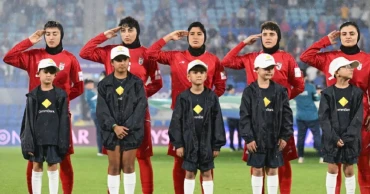
Most of Iranian women's soccer team leaves Australia, few accept asylum offers
Most of Iran's women's soccer team left Australia on Tuesday, with only seven players having accepted offers of permanent asylum. Tense scenes unfolded at Sydney Airport as Australian officials held last-minute private meetings with each player, explaining through interpreters that they could choose not to return to Iran.
Earlier, seven players had received humanitarian visas to stay in Australia permanently. Despite emotional appeals and tearful protests from the departing players, no additional team members chose to remain. Australian Home Affairs Minister Tony Burke described the airport meetings as "emotional," adding that one of the seven women who initially stayed behind later decided to return to Iran.
The episode drew national attention after the team’s first Asian Cup match, where some players remained silent during Iran's national anthem. Their silence was widely interpreted as a protest or act of defiance, while others viewed it as a form of mourning. Burke said the gesture had “been heard as a roar all around the world” and noted that Australia offered the players a safe choice.
The team arrived in Australia before the outbreak of the Iran war on Feb. 28. Following Iran’s exit from the tournament over the weekend, players faced the prospect of returning to a country under conflict. Iranian-Australian groups warned the players could face serious consequences for their actions, even as the players themselves did not publicly explain their silence.
U.S. President Donald Trump criticized Australia for not offering asylum, although Australian officials confirmed private discussions with the players had already been ongoing. Meanwhile, Iranian authorities insisted the players were safe and that the government would protect them.
Burke said Australian officials had made every effort to allow players to decide freely, arranging last-minute discussions, private phone calls, and separation from team minders to ensure decisions were made with dignity. The six players remaining in Australia were relocated for security, guaranteed permanent residency, and provided health, housing, and support.
The Asian Football Confederation confirmed the squad had moved to Kuala Lumpur, Malaysia, where it would continue to receive support until further travel arrangements.
6 months ago