Canada
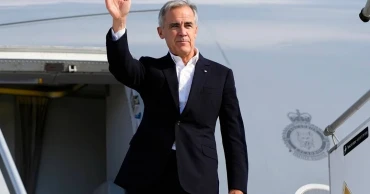
Carney to speak at EU Parliament as Canada seeks closer ties with Europe
Canadian Prime Minister Mark Carney will address the European Parliament on Thursday, with his speech drawing added attention after US President Donald Trump warned that a move to make Canada an associate member of the European Union could be a “hostile act.”
Trump’s comments have raised expectations about Carney’s address and whether he will again criticize the use of economic power to pressure smaller countries, as he did at the World Economic Forum in Davos in January.
European Commission President Ursula von der Leyen proposed making Canada the EU’s first associate member on Wednesday, in a major diplomatic gesture as Trump’s trade policies and repeated demands have pushed Ottawa closer to Europe.
Speaking in Charlotte, North Carolina, Trump said the US could respond to the proposal with heavier tariffs on the EU.
He linked the threat to the “intention” behind the European move, saying, “If it’s a good intention, that’s fine. If it’s a bad intention, we’ll put very heavy tariffs on Europe.”
Trump also suggested the US could restrict trade with Europe in some areas.
He described the possibility of Canada joining the EU as “laughable” and called Canada a “terrible trade partner.”
For decades, Canada has built its economy around close ties with the United States. But Trump’s tariffs, demands for economic concessions and repeated comments about making Canada the 51st US state are prompting Ottawa to reduce its dependence on Washington and strengthen economic, security and political ties with Europe.
Europe offers Canada closer tiesVon der Leyen’s proposal would make Canada the EU’s first associate member. Such a status does not currently exist under the bloc’s treaties and would have to be established.
She said Europe wants to take its relationship with Canada to “the highest level possible.”
Carney, who was sitting in the front row of the European Parliament chamber, nodded and stood to embrace von der Leyen as lawmakers gave the proposal a standing ovation.
Von der Leyen said Canada and the EU should go beyond their existing free trade agreement and establish an “Alliance for the Future” covering a “common prosperity and economic security space.”
Carney is scheduled to host EU leaders at a Canada-EU summit in Montreal on Oct. 29-30. The proposed new relationship is expected to be discussed in greater detail at the meeting.
Canada sends about 70% of its exports to the United States, leaving its economy highly exposed to Trump’s tariffs.
Ottawa has imposed retaliatory measures and rejected demands that Carney says threaten Canadian sovereignty. The EU has taken a different approach, suspending retaliation and accepting tariffs of up to 15% on most of its exports to the US.
Carney brings Davos message to EuropeCarney has repeatedly called on middle powers to resist economic pressure from dominant countries.
At the World Economic Forum in Davos in January, he warned that countries negotiating individually with a powerful nation “negotiate from weakness” and “accept what is offered.”
Trump criticized Carney the following day, and Thursday’s speech could add to tensions between the two leaders.
Jonathan Wilkinson, Canada’s ambassador-designate to the EU, said Wednesday that Ottawa is not seeking full EU membership because that would require Canada to give up some sovereignty.
Instead, he said Canada wants “to get as close as we possibly can” to Europe while becoming more economically independent.
The exact terms and powers of any associate membership have yet to be negotiated.
Canada has already taken a major step toward closer cooperation with Europe. This year, it became the first non-European country to join the EU’s 150-billion-euro ($173 billion) SAFE defense procurement program, allowing Canadian companies to participate in joint procurement as European countries increase defense spending.
Canada and the EU have also discussed closer cooperation in energy, critical minerals, artificial intelligence and digital trade.
“The policies and rhetoric of the Trump administration are clearly pushing both Canada and the EU to imagine a world without strong U.S. leadership and to act accordingly,” said Daniel Béland, a political science professor at McGill University in Montreal.
Nelson Wiseman, professor emeritus at the University of Toronto, said Carney’s handling of Trump has increased European interest in the Canadian prime minister.
“Carney’s shrewdness in dealing with Trump has captured Europe’s attention,” Wiseman said.
Washington watching closelyWiseman said Europeans have traditionally viewed Canada as a country with a deep understanding of the United States because of their close economic and political ties.
He said Carney’s decision to resist Trump rather than quickly accept Washington’s demands has strengthened that perception.
Béland said Carney may avoid directly naming Trump in his speech while making clear who his broader message is aimed at.
“He knows that, beyond Europe, the world will be watching, including the White House,” Béland said.
2 days ago

Bangladesh to import 480,000 tonnes of potash fertiliser from Canada
Bangladesh Agricultural Development Corporation (BADC) will import 480,000 tonnes of potash fertiliser from Canada, with an option to purchase an additional 120,000 tonnes.
Bangladesh and Canada have signed a government-to-government contract recently to import Canada’s world leading potash fertiliser between September 2026 and March 2027.
The Canadian Commercial Corporation - Corporation commerciale canadienne (CCC), Government of Canada and Bangladesh Agricultural Development Corporation (BADC) signed the deal.
Canada’s potash partnership with Bangladesh spans more than 30 years, with approximately 3.5 million tonnes of Canadian potash supplied through the government-to-government mechanism since 2014, said the Canadian High Commission in Dhaka.
Canadian potash is recognised globally for its high quality, consistency and reliable supply, backed by some of the world’s largest and most advanced potash reserves and production capabilities in Saskatchewan.
Unlike many alternative sources, Canada offers a stable, long-term, and trusted supply through Canpotex and the government-to-government mechanism, providing greater predictability for farmers and food security, said the High Commission.
The signing ceremony held recently was attended by Secretary of Ministry of Agriculture, Bangladesh Md Salim Khan, Chairman of BADC Md Azizul Islam, and High Commissioner of Canada Ajit Singh, alongside senior officials from Canada, Bangladesh and Canpotex International Pte Ltd.
Secretary Salim Khan highlighted the importance of ensuring a reliable supply of quality fertiliser to support Bangladesh’s farmers and agricultural production.
High Commissioner Ajit Singh said Canada is proud to be a reliable partner in supporting Bangladesh’s farmers and food security in this time of need with the world’s best quality potash fertiliser.
"Today’s agreement builds on more than 30 years of cooperation on potash and opens the door to deeper collaboration between our countries across the agriculture sector.”
Canada looks forward to expanding cooperation in agricultural technology such as food processing and value addition, cold-chain and supply-chain technologies, genetics, biofertilizers, sustainable and climate-smart agriculture, research and knowledge partnership, helping strengthen productivity and resilience in Bangladesh’s agriculture sector.
22 days ago
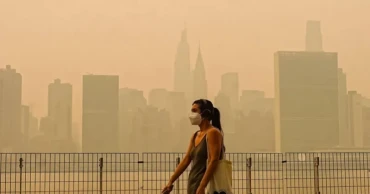
Trump threatens new tariffs on Canada over wildfire smoke affecting US cities
US President Donald Trump has threatened to impose new tariffs on Canada, accusing the country of allowing wildfire smoke to pollute American cities with what he described as "filthy" air.
The comments came as massive wildfires continued to burn across parts of Canada, sending thick smoke into several US states and worsening air quality from the Midwest to the East Coast.
Canadian leaders rejected the criticism, saying the country is using every available resource to battle the fires and urged the United States to provide assistance instead of blaming Canada.
Ontario Premier Doug Ford said Canada has repeatedly helped the US respond to natural disasters, including wildfires in California and hurricanes in North Carolina.
"Maybe what you should do rather than complain is send support, send help, because we have done the exact same thing for our American friends," Ford said.
Ford noted that the US states of Michigan and Massachusetts have already offered help by sending water bombers, firefighters and rescue teams.
Canadian Prime Minister Mark Carney also responded, saying climate change is a shared global challenge.
"Climate change is everyone's responsibility — including the United States," Carney told reporters, adding that his government remains in close contact with provincial authorities and affected communities.
Ford defended Ontario's response, saying more than 150 firefighting crews, over 80 water bombers and helicopters have been deployed to contain the blazes.
"We are throwing every single resource we can," he said.
Wildfires continue to spread
Several communities in northern Ontario have been evacuated as fires continue to spread. A First Nations leader said one community had been "burnt to ashes."
Wildfires are also raging in British Columbia, where officials reported more than 59 active fires on Friday. The British Columbia Wildfire Service said 39 new fires started within the previous 24 hours, while 31 remain out of control.
A large group of fires in northwestern Ontario has produced massive smoke clouds that have spread across Canada and into the United States.
Smoke disrupts daily life across US
Heavy smoke reduced visibility in New York City on Thursday, partially obscuring landmarks including the Empire State Building and the Statue of Liberty. Similar hazy conditions affected Washington, DC, where national monuments were barely visible.
Health officials advised residents to stay indoors, while some communities distributed free face masks because of the health risks linked to poor air quality.
The smoke also forced the cancellation of outdoor activities across parts of the northern United States, including Chicago, Detroit, Pennsylvania and New England. Summer camps moved activities indoors, concerts were postponed and at least one popular lakeside beach was temporarily closed.
Poor visibility also disrupted air travel, causing flight delays at several airports.
Concerns ahead of World Cup final
The wildfire smoke has also raised concerns ahead of Sunday's FIFA World Cup final between Argentina and Spain at MetLife Stadium in New Jersey, which President Trump is expected to attend.
US officials, including Andrew Giuliani, who heads the White House World Cup Task Force, have been holding informal discussions with FIFA and other agencies monitoring the wildfire situation.
However, weather forecasts suggest rainfall over the weekend is expected to improve air quality before kickoff.
Meanwhile, residents of several First Nations communities in northern Ontario continue to evacuate as the fires advance. Videos shared online showed some families leaving remote areas by boat.
Matthew Hoppe, incident commander for the Namaygoosisagagun First Nation, said the community had been devastated after the wildfire spread with little warning.
Source: BBC
2 months ago
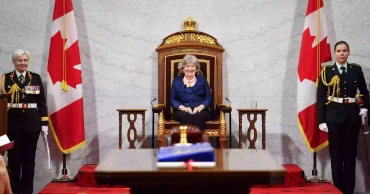
Former Supreme Court justice Louise Arbour sworn in as Canada's new governor general
Retired Supreme Court Justice Louise Arbour was sworn in Monday as Canada’s new governor general, becoming the official representative of King Charles III in the country.
Arbour, 79, succeeds Mary Simon, who made history in 2021 as Canada’s first Indigenous governor general. The position carries key constitutional responsibilities, although it is largely ceremonial and symbolic.
The installation ceremony included the raising of the Governor General’s Flag on Parliament Hill and a performance of “God Save the King” by the Central Band of the Canadian Armed Forces.
Prime Minister Mark Carney selected Arbour, a prominent Francophone jurist with an extensive record in international law, human rights and justice.
Throughout her legal career, Arbour served on the Supreme Court of Ontario, the Ontario Court of Appeal and the Supreme Court of Canada. In 1996, she was appointed chief prosecutor for the United Nations tribunals investigating crimes committed in the former Yugoslavia and Rwanda.
During her tenure, she oversaw landmark prosecutions, including the first genocide conviction since the adoption of the 1948 Genocide Convention and the first war crimes indictment of a sitting head of state.
Arbour later served as the UN Special Representative for International Migration from 2017 to 2018.
In her inaugural address as governor general, Arbour emphasized the importance of peaceful coexistence and respect for the rule of law in maintaining a stable and democratic society.
She also expressed concern about the growing influence of artificial intelligence, warning that increased reliance on AI could blur the distinction between facts and assumptions and undermine people's ability to control their own future.
Arbour highlighted Canada's global significance, noting that the country contains nearly seven percent of the world's land area and 20 percent of its freshwater resources while accounting for only about half of one percent of the global population.
She said Canada remains a country that attracts admiration around the world.
Ahead of her installation, Arbour met King Charles III at Buckingham Palace last week.
Canada remains a constitutional monarchy and a member of the Commonwealth, with the British monarch serving as the country's head of state.
3 months ago

Canada orders online streaming platforms to increase funding for local content
Canada’s federal broadcasting regulator has ordered major online streaming platforms to contribute 15% of their Canadian revenue to support local content production.
The new requirement, announced Thursday by the Canadian Radio-television and Telecommunications Commission, is three times higher than the earlier 5% contribution rule introduced in 2024.
Several major US-based streaming companies, including Apple, Amazon and Spotify, are challenging the earlier rule in court.
The decision is part of Canada’s implementation of the Online Streaming Act, which the United States has already raised as a concern ahead of upcoming trade talks with Canada.
At the same time, the regulator said traditional Canadian broadcasters, which currently contribute between 30% and 45% of their revenues, will see their required contribution reduced to 25%.
According to the CRTC, the new rules are expected to maintain more than 2 billion Canadian dollars in funding for Canadian and Indigenous programming, including French-language content and news coverage.
The regulator also introduced new guidelines on how broadcasters and streaming companies must spend the money, including support for production funds and direct investment in Canadian-made programs.
Most of the streaming companies’ contributions can be used for content production, but the regulator has added extra conditions for the largest platforms.
Streaming services earning more than 100 million Canadian dollars annually in Canada will be required to direct 30% of their spending toward partnerships with Canadian broadcasters and independent producers.
The rules will apply to both streaming services and broadcasters that earn at least 25 million Canadian dollars a year from broadcasting activities in Canada.
The CRTC also announced plans to create a new fund to support selected television channels, including CPAC, which broadcasts live coverage of political events in Canada.
3 months ago
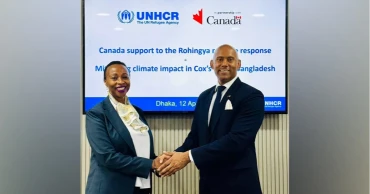
Canada supports Rohingya response for environmental protection, clean cooking fuel
Canadian High Commissioner to Bangladesh Ajit Singh on Sunday said Canada remains a ‘longstanding and steadfast partner’ in the Rohingya crisis response and accounted CAD 10 million contributions to provide clean, safe and sustainable cooking fuel for the Rohingyas in Cox’s Bazar.
“This climate-responsive humanitarian contribution will reduce deforestation and carbon emissions in an environmentally fragile district that will benefit refugees, Bangladeshis, and the wider population,” said the High Commissioner.
He said it will also lower the risks to vulnerable people, especially women, girls, and children, including those that stem from gathering firewood.
“Canada is pleased to provide this $10 million contribution to UNHCR and IOM to strengthen environmental protection that benefits us all, as well as advance the wellbeing of vulnerable Rohingya refugees,” said the High Commissioner.
The funding to UNHCR, the UN Refugee Agency, and IOM, the International Organization for Migration, will ensure the continued provision of liquefied petroleum gas (LPG) to the Rohingya, essential for them to cook, while helping to preserve the fragile environment surrounding the camps and improve safety, health and dignity for refugees, particularly women and children, said the UN agency.
Cox’s Bazar, one of the most climate-vulnerable regions of Bangladesh, faces recurrent flooding, landslides, cyclones, fires and environmental degradation.
Since the start of LPG distribution to Rohingya refugees, the programme has reduced firewood use by 80% among refugee households, preventing an estimated 407,000t of CO₂ emissions every year.
“Nine years on, Rohingya refugees are navigating one of the world’s most difficult displacement situations – protracted crisis compounded by climate vulnerability,” said UNHCR Deputy Representative in Bangladesh Juliette Murekeyisoni.
“Canada’s support comes at a crucial time, and I am deeply grateful for it. Sustained international solidarity remains critical to ensuring that refugees can live in dignity while we work toward conditions for their voluntary, safe, and dignified return.”
Chief of Mission for IOM in Bangladesh Giuseppe Loprete said safe, reliable energy is fundamental to the well-being of families who have experienced immense hardship for the past nine years.
“We thank Canada for their generous support, which ensures that refugees can avoid dangerous firewood collection and live in healthier environments, while also protecting local forests and biodiversity.”
The provision of LPG has been central to the response since 2018. Studies have shown it has dramatically improved indoor air quality in the densely populated camps and lowered household spending on cooking fuel.
The UN refugee agency said Canada’s contribution will support LPG access for some 243,500 refugee households and help conserve up to 10,700 hectares of protected forest in Cox’s Bazar.
It also strengthens community resilience by stabilizing slopes, reducing landslide risks, and lowering human wildlife conflict around ecologically sensitive areas.
5 months ago

China opens visa-free entry to UK, Canada travellers
China has confirmed that nationals of the United Kingdom and Canada will be able to enter mainland China without a visa for stays of up to 30 days from February 17.
China’s foreign ministry said the visa-free entry will apply to travel for tourism, business and visits to family or friends, and the policy will initially remain in force until December 31 this year.
The announcement follows British Prime Minister Keir Starmer’s official visit to China last month, during which he and Chinese President Xi Jinping agreed to ease travel arrangements between the two countries.
In a statement issued on Sunday, China’s foreign ministry said the move would further facilitate people-to-people exchanges between China and other countries.
The decision brings the UK and Canada into line with around 50 other countries whose citizens are already eligible for visa-free entry to China, including France, Germany, Italy, Australia and Japan.
According to official figures from the UK, about 620,000 British nationals travelled to China in 2024, meaning hundreds of thousands of travellers could potentially benefit from the new arrangement.
During his January visit, Starmer said UK businesses were seeking greater opportunities to expand their presence in China. The two sides also agreed to deepen cooperation in areas such as services, healthcare, green technology and finance, though no comprehensive free trade agreement was announced.
The visit marked the first trip to China by a British prime minister since Theresa May in 2018.
With inputs from BBC
7 months ago
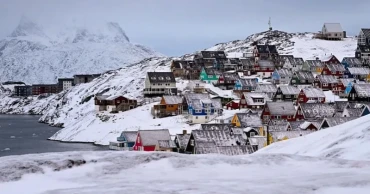
Canada and France open consulates in Greenland after US threats
Canada and France are set to open diplomatic consulates in Greenland on Friday, marking a historic expansion of foreign engagement in the Arctic territory, officials said.
A Canadian delegation led by Governor General Mary Simon and Foreign Minister Anita Anand will formally inaugurate Canada’s first diplomatic outpost in Nuuk, accompanied by a Canadian Coast Guard vessel. French officials are scheduled to open their consulate on the same day.
Governor General Simon, Canada’s Crown representative, said in a pre-trip statement that Canada “stands firmly in support of the people of Greenland who will determine their own future.” The visit also underscores the cultural and ethnic connections between Canadian Inuit and Greenlandic Inuit, Simon’s own Inuk heritage highlighting these longstanding ties.
Until this week, only Iceland and the United States maintained formal diplomatic missions in Greenland. The opening of Canadian and French consulates is viewed as a strategic move amid former US President Donald Trump’s prior remarks suggesting the US should “own” Greenland for national security purposes. Trump later softened his stance, citing ongoing discussions with Denmark, European allies, and Canada.
The Canadian consulate had been planned since early 2024 under Ottawa’s review of its Arctic policy but was delayed due to weather. The opening now comes amid increasing focus on Arctic security and infrastructure, with Canadian officials noting the proximity of Nuuk to Iqaluit in Nunavut, and the broader significance for regional cooperation.
Inuit leaders, including Natan Obed of Inuit Tapiriit Kanatami, said the consulate represents years of advocacy to strengthen ties with Greenland and emphasized concern over US threats, given historical colonization and recent geopolitical tensions. Approximately 50 Canadian Inuit are expected to attend the inauguration ceremony.
Foreign Minister Anand described Arctic defence as “an unquestionable national security priority,” highlighting Canada’s ongoing investments in northern infrastructure and a year-round military presence. During the visit, Anand will meet with Greenland’s Foreign Minister Vivian Motzfeldt, while Simon will meet Prime Minister Jens-Frederik Nielsen.
The consulate openings signal continued NATO ally support for Greenland amid past US claims and reinforce Canada’s strategic presence in the Arctic.
With inputs from BBC
7 months ago
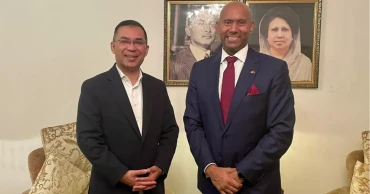
Canadian envoy, BNP discuss progress towards democratic transition
Canadian High Commissioner to Bangladesh Ajit Singh on Monday met Bangladesh National Party (BNP) Chairman Tarique Rahman and BNP leadership where they discussed progress towards a ‘peaceful and inclusive’ democratic transition through the upcoming elections in Bangladesh.
High Commissioner Singh underscored Canada’s desire to work with the interim government, and the next elected government of Bangladesh, to build on the momentum created by economic, financial, judicial, and labour reforms, to deepen bilateral relations and create a better future for people in both countries.
Canada has been a longstanding advocate for ‘free, fair, inclusive, and participatory’ elections in Bangladesh, said the High Commission.
8 months ago
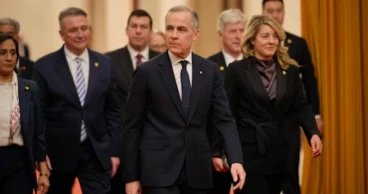
Canada to cut tariff on Chinese EVs in exchange for lower duties on farm exports
Canada has agreed to reduce its 100% tariff on Chinese electric vehicles in return for sharp cuts to Chinese duties on key Canadian farm products, Prime Minister Mark Carney said Friday.
Speaking after two days of talks with Chinese leaders, Carney said the deal will initially allow up to 49,000 Chinese-made EVs to enter the Canadian market. In exchange, China will lower its tariff on Canadian canola seeds from about 84 percent to around 15 percent.
The announcement came as Canada and China signaled a broader effort to reset relations after years of tension.
Carney said his visit, the first by a Canadian prime minister in eight years, marked “a historic and productive” step toward rebuilding ties and adapting cooperation to new global realities. He called for closer collaboration in agriculture, energy and finance.
Chinese President Xi Jinping said talks since an initial meeting last October had helped open a new chapter in bilateral relations and that Beijing was willing to continue working to improve ties.
Venezuela’s new leader signals oil sector reforms and warmer US ties
Relations between the two countries deteriorated in recent years after Canada followed the United States in imposing steep tariffs on Chinese electric vehicles, steel and aluminum under former prime minister Justin Trudeau. China retaliated with heavy duties on Canadian canola oil, meal and seeds, as well as pork and seafood, effectively shutting Canadian canola out of the Chinese market.
The renewed engagement comes as both countries face economic pressure from US President Donald Trump’s America-first trade policies, which have disrupted global commerce and hit both the Canadian and Chinese economies.
Carney said his government is seeking to build an economy less dependent on the United States and to diversify trade partnerships during a period of global trade disruption.
After leaving China on Saturday, Carney will visit Qatar before heading to Switzerland for the World Economic Forum, where he is expected to meet business leaders and investors to promote trade and investment.
8 months ago