public spaces
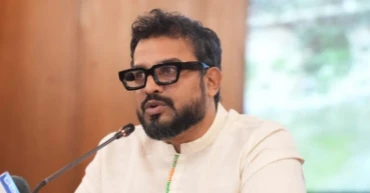
Will reclaim public spaces, double open areas within a year: DNCC’s new administrator
Dhaka North City Corporation’s (DNCC’s) new administrator Mohammad Azaz has pledged to double the city's open public spaces within a year by impartially removing illegal structures to reclaim land and enhance urban livability.
“We’ve set a target to double open space within the next one year. We’ll evict all sorts of illegal establishments. We’ll be strict and impartial in the eviction operations,” he said in an interview with UNB.
Mohammad Azaz, who joined earlier this month as DNCC Administrator for the next one year, said his administration will mainly work on water-logging, open space, heat-wave mitigation, housing justice, building a clean city and promoting democratic urban governance practices.
“We will ensure there is no waterlogging during the next monsoon,” he said, adding that the works to reclaim some canals now continues.
The new administrator said they will prioritize environmental sustainability to enhance the city's livability and make it more environment-friendly.
Dhaka chokes on smog as governments ignore transboundary air pollution crisis
He also mentioned that DNCC will introduce an innovative model in heatwave mitigation and promote housing justice by taking initiatives for the resettlement of poor communities.
Highlighting the need for a well-functioning and pro-people DNCC, Azaz said they will promote democratic urban governance practices to ensure fairness and equity in city management.
“I am a resident first, then an administrator. I do not believe in the model of an administrator who stands above others. We have inherited much of our urban governance from colonial regimes. We must dismantle our unexamined colonial baggage, and work to reimagine a people-centered urban governance. We need democratic urbanization, a city built by its people and for its people,” he said.
He sought constructive criticism and hope-filled actions from the city dwellers. “While we reimagine and build a different Dhaka together, we must also listen deeply to each other because governance must be based on listening to the lived experiences of city residents,” he said.
Hospital waste management in Bangladesh lags behind sustainable standards
He said the fight for better environment, accessible public spaces, functional infrastructure and essential services and for an inclusive urban economy that draws innovations and investments is a work that belongs to all the city dwellers.
Azaz, the founder of the River and Delta Research Centre (RDRC), said the 2024 July Uprising was an urban movement against fascism. City residents gave their lives in demanding a society where there will be no discrimination rather people could live with dignity and human rights.
He said human rights in the city relates to issues such as safety and livability, healthy environment, mobility and housing justice, cultural diversity, urban commons, equitable public amenities, and locally-led governance.
“To honour the spirit of the July Uprising, we must act collectively against all forms of discrimination. We must reimagine Dhaka's city planning with equity and inclusion at its center. I do not represent any partisan political interests and reject the traditional bureaucratic politics. The needs and desires of Dhaka's residents will be the driving force of our initiatives,” he said.
Eviction and Encroachment: A never-ending cycle along Sunamganj-Sylhet Highway
The new administrator, however, acknowledged the limitations of this office. The city corporation lacks the authority and resources to fully address the scale of Dhaka's crises. “Fundamental reforms are needed to give our city corporation the resources and capacities it requires to serve its people effectively.”
He said locally-led preparedness will be crucial to address risks of floods, fires, earthquakes, and heat stress in a time of a time of climate change.
To address different issues from the restoration of city canals, the recovery of city playgrounds, to the creation of thriving public spaces for women, children, people with disabilities and diverse cultural expressions, he will work with planners, architects, scientists, organizers, scholars, community members, and others Bangladeshis here and abroad to offer working models.
Dhaka's public transport crisis: Commuters endure endless suffering
“If we stand in solidarity, if we choose to care for one another and for our city, we can build a fair, resilient, and humane Dhaka,” said the new administrator.
According to a recent study published on 9 May in US-based journal Plos Sustainability and Transformation, green spaces such as parks, playgrounds, and urban forests, which play a vital role in regulating a city's temperature, have decreased by 66% in DNCC over the past 30 years.
1 year ago

Wartime Ukraine erasing Russian past from public spaces
On the streets of Kyiv, Fyodor Dostoevsky is on the way out. Andy Warhol is on the way in.
Ukraine is accelerating efforts to erase the vestiges of Soviet and Russian influence from its public spaces by pulling down monuments and renaming hundreds of streets to honor its own artists, poets, soldiers, independence leaders and others — including heroes of this year’s war.
Following Moscow’s invasion on Feb. 24 that has killed or injured untold numbers of civilians and soldiers and pummeled buildings and infrastructure, Ukraine's leaders have shifted a campaign that once focused on dismantling its Communist past into one of “de-Russification.”
Streets that honored revolutionary leader Vladimir Lenin or the Bolshevik Revolution were largely already gone; now Russia, not Soviet legacy, is the enemy.
It’s part punishment for crimes meted out by Russia, and part affirmation of a national identity by honoring Ukrainian notables who have been mostly overlooked.
Russia, through the Soviet Union, is seen by many in Ukraine as having stamped its domination of its smaller southwestern neighbor for generations, consigning its artists, poets and military heroes to relative obscurity, compared with more famous Russians.
Read more: Putin in Belarus, eyeing next steps in Ukraine war
If victors write history, as some say, Ukrainians are doing some rewriting of their own — even as their fate hangs in the balance. Their national identity is having what may be an unprecedented surge, in ways large and small.
President Volodymyr Zelenskyy has taken to wearing a black T-shirt that says: “I’m Ukrainian.”
He is among the many Ukrainians who were born speaking Russian as a first language. Now, they shun it — or at least limit their use of it. Ukrainian has traditionally been spoken more in the western part of the country — a region that early on shunned Russian and Soviet imagery.
Large parts of northern, eastern and central Ukraine are making that linguistic change. The eastern city of Dnipro on Friday pulled down a bust of Alexander Pushkin — like Dostoevsky, a giant of 19th century Russian literature. A strap from a crane was unceremoniously looped under the statue's chin.
This month, Kyiv Mayor Vitali Klitschko announced about 30 more streets in the capital will be rechristened.
Volodymyr Prokopiv, deputy head of the Kyiv City Council, said Ukraine's “de-Communization” policy since 2015 had been applied in a “soft” way so as not to offend sensitivities among the country's Russian-speaking and even pro-Moscow population.
“With the war, everything changed. Now the Russian lobby is now powerless – in fact, it doesn’t exist,” Prokopiv said in an interview with The Associated Press in his office overlooking Khreschatik Street, the capital's main thoroughfare. “Renaming these streets is like erasing the propaganda that the Soviet Union imposed on Ukraine.”
During the war, the Russians have also sought to stamp their culture and domination in areas they have occupied.
Andrew Wilson, a professor at University College London, cautioned about "the dangers in rewriting the periods in history where Ukrainians and Russians did cooperate and build things together: I think the whole point about de-imperializing Russian culture should be to specify where we have previously been blind — often in the West.”
Read more: Kyiv targeted in early morning drone attack: Authorities
Wilson noted that the Ukrainians "are taking a pretty broad-brush approach.”
He cited Pushkin, the 19th century Russian writer, who might understandably rankle some Ukrainians.
To them, for example, the Cossacks — a Slavic people in eastern Europe — “mean freedom, whereas Pushkin depicts them as cruel, barbarous, antiquated. And in need of Russian civilization,” said Wilson, whose book "The Ukrainians” was recently published in its fifth edition.
In its program, Kyiv conducted an online survey, and received 280,000 suggestions in a single day, Prokopiv said. Then, an expert group sifted through the responses, and municipal officials and street residents give a final stamp of approval.
Under the “de-Communization” program, about 200 streets were renamed in Kyiv before this year. In 2022 alone, that same number of streets have been renamed and another 100 are scheduled to get renamed soon, Prokopiv said.
A street named for philosopher Friedrich Engels will honor Ukrainian avant-garde poet Bohdan-Ihor Antonych. A boulevard whose name translates as “Friendship of Peoples” — an allusion to the diverse ethnicities under the USSR – will honor Mykola Mikhnovsky, an early proponent of Ukrainian independence.
Another street recognizes the “Heroes of Mariupol” — fighters who held out for months against a devastating Russian campaign in that Sea of Azov port city that eventually fell. A street named for the Russian city of Volgograd is now called Roman Ratushnyi Street in honor of a 24-year-old civic and environmental activist who was killed in the war.
A small street in northern Kyiv still bears Dostoevsky's name but soon will be named for Warhol, the late Pop Art visionary from the United States whose parents had family roots in Slovakia, across Ukraine's western border.
Valeriy Sholomitsky, who has lived on Dostoevsky Street for nearly 40 years, said he could go either way.
“We have under 20 houses here. That’s very few,” Sholomitsky said as he shoveled snow off the street in front of a fading address sign bearing the name of the Russian writer. He said Warhol was “our artist” — with heritage in eastern Europe:
Now, “it will be even better,” he said.
“Maybe it is right that we are changing many streets now, because we used to name them incorrectly,” he added.
3 years ago
.jpg)
What's Happening: Virus empties public spaces, spreads in US
The new coronavirus is entering additional territories, from megacities to seaside villages, and casting a fast-growing shadow over the world economy.
6 years ago