IMF
IMF loan for Bangladesh stalled over reform measures, and climate resilience issues
Release of International Monetary Fund (IMF) loan for Bangladesh remains stalled due to pending reforms in the financial sector, conditions to cut subsidies and climate resilience issues.
The global lender has imposed nearly a dozen conditions, including reforms in the banking sector and banking laws, capacity building of the National Board of Revenue (NBR), single-click access to taxpayer information, removal of subsidies on fuel and electricity, setting a market-based foreign exchange rate and climate resilience issues.
The government is seeking US $2.0 billion additional loan as budget support from the IMF along with the remaining tranches of the $4.7 billion loan program.
The government is seeking to reactivate the suspended IMF loan program and secure new funding. However, the IMF has made macroeconomic reforms and climate risk management capabilities the primary preconditions for this financing.
A high-level delegation from the IMF’s Fiscal Affairs Department recently completed their visit to Dhaka to review progress in key sectors and assess tax policies, which will determine the future of the loan program. According to relevant sources, financial sector reforms and climate resilience will be a major consideration in the IMF’s new credit program.
The incomplete reform activities under the previous loan program with the IMF got priority under the new program. As a result, this visit was not limited solely to assessing climate policies, but also played a crucial role in setting the future direction of economic reforms.
A six-member high-level delegation from the IMF’s Technical Assistance (TA) mission visited Bangladesh at a time when the country's capacity to address climate risks, economic reforms, and the potential for new international financing are moving in parallel. The main goal of the visit, which ran from July 19 to July 30, was to conduct a full evaluation of Bangladesh’s policies, financial structures, and institutional capabilities in tackling climate change. The findings of this evaluation will also carry significant weight in discussions regarding a potential new loan program.
Led by Suphachol Suphachalasai, Senior Economist in the Climate Policy Division of the IMF’s Fiscal Affairs Department, the delegation's primary focus is the 'Climate Policy Diagnostic' (CPD). Through this diagnostic, Bangladesh’s climate change mitigation policies, financing framework, and risk management capabilities will be thoroughly examined. Additionally, the team reviewed the country's overall macroeconomic situation and discussed a potential new loan program with the government.
The loan program under the Resilience and Sustainability Facility (RSF) is another major topic of discussion during this visit. Under the RSF, Bangladesh received a loan facility of 1 billion Special Drawing Rights (SDR), equivalent to approximately $1.4 billion. While two-thirds of the funds have already been released, the remaining portion remains suspended. Steps have now been taken to reactivate the program. Notably, Bangladesh was the first country in Asia to secure this facility.
In a report on Bangladesh, the IMF noted that the RSF would complement the Extended Credit Facility (ECF) and Extended Fund Facility (EFF). The fund aims to support measures implemented by the Bangladesh government to counter the impacts of climate change, while also helping build climate resilience and mobilizing additional public and private financing.
Meanwhile, the Finance Division recently launched the ‘Public Financial Management Reform Strategy 2025–2030.’ For the first time, this strategy document includes climate-smart public financial management and gender-responsive budgeting. Furthermore, in the FY2025–26 budget, approximately Tk 42,206.89 crore has been allocated across 25 ministries for climate-related expenditures, accounting for 10.09 percent of the total budget.
The IMF delegation held a series of meetings with relevant ministries and divisions on economic matters. The mission also meeting with Finance Secretary Dr. Md. Khairuzzaman Mozumder. Then the meeting was also with Bangladesh Bank, Financial Institutions Division, NBR and the Ministry of Power and Energy, Ministry of Forest and Environment and some other ministries.
Dr. Md. Khairuzzaman Mozumder told UNb that the IMF held separate meetings with officials from the Macroeconomic Wing and Budget Wing of the Finance Division to review progress on climate and disaster-related initiatives.
Discussions covered the current status of the ‘Bangladesh Climate Development Partnership’ and the ‘National Strategy for Disaster Risk Financing,’ alongside a detailed evaluation of how climate risks are being integrated into macroeconomic planning, he said.
“We hope that the IMF will consider different difficulties of Bangladesh to meet cent percent of the loan conditions. Despite some challenges, we are expecting the loans will be released in favour of Bangladesh,” said the finance secretary.
Meetings with the Ministry of Water Resources addressed flood control measures, delta and coastal management, irrigation policy, and surface and groundwater management—considered key elements in assessing Bangladesh’s readiness to face the long-term impacts of climate change.
According to officials, this IMF TA mission is not merely a routine evaluation; it represents a critical stage in shaping Bangladesh’s climate policies, economic reforms, and future international financing framework. The evaluations and recommendations from this visit are expected to play a decisive role in setting priorities for a new loan program.
Commenting on the matter, economist Professor Abu Ahmed told UNB that reform measures must continue for the sake of the country's economy.
He added that since Bangladesh is one of the countries most affected by climate change, enhancing national capacity to manage these impacts is an urgent necessity.
30 days ago
Economic growth may slow to 3.5% in FY27: IMF staff team
The International Monetary Fund (IMF) staff team concluded a five-day visit to Dhaka on Thursday, projecting Bangladesh's economic growth to moderate to 3.5 percent in FY2026-27 and weaken further below 3 percent over the medium term in the absence of decisive reforms.
The visit, which took place from July 12 to 16, 2026, was led by Ivo Krznar following a request from the Bangladesh government for a new Fund-supported economic reform program. The mission aimed to take stock of recent developments and discuss the authorities' policy plans and reform priorities.
"Bangladesh continues to face significant fiscal, financial, and inflationary challenges, which have been compounded by the war in the Middle East," Krznar said in a statement issued at the end of the visit.
He noted that higher global commodity prices and supply disruptions have renewed inflationary pressures, increased subsidy costs, and further constrained the country's limited fiscal space. Elevated banking sector stress and external pressures also continue to weigh on the economy, despite strong remittance growth.
The IMF warned that risks to the economic outlook remain tilted to the downside due to the potential interaction of banking sector strains, fiscal challenges, and external pressures.
To address these compounding weaknesses and safeguard macro-financial stability, the IMF team recommended several priority policy measures.
Revenue and Subsidy Reform: Stronger revenue mobilization and subsidy rationalization are needed to create fiscal space for priority social and development spending. Well-targeted social support should be implemented to protect vulnerable households.
Monetary and Fiscal Stance: The government should maintain tight monetary and prudent fiscal policies to tame inflation and rebuild foreign exchange reserves.
Exchange Rate Flexibility: Consistent implementation of the crawling peg regime adopted in 2025 is essential to enhance exchange rate flexibility and safeguard external stability.
Banking Sector Cleanup: Restructuring of the banking sector should be anchored in a credible, comprehensive strategy with a well-managed cleanup to support investment.
Looking ahead, Krznar indicated that discussions on the possible parameters of a new arrangement—including its size and associated reform commitments—will take place in the coming months.
2 months ago
Bangladesh seeks fresh financial assistance from IMF to bankroll economic reforms
Bangladesh has formally requested a fresh financial arrangement from the International Monetary Fund (IMF) to support and anchor its ongoing macroeconomic reform initiatives, the global lender announced on Wednesday.
In a statement issued today (Wednesday), IMF Mission Chief for Bangladesh, Mr. Ivo Krznar, said that discussions are already underway regarding the policy priorities and structural updates underpinning the new funding request.
"The ongoing IMF-supported program, approved in January 2023 under the Extended Credit Facility (ECF), Extended Fund Facility (EFF), and Resilience and Sustainability Facility (RSF), has served as a critical policy anchor for Bangladesh," the Mission Chief noted.
However, the global lender emphasized that the country’s macroeconomic and political landscape has shifted significantly since the inception of the 2023 program, with banking-sector vulnerabilities and chronic revenue-collection shortfalls emerging as primary structural challenges.
The IMF indicated that negotiations for the potential new facility are designed to address current ground realities and align closely with the strategic priorities of the new administration.
The multilateral lender explicitly clarified that any new credit package will be strictly contingent upon the country’s balance of payments (BOP) needs, the strength of its policy commitments, and the credibility of its structural reform agenda. Any finalized deal will ultimately require the stamp of approval from the IMF’s Executive Board.
To lay the groundwork, the IMF is planning an upcoming staff visit to Dhaka. The delegation will review recent macroeconomic developments, evaluate policy priorities, and assess looming economic headwinds. Detailed negotiations regarding the exact financial quantum, tranches, and conditions of the new package will take place during subsequent formal missions.
Reiterating its long-term stance, the Washington-based lender stated that it remains fully committed to partnering with Bangladesh to restore sustainable macroeconomic stability, fortify financial sector resilience, and stimulate inclusive economic growth.
3 months ago
IMF completes governance, corruption diagnostic mission in Nepal
An IMF capacity development team led by Jonathan Pampolina visited Kathmandu and Birgunj from April 20 to May 6, 2026 at the request of the Government of Nepal to conduct a Governance and Corruption Diagnostic (GCD).
Building on the scoping mission last January 12–21, 2026 and the structural reform agenda under the current Extended Credit Facility, the GCD marks a significant milestone in Nepal’s engagement with the IMF to strengthen governance, reduce corruption vulnerabilities, and advance macroeconomic stability and inclusive growth.
The GCD is designed to identify macro-critical governance weaknesses in institutions, policies, and practices that can undermine economic performance, fiscal sustainability, business and investment climate, and public trust.
The GCD will provide concrete, well-sequenced, and prioritized reform recommendations to address corruption risks, that are binding constraints on Nepal’s economic development.
Following the election of a single majority government with a strong reform mandate, Nepal has a unique window of opportunity to advance a transformative governance agenda and unlock stronger, more inclusive medium-term growth.
Reflecting the breadth of the GCD, the mission brought together experts from several IMF departments, including Fiscal Affairs, Monetary and Capital Markets, and Legal.
The team worked closely with government counterparts and other stakeholders to assess governance and corruption vulnerabilities across core state functions, consistent with the IMF’s 2018 Governance Framework.
The team held extensive discussions with Nepali authorities responsible for public financial management (including budget, public investment management, state-owned enterprises, and public procurement), revenue administration (tax and customs), financial sector oversight, anti-money laundering, and rule of law.
Engagements with anti-corruption and oversight institutions focused on the effectiveness of legal and institutional frameworks to prevent, detect, and address macro-critical corruption risks.
The team also consulted broadly with representatives from civil society organizations, academicians, think tanks, private sector, business associations, and international development partners.
These discussions provided valuable perspectives on governance challenges, reform priorities, and opportunities to strengthen accountability, transparency, and trust in public institutions.
The IMF team would like to thank the Nepali authorities and all stakeholders for their strong engagement, gracious welcome, and open, candid, and constructive dialogue.
Collaboration on the GCD will continue after the main mission. A draft report setting out the findings and proposing a sequenced and prioritized reform plan is expected to be shared with the authorities for further input in the coming months.
The final report will be published, upon authorities’ consent.
4 months ago
'Significant work remains' in reforming financial, fiscal, and exchange rate sectors: IMF
The International Monetary Fund (IMF) has emphasized that Bangladesh requires extensive reforms across three critical sectors, including financial, fiscal, and foreign exchange.
According to the global lender, significant work remains to be done in each of these areas to ensure economic stability.
Krishna Srinivasan, Director of the IMF's Asia and Pacific Department, made these remarks on Thursday while responding to questions from Bangladeshi journalists at a press conference in Washington, D.C. The briefing was attended by media representatives from India, Nepal, Sri Lanka, and South Korea, among other nations.
The briefing took place on the sidelines of the World Bank-IMF Spring Meetings, which commenced on April 13 and are scheduled to conclude on April 18. A 14-member Bangladeshi delegation, led by Finance and Planning Minister Amir Khosru Mahmud Chowdhury and Bangladesh Bank Governor Md. Mostaqur Rahman, is currently attending the meetings.
Reflecting on his visit to Bangladesh on March 24, where he met with Prime Minister Tarique Rahman and the Finance Minister, Srinivasan shared his impressions of the new government's capacity for reform.
"I visited Bangladesh and held meetings with the Prime Minister and other high-level officials. We discussed the challenges ahead," Srinivasan stated.
"I noted that a government with a strong majority has the opportunity to undertake ambitious reform agendas. They have listened to our suggestions; now we must wait and see how they respond," he opined.
The IMF Director expressed concern over Bangladesh's revenue collection performance. "In terms of revenue mobilization, Bangladesh has not performed well. It remains at a low level and has seen further deterioration over the last three years," he noted.
Regarding the release of the next loan tranche, he mentioned that discussions are ongoing, and updates would be provided in due course.
Highlighting the situation in Sri Lanka, Srinivasan pointed out that under its IMF-supported program, the country has made significant strides in increasing its tax-to-GDP ratio over the last three years, gradually building financial buffers. He noted that Sri Lanka is now in a relatively better position to support citizens affected by energy price shocks.
Srinivasan warned that because Bangladesh has a small revenue base, the government faces greater pressure when trying to provide social safety nets. "The people of Bangladesh are suffering. Therefore, it is crucial that whatever resources Bangladesh possesses are utilized with maximum target-based efficiency," he urged.
He advised Bangladesh to focus on increasing revenue collection while addressing other barriers in the financial sector to boost both short-term and long-term growth. Like other Asian nations, Bangladesh has been impacted by global energy shocks, and Srinivasan concluded that policy support and program discussions are active, with the outcome depending on how effectively these dialogues progress.
5 months ago
IMF sees Bangladesh growth rebounding to 4.7% in FY26–27
Bangladesh’s economic growth is expected to rebound to 4.7 percent in both FY26 and FY27 following a recent slowdown but the economy continues to face mounting macro-financial challenges, the International Monetary Fund (IMF) has said.
The IMF’s assessment came after its Executive Board completed the Article IV Consultation for Bangladesh recently. The authorities have consented to the publication of the Staff Report prepared for the consultation, it said on Thursday.
According to the IMF, Bangladesh’s GDP growth slowed to 3.7 percent in FY25 from 4.2 percent in FY24 and 5.8 percent in FY23, reflecting production disruptions during the popular uprising, a tighter policy mix, and sluggish private investment.
Inflation, though easing from double-digit levels earlier in FY25, remained elevated at 8.2 percent year-on-year in October.
The IMF noted that tax revenue collection weakened significantly in FY25, with the tax-to-GDP ratio falling sharply.
However, the fiscal deficit was contained due to under-execution of capital and social spending. Foreign exchange reserves have started to rebuild, supported by improvements in the current account balance.
Looking ahead, the IMF said the economy is expected to recover gradually over the medium term, provided policies are implemented to mobilise tax revenue and address financial sector vulnerabilities.
Growth is projected to gradually accelerate to around 6 percent over the medium term, while inflation is expected to remain high at 8.9 percent in FY26 before easing to around 6 percent in FY27.
However, risks to the outlook remain tilted to the downside, mainly due to potential delays or inadequacies in policy implementation, reversals in exchange rate reforms, and weakening fiscal discipline, the IMF warned.
In its Executive Board assessment, IMF Directors acknowledged the interim authorities’ efforts to stabilise the economy following the 2024 uprising and ahead of upcoming national elections.
At the same time, they stressed that Bangladesh faces serious macroeconomic and financial challenges, including weak revenue mobilisation, banking sector vulnerabilities, incomplete implementation of the new exchange rate framework, and persistently high inflation.
The Directors emphasised the need for decisive and sustained policy actions, noting that bold fiscal and financial reforms are essential to restore macroeconomic stability and support long-term development.
They also highlighted that full ownership of the IMF-supported programme by the new administration would be critical, along with early engagement with IMF staff and efforts to secure stakeholder support.
On fiscal policy, the IMF urged the authorities to undertake ambitious tax reforms, simplify the tax system, and strengthen tax administration and compliance.
The Directors also underscored the importance of rationalising subsidies, prioritising growth-enhancing investments, improving public financial and investment management, and strengthening social safety nets to promote inclusive growth. Improving the financial viability of energy state-owned enterprises was also flagged as a priority.
The IMF further stressed the urgent need for a credible banking sector reform strategy aligned with international standards.
This should include comprehensive asset quality reviews of systemic and state-owned banks, estimates of undercapitalisation, clearly defined fiscal support, and legally robust restructuring and resolution plans.
Strengthening risk-based supervision, governance, and balance sheet transparency was also emphasised.
On monetary policy, the Directors agreed that maintaining a tight policy stance is necessary to rebuild foreign exchange reserves and reduce inflation.
They stressed the importance of fully and consistently implementing exchange rate reforms and allowing greater exchange rate flexibility, while cautioning against unsecured liquidity support to weak banks.
Monetary policy, they said, should remain tight until inflation is firmly on a downward trajectory.
The IMF also underscored the need for comprehensive structural reforms to unlock Bangladesh’s economic potential as it prepares to graduate from least developed country (LDC) status.
Priority areas include strengthening governance and transparency, enhancing anti-corruption and AML/CFT frameworks, ensuring central bank autonomy, creating jobs—particularly for the youth—and promoting export diversification.
Continued reforms under the Resilience and Sustainability Facility (RSF) were seen as key to building climate resilience and mobilising climate finance.
7 months ago
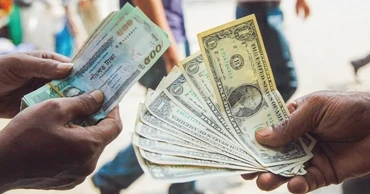
Bangladesh sees $1.12bn in remittances in first 10 days of January
The remittance from Bangladeshi expatriates continued its upward momentum in January, with the country receiving more than US$1.12 billion in the first 10 days of the month.
Bangladesh received $17.39 billion in inward remittances from July to January 10, 2026, in the current fiscal year, FY 2025-26. It was 14.49 billion in the same period of the previous FY2024-25, saw a growth of 20 percent.
Blessings on the remittance, the gross forex reserves of Bangladesh cross $33 billion. As per the IMF standard BPM6, the forex reserves stood at $29 billion plus.
Read more: Remittance inflow exceeds $632 million in first six days of December
Arif Hossain Khan, Executive Director and spokesperson of Bangladesh Bank (BB), said the expatriates have sent $1.12 billion in the first 10 days of January 2026, which was $7.17 million in the same period of January 2025. It means the remittance earnings grew by 57.2 percent in this time.
The growth is attributed to several factors, including incentives offered for sending money through legal banking channels, increased encouragement for using the formal system, and the active role of exchange houses.
In the FY2025-26, Bangladesh received $2.47 billion in remittances in July, $2.42 billion in August, $2.68 billion in September, $2.56 billion in October, $2.88 billion in November, and $3.22 billion in December.
The data showed an average inward remittance of over $2.42 billion in the past six months, prompting Bangladeshi policymakers to favour remittance inflows over borrowing from the IMF with stringent conditions.
Read more: Remittance fighters deserve more than just appreciation: Singer Asif Akbar
8 months ago
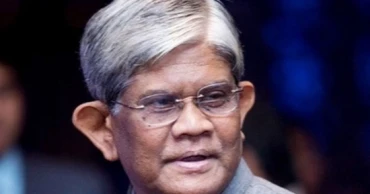
IMF satisfied with Bangladesh’s reform progress but flags key challenges: Salehuddin
Finance Adviser Dr Salehuddin Ahmed on Tuesday (November 18) said the International Monetary Fund (IMF) has expressed satisfaction with Bangladesh’s ongoing economic reforms although reiterated concerns over several structural challenges that require closer attention.
“They said the situation is overall good but they are monitoring the challenges. We are working under a plan but they feel that taking some steps a little faster would bring better outcomes,” he told reporters after meetings of the Advisers Council Committee on Economic Affairs and the Committee on Government Purchase at the Secretariat.
He noted that the IMF is particularly concerned about the speed of policy implementation especially surrounding interest rate adjustments.
“Increasing the policy rate by the central bank cannot be done suddenly. Everyone knows that. We have to ensure supply-side improvements at the same time,” he said.
Dr Salehuddin also mentioned that the IMF has raised issues related to the banking sector.
“They have taken five banks under observation which they consider a major challenge,” he said, adding that the government needs to undertake tough reforms to strengthen financial governance.
On revenue administration, the adviser said the IMF is satisfied with the current progress of the National Board of Revenue (NBR) but expects reforms to continue steadily. “The process has become principled but manpower restructuring and capacity enhancement will take time,” he said.
Read more: Bangladesh’s reserves still remain above $31 billion after ACU payment
He added that while it may not be possible to achieve a complete turnaround within the current government’s tenure substantial groundwork and structural preparations would be completed.
“We may not reach the final conclusion but the logical framework and preparatory work will be done,” he assured.
Responding to a question on whether the IMF has set any new conditions, Dr Salehuddin said no fresh conditions were imposed.
“This was more like a consultation. They expressed satisfaction with the measures we have taken so far. The economic situation is largely under control and the remaining time will be used for consolidation,” he said.
The $4.7 billion IMF loan programme, approved in January 2023, aims to support Bangladesh’s economic stability, strengthen fiscal reforms, and enhance resilience amid global economic pressures.
Several tranches have already been disbursed while further installments remain tied to policy performance benchmarks and structural reforms.
The IMF will delay disbursing the sixth tranche until the next national election and the new elected government assumes office.
Read more: Bangladesh economy in ‘waiting vortex’; experts urge credible elections
The interim government that assumed power on August 8, 2024 three days after the Awami League regime was ousted amid a mass uprising announced that the next general election would be held in February.
Finance ministry officials said that theyare expecting the releases of the sixth and the seventh tranches in June, 2026.
On June 23, the IMF approved the release of the fourth and fifth tranches amounting to $1.3 billion, taking the overall amount of disbursement to $3.6 billion.
In June 2025, the IMF also increased the overall loan amount to $5.5 billion from $4.7 billion under the loan programme that began in 2023 under the AL regime in 2023 to meet the balance of payment shortage.
The progarmme period has also been extended by six months to January 27, 2027 from July 2026, following requests from Dhaka.
The interim government has already reduced the balance of payment pressure.
Driven by higher remittance and export earnings, the country’s gross foreign exchange reserves increased to $32 billion on October 16, the highest in 31 months.
The latest IMF mission is also linked to the Article IV report, an annual consultations with its member countries on overall economy, on Bangladesh.
Read more: Jamaat-e-Islami holds meeting with IMF on economy and tax system
10 months ago
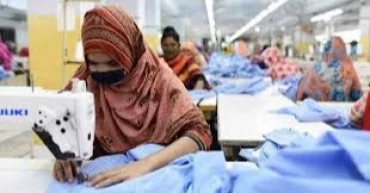
Bangladesh economy in ‘waiting vortex’; experts urge credible elections
Bangladesh’s economy is caught in a debilitating ‘waiting vortex’ of stagnant investment, high inflation and weak business confidence, with experts saying only a credible and participatory election can restore stability and drive recovery.
The prevailing consensus across the business and policy landscape is that the economy is currently ‘breathing, but unable to walk’ as it is paralysed by political uncertainty ahead of the general election expected next February.
Business owners and entrepreneurs unanimously assert that new initiatives and investments are impossible without political stability and certainty.
Professor Rashed Al Mahmud Titumir of Dhaka University, Liaquat Ali Bhuiyan, Senior Vice-President of the Real Estate and Housing Association of Bangladesh (REHAB), Inamul Haq Khan, Senior Vice-President of the Bangladesh Garment Manufacturers and Exporters Association (BGMEA), Anwar-ul-Alam Chowdhury (Parvez), President of the Bangladesh Chamber of Industries (BCI), and former Chief Economist of Bangladesh Bank Dr Mustofa K Mujeri talked to the UNB correspondent about the current economic situation in Bangladesh.
Read more: Bangladesh’s reserves still remain above $31 billion after ACU payment
The economy is sustained by political trust, and it is the government’s responsibility to restore that confidence, said economists, underscoring that without a stable political environment, the recovery process cannot begin.
This sentiment is echoed by the country’s development partners. The International Monetary Fund (IMF) has reportedly linked the disbursement of the next tranche of its $4.7 billion loan to the formation of an elected government. Similarly, both domestic and foreign investors are reluctant to take risks, preferring instead to adopt a cautious ‘wait-and-see’ stance.
Worrying Economic Indicators
Private Sector Credit Growth: Loan growth to the private sector has dropped to around 6.5 per cent — roughly half the normal rate — signalling a sharp contraction in new business activity and entrepreneurship.
Capital Machinery Imports: Imports of capital machinery, a key indicator of future industrial output, have declined by 25 per cent, casting a shadow over upcoming production and employment prospects.
Inflation and Savings: Inflation has been persistently high, hitting 8.36 per cent in September 2025, hitting hard the purchasing power of ordinary citizens, with the sales of national savings certificates falling by over Tk 6,000 crore, making it clear that many are being forced to liquidate their savings.
Foreign Investment: Foreign Direct Investment (FDI) fell by 22 per cent in the first quarter of the current fiscal year, as international investors remain cautious — with some existing firms even scaling back their operations.
Govt moves to make SMEs a driving force of economy: CA’s office
“Investment is now not just an economic question, but a question of social confidence,” one analyst observed, noting that political instability and deteriorating law and order are heavily discouraging entrepreneurs.
Social Costs and Unemployment
The economic stagnation is inflicting a deep social toll, with experts warning of rising poverty and worsening unemployment.
Professor Titumir cautioned that high inflation has “reduced the purchasing power of the common people, increased poverty, and may push another 30 lakh people below the extreme poverty line.”
The country now faces a mounting unemployment crisis, with around 13 lakh jobless youths — including one in every three university graduates.
Industry Leaders Demand Clarity
Business leaders across key sectors have emphasised the urgent need to restore political and policy clarity.
Liaquat Ali Bhuiyan said that new investment in manufacturing, real estate, banking, and services has “nearly stopped.”
Inamul Haq Khan noted that foreign buyers and partners, including the IMF, have little confidence in a temporary setup.
Dhaka’s economy driven by manufacturing sector with 56% share: DCCI
“IMF and foreign stakeholders are waiting for the new government. Only then will confidence and investment surge,” he added.
Path to Recovery
Economists argue that the top priority for the current interim administration must be to hold a swift, credible, and widely accepted national election, paving the way for an elected government to take charge.
Anwar-ul-Alam Chowdhury (Parvez) told UNB that clarity on the election timeline and assurance of a peaceful process are the most crucial prerequisites for restoring economic stability.
Dr Mustofa K Mujeri observed that the economic environment will remain fragile as long as high interest rates persist and political uncertainty continues to limit capital flow.
Ultimately, analysts suggest that the nation stands at a “historic juncture,” where it must either accept the current stagnation or move decisively towards a new economic model anchored in political stability and trust.
Read more: IMF to decide Bangladesh’s next loan installment after formation of political govt: Adviser
10 months ago

Bangladesh’s reserves still remain above $31 billion after ACU payment
The Bangladesh Bank has settled US$1.61 billion in import payments to the Asian Clearing Union (ACU) for September and October 2025, keeping the country's foreign exchange reserves above the $31-billion mark.
Following Sunday’s (9th November 2025) payment, the gross foreign exchange reserves now stand at $31.14 billion, higher than September’s $30.31 billion recorded after a similar $1.5 billion ACU payment.
Based on the International Monetary Fund’s (IMF) Balance of Payments and International Investment Position Manual (BPM6) methodology, the reserve currently amounts to $26.44 billion, up from $25.40 billion in September.
RCBC requested to forfeit $81m over Bangladesh Bank reserve heist
Before the latest ACU settlement, the gross reserve was $32.71 billion, while the BPM6 figure stood at $28 billion. The central bank has been publishing reserve figures under the IMF’s BPM6 system since June 2023, in line with the IMF loan conditions. At that time, the reserve was $24.75 billion.
Last week’s reserve figure of $32.71 billion was reportedly the highest in the past 32 months.
The ACU (Asian Clearing Union) is a regional payment mechanism that facilitates trade settlements among member countries every two months. Its current members are Bangladesh, Bhutan, India, Iran, the Maldives, Myanmar, Nepal, and Pakistan. Sri Lanka, a former member, withdrew amid its economic crisis and has yet to rejoin despite signs of recovery.
Bangladesh’s foreign exchange reserves had peaked at $48 billion in August 2021 but later declined steadily, dropping to around $16 billion during the final days of the previous Awami League government.
BB reserve heist review committee’s tenure extended for 3rd time
Since the government transition, tighter measures against money laundering have reduced hundi (illegal money transfer) operations, contributing to higher formal remittance inflows.
Remittances reached $10.90 billion from the start of the current fiscal year to November 8, representing a 14 percent rise compared to the same period a year earlier.
10 months ago