JICA

Govt plans Moheshkhali-Matarbari to be Bangladesh’s next commercial hub
Chairman of the Moheshkhali–Matarbari Integrated Development Authority (MIDA) Chowdhury Ashik Mahmud Bin Harun on Wednesday said they want to see it as a township like Singapore and Shanghai which, once successfully executed, could bring about a considerable impact on Bangladesh economy.
“It is not just a vessel city… it is not a satellite city...it itself is a township, an almost enhanced and modified new version of Chattogram,” he told reporters at a media briefing at the Foreign Service Academy in the capital.
Chief Adviser’s Press Secretary Shafiqul Alam and MIDA members were present at the briefing.
Ashik said the region was seen as a power hub and deep seaport by the previous regime but they want to see it as a township.
Highlighting the importance of the private sector’s involvement, he said they all know what needs to be done but there is a huge gap in terms of execution capability.
Earlier, the MIDA chairman met Chief Adviser Prof Muhammad Yunus and made a presentation on the Moheshkhali-Matarbari project and presented MIDA's work plan for the next four months.
Ashik said the project will be completed in three phases - the first phase from 2025 to 2030, the second phase from 2030 to 2045, and the third phase from 2045 to 2055.
“If the project is implemented, it will provide direct and indirect employment to about 2.5 million people and add US$ 150 billion to the GDP,” he said.
Ashik said the initiative, planned as a core to develop one of the largest commercial hubs in Bangladesh, brings logistics, energy and power, manufacturing and fishing industry to one location.
A strong start to that is the 120-day work plan spanning the fourth quarter of 2025, he said, adding that collaboration across 10+ different organisations and ministries will ensure the finalisation of the MIDA Master Plan by the end of Q4.
It is the first step towards the crystallisation of the long-term roadmap that will help evolve MIDA as an economic hub, Ashik said.
Read: Japan reaffirms support for Matarbari deep sea port development
“Simply put, the idea is to combine deep sea port facilities with energy terminals, power plants and economic zones so that industries can operate close to their source of fuel and with logistics support,” according to the MIDA Strategic Vision shared by the Chief Adviser’s press wing.
The Moheshkhali-Matarbari region was chosen for such a multifaceted project owing to several competitive factors: necessary draft for deep sea port; proximate land to build synergic ecosystem for power, energy, manufacturing and heavy industry, marine and fishing.
The ambition is to build an integrated economic hub for trade and investment leveraging direct access to international shipping lines is central to improve competitiveness and future growth.
A study by JICA suggests investment of USD 60-65 billion in the next 20-30 years. Private investment is anticipated at USD 47-48bn, of which 10% (USD 4.8bn) is targeted FDI investment.
The total GDP impact is projected at USD 150bn. Of that amount, direct GDP impact will be USD 70-75bn.
This is backed by the creation of 1.5 lakh direct jobs (25 lakh direct + indirect) in the long term.
This region will become an essential element for long term sustainability of Cox’s Bazar’s regional economy, resulting in 1.5X the current tourist footfall in the region, according to the document.
4 Main Pillars
This execution consists of four main pillars - port and logistics, manufacturing, power and energy, fishing.
There has been ongoing revision and consultation regarding the portfolio mix of these pillars to tap into the geographical advantage meaningfully, according to the MIDA Strategic Vision.
The four pillars will also be sustained by supporting physical and social infrastructure, including a tourism zone at Matarbari.
Each of the pillars has both short and long-term strategies, along with economic impact, such as:
The first pillar of the initiative is the deep sea port and its connected logistics system. This part of the project is designed to handle both bulk cargo and containers in a way that current ports in Bangladesh cannot.
The port at Matarbari is built with a natural depth of about 18.5 meters, which allows large ships to dock directly. This is a significant change from Chattogram where smaller vessels are required and goods need to be moved in several steps.
These changes will allow a projected increase in port capacity by 50% in the next 30 years.
With the advantage of the natural depth, it is estimated that Matarbari will cater to 25% of the country's bulk traffic and 45% of container traffic. Saving up here will have spillover effects in the cost of other essential commodities.
For instance, this reduction in shipping cost can reduce the cost of a 12kg LPG cylinder in Bangladesh by Tk 50.
The risk-factored numbers were procured with a few developments underway - container freight stations, widening to four-lane roads, Intermodal Container Yard at Chakaria to double-line rail connectivity till Dhaka to name a few.
Subsequent large-scale ship building, recycling, and steel manufacturing prospects are also being considered. Since the deep-sea port is bringing about cost competitiveness for both bulk and containerised goods, the synergy of a manufacturing hub comes naturally.
Large volumes of industrial commodities will be traded via the Matarbari port, providing ready feedstock for manufacturing.
After three stages of scrutiny, nine suitable industries were identified including steel, agro and food processing, automobile and electronics.
Besides, pharmaceuticals and API, synthetic fibres, and shipbuilding were identified for export diversification.
Overall, Balance of Payment savings equivalent to USD 6 billion could be achieved in the long term, Ashik said.
Attracting the right investments with a package deal of deep-sea logistics and captive power, the hub is expected to directly contribute to 10% of Bangladesh’s manufacturing output by the next 30 years.
The third pillar is developed keeping the 6.7% CAGR of power demand in mind.
Being significantly import dependent and affected by global price volatility, Bangladesh aims to generate 90% of power demand on its own in the long term.
With that end, the plan for a power generation hub was devised. The mix of traditional and new power sources are to be developed shortly.
Read more: Planning adviser orders probe into graft allegations in Matarbari road project
The strategic advantage of deep draft and land availability makes the hub a natural choice for fuel imports for Bangladesh.
An analysis shows that given its competitiveness, the hub can take up 80% and 60% of demand for LNG and LPG imports respectively.
MIDA is also eyeing for the opportunity of Petroleum, Oil, and Lubricants (POL) refining in Bangladesh to substitute imports.
A proposed 8-10 MTPA capacity will support 35% of total product demand in the next 30 years.
This can also potentially save USD 3.4bn in export-import logistics, adding to a strong energy security narrative for Bangladesh.
The fourth pillar ventures into uncharted waters. Being part of a multi-billion-dollar market, deep sea fishing and fish processing are evidently obvious choices. Yet, it has been largely unexplored.
The advent of MIDA makes the choice to tap into that potential now more than ever and 7% of the global fisheries come from the Bay and Bengal. And more than 450 million people rely on its blue economy.
Currently, that economy consists of fishing up to only 100 meters deep with artisanal boats or industrial trawlers.
Bangladesh is a member of the Indian Ocean Tuna Commission (IOTC), which allows Bangladesh to fish in certain territories of the Indian Ocean, fish up to a quota for 2 species of tuna, and fish an unlimited amount of 2 other species of tuna.
Yet, year after year, the quota remains unfulfilled. To address this issue, and to encourage deep sea fishing as a whole, the Ministry of Fisheries and Livestock has permitted the manufacturing or import of 28 longliner fishing vessels.
The Matarbari port will help existing (and new) ventures like the Chakaria shrimp industry by faster shipments to EU, USA, Japan etc.
It will reduce processing time and cost on exporting and potentially make way for value-added product exports like fillet, smoked fish, ready-to-eat seafood, etc.
The potential, for instance, of scallop processing and exporting worth 500 million USD, coupled with the robust logistics of MIDA is expected to bring a new wave of FDI into the country.
The 4 pillars will also be backed by supporting infrastructure, like access roads, rail links, township etc.
To properly leverage the core strengths, the long-term vision was divided across 3 periods/phases: incubation, expansion and diversification.
1 year ago
Bangladesh important partner of Japan in Asia: JICA top official tells Prof Yunus
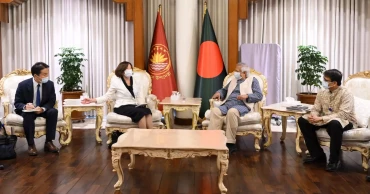
Executive Senior Vice President of Japan International Cooperation Agency (JICA) Miyazaki Katsura on Thursday said Bangladesh remains one of Japan’s most important partners in Asia and reaffirmed Japan’s continued support for Bangladesh’s development journey.
"We deeply mourn the lives lost and those injured in July, (uprising)” she told Chief Adviser Professor Muhammad Yunus during a meeting at State Guest House Jamuna.
Prof Yunus urged Japan to further strengthen its cooperation with Bangladesh in areas such as investment, fisheries, Rohingya humanitarian response and youth development, including education and sports.
“Japan has always been a trusted friend. I recently visited your country and I was deeply touched by the warmth and hospitality extended to me and my delegation,” said Prof Yunus.
During the meeting, the Chief Adviser highlighted the importance of the Matarbari project, describing it as the “most important region for our country’s future”.
Prof Yunus seeks JICA’s greater support for MIDI
He emphasised Bangladesh’s maritime potential. “When I spoke with the JICA President in Japan, I told him that we wanted to become a sea-based economy,” he added.
Prof Yunus also requested Japan to increase scholarships for Bangladeshi young people to study in Japan, as well as expand opportunities for employment.
“Many young people can go to Japan for work too. The issue is language. We proposed that Japanese teachers come here or offer distance learning so our people can learn Japanese language and workplace etiquette,” he said.
The Chief Adviser also raised concerns about the situation of Rohingya refugees. “It is a sad situation. Thousands of young people are growing up in camps with no hope. They are becoming frustrated and angry.” he said.
Miyazaki said JICA is focusing on supporting reforms in Bangladesh’s judiciary, public administration, local government and health sector as the country prepares for its graduation from LDC status in 2026.
She added JICA has taken up a Bangladesh focused project in an effort to introduce advanced ICT human resource training in collaboration with local governments, companies and universities in both countries.
JICA warns against fraudulent activities circulating on online platforms
On youth development, the Chief Adviser highlighted Bangladesh’s success in women’s sports. “Our girls are winning everywhere. Yesterday they won another match and reached the final. We are increasing hostel facilities but need help for their health and training as well,” he said.
Miyazaki responded positively, stating that Japan is already sending volunteers for schooling projects in many countries and will consider further cooperation in women’s sports.
During the meeting, the Chief Adviser thanked Japan for signing the recent Loan and Grant Agreements worth over USD 1 billion for economic reforms, railway construction, and human resource development, and requested an increase in Japan’s annual ODA threshold from 300 billion to 450 billion JPY to implement more development projects.
“Bangladesh will always remember Japan’s friendship and contributions,” Prof Yunus said.
1 year ago

Prof Yunus seeks JICA’s greater support for MIDI
Chief Adviser Professor Muhammad Yunus on Thursday called upon the Japan International Cooperation Agency (JICA) to bolster its support for the Moheshkhali-Matarbari Integrated Development Initiative (MIDI), aiming to transform the region into a vital engine for Bangladesh's future economic growth.
The request was made during a meeting with JICA President Dr Tanaka Akihiko on the sidelines of the 30th Nikkei Forum: Future of Asia, held at the Imperial Hotel in Tokyo.
"The MIDI region represents the future of Bangladesh," Prof Yunus said. "With access to the Bay of Bengal, we are developing deep-sea ports, highways, and railway links to connect the MIDI region with Nepal, Bhutan, and other parts of South Asia."
JICA initially proposed the development of a deep-sea port at Matarbari. The interim government, under Prof Yunus' leadership, is now formulating a comprehensive master plan to transform the entire MIDI region into a hub for ports, logistics, fishing, energy and power.
Japan to become important manpower market for Bangladesh: Shafiqul Alam
"Our vision includes building a megacity in the region," Prof Yunus added, noting that airports are also being upgraded to accommodate increased travel demands.
Dr Tanaka reaffirmed JICA's commitment to the MIDI development but emphasised the need for accelerated decision-making to expedite project implementation.
In response, Prof Yunus announced plans to appoint a senior official to oversee MIDI projects and coordinate efforts with JICA and other potential foreign investors.
The Chief Adviser also revealed plans to establish free trade zones within the MIDI area, inviting foreign investors to set up manufacturing plants aimed at export markets.
Besides, the government intends to create an exclusive fisheries zone in the region, enabling large fishing vessels to operate.
"We need to engage in deep-sea fishing," Prof Yunus explained. "Currently, fishing vessels from neighbouring countries exploit these waters, while our trawlers are too small for deep-sea operations. By developing our capabilities, we can process the catch in the fisheries zone for both export and domestic consumption."
Dr Tanaka said this was possibly the first time he had heard a Bangladeshi leader discuss deep-sea fishing initiatives.
The two leaders also discussed Bangladesh's reform agenda following the July uprisings, the country's democratic transition, and the Interim Government's anti-corruption efforts.
Prof Yunus confirmed that general elections are scheduled to be held between December and June, after which he plans to return to his previous work once an elected government assumes office.
Japan to recruit one lakh Bangladeshi workers in five years
The Rohingya crisis was also discussed, with the Chief Adviser seeking increased JICA’s support for humanitarian responses.
Dr Tanaka expressed JICA's willingness to participate in international efforts addressing the Rohingya crisis.
1 year ago

JICA warns against fraudulent activities circulating on online platforms
The Japan International Cooperation Agency (JICA) Bangladesh Office has requested that the public should remain ‘cautious, verify and report any suspicious offers or messages’ that are being circulated under JICA’s name on online platforms.
JICA Bangladesh Office has recently become aware of various fraudulent activities that have been operating on numerous online platforms.
“The organisation will remain committed to supporting the development of Bangladesh through transparent and ethical partnerships,” it said on Thursday.
The scammers are misusing JICA’s name to endorse fake savings schemes, loan offers and job opportunities.
JICA strongly condemned such deceptive practices and urges the public to remain cautious about such offers and messages.
JICA signs Tk 6,700 crore loan deals with Bangladesh for 2 projects
These scams falsely claim to provide individual loans on behalf of JICA and often request advance fees or loan processing.
Some Facebook posts have also provided fictitious savings schemes and employment opportunities in return for money under JICA’s name.
JICA strongly condemned these misleading practices and would like to clarify that the organisation neither provides loans to individuals nor charges any fee at any stage of the recruitment process.
It said all genuine information about JICA is available through official communication channels.
1 year ago

Master plan for Matarbari deep-sea port being revised to meet global standards: Shipping Adviser
The master plan for Matarbari, Bangladesh’s first deep-sea port, is being restructured to address evolving regional and global dynamics, Brigadier General (retd) Dr. M. Sakhawat Hossain, Adviser to the Ministry of Shipping, said today.
He shared this information after a meeting with the Japanese Ambassador to Bangladesh, Iwama Kiminori, at the Ministry of Shipping.
The adviser explained that the revised master plan aims to ensure the deep-sea port’s comprehensive security and operational readiness, adapting to the changing global trade environment. The updated strategy also includes plans to construct an international-standard dockyard at the site, further enhancing the port’s logistical and operational capabilities.
He added that after completing the first phase of construction, a dedicated authority will be formed to oversee the port’s activities and streamline its management. Highlighting its strategic importance, the adviser expressed optimism that the port’s operations could commence by 2030, significantly boosting Bangladesh’s connectivity and trade prospects.
Matarbari Power Plant not getting payment against power supply to national grid
Dr. Sakhawat also informed that the government is working on a National Port Strategy to improve coordination and efficiency across the country’s ports. He sought JICA’s continued technical support for the development and implementation of these plans.
Ambassador Iwama said that Japan is committed to supporting the Matarbari Deep-Sea Port project through the Japan International Cooperation Agency (JICA). He expressed confidence that the project would be completed on schedule with collective efforts.
Additionally, Dr. Sakhawat briefed the ambassador on the formation of a high-level committee to evaluate environmental standards in Bangladesh’s shipbreaking industry. The committee will conduct field inspections and submit recommendations to the government.
He also requested Japan’s professional and technical support for the development of marine academies in Bangladesh.
The ambassador also expressed interest in collaborating on Bangladesh’s shipbreaking industry.
Senior officials from the Japanese Embassy and the Ministry of Shipping were present during the meeting.
1 year ago

No major headway in Titas smart prepaid meter project
Though two separate deals were signed with the World Bank and the Asian Development Bank about a year ago to install some 17.5 lakh (1.75 million) smart pre-paid metres, the Titas Gas Transmission and Distribution Company has made little progress in implementing the project.
“Only some individual consultants were appointed by Titas Gas PLC. No project management consultant (PMC) has been appointed as yet,” said a senior official of the Energy and Mineral Resources Division.
Explaining the significance of the PMC he said has it critical role in implementing a project as it holds the responsibility to plan and design the project.
“The main technical aspects remain in the hand of the PMC. Normally one or two foreign companies are appointed as PMC”, he told UNB.
Newly appointed Managing Director of the Titas PLC Shahnewaz Parvez also admitted the poor progress of the smart prepaid metre project.
He, however, said that the appointment of PMC is under process and hoped that the Titas will be able to appoint the consultant soon.
Official sources said Titas Gas signed two separate loan agreements in November last year with the World Bank and ADB to install a total of 17.5 lakh prepaid meters under two projects.
On November 23 in 2023, Titas signed a loan agreement with the World Bank for installation of 11 lakh smart prepaid meters under the Gas Sector Efficiency and Carbon Abatement Project.
The gas transmission and distribution company also signed another agreement with the Asian Development Bank on November 28 in 2023 for the installation of 6.50 lakh smart prepaid meters under the Smart Metering Energy Efficiency Improvement Project.
Read: JS body recommends taking steps to gain prepaid meter consumers’ trust
The government had undertaken the smart prepaid metre project for the Titas Gas PLC, to reduce the excessive system loss to a reasonable level.
As the oldest and largest gas distribution both in terms of its operational area and volume of natural gas sales among the six gas distribution companies, the Titas Gas has been reeling with 7 percent system loss.
Titas Gas officials said the company has to incur a loss of Tk 150-180 crore per month for its system loss. They said the entity can save Tk1,800-2,160 crore a year if such a huge system loss is checked.
Titas Gas has so far installed about 3.5 lakh of prepaid gas meters for its household consumers mainly in Dhaka city with the financial support of the Japanese donor agency JICA.
Its prepaid meters were installed mainly in Gulshan, Banani, Mohammadpur, Paltan, Ramna, New Market, Khilgaon and Segunbagicha areas.
Titas Gas currently supplies gas to over 2.878 million consumers, including some 2.853 million household consumers, 12,078 commercial consumers, 5,429 industrial consumers, 1,755 captive power plants, and 396 CNG stations.
As per the official statistics, Titas Gas alone holds 55% of the gas market share, while the other five companies have 45%.
Read more: Electricity bills harassments: Postpaid consumers can turn to prepaid meters
Its vast operational area covers Dhaka, Manikganj, Gazipur, Narayanganj, Munshiganj, Narsingdi, and Mymensingh.
It annually sells about 14,459.41 MMCM (million cubic meters) of gas (2021-23 fiscal years), to earn a revenue of Tk26,387.12 crore.
1 year ago
Dhaka Airport’s Third Terminal on track for completion this Oct, flights expected from early 2025
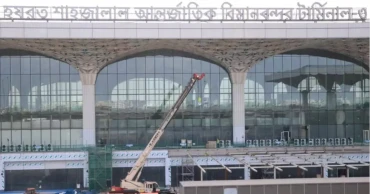
The construction of the third terminal at Hazrat Shahjalal International Airport in Dhaka is set to be completed by October this year, with flight operations expected to begin in early 2025, officials from the Civil Aviation Authority of Bangladesh (CAAB) have confirmed.
According to CAAB, the third terminal’s construction is in its final stages and is on track to be completed by the October deadline. The Civil Aviation Authority will take over the terminal from the contractor in October, following which the process of scheduling flights from the new terminal will commence early next year.
Following the fall of the Awami League government on August 5, uncertainty arose over the timely completion of the terminal. However, the interim government soon restored normalcy to the construction process.
The striking design of the third terminal building has drawn attention in the project area, with finishing touches underway both inside and outside the facility.
Read more: Target set for Dhaka Airport Third Terminal's full functionality by December 2024: CAAB Chairman
Air Vice Marshal Md Monjur Kabir Bhuiyan, Chairman of CAAB, recently inspected the progress of the third terminal. He directed the officials and workers involved in the project to ensure timely completion with a high standard of work.
“About 98% of the work on the third terminal has already been completed, and overall progress is satisfactory. I have instructed those involved to finish the remaining tasks promptly,” Air Vice Marshal Monjur told UNB. “We expect all work to be completed by October. After taking over the terminal from the contractor, we will prepare to launch flight operations.”
Consultancy firm Nippon Koei has estimated that around 6,000 skilled workers will be needed for the operation, maintenance, and security of the terminal, with nearly 4,000 of them required for security alone. However, CAAB officials said that it might take a few months to recruit the necessary workforce, meaning the terminal may not be fully operational immediately. Initially, CAAB and Biman Bangladesh Airlines will manage the terminal, with full operations likely to begin in February next year.
Once operational, the third terminal will increase Hazrat Shahjalal International Airport’s passenger handling capacity by an additional 12 million passengers annually. Currently, the airport’s first and second terminals manage between 120 to 130 flights of more than 30 airlines daily, serving around 20,000 passengers. This equates to a capacity of approximately 8 million passengers per year.
The new terminal will add 230,000 square meters of space to the airport, featuring 115 check-in counters, 66 departure and 59 arrival immigration desks, and three VIP immigration desks. It will also include 27 baggage screening machines, 40 security scanners, 12 boarding bridges, 16 carousels, and 11 body scanners.
The construction project, launched by the government in 2017, began on December 28, 2019, with an estimated cost of Tk 21,398 crore. The Japan International Cooperation Agency (JICA) is providing Tk 16,141 crore as a loan, with the remaining funds coming from the Bangladesh government. The construction is being carried out by Japan’s Mitsubishi and Fujita and South Korea’s Samsung.
CAAB officials noted that once completed, the terminal will accommodate 37 aircraft at a time and feature two high-speed taxiways to reduce waiting times on the runway. Two buildings have also been constructed for import and export cargo operations. A three-story parking facility for 1,350 vehicles is nearing completion. Initially, 12 out of the 26 boarding bridges will be operational, with 15 self-service check-in counters and 10 automated passport control counters available for departing passengers.
The terminal has been designed to ensure smooth entry and exit for passengers. It will be connected to the elevated expressway, and airport railway station via a tunnel. Hajj pilgrims will also have a dedicated tunnel from the Ashkona Hajj Camp to the third terminal.
Last year, on October 7, former Prime Minister Sheikh Hasina partially inaugurated the terminal as part of her government’s development efforts ahead of the national elections. At that time, the government had announced that flights would operate from the third terminal by October this year.
Read more: Govt will decide on ground handling at Dhaka airport’s third terminal and Biman is ready: CEO
2 years ago

Empowering Ctg’s water future: JICA to provide support to CWASA for capacity improvement, sustainability
Japan International Cooperation Agency (JICA) signed a Technical Cooperation agreement with the Government of Bangladesh on “The Project for Improvement of Management Capacity of Chattogram Water Supply and Sewerage Authority” on Monday.
The project aims to enhance Chattogram WASA's capacity to improve its service delivery, strategic project planning, and financial management. JICA has a longstanding commitment to collaborating with Bangladesh in the Water Supply and Sanitation sector, especially in Chattogram.
JICA to assist govt in preparing power distribution plan for Dhaka
The agreement was signed by MIURA Mari, Senior Representative, JICA Bangladesh Office; AKM Shahabuddin, Additional Secretary, Economic Relations Division; Mr. AHM Kamruzzaman, Joint Secretary, Local Government Division, Ministry of Local Government, Rural Development and Cooperatives; andAKM Fazlullah, Managing Director, Chattogram Water Supply and Sewerage Authority.
Chattogram city, the second largest city in Bangladesh, with a population of around 7 million, has historically relied heavily on groundwater for drinking water.
NCDC launches national guideline on hypertension with JICA’s support
JICA's support to Chattogram city began in 2003 with an engineering study in response to the severe drinking water crisis in the city. The initiative identified the need to develop surface water sources and enhance the institutional capacity of Chattogram Water Supply and Sewerage Authority (CWASA) to address its growing population.
Over the years, JICA has supported CWASA in mitigating the water crisis, focusing on water supply capacity development and reducing non-revenue water. JICA’s supported water treatment plants supply 286 million liters daily, meeting about 60 percent of Chattogram city's demand. JICA has also conducted surveys in its sewerage sector.
JICA seminar on ‘Private Sector Contribution to the SDGs’ held
CWASA's services for safe water supply have improved tremendously. However, further work is needed to provide more clean water and serve its growing population. The new Technical Cooperation is expected to maximize the benefit of CWASA's services and transform CWASA into a sustainable water sanitation service provider of international standards.
This new project for CWASA focuses on improving financial management, water treatment plant operation, non-revenue water reduction, customer communication, and inter-WASA collaboration. Through these the project aims to enhance CWASA's overall management capacity, ensuring sustainable and efficient water services.
2 years ago

Boosting Dhaka’s connectivity: Japan funding for Hazrat Shahjalal Airport’s major upgrade
In a significant development for Bangladesh’s aviation sector, the country and Japan today signed the exchange of notes of the 44th Official Development Assistance (ODA) yen loan. This crucial funding, amounting to 76,635 million yen (approximately USD 540 million), is earmarked for the expansion of Dhaka’s Hazrat Shahjalal International Airport (HSIA).
Is Dhaka ready for a Westeros Winter?
The installment will be used for constructing Hazrat Shahjalal International Airport’s Third International Passenger Terminal, a Cargo Terminal, and associated facilities.
The agreement was formalized by Iwama Kiminori, Japanese Ambassador to Bangladesh, and Md. Shahriar Kader Siddiky, Secretary of the Economic Relations Division, Ministry of Finance. This latest installment brings the total of the 44th round of yen loans to a substantial 324,191 million yen (around USD 2.21 billion).
A corresponding loan agreement was signed by Yoshida Hiroshi, Senior Representative of JICA's Bangladesh Office, and Shariar Siddiky, emphasizing the commitment to meet the growing aviation demands, enhance airport capacity, improve accessibility, and bolster security. This expansion is anticipated to significantly contribute to Bangladesh’s economic development and regional connectivity.
Prime Minister Sheikh Hasina, at the recent soft opening of Dhaka Airport’s Third Terminal, highlighted the importance of Japanese companies’ involvement in this grand project. Ongoing intensive discussions between the Japanese consortium and airport authorities reinforce Japan’s commitment to fostering Bangladesh’s development through this strategic partnership, aiming for mutual prosperity.
Penalty for code of conduct violation depends on investigation report: EC Sultana
The 44th ODA loan package specifically targets the Hazrat Shahjalal International Airport Expansion Project (Phase III). The terms include an interest rate of 1.30% per annum, with a repayment period of 20 years following a grace period of 10 years, as outlined by the Japanese Embassy in Dhaka. This agreement marks a pivotal step in enhancing Dhaka’s status as a key aviation hub in the region.
2 years ago

Govt will decide on ground handling at Dhaka airport’s third terminal and Biman is ready: CEO
There has been no official decision yet on the ground handling work at the third terminal of Hazrat Shahjalal International Airport in Dhaka, Biman Bangladesh Airlines Managing Director and CEO Shafiul Azim has said.
“The prime minister gave a clear directive during her visit to the airport that the ground handling should be improved, it should be world-class. We have been working to ensure that since then," he said.
“Since then, we have been procuring new equipment. We have already bought new equipment worth Tk 1,000 crore, and a Tk 600-700 crore budget to buy new equipment is in the pipeline. We have recruited manpower as well,” said the national flag carrier CEO.
“There are limitations in this too, but we are working day and night,” he said.
Also read: 12 boarding bridges will be operational when Dhaka Airport’s 3rd Terminal partially opens this Oct: CAAB
A project with Japan International Cooperation Agency (JICA) is on, he added.
3 years ago