World Bank
AI could enhance productivity for 16.2 percent of workers in developing economies: World Bank
Artificial intelligence could enable developing nations to achieve a century's worth of progress within a single decade, but only if governments move quickly to fix critical deficits in power, internet access, and skills, according to a landmark World Bank report.
According to the report—the Bank's first comprehensive assessment of AI’s impact on the global south—only 4.5 percent of jobs in low- and middle-income countries are at risk of automation, compared to 14.2 percent in high-income nations. Conversely, AI could meaningfully enhance productivity for 16.2 percent of workers in developing economies, close to the 18.7 percent expected in wealthy nations.
World Bank approves $1.1 billion for food security, emergency response in Bangladesh
The World Development Report 2026: The Promise of Artificial Intelligence highlights that while developing countries face lower risks of job displacement from generative AI compared to high-income economies, they stand to gain nearly equal productivity boosts if they adopt the technology effectively.
"AI has thrown developing economies a lifeline, and they should seize it," said Indermit Gill, Senior Vice President and Chief Economist of the World Bank Group.
"They do not need large models or big data centers to reap its benefits. By adapting small, low-cost AI tools to local conditions, they can bring better medical care, education, judicial services and agricultural extension within reach of millions."
The findings come at a critical time as developing economies struggle through their weakest average growth performance in three decades. The report notes that AI could significantly accelerate growth before the end of the 2020s, particularly in regions constrained by shortages of trained professionals, reliable records, and institutional capacity.
However, the World Bank warned that the opportunity is not guaranteed. Advanced AI development remains concentrated among a small group of nations and corporations, threatening to widen global inequalities if poor infrastructure prevents adoption elsewhere. In Sub-Saharan Africa, for instance, nearly one-third of rural schools lack electricity, while over two-thirds lack dependable internet access.
To prevent a deepening digital divide, the report outlines a three-step strategy for developing nations: first adopt available international tools, then adapt them to local contexts and languages, and eventually advance toward developing frontier AI systems over time.
"The window to get this right is narrow," warned Gaurav Nayyar, Director of the World Development Report 2026. "Developing countries that build the foundations now—power, connectivity, skills, and institutions—will be positioned to adopt and adapt AI for their people."
The report stresses that governments must also focus on expanding computing power, creating local language datasets, establishing clear regulatory frameworks, and protecting data privacy to build public trust as AI tools roll out.
1 month ago

World Bank approves $1.1 billion for food security, emergency response in Bangladesh
World Bank on Saturday approved $1.1 billion for two projects to help Bangladesh mitigate the price and supply volatility in the global fertiliser and fuel markets, sustain food security, and enable rapid response.
The Emergency Support for Food Security Project ($300 million) will provide time-bound financing to help Bangladesh import fertilisers critical for the Aman and Boro seasons in July–October 2026 and October 2026–April 2027, respectively.
The project will finance imports of 600,000 metric tons of critical fertilisers, half of which would be Urea, covering 1,400,000 hectares of rice production cultivated by smallholder farmers, the World Bank said in a press release.
“Rising food, fertiliser, and fuel prices stemming from the Middle East conflict, along with tighter fiscal space have deeply impacted Bangladesh’s economy, hitting smallholder farmers as well as poor and vulnerable people the hardest,” said Jean Pesme, World Bank Division Director for Bangladesh and Bhutan.
“The World Bank has stepped up with immediate support to help Bangladesh mitigate this impact to ensure fertilizer supply for rice production, protect households, jobs and livelihoods and continue with essential services.”
“Bangladesh’s food security depends on Aman and Boro rice seasons, which together account for about 90% of the country’s total rice production. Further, about half the population is employed in agriculture sector. So, any disruption in fertilizer supply would not only threaten food security, it would deepen poverty and cost jobs,” said Souleymane Coulibaly, World Bank Lead Economist and Task Team Leader for the project.
The Contingent Emergency Response Project ($713 million) will support quick-disbursing emergency expenditures, including cash transfers and livelihood assistance for affected households and micro, small, and medium enterprises, helping stabilize incomes and preserve jobs during crises.
It will also finance fuel and energy supplies to continue essential services, including food, medicines and medical equipment, energy, and water. The project will disburse by June 30, 2026.
“This project will provide Bangladesh immediate access to funds through the World Bank’s crisis preparedness and response toolkit by repurposing unutilized financing from existing projects, directing resources where they are most needed and protecting people, businesses, and jobs from the impact of shocks,” said Lesley Jeanne Yu Cordero, World Bank Lead Disaster Risk Management Specialist and Task Team Leader for the project.
2 months ago

World Bank approves $450 mln to strengthen Bangladesh’s banking sector
The World Bank Board of Executive Directors on Wednesday approved $450 million in financing to help Bangladesh strengthen the foundations for a stronger banking sector, a prerequisite for the revival of the country’s economic growth and job creation.
The Financial Sector Support Project II aims to bolster the deposit protection system to protect small depositors and build Bangladesh Bank’s supervisory capacity and systems.
It will also support the deposit protection fund by increasing its capital and advance key reform priorities, including enhancing the deposit protection system, establishing an effective Emergency Liquidity Assistance framework, developing bank restructuring strategies, and supporting reforms in state-owned banks, said a press release.
The banking sector faces significant challenges caused by weak corporate governance, regulatory capture, and related-party lending.
The non-performing loan (NPL) ratio stood at 32.6 percent as of the end of March 2026, well above the average for South Asian banks of 7.9%, and the system-wide capital-to-risk-weighted assets ratio was negative 2.6 percent as of the end of December 2025.
“Bangladesh’s vision of attaining a trillion-dollar economy requires a stable and inclusive financial sector. But the banking sector—which accounts for about 90 percent of total financial sector assets—faces mounting stress,” said Jean Pesme, World Bank Division Director for Bangladesh and Bhutan.
“This project will help Bangladesh put in place a set of essential tools, systems, and safeguards needed to protect small depositors and support confidence, restore stability in the banking sector, allowing it to support economic growth and job creation.”
It will upgrade and modernise Bangladesh Bank’s Information and Communications Technology (ICT) infrastructure, helping address rising cybersecurity risks and close critical gaps in sector-wide data and analytics.
This will improve Bangladesh Bank’s ability to monitor risks, enhance data-driven and risk-based supervision, and improve the resilience of the financial sector.
“The project, which forms part of a coordinated approach by development partners including the IMF and the Asian Development Bank, supports measures to bolster crisis preparedness and build the authorities’ capacity to manage banking sector stress,” said Toshiaki Ono, World Bank Senior Financial Sector Specialist and Task Team Leader of the project.
2 months ago
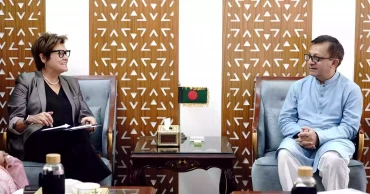
Minister seeks WB support to sharpen Bangladesh’s trade negotiation skills
Commerce Minister Khandakar Abdul Muktadir on Wednesday called on the World Bank (WB) to extend support in developing trade negotiation skills among Bangladesh's trade officials, emphasising that human resource development is as critical as infrastructure investment in strengthening the country's global competitiveness.
"To ensure effective participation in the international trading system, it is essential to build skilled manpower in trade negotiation, trade law, WTO regulations and modern trade management," he said during a meeting with WB Operations Manager Gayle Martin at the Commerce Ministry.
The meeting covered ongoing collaboration between the ministry and the global lender, focusing on capacity building, skilled human resource development and modernisation of the trade sector.
The minister specifically sought WB assistance in three areas: trade negotiation skill development for ministry officials, establishing a strong resource pool for the Bangladesh Foreign Trade Institute (BFTI), and building practical expertise in trade law and WTO affairs.
He also pointed out that despite large-scale projects being implemented under various donor agencies and government funding, adequate initiatives to enhance the capacity of project directors have remained largely absent.
World Bank Operations Manager Gayle Martin described the EC4J project, currently being implemented by the Commerce Ministry, as a successful initiative and assured continued support. "World Bank programmes in Bangladesh place special emphasis on job creation, productivity enhancement and value creation to generate long-term positive impact on the national economy."
Commerce Ministry Secretary (Routine Duty) Md Abdur Rahim Khan was also present at the meeting.
4 months ago
World Bank approves $370m to improve waste management, restore Dhaka rivers
World Bank’s Board of Executive Directors has approved $370 million in financing to improve sanitation and solid waste management services in Dhaka and nearby areas, aiming to cut water pollution and restore rivers and canals.
The support will fund the Metro Dhaka Water Security and Resilience Program, which seeks to strengthen the capacity of local and national institutions to tackle water pollution in greater Dhaka.
The region accounts for about half of the country’s formal employment and nearly one-third of its GDP, said a press release on Wednesday.
The programme will introduce a result-based system to help city corporations and the Water Supply and Sewerage Authority (WASA) deliver measurable improvements.
Under the project, 550,000 people will receive safely managed sanitation services, while 500,000 people will benefit from improved solid waste management. Priority will be given to communities most affected by pollution and service gaps.
“Waterbodies are the lifeline for millions of people in greater Dhaka. But rapid and unplanned urbanisation and industrial growth have outpaced the city's capacity to manage wastewater and pollution, affecting public health, the environment and the economy,” said Jean Pesme, World Bank Division Director for Bangladesh and Bhutan.
He said the programme would help build the institutional foundations needed to reduce pollution and gradually restore the health of Dhaka’s rivers and canals.
Dhaka faces serious wastewater and water pollution challenges and about 20 percent of residents are connected to a piped sewer system, while just 2 percent use functional fecal sludge management services, said the press relesae.
More than 80 percent of untreated wastewater and sewage is discharged into the city’s interconnected waterways.
Over half of Dhaka’s canals have either disappeared or become clogged, worsening pollution and reducing water flow.
To address these problems, the programme will take a comprehensive approach involving the public and private sectors, as well as city corporations. It will improve service delivery, strengthen regulations and help revive rivers and canals by reducing pollution and restoring flow capacity.
Industrial pollution remains a major concern. Around 80 percent of export-oriented garment factories are located in Dhaka, and more than 7,000 factories discharge an estimated 2,400 million litres of untreated wastewater into waterways each day. This contributes to skin diseases, diarrhoea and neurological conditions.
The programme will encourage private sector participation, particularly from industries in and around Dhaka, to scale up industrial effluent treatment and water reuse to improve water efficiency and reduce pollution.
“The programme is part of a multi-phase, long-term engagement supporting Bangladesh’s broader water security and resilience agenda,” said Harsh Goyal, World Bank Senior Water Supply and Sanitation Specialist and Task Team Leader of the project.
He said this phase would focus on reducing pollution discharge into Dhaka’s water bodies, strengthening monitoring and regulatory systems, introducing a comprehensive water quality index for Dhaka’s rivers, establishing digital real-time pollution monitoring and preparing integrated restoration plans for four major rivers around Dhaka.
In the first phase, the programme will cover selected areas in Dhaka and Narayanganj.
It will expand primary waste collection services, especially in underserved communities near major canals and rivers, and upgrade recycling systems.
7 months ago

World Bank raises Bangladesh growth forecast to 6.1% for FY26-27
Bangladesh’s medium-term economic outlook has improved, with growth expected to strengthen steadily over the next two fiscal years, according to the World Bank’s latest Global Economic Prospects report.
The report revised up its projections for Bangladesh, forecasting economic growth of 4.6 percent in FY25-26, rising further to 6.1 percent in FY26-27.
The upward revision reflects strengthening private consumption amid easing inflationary pressures, alongside expectations of higher industrial activity and investment.
Reduced political uncertainty following the general election and anticipated structural reforms by the new government are also expected to support industrial expansion and faster public spending, said the report.
Compared with the World Bank’s June projections, growth for FY 26-27 has been revised up by 0.3 percentage points, driven largely by Bangladesh and better-than-expected performance in several other economies.
Read More: World Bank approves $1.16 billion for Bangladesh
At the global level, the World Bank noted that the economy is proving more resilient than previously anticipated despite trade tensions and policy uncertainties.
Global growth is projected to ease to 2.6 percent in 2026, before edging up to 2.7 percent in 2027, largely due to stronger than expected growth in major economies, particularly the United States.
However, it warned that the 2020s could become the weakest decade for global growth since the 1960s if current trends persist.
Global inflation is expected to decline to 2.6 percent in 2026, reflecting softer labour markets and lower energy prices.
Indermit Gill, World Bank Group’s Chief Economist, said slower growth combined with record public and private debt levels could strain finances and credit markets.
The report emphasised the need for governments to liberalise investment and trade, rein in public consumption, and invest in technology and education to avoid stagnation and rising unemployment.
Growth in developing economies is projected to slow slightly to 4 percent in 2026 from 4.2 percent in 2025, before picking up to 4.1 percent in 2027.
Read More: Government seeks World Bank, IFC support for ongoing, future programmes: Finance Adviser
Low-income countries are expected to record stronger growth, averaging 5.6 percent over 2026–27, supported by firm domestic demand, recovering exports, and moderating inflation.
Despite this, per capita income growth in developing economies will remain insufficient to narrow the gap with advanced economies, projected at just 3 percent in 2026, about one percentage point below the 2000–2019 average.
The report also highlighted rising fiscal pressures in developing countries, with public debt reaching its highest level in more than 50 years.
M Ayhan Kose, Deputy Chief Economist of the World Bank, said restoring fiscal credibility through well-designed fiscal rules is crucial but requires strong institutions, credible enforcement, and sustained political commitment.
8 months ago
WB okays $150.75m for youth, micro-entrepreneur jobs in Bangladesh
The World Bank has approved $150.75 million to help Bangladesh scale up support to create employment, opportunities and better income for low-income youth and micro-entrepreneurs, with a focus on women and those living in climate-vulnerable areas.
The additional financing to the Recovery and Advancement of Informal Sector Employment (RAISE) Project will create employment and income opportunities for about another 176,000 youth across Bangladesh, in addition to the earlier 233,000 project beneficiaries.
Participants will benefit from a comprehensive package of services including skills training, apprenticeships, entrepreneurship development, and access to microfinance to help young people and micro-entrepreneurs overcome barriers to employment and business growth.
It will also introduce innovative approaches for women’s empowerment, including access to quality childcare, and climate resilient livelihoods to help communities adapt to climate shocks.
Read more: China’s K Visa For Bangladeshi Professionals: Eligibility, Application Process, Fees
World Bank Acting Division Director for Bangladesh and Bhutan Gayle Martin said that a good job can transform a life, a family, and a community.
Yet, he said, every year many young Bangladeshis entering the labor market can't find work. The country also faces challenges in job quality, skills shortages and mismatches.
“This additional financing will help more young people from low-income families, especially women and those in vulnerable communities, to access market-relevant skills, resources, and training they need for better employment and livelihood opportunities.”
The financing will help the project expand its coverage beyond urban centers to rural communities, ensuring that marginalized youth and micro-entrepreneurs across the country can benefit from targeted support.
It will pilot quality and affordable home-based childcare services by providing training and start-up grants to women.
Read more: Bangladesh’s external debt crosses $104bn amid rising interest burden: WB
By addressing both demand and supply of childcare needs, these efforts will boost female labor force participation and create new jobs in the care sector, while also enhancing children’s early health and development.
Besides, women will be targeted with life skills training to enhance their confidence and empowerment.
The additional financing will also supplement training with job intermediation efforts by organising job fairs, connecting potential employers with candidates and assisting in marketing and contract negotiations.
Team Leader for the project Aneeka Rahman said that the RAISE project has shown that targeted support can make a real difference for youth and micro-entrepreneurs. “With this new financing, we can scale up proven interventions, expand access to microfinance, and introduce innovative solutions like quality childcare, helping even more young people and women unlock their potential and build resilient futures.”
The project has already shown strong results: over 80 percent of graduated apprentices secured employment within three months of completing the program and the young microentrepreneurs reported better earning and business practices.
With this additional financing, the World Bank’s total support to the RAISE project now stands at $350.75 million.
Read more: Bangladesh sets its own economic policy, not dictated by IMF or WB: BB Governor
8 months ago
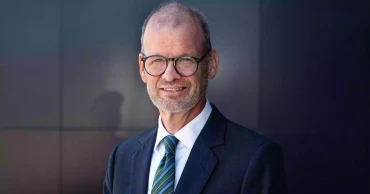
Committed to helping Bangladesh maintain inclusive growth path: WB VP
World Bank’s new Vice President for the South Asia Region Johannes Zutt has said the global lending agency ‘remains committed’ to helping Bangladesh to maintain a ‘sustainable and inclusive growth path and create more and better jobs’ for the two million youths entering the job market every year.
“I have very fond memories of Bangladesh, its people and the friendships I have made. I was always impressed by the resilience and creativity of the Bangladeshi people and their determination to build a better future for their children,” said Zutt, who arrived in Dhaka on Saturday, marking Bangladesh as his first official tour in the new role.
During his four-day official visit, Zutt will meet Chief Adviser Prof Muhammad Yunus, Finance Adviser Dr Salehuddin Ahmed, Bangladesh Bank Governor Ahsan H Mansur, and other senior government officials and private sector representatives, according to the WB.
The WB Vice President said he looks forward to seeing firsthand the transformative changes that have been achieved over the ten years since he left his role as Country Director.
World Bank predicts worst decade for global growth since 1960s
Zutt assumed his role as World Bank Vice President for the South Asia Region on July 1, 2025 and he previously served as the World Bank’s Country Director for Bangladesh, Bhutan and Nepal from 2013-2015.
A Dutch national, Zutt joined the World Bank in 1999 and has taken positions of increasing responsibility.
He most recently served as the World Bank’s Country Director for Brazil. Before this he was the Director for Strategy, Results, Risk and Learning in the Operational Policy and Country Services (OPCS) Vice Presidency.
Zutt has also served as Country Director for Türkiye, Comoros, Eritrea, Kenya, Rwanda, Seychelles and Somalia.
The World Bank was among the first development partners to support Bangladesh after its independence.
Since then, the Bank has committed about $46 billion to Bangladesh, mostly in grants or concessional credits.
Bangladesh currently has one of the largest ongoing programs supported by the World Bank Group’s International Development Association (IDA)
1 year ago
Over half of low-income countries at risk of debt distress, warns WB
More than half of the world’s low-income countries are either already in or nearing a high risk of debt distress, the World Bank has warned, calling on global leaders to adopt “radical debt transparency” to avert future financial crises.
In its latest report, Radical Debt Transparency, the Bank reveals that 54 percent of low-income countries face severe debt vulnerabilities, with many spending more on debt repayments than on essential sectors such as education, healthcare, and infrastructure combined.
“Without urgent action, future debt crises will not only be the result of economic shocks, but also of undisclosed and misunderstood liabilities,” said Axel van Trotsenburg, World Bank Senior Managing Director, in a signed commentary accompanying the report.
The report underscores that while past international efforts like the Heavily Indebted Poor Countries (HIPC) Initiative provided critical relief, today’s debt environment has grown significantly more complex.
An increasing share of sovereign borrowing now occurs off-budget, through opaque arrangements, collateral-backed loans, and deals with non-traditional lenders.
Since 2020, the proportion of low-income countries publishing some form of debt data has risen from under 60 percent to more than 75 percent, the report notes.
However, only one in four countries disclose loan-level data on new debt, raising concerns about the depth and consistency of current reporting standards.
World Bank approves over $1 billion for projects in Lebanon, Syria and Iraq
The World Bank is urging stronger national oversight and full public disclosure of lending terms.
It has also recommended leveraging technology to standardise debt-recording systems and enhance accountability, proposing the development of a joint digital platform for both borrowers and creditors.
“Transparency is not a luxury—it’s a necessity,” said van Trotsenburg. “It rebuilds trust with investors and supports long-term growth and stability.”
The report comes at a time when developing economies are grappling with shrinking access to affordable financing, further strained by global shocks such as commodity price volatility and climate-induced disasters.
While the World Bank and International Monetary Fund have extended technical assistance and financial support to vulnerable nations, and the G20’s Common Framework offers a mechanism for debt resolution, experts believe these measures remain insufficient without more coordinated and comprehensive action.
The report concludes by warning that debt crises—once largely reactive—must now be addressed proactively, with radical transparency serving as the first line of defence against yet another lost decade of development.
1 year ago

Jean Pesme takes charge as WB’s new director for Bangladesh, Bhutan
Jean Pesme will assume office on Tuesday as the new World Bank Division Director for Bangladesh and Bhutan.
Pesme brings extensive development experience to the role, with a proven track record in fostering economic growth, enhancing financial system resilience and promoting inclusivity, according to a press release.
A French national and an engineer by training, Pesme joined the World Bank in 2003 as a Senior Infrastructure Specialist and has since held leadership positions within the World Bank Group, including its private sector arm, IFC.
He has extensive experience in working on financial sector issues, notably in the Middle East and North Africa.
Prior to taking this assignment, Pesme served as the Global Director, Finance and led the World Bank’s work to promote the development of sound, stable, sustainable, and inclusive financial systems.
He also led the World Bank’s Financial Stability and Integrity global team, which assists countries in building and restoring robust and resilient financial systems operating with integrity, transparency and in compliance with international standards.
Pesme said that Bangladesh has unique development experiences to share with the world.
“This is a country that has repeatedly surprised the world with its development innovation, determination, and resilience to tackle pressing development and economic challenges,” he said.
Canadian High Commission hosts seminar on grain, oilseed storage
“I look forward to working closely with the government and people of Bangladesh to help the country maintain a robust and inclusive development and growth trajectory.”
He also said that the World Bank is harnessing the full strength of the One World Bank Group by collaborating closely with our private sector arms, IFC and MIGA to mobilize private sector growth and investment, leading to creation of quality jobs.
In his role as the World Bank Division Director for Bangladesh and Bhutan, Pesme will lead the strategic and policy dialogue to shape World Bank engagement in Bangladesh and Bhutan, supporting the countries to achieve their respective development goals.
He will also ensure that the country and regional programs are aligned with the World Bank Group's vision and mission and anchored in country priorities, while emphasizing selectivity, speed, scale, impact, and partnerships.
1 year ago