Khamenei
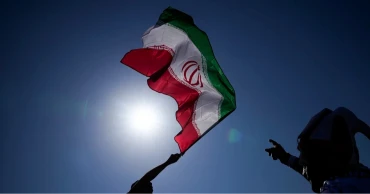
Who leads Iran after Khamenei’s death?
Following the killing of Supreme Leader Ayatollah Ali Khamenei, Iran has formed a three-member transitional council to manage state affairs.
Ayatollah Alireza Arafi, a member of the country’s powerful constitutional watchdog, was appointed on Sunday to the interim council, which also includes President Masoud Pezeshkian and Supreme Court Chief Justice Gholam-Hossein Mohseni-Ejei.
Under Article 111 of Iran’s constitution, the council will govern until the Assembly of Experts, an 88-member body, selects a new supreme leader. Khamenei’s nearly 37-year rule ended Saturday following a deadly U.S.-Israeli attack, reports Al Jazeera .
The constitution mandates that the Assembly of Experts appoint a successor “as soon as possible” while the transitional council oversees the government.
7 months ago
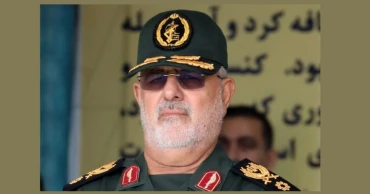
Iran says ‘finger on trigger’ as Trump claims Tehran wants talks
Iran’s powerful Revolutionary Guard has warned the United States that its forces remain on high alert, even as President Donald Trump said Tehran appears willing to enter negotiations.
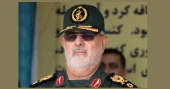
In a statement aired by state television on Thursday, Revolutionary Guard commander Gen Mohammad Pakpour said his forces have their “finger on the trigger,” cautioning both Washington and Israel against what he described as potential miscalculations.
He urged the US and Israel to draw lessons from past conflicts, including what he called the “12-day imposed war,” and said the Guard stood fully prepared to carry out any orders from Iran’s supreme leader, Ayatollah Ali Khamenei.
Despite the sharp rhetoric, signs of immediate US military action appeared to ease this week. Speaking at the World Economic Forum in Davos, Trump said the United States had struck Iranian uranium enrichment facilities last year to prevent Tehran from developing a nuclear weapon.
New Israeli settlement Yatziv inaugurated near Beit Sahour
“We can’t let that happen,” Trump said, adding that Iran “does want to talk,” and that the US would engage in discussions.
At the same time, Iran’s military leadership issued further warnings. Gen Ali Abdollahi Aliabadi, head of Iran’s joint command headquarters, said any US attack would make “all US interests, bases and centres of influence” legitimate targets.
Earlier this week, Trump had warned Iran’s leaders that the United States would respond decisively if there were any attempt on his life, linking such a scenario to potential retaliation over actions targeting Khamenei.
The heightened tensions come as Iran’s leadership deals with the fallout from nationwide protests that erupted in late December. Authorities have since suppressed the unrest through a forceful crackdown, alongside a sweeping internet blackout described by monitoring group NetBlocks as a “national kill-switch,” now in its second week.
Hackers disrupt Iran state TV as protest crackdown death toll tops 4,000
On Wednesday, Iranian officials released their first official casualty figures from the protests, saying 3,117 people were killed.
#With inputs from Agencies
8 months ago
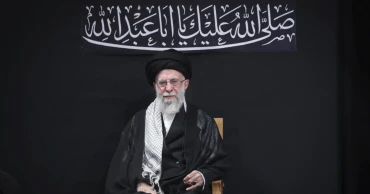
Khamenei makes first public appearance since Iran-Israel war
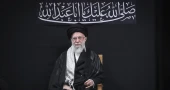
Iran’ s Supreme Leader Ayatollah Ali Khamenei on Saturday made his first public appearance since the 12-day war between Israel and Iran began, attending a mourning ceremony on the eve of Ashoura.
State television broadcast footage on Saturday showing Khamenei greeting worshippers at Tehran’s Imam Khomeini Mosque during a ceremony held ahead of Ashura, the significant Shia religious observance.
Khamenei’s last appearance had been via pre-recorded speeches aired during the Iran-Israel conflict, which began on June 13 and saw the killing of several senior Iranian military commanders and nuclear scientists.
The war began after Israel launched a surprise assault targeting Iranian nuclear and military sites. In retaliation, Iran carried out aerial strikes on Israel. The conflict lasted 12 days, during which Khamenei delivered three video messages, fueling speculation that he had gone into hiding in a secure bunker.
Iranian media extensively covered Khamenei’s public appearance on Saturday, with state TV airing footage of jubilant supporters reacting to his presence. In the video, Khamenei is seen turning to senior cleric Mahmoud Karimi, urging him to perform the patriotic song "O Iran," which has gained renewed popularity amid the recent conflict.
Israeli airstrikes kill 14 Palestinians in Gaza, another 10 people die seeking food
The event took place at the Imam Khomeini Mosque, named after the founder of the Islamic Republic. State television also invited citizens to submit videos sharing their reactions to Khamenei’s reappearance in public.
The supreme leader's appearance comes as Iran observes Muharram, a month of mourning in the Shia Muslim calendar. Ashura, which falls on July 6 this year, marks the martyrdom of Prophet Muhammad’s grandson, Imam Hossein, and is traditionally attended by the country’s top religious leaders.
Russia becomes first state to recognise Afghanistan's Taliban government
On June 26, in a previously recorded speech broadcast on state TV, Khamenei declared that Iran would not surrender to Israel, despite US President Donald Trump’s demands. The United States entered the conflict on June 22 by launching airstrikes on Iranian nuclear sites. The American operation involved 125 military aircraft targeting key facilities in Fordo, Natanz, and Isfahan.
Iran’s judiciary later reported that the 12-day conflict resulted in over 900 deaths.
#With inputs from Agencies
1 year ago
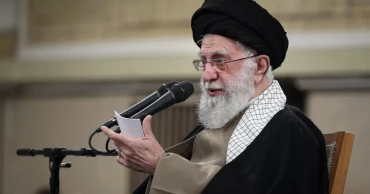
Khamenei dismisses US offer for nuclear talks, calls it deceptive
Iran’s Supreme Leader Ayatollah Ali Khamenei has rejected the United States’ proposal for negotiations on Tehran’s nuclear programme, calling it a ploy to manipulate global opinion.
His remarks came as a letter from US President Donald Trump, urging Iran to enter talks, was delivered to Iranian Foreign Minister Abbas Araghchi.
Trump recently confirmed that he had sent a letter seeking negotiations over a new nuclear agreement aimed at restricting Iran’s advancing programme. The letter was handed over on Wednesday by Anwar Gargash, diplomatic adviser to the president of the United Arab Emirates.
During a meeting with university students, Khamenei dismissed the offer, arguing that past negotiations had already resulted in a comprehensive deal that the US later abandoned.
“We negotiated for years, reached a complete and signed agreement, and then this individual tore it up,” Khamenei stated, referring to the 2015 nuclear accord between Tehran and world powers.
“How can one negotiate under such circumstances? When we know they won’t honour their commitments, what is the point?”
Trump says Ireland cheats the US as its leader joins him to celebrate St Patrick's Day
The 2015 deal limited Iran’s nuclear activities in exchange for sanctions relief. However, in 2018, during his first term in office, Trump unilaterally withdrew the US from the agreement and imposed new economic sanctions. A year later, Iran began scaling back its compliance with the accord.
Since returning to the White House in January, Trump has expressed interest in renewed talks while reinstating his policy of “maximum pressure” on Iran.
Khamenei said negotiating with the Trump administration, which he said has excessive demands, “will tighten the knot of sanctions and increase pressure on Iran”.
Iran has consistently denied pursuing nuclear weapons.
“If we wanted to build nuclear weapons, the US would not be able to stop us. We ourselves do not want it,” Khamenei added.
However, the International Atomic Energy Agency (IAEA) reported last month that Iran’s uranium stockpile enriched to 60% purity—just short of weapons-grade levels—has increased significantly.
With inputs from Al Jazeera
1 year ago

Death of Sinwar won’t halt 'Axis of Resistance': Khamenei
Iran's Supreme Leader, Ayatollah Ali Khamenei, has said that the death of Hamas leader Yahya Sinwar, who was killed by Israeli forces, will not stop the momentum of the "Axis of Resistance" in the Middle East.
Khamenei’s remarks came after Sinwar, the mastermind behind the deadly October 7 attack on Israel, was confirmed dead by the Israeli Defence Force (IDF).
"His loss is undoubtedly painful for the Axis of Resistance, but this front did not cease advancing with the martyrdom of prominent figures," Khamenei said in a statement.
He reiterated Iran’s commitment to supporting Palestinian fighters, stating, "We will continue to stand by the sincere Palestinian mujahideen and fighters."
Israel confirms killing of Hamas chief Yahya Sinwar in Gaza
Yahya Sinwar, a prominent figure within Hamas, was killed on Friday, October 17, following an Israeli operation targeting him. Drone footage released by the IDF showed his final moments, where he was seen slumped in a chair with injuries, shortly before a tank shell destroyed the building where he was hiding.
Sinwar’s death marks a significant moment in the ongoing conflict between Israel and Hamas, particularly after the October 7 attack that claimed the lives of 1,200 Israelis.
Hamas has confirmed the death of its leader and issued a statement vowing that the group will not release any hostages taken during the October 7 assault until what they describe as "the aggression in Gaza" comes to an end.
The group also reaffirmed its commitment to continuing its resistance against Israel, even as it faces mounting pressure from Israeli forces.
Sinwar, who had been imprisoned by Israel for many years, was a key figure in Hamas' leadership, rising to the top after the assassination of former political chief Ismail Haniyeh in Tehran earlier this year.
Known for his ruthless enforcement against Palestinians seen as collaborating with Israel, Sinwar played a critical role in shaping Hamas' military strategy. His death is seen as a significant blow to the group, although Khamenei's comments suggest that Iran and other actors within the "Axis of Resistance" will continue their support for the Palestinian cause.
A Palestinian student was asleep in his tent at a hospital when an Israeli strike brought an inferno
The October 7 attack, which was orchestrated under Sinwar’s leadership, is considered the deadliest assault on Israel in recent history. It has plunged the region into deeper turmoil, with Israel intensifying its military response in Gaza, and international actors calling for de-escalation.
As tensions continue to rise, the Middle East remains on edge, with Khamenei's defiant remarks likely to add fuel to the already volatile situation.
2 years ago
.jpg)
COVID-19: Iran's top leader urges full adherence to health guidelines
Iran's Supreme Leader Ayatollah Ali Khamenei on Sunday called on the people to fully adhere to health guidelines amid the resurgence of COVID-19 in most parts of the country.
6 years ago
.jpg)
Khamenei to pardon 10,000 more prisoners
Iran's top leader will pardon 10,000 more prisoners in an apparent effort to combat the coronavirus, state TV reported Thursday.
6 years ago