Rivers
Living with Monsoon floods: Can Surma–Kushiyara project change Sylhet’s fate?
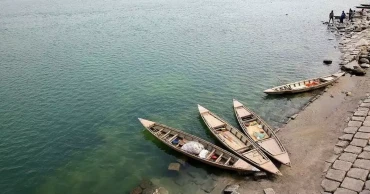
For generations, the Surma and Kushiyara rivers have shaped life in Sylhet and Habiganj—nurturing fertile floodplains while also unleashing destruction with alarming regularity.
Each monsoon, swollen waters spill over Surma and Kushiyara banks, washing away cropland, homes and roads, and forcing thousands into cycles of loss and recovery.
In a bid to break that cycle, the government has taken up a Tk 1,273.77 crore project aimed at strengthening flood protection, stabilising riverbanks and introducing integrated water resources management in Surma–Kushiyara river basin.
The project—titled Surma–Kushiyara River Basin Development and Flood and Integrated Water Resources Management Project (Phase I)—will be implemented by the Bangladesh Water Development Board under the Ministry of Water Resources between January 2026 and June 2028.
Fully financed by the government, it will cover 11 upazilas of Sylhet and Habiganj districts, where agriculture remains the backbone of local livelihoods.
At the heart of the initiative lies large-scale river dredging.
More than 121 kilometres of river stretches will be dredged, with an estimated 120.53 million cubic metres of sediment to be removed.
Besides, , riverbank protection works will be carried out along 17 kilometres of erosion-prone sections—areas that have repeatedly borne the brunt of the rivers’ shifting courses.
The Surma and Kushiyara are part of the vast Ganges–Brahmaputra–Meghna basin, originating from the Barak River in India before entering Bangladesh.
After crossing the border, the river splits into two branches, flowing through Sylhet’s hilly valleys before reuniting at Ajmiriganj in Habiganj as the Kalni River, which later merges with the Meghna near Bhairab Bazar and eventually drains into the Bay of Bengal.
Their mountainous origin makes both rivers naturally fast-flowing and highly meandering.
Erosion is a regular phenomenon, especially along concave bends.
In recent years, however, the problem has intensified.
Climate change–induced extreme rainfall, coupled with widespread destruction of upstream hill forests, has increased sediment loads entering the rivers.
These sediments settle along convex bends, choking river channels and accelerating erosion along opposite banks, according to the project document obtained by UNB.
During the monsoon, the volume of upstream runoff often exceeds the rivers’ carrying capacity, triggering floods that inundate vast tracts of land.
Crops are destroyed, homesteads collapse into the river, and public infrastructure—from roads to schools and religious institutions—suffers repeated damage.
Sylhet waterlogging mitigation project delayed again; sees 44pc cost surge
The basin also includes other transboundary rivers such as the Sarigoain, Sonai and Piyain, which enter Bangladesh from India and merge with the Surma.
Severe erosion along these rivers has displaced families and erased farmland, underlining the urgency of coordinated intervention.
Officials say the new project is designed to address these challenges in a more integrated manner—maintaining natural river flow through dredging, reducing erosion, enhancing fisheries resources and protecting both public and private infrastructure.
Special attention will be given to erosion-prone border stretches in Zakiganj upazila where riverbank protection works are expected to help safeguard Bangladesh’s territorial integrity—an often-overlooked consequence of unchecked river erosion along transboundary rivers.
Once completed, the project is expected to protect crops, homes, roads, mosques, madrasas, orphanages and other key installations from both early and peak monsoon floods across the region.
Beyond immediate protection, officials hope it will lay the foundation for more sustainable water resource management, agricultural stability and long-term socio-economic resilience in one of Bangladesh’s most flood-vulnerable landscapes.
During the monsoon of 2022, northern and northeastern Bangladesh experienced an unprecedented flood, widely regarded as the worst to strike the region in 122 years.
The disaster affected 18 districts, with Sylhet, Sunamganj, Moulvibazar, Habiganj and Netrakona bearing the heaviest damage. The flooding claimed 12 lives and disrupted the lives of around 7.2 million people.
Abdul Karim, a resident of Sylhet city said, “If this project can really control erosion and reduce flooding, it will give people like us some peace of mind. But we hope the work is done properly and finished on time.”
7 months ago

BNP to seek Bangladesh’s rightful water share from India if elected: Fakhrul
BNP Secretary General Mirza Fakhrul Islam Alamgir on Monday said that if voted to power, his party would pursue Bangladesh’s rightful share of water from India while upholding mutual respect between the two countries.
“If BNP forms the government, we will engage with India on issues related to the Teesta, Padma and other shared rivers and try to realise our rightful share of water,” he told reporters in Thakurgaon town responding to a question on how BNP would shape relations with India.
When asked about India’s current unfriendly attitude, Fakhrul said proper diplomatic engagement could help ease tensions.
He also criticised the government over what he described as its failure to recover illegal weapons, saying the law and order situation has not improved significantly so far.
“I do not think the law and order situation has improved much yet. However, I am hopeful that it will improve during the election period and reach a better state,” he said.
Referring to recent developments involving cricket, he said the issue carried political implications and was linked to the dignity of the country.
“Undoubtedly, one of our cricketers has been insulted. We believe our country has been insulted. In that case, we agree with the decision taken by the cricket control board. At the same time, we believe minor issues should be resolved through dialogue,” he said.
Asked whether major political parties were trying to woo Awami League voters, Fakhrul said BNP remained a self-sufficient political party with a strong record.
“All the major achievements of this country were made under BNP from restoring multi-party democracy to shifting from a presidential to a parliamentary system, ensuring press freedom and judicial independence. BNP has ensured these through its 31-point reform agenda,” he said.
Tarique to kick off BNP’s election campaign from Sylhet on Jan 22
On the election situation, he said the real situation will be clear once election campaigns begin. “Before that, it is difficult to understand the actual scenario,” he added.
Asked whether fascism could return, he said “We are not afraid of fascists. We know how to resist them. We know how to fight and how to endure repression. We are not afraid of that.”
BNP district secretary Paygam Ali and other party leaders were present.
8 months ago

Rivers should unite us, not divide: ICIMOD DG Dr Pema
Director General of the International Centre for Integrated Mountain Development (ICIMOD) Dr Pema Gyamtsho has laid emphasis on building trust and sharing scientific knowledge and evidence among countries in the region, stressing that rivers cross national boundaries and connect people.
“This is very important. Rivers cross national boundaries and rivers connect us. But very often, we do not recognise the connectivity that rivers bring. Rivers should be uniting us, not dividing us,” he told UNB in an interview at the ICIMOD headquarters in Kathmandu recently.
Dr Pema, the first Director General from the region that ICIMOD serves since its establishment in 1983, said the first step is to build trust and the next step is to come up with scientific knowledge and evidence.
He highlighted the importance of sharing information on what is happening upstream, the kind of water flow regimes, how glacier melt affects river flows, or in the event of a potential glacial lake outburst and how that information can quickly reach downstream communities.
Dr Pema, who served the Royal Government of Bhutan for over three decades, said it is also important to know what kind of sedimentation is happening and what level of pollution is taking place.
Upstream-Downstream Data
“This upstream–downstream data is very relevant,” he said, adding that everything has to be done step by step. “Overnight, we cannot reach a stage where everybody agrees. It has to be a process, a movement,” said the DG.
He, however, said the ICIMOD provides the information, science and the decision-support systems. At the end of the day, Dr Pema said, it is up to the governments to come together, discuss and make decisions. “If they have the right evidence and intelligence, they will be better informed to make the right decisions.”
Thriving rural communities foundation of global security: IFAD
Responding to a question, Dr Pema said they have been largely focused on the Chittagong Hill Tracts area because that represents the mountainous part of Bangladesh.
There, he said, they are looking at supporting the livelihood systems - how they can promote climate-resilient agricultural practices, how they can better manage water resources, especially in terms of addressing the shortage of water.
Dr Pema said Bangladesh faces serious challenges - sometimes there is too much water with floods; sometimes there is too little water with long periods of drought.
“So, during those periods, how can we manage production systems? We are also looking at reviving springs that have already dried up and preventing the drying up of springs that are still in good condition. Spring-shed management is one area we are really going to focus on,” said the DG.
He said, “Of course, other areas are also important - for example, supporting the development of ecotourism. That is another area where we would like to focus.”
Now, at the national level, Dr Pema said they are working with institutions like the Department of Meteorology and Hydrology to come up with more reliable forecasting systems and early warning systems.
Early Warning System
Responding to a question on early warning systems, Dr Pema said the early warning system that they are trying to promote is called Community-Based Flood Early Warning Systems (CBFEWS).
“Now, of course, ICIMOD itself cannot do all these things - we are working through partners in Bangladesh, including the Disaster Management Department,” he said.
Bangladesh’s tourism sector reels from political and safety issues
Dr Pema said it is not enough just to have the right prediction tools or early warning systems. “It is equally important to prepare communities: bringing them together, building their capacity, educating them, and preparing their response mechanisms.”
He said that is something they really want to take forward, because at the end of the day, when a flood happens, it is the communities that have to respond.
“They need to be ready. This also means we must look at how to address the specific needs of more vulnerable groups, like people with disabilities, women, and children,” Dr Pema observed.
In terms of funding, he said how these funds are being mobilised, and whether there is any funding gap that is a calculation they have made based on the National Adaptation Plans of countries.
For adaptation, Dr Pema said, it will indeed be a challenge, but they have to start somewhere. “We have to raise awareness about how much is needed, and identify the sources from which we can get this funding whether from global funding mechanisms or from within our own governments.”
He said it is a multipronged approach and they try to link the scientific evidence with the potential sources of funding, so that there is an opportunity for funding agencies and the scientific community to come together, and see where support is most needed, where it could have the biggest impact.
Expectations from COP30
Asked about his expectations from the 30th United Nations Climate Change Conference, scheduled for November 10-21, 2025, in Belém, Brazil, the DG said, “I have always kept my expectations very modest.”
“For me, the priority is for this region to come together and solve our own problems, our own challenges. Of course, we can raise our issues and challenges at the global level, but for that to translate into actions here takes time,” he observed.
Dr Pema said the fastest way forward for them is for their own member countries to come together and take action now. “If you ask me frankly, my expectations are very modest.”
On the issue of the Loss and Damage Fund, especially with the big players like the USA, who have not been very proactive in the deliberations so far, he said, it is indeed a challenge.
Dr Pema said loss and damage is going to be challenging and the discussions are still ongoing; definitions are still being refined; funding mechanisms are still being debated.
At this stage, he said, it is very difficult to say how effective this funding mechanism will be.
Current Priorities
Asked about the priorities for ICIMOD, Dr Pema said, the biggest priority is for the eight regional member countries – Afghanistan, Bangladesh, Bhutan, China, India, Myanmar, Nepal, and Pakistan - to come together and address the challenges they are facing.
“Every day we hear about disasters as a result of climate change. You hear about glacial lake outburst floods happening as a result of fast melting of glaciers; we are talking about cloudbursts and flash floods,” he said.
Remembering the TigerCaravan: Most Successful Innovative Conservation Campaign by USAID, Bangladesh Forest Department and WildTeam
Dr Pema said these disasters do not stop at their borders - from the upstream countries to the downstream countries, everybody needs to work together.
He said they are trying to bring these countries together to address these challenges, which require very reliable early warning systems and effective response measures. “So this is a top priority.”
Of course, another priority is air pollution, Dr Pema said, adding that the whole region is suffering from very poor air quality.
“We are also trying to see how we can tackle air pollution across borders, because air pollution may originate in one place, but the impacts are felt everywhere,” said the DG.
He said it does not stop in airspace or water; it just keeps moving. “So again, there is a need for all countries to come together and address it.”
The third area they are focusing on is the management of national parks and protected areas, Dr Pema said.
He said biodiversity is very important for the people, and many communities depend on it for their livelihoods.
“So how can we improve the bio-economy? How can we improve conservation? How can we work together to protect iconic species like the wild yak, red panda, Asian elephant, or high-altitude snow leopard? These animals don’t use passports; they don’t apply for visas. We have to give them enough space to move around, which will also enhance their chances of survival,” Dr Pema said, adding that these are some of the priority areas they are working on.
Political Support
Responding to a question, he said they are getting all the support from their member countries. Since ICIMOD is a politically neutral organisation, they are not a political body, he mentioned.
“We do not deal with politically sensitive issues. We are focused on science, environment, and science-based evidence. Our key role is facilitating the sharing of knowledge, experiences, and good practices from one country to another, and also learning from institutions outside the region and bringing that knowledge here to share with our member countries,” he said.
“Now, as far as political support from all member countries is concerned, I would say we are receiving it. ICIMOD is jointly funded by our member countries as well as partners from outside the region. The funding itself is an indication of the kind of support we are receiving,” Dr Pema mentioned.
11 months ago
Mangrove reforestation to be initiated along 52 rivers and canals near Sundarbans
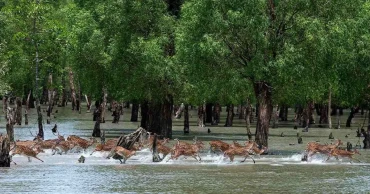
The Forest Department has undertaken a major initiative to restore mangrove forests along the banks of 52 rivers and canals near the Sundarbans in Khulna. This effort, inspired by the successful mangrove reforestation at Sheikh Russel Eco Park, aims to combat the impacts of climate change by planting native Sundarbans vegetation along these waterways.
In a model project at Sheikh Russel Eco Park in Batiaghata, mangrove reforestation was carried out on five acres of land along a lake, using saline water from the Rupsha River. This reforestation involved planting 4,000 mangrove saplings, setting a precedent for similar efforts in Khulna, Bagerhat, and Satkhira districts. The project, funded by the French Development Agency and implemented by IUCN Bangladesh and the Forest Department, will focus on restoring mangrove forests along 52 rivers and canals that flow through rural areas of Shyamnagar, Mongla, Dakop, Koyra, and Morelganj, eventually entering the Sundarbans.
‘Sundarbans Honey’ being registered as Bangladesh’s GI product: Industries Ministry
According to the Sundarbans West Division, this initiative is part of the ‘Upper Sundarbans Restoration Program,’ designed to enhance climate resilience in the region. The rivers and canals, once teeming with freshwater and vital to the Sundarbans’ mangrove ecosystem, have seen diminished water flow due to human activities such as deforestation, construction of embankments, and installation of sluice gates. These activities have led to the decline of mangrove forests along these waterways.
French President Emmanuel Macron’s visit to Bangladesh in September last year highlighted the French government's commitment to supporting climate-affected countries. Following his visit, the French Development Agency, with IUCN Bangladesh’s support, launched the ‘Upper Sundarbans Restoration Program’ to mitigate the impacts of climate change on the Sundarbans and surrounding rural areas.
Dr. Abu Naser Mohsin Hossain, Divisional Officer of the Sundarbans West Forest Division, said that from July 6 to 8, officials from the Forest Department, French Development Agency, and IUCN Bangladesh will jointly visit the cyclone-affected settlements in the upper Sundarbans and the mangrove model at Sheikh Russel Eco Park. This visit will lead to the launch of a pilot project aimed at restoring the mangrove forests along the banks of the region’s rivers and canals.
Read more: Three-month ban in Sundarbans worries local communities
2 years ago

Dev projects must not damage rivers and canals: PM Hasina asks officials
Prime Minister Sheikh Hasina on Monday (October 16, 2023) asked the officials concerned to make sure that developments projects don’t impede the free flow of water bodies, including rivers and canals.
“We have to ensure the uninterrupted flow of rivers. Keeping that in mind, we have to carry out our projects and development activities,” she said.
The prime minister said this while inaugurating various projects under the ministries of water resources and health.
She joined the programme from her official residence, Ganabhaban, through video link.
She said that in the name of development it is often seen that all water bodies are filled up.
“I think that this is very fulsome. All have to take step to save the water resources whenever any project is taken up or implemented,” she stressed.
Hasina also put importance on preserving water during the monsoon season.
She put emphasis on continuous capital dredging and maintenance dredging whichever is needed for the water bodies.
Read more: Bangladesh is a role model to least development countries: Shahab Uddin
The PM also said that the natural flow of the rivers, canals, beels (lake-like wetland) and other water bodies must not be hindered during implementation of any development project.
She asked the relevant authorities to ensure having at least one water reservoir in every development project.
Mentioning water as the biggest resource for the country, she said that all water bodies must have to be protected.
“The nature will flow by its own course, and we have to take steps to save our resources going with that flow,” she said.
Read more: Development should prioritise environmental protection over environmental damage: Dr Hossain Zillur
Health and Family Welfare Minister Zahid Maleque and State Minister for Water Resources Ministry Zaheed Farooque also spoke at the programme.
2 years ago

Geographies have destined us to take benefit of nature, including rivers: Momen
Foreign Minister AK Abdul Momen has said one country should not be deprived of its due share, as geographies have destined them to take benefit of nature, including rivers.
"We should be mindful that issues of domestic politics should not hurt the sentiment of the majority of people of other countries," he said while sharing a number of proposals for long-lasting friendship between South Asian countries and sustaining peace in the region.
Momen said South Asia has one of the lowest levels of intra-regional trade anywhere in the world due to prevailing trade barriers.
"A country should not abruptly impose tariff and non-tariff barriers to offset the prospects of trade," he said, adding that trade is the engine of growth and goes hand-in-hand with investment.
Momen said all countries should remove restrictions on investment from one country to another country to promote economic and trade prosperity.
He was delivering a public lecture on "Promoting Culture of Peace for shared prosperity: A vision for South Asia" at the Vivekananda International Foundation in India's New Delhi Wednesday evening.
Emphasising track 2 engagements to promote regionalism, the foreign minister said since the region is "very volatile" and at times, "full of emotions," the intelligentsia, including scientists, economists, litterateurs and journalists can make a positive and valuable contribution in "negating any propaganda" and in formulating sound and constructive programmes for the good and well-being of the region.
Read more: Bonhomie of Bangladesh-India continues to expand: FM Momen
"We need regional peace and stability to prosper and sustain. Therefore, we should promote dialogues among various strata of people, especially academicians, opinion builders and think tanks," he said.
Momen said there is an undisputed recognition that the destinies of the neighbouring countries are intertwined, that the stability and prosperity of the region are inextricably linked with each other and that the future of the region can best be served by strengthening mutually beneficial relations with each other.
He said the roots of regional cooperation lie in the realisation of social and economic benefits of the peoples of the region irrespective of existing divergences in the political, social and economic performances of any country.
"It is more important to promote cooperation rather than division," Momen said.
Vivekananda International Foundation Director Arvind Gupta and current and former diplomats, including Bangladesh High Commissioner to India Md Mustafizur Rahman were present.
3 years ago

DCs asked to stay vigilant about illegal sand extraction from rivers
Sate Minister for Water Resources Ministry Zahid Faruk on Thursday directed the Deputy Commissioners (DCs) to remain vigilant to stop illegal sand extraction from rivers.
The dams which are built on the rivers collapse due to the illegal sand extraction, he said while talking to reporters after the Deputy Commissioners’ Conference 2023 at the Osmani Memorial Auditorium in the capital.
Sand can be extracted only from those places which the Water Development Board declares as ‘Balu Mahals’ (sand quarries) as sand is needed for the development of the country, he said.
“In this way we will be able to meet the need for sand as well as prevent river erosion.”
Due to climate change, river erosion and flood has increased in Bangladesh, said the state minister.
“Last year we saw early flooding in rural areas. Even then we didn't let the crops get damaged. I have taken precautions.”
Read more: Sand lifting from rivers at night to be banned: State Minister
Stating that a few DCs spoke about the problem of river erosion in their areas, he said, "We are working, but the pace is slow due to the global recession."
“When a problem is raised from an area, we take action after conducting a survey,” he said urging the engineers to talk to local public representatives and solve their problems.
3 years ago

Rivers, lifeline of Bangladesh, played a crucial role behind victory over Pakistan in 1971: Study
The country’s rivers had played a vital role in defending and guiding the trajectory of Bangladesh's 1971 War of Liberation to victory as a larger number of operations run by the freedom fighters were on the rivers.
In 1971, rivers played one of the critical strategic roles, resisting the free and frequent movement of the enemies – Pakistani occupation forces. Most importantly, rivers acted as front-line soldiers by encountering enemies in the first place in the War of Liberation.
During the War of Liberation, Bangladesh was strategically divided into 11 sectors to defeat the Pakistani army. As Bangladesh is a riverine country, rivers formed most sector boundaries.
Some 87 percent (precisely 86.89pc) of the total boundary of the 11 sectors was demarcated by the rivers, according to a study conducted over the role of rivers in the War of Liberation by a non-government organisation --River and Delta Research Centre (RDRC).
Read more: Bangladesh's Liberation War deeply moving for us: Kennedy Jr
Mainly, rivers such as Padma, Brahmaputra, Meghna, Jamuna, Surma, Madhumati, and Muhuri played a key role in the formation of the sectors.
The highest 100 percent boundary of Sector-1 was demarcated by rivers, while lowest 76.32 percent of Sector-7 was drawn by rivers.
Based on the study findings, the RDRC prepared several maps that help understand the geographical aspects, especially rivers and water bodies of Bangladesh in 1971 and how they influenced Bangladesh’s birth.
The Sector-10, which covered the entire waterways of Bangladesh including coastal areas, rivers and seaports was formed on May 13, 1971, before the other sectors formed on 12-15 June, 1971.
Read more: Brave Women Freedom Fighters of Bangladesh’s 1971 Liberation War
According to government official data, naval commandos of sector-10 had undertaken 78 operations along with Jackpot and Hot Pants. In addition, the RDRC in its study found more than 300 guerrilla operations carried out on rivers.
In these operations, rivers served as a natural defence, and tactical advantage support mechanism that holds an unassailable position on the enemy side of the river.
In this manner, rivers led to the success in the Liberation War. Big and small rivers, monsoon and rains, have isolated, slowed the enemy forces from their occupation, led to national strength and often to war success, cumulating to national independence.
“We found 1270 rivers and streams existed during 1971 in Bangladesh. Every channel and stream played a role of direct defence, as well as served as a tactical advantage support mechanism that holds an unassailable position,” said RDRC chairman Mohammad Azaz.
Read More: 1971 and the Elderly
He said the eastern units of Pakistani troops were supported and supplied the logistics and ammunition through river networks from the beginning of the war in March 1971. In the beginning, the guerilla operations were mainly on land, he added.
As the operations increased, Pakistani troops used rivers and waterways as the safest network. Ships and supply chain networks were active and transported across all the major river ports in the country. This situation was functional up to mid-August, he said.
“We found that the naval operations and other operations on rivers gained attention globally, and Pakistani forces started losing their confidence and started losing the war from August to December 1971.The guerrilla operations had also lowered the morale of the Pakistani army,” said Azaz.
During the 1971 War of Liberation, rivers and waterbodies played a vital role in facilitating communication within and outside the country and helped demolish the Pakistani Military. The influence of Pakistani occupation forces started declining sharply due to naval operations particularly after August 16, 1971, which led to the victory and birth of Bangladesh as a new country in the world’s map.
Read More: 1971 loss a ‘military failure’, Pakistan’s Foreign Minister Bilawal says after ex army chief called it ‘political failure’
3 years ago

Sylhet flood situation improves as rivers recede
The flood situation in Sylhet district improved slightly on Tuesday morning, with most of the rivers except the Kushiyara showing a receding trend.
However, flood survivors across the northeastern district continue to suffer from the deluge. While many have taken refuge in makeshift shelters, others are staying in tents on the highway and roads.
The Surma river was receding very slowly. As on Monday 6pm, the river was flowing 34 cm above the danger level after its water level dropped 8 cm in 24 hours, according to the district Water Development Board (WDB).
Also read: Flood in Bangladesh: Death toll stands at 107
However, the Kushiyara river was still flowing 84 cm above the danger mark at Amalshid point after rising 18 cm in 24 hours. At Sheola point, the river was flowing 20 cm above the danger level at 3pm Monday after rising 12 cm in 24 hours.
4 years ago

Steps taken for making rivers around Dhaka fit for navigation: Tajul
LGRD Minister Md Tajul Islam on Sunday said the government has taken steps to develop the rivers around Dhaka so more passener boats can operate to ease traffic in the capital city.
“The bridges over rivers around Dhaka are not high enough to allow vessel movement. Already the authorities concerned have identified some bridges and directives have been given to demolish those and make the rivers suitable for navigation,” he said.
Tajul was speaking at a function marking the signing of a Memorandum of Understanding (MoU) between the Water Development Board and South City Corporation in the city.
Also read: DSCC preparing integrated master plan to turn Dhaka into smart city, Tajul tells JS
He said the waterlogging problem in the city has eased this year due to the re-excavation of canals and eviction of illegal occupants
Tajul said most of the buildings in the city have no septic tanks. They have been warned, but response has been unsatisfactory, he said.
Also read: Decision on legal steps against GCC mayor to be known soon: Tajul
He also urged the authorities concerned to take strict action including shutting down the sewerage lines of those owners who refused to follow the government decision.
4 years ago