food distribution
Bangladesh to distribute 36.6 lakh tonnes of food grains among poor in FY26
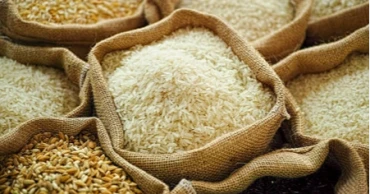
The government has taken a move to distribute some 36.61 lakh metric tonnes of food grains in 2025-26 fiscal year among low-income people under various social safety net programmes in the country to contain the inflationary pressure.
Inflation in the country rose to 8.55 percent in July 2025, according to the latest data released by the Bangladesh Bureau of Statistics (BBS).
The rise was attributed to a modest rise in food and non-food inflation, the BBS report mentions.
Under the programmes, 30.57 lakh metric tonnes of rice and 6.04 lakh metric tonnes of wheat will be distributed, according to a Food Ministry document.
In the previous fiscal year, 33.05 lakh metric tonnes of food grains, 26.30 lakh metric tonnes of rice and 6.75 lakh metric tonnes of wheat-were distributed.
Social security programmes get bigger allocations in national budget for FY26
A total of 2.40 lakh metric tonnes (MT) of rice and 3 lakh MT of wheat will be distributed through Open Market Sale (OMS) allocation in FY2025-26.
Although some 1,066 OMS centres are currently operating in city corporations and major municipalities (as of July 2025) the demand is far higher.
The annual rice requirement under the OMS programme is around 3,06,240 MT against the current allocation of over 66,000 MT.
Besides, the daily wheat allocation requirement is 1,391 MT( or 30,602 MT of flour) per month.
The monthly requirement stands at 39,743 MT of wheat which pushes the annual demand to around 4,76,915 MT against 3 lakh MT currently allocated.
Officials say the shortfall highlights the need to revisit allocation levels to meet actual consumption patterns and ensure uninterrupted supply for low-income consumers who rely on subsidised rice and wheat through OMS channels.
Rice prices in Bangladesh continue to exert significant pressure on food inflation as well as overall inflation, according to the latest economic update by the General Economics Division (GED) of the Planning Commission of the Planning Ministry.
The contribution of rice to food inflation rose sharply from 40 percent in May to 51.55 percent in July. Medium and coarse rice accounted for the bulk of the increase, contributing 24 percent and 18.39 percent respectively, the GED report shows.
A note from the Directorate says that the matter could be placed for discussion and decision-making regarding potential increases in OMS allocations for both rice and wheat.
Rice and flour are sold at subsidised rates under OMS programme across Bangladesh to stabilise prices and support vulnerable groups particularly in urban areas.
Bangladesh’s food grains distribution programmes are a key pillar of the government’s efforts to ensure food security for low-income and disaster-affected populations.
Managed primarily by the Directorate General of Food under the Ministry of Food these initiatives combine social safety nets, targeted subsidies, and emergency relief to address both chronic poverty and seasonal hardships.
Bangladesh targets record $63.5 billion exports for FY26: Commerce Adviser
The largest components include the Vulnerable Group Feeding (VGF) and Vulnerable Group Development (VGD) schemes which provide rice and wheat to millions of rural and urban poor households, particularly during lean agricultural seasons and ahead of major religious festivals.
Under the Food for Work (FFW) and Test Relief (TR) programmes, food grains are distributed as payment for labour in rural infrastructure projects such as road maintenance, embankment repair, and irrigation canal construction, helping communities build resilience while generating employment.
The Open Market Sale (OMS) initiative operates through trucks and dealers nationwide to sell rice and flour at subsidised prices to stabilise markets and support low-income consumers.
Besides, during floods or cyclones, the government mobilises rapid-response relief channels to distribute food grains directly to affected families.
These programmes are supported by the development partners including the World Food Programme (WFP) which collaborates with the government on capacity building, targeting systems and supply chain management.
Officials said such programmes are vital for reducing hunger, protecting livelihoods, and protecting the most vulnerables against price shocks and climate-related disruptions.
A top Food Ministry official said some 55 lakh families in the country which was 50 lakh previously will get 30 kilograms of rice per month at the rate of Tk 15 per kilogram.
This will be distributed in August, September, October, November, February and March.
“We hope that the market price will be lower comparatively as our storage is satisfactory,” said an official wishing anonymity.
1 year ago

‘100 Million Meals’ Campaign: Food distribution begins in Jordan, Pakistan and Egypt
Food distribution has already begun in Jordan, Pakistan and Egypt as part of the ‘100 Million Meals’ campaign that aims to support disadvantaged communities across 20 countries during the holy month of Ramadan.
Low-income families, refugees, orphans and widows in Jordan, Egypt and Pakistan have started receiving food parcels that enable them to prepare their own meals throughout the holy month of Ramadan.
The Mohammed bin Rashid Al Maktoum Global Initiatives (MBRGI), organiser of the ‘100 Million Meals’ campaign, is collaborating with international and local partners in each of the beneficiary countries to ensure swift and efficient delivery of food parcels.
Massive donations continue to pour in from individuals, companies and businessmen inside and outside the UAE since the campaign launched on April 11. Every AED1 donated helps provide one meal for beneficiaries in targeted countries across the Middle East, Africa and Asia.
Jordan refugee camps MBRGI is collaborating with the United Nations World Food Programme, the Food Banking Regional Network and humanitarian organisations in beneficiary countries to ensure food parcels are delivered to people most in need.
The UN World Food Programme will distribute cash vouchers raised from the ‘100 Million Meals’ campaign, sufficient to provide 20.8 million meals in refugee camps in Jordan over the next six weeks. As a strategic partner in the ‘100 Million Meals’ campaign, the World Food Programme is helping provide food support through money transfers and cash vouchers for low-income communities in Palestine and in refugee camps in Jordan and Bangladesh.
As an umbrella for local food banks in 13 of the 20 countries covered by the campaign, the Food Banking Regional Network is collaborating with the Jordanian Food Bank to secure food parcels to the target groups in Jordan.
The use of cash and vouchers, equipped with biometric identification, has proven to maximise food security outcomes amongst the target population.
They help beneficiaries secure access to a diverse and nutritious diet, affording them the choice to select priority needs, and presenting benefits to both buyer and seller by injecting capital into local markets and economies.
Islamabad first to benefit The Mohammed bin Rashid Al Maktoum Humanitarian and Charity Establishment (MBRCH), in collaboration with the UAE embassy, started distributing food parcels to target groups in Pakistan. Essential food items including flour, rice, lentils, red beans, sugar, oil, dates and tea have so far been distributed in three villages and neighborhoods of the city of Islamabad.
Egypt’s food safety net To ensure food parcels reach people most in need, the Food Banking Regional Network is collaborating with the Egyptian Food Bank and a number of charity organisations across Egypt, under the supervision and follow-up of the Ministry of Social Solidarity and its affiliated directorates in all governorates.
Low-income families and disadvantaged individuals across Egypt received basic foodstuffs including rice, oil, beans, beans and flour. Food parcels distributed to families are sufficient to prepare between 240 and 300 meals throughout the Holy Month of Ramadan.
A partnership for the good of humanity The integrated distribution network, developed in MBRGI’s collaboration the UN World Food Programme, the Food Banking Regional Network and local charities in beneficiary countries, ensures swift food support to the largest possible segment of beneficiaries and maximise the impact of the campaign that aims to improve lives.
Individuals and companies can donate to the ‘100 Million Meals’ campaign in four simple ways. First, on the campaign’s website www.100millionmeals.ae; second, by making a transfer to the designated bank account through Dubai Islamic Bank (AE08 0240 0015 2097 7815 201); third, by sending "Meal" on SMS to the specified UAE numbers (Etisalat and Du) listed on the website; and fourth, by contacting the campaign call center on the toll-free number 8004999.
5 years ago
.jpg)
Rainbow Paints distributes food among painters
Rainbow Paints, popular paint brand of RFL Group, has distributed food among about 2500 painters in different places across the country.
6 years ago
.jpg)
Inform police before food, relief distribution: PHQ
Police Headquarters on Thursday urged different organisations and individuals to inform police before going for distributing food and relief materials.
6 years ago