Nuclear energy
Global nuclear energy sees strong comeback four decades after Chernobyl
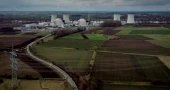
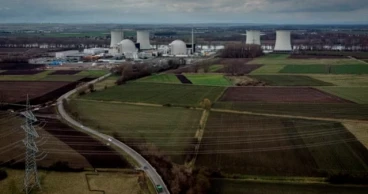
Nuclear energy is making a strong global comeback about 40 years after the Chernobyl disaster, as countries look for reliable and low-carbon electricity amid rising energy demand and geopolitical tensions.
The 1986 Chernobyl accident in then Soviet Ukraine triggered widespread fear about nuclear power and slowed its expansion across Europe and other regions. Later, Japan’s Fukushima disaster in 2011 further weakened public support. But experts say the trend is now reversing.
Today, more than 400 nuclear reactors are operating in 31 countries, while around 70 new reactors are under construction. Nuclear power now generates about 10% of global electricity and roughly a quarter of low-carbon energy worldwide.
The industry has also improved over time with stronger safety systems and lower construction and operating costs.
Fatih Birol, executive director of the International Energy Agency, said nuclear power is regaining momentum globally. He linked the renewed interest partly to recent wars and energy security concerns.
“I am 100% sure nuclear is coming back,” Birol said, adding that the technology is increasingly seen as a secure source of electricity across the Americas, Europe and Asia.
The United States is the world’s largest producer of nuclear power with 94 operating reactors, contributing about 30% of global nuclear electricity output. Washington is now aiming to quadruple its nuclear capacity by 2050. A senior US official recently said nuclear power is essential for industry growth, artificial intelligence demand and long-term energy security.
China operates 61 reactors and is building nearly 40 more, positioning itself to become the global leader in nuclear capacity. Russia is also expanding rapidly, both at home and abroad, building 20 reactors in different regions including Europe, Asia, Africa and the Middle East.
In Europe, the European Commission now considers nuclear power part of its clean energy mix alongside wind and solar. Commission President Ursula von der Leyen has called Europe’s earlier reduction of nuclear power a “strategic mistake” and said the bloc is now rethinking its approach to energy security and climate goals.
France remains Europe’s nuclear leader, generating nearly 70% of its electricity from 57 reactors. President Emmanuel Macron has announced plans for new reactors to strengthen energy independence and cut emissions.
Other European countries remain divided. Germany shut down its last nuclear reactors in 2023 after decades of opposition, while Belgium has extended the life of its plants. Spain still plans a gradual phase-out of nuclear power.
Japan has restarted 15 reactors after safety reviews following Fukushima, with more expected to resume operations.
In Africa, South Africa remains the only country with a nuclear plant, while Egypt is building one with Russian support and several others are exploring the technology.
Russia, the pioneer of several nuclear projects, is also modernizing its domestic fleet and expanding exports. It continues to build reactors in multiple countries and has strengthened older Soviet-era designs with new safety upgrades.
The renewed global interest reflects a broader shift in energy thinking. Rafael Grossi, head of the International Atomic Energy Agency, said countries now recognize that stable and low-carbon electricity will be essential to meet rising demand.
From Chernobyl’s legacy to today’s energy challenges, nuclear power is once again becoming a key part of global energy strategies.
5 months ago
Japan marks 15 years since Tsunami, Takaichi calls for more nuclear energy
Japan on Wednesday marked the 15th anniversary of the devastating earthquake, tsunami, and nuclear disaster that struck its northeastern coast, as the government pushes for increased use of atomic energy.
The magnitude 9.0 quake and resulting tsunami on March 11, 2011, killed more than 22,000 people and forced nearly 500,000 to flee their homes, mostly due to flooding. In Fukushima, around 160,000 residents evacuated after radiation leaked from the tsunami-hit Fukushima Daiichi nuclear plant, with about 26,000 still living elsewhere due to lingering radiation fears or restrictions in their hometowns.
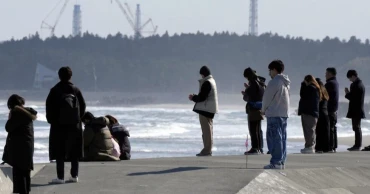
At 2:46 p.m., the country observed a moment of silence, marking the exact time the quake struck.
Prime Minister Sanae Takaichi, speaking at a ceremony in Fukushima, vowed to accelerate the region’s recovery over the next five years and to continue sharing “the valuable lessons learned from the disaster.” She has also pushed for faster restarts of nuclear reactors, supporting nuclear power as a stable energy source following a policy reversal in 2022 that ended a decade-long phase-out.
Early Wednesday, some residents of the tsunami-hit areas visited the coast to pray for missing loved ones. Over one million homes, schools, and offices in Iwate, Miyagi, Fukushima, and other coastal regions were destroyed or damaged. While infrastructure has largely been rebuilt, community and economic recovery has been slow, with many residents relocating permanently.
At Fukushima Daiichi, meltdowns occurred in three of six reactors, with at least 880 tons of melted fuel still inside. Radiation levels prevent full inspection, and large-scale removal is not expected until 2037 or later. Decontamination efforts produced massive amounts of slightly radioactive soil—enough to fill 11 baseball stadiums which the government plans to move, including for public works, but faces local resistance.
6 months ago

Bangladesh, South Korea ink MoU on cooperation for peaceful nuclear energy use
The Korea Atomic Energy Research Institute (KAERI) and Bangladesh Atomic Energy Commission (BAEC) have signed a memorandum of understanding (MoU) for the collaboration in the peaceful use of nuclear energy.
The signing ceremony was held at the BAEC building in Dhaka on Wednesday. Dr Park Won Seok, President of KAERI, Dr Md. Azizul Haque, Chairman of BAEC, Lee Jang-keun, Ambassador of the Republic of Korea to Bangladesh and other officers of BAEC and KAERI were present.
Also read: South Korea committed to deepen ties with Bangladesh through EPS prog: Envoy
According to the MOU, KAERI and BAEC will strengthen cooperation in various aspects of peaceful utilization of atomic energy, including development, utilization and upgrade of research reactor, production and application of radioisotope, development of radiation technology, neutron science and management of nuclear/radioactive waste.
Korea expects that the signing of the MOU will provide important momentum to take the existing collaboration between the two agencies to a new height.
Mentioning that KAERI has established a solid infrastructure as well as operation know-how of research reactors through the development of HANARO of Korea, JRTR of Jordan, OYSTER of the Netherlands during the past 50 years, Dr Park Won Seok expressed his confidence in cultivating and strengthening trustful partnership in the peaceful use of nuclear energy.
4 years ago

Bangladesh’s future focus may be on nuclear energy use: Dr Tawfiq
Bangladesh may go for nuclear power use to meet its growing consumption, said Prime Minister’s Energy Advisor Dr Tawfiq-e-Elahi Chowdhury.
Taking advantage of advanced technologies, Bangladesh may concentrate on nuclear power in near future to meet its energy demand as it has zero emission,” he said on Tuesday.
Dr Tawfiq was addressing the first-ever stakeholders’ meeting at a city hotel on formulation of an integrated energy and power sector master plan.
The Power, Energy and Mineral Resources Ministry organised the meeting with State Minister for Power, Energy and Mineral Resources Nasrul Hamid in the chair.
Read: S Korean companies to be interested in Bangladesh’s nuclear energy sector: Envoy
Japan International Cooperation Agency (JICA) is providing financial and technical support for framing the integrated plan for the energy and power sector.
The function was addressed, among others, by Principal Secretary to the Prime Minister Dr Ahmad Kaikaus, Japanese Ambassador ITO Naoki and Power Secretary Habibur Rahman.
Dr Tawfiq urged JICA to focus on technological advancement while formulating the master plan as technologies are fast changing in the energy and power sector.
He also advised the officials concerned to talk to local people to have innovative ideas in finding solutions to various problems in the sector.
Read: Bangladesh, Hungary to bolster ties in nuclear energy, training
Nasrul Hamid said Bangladesh would require $21 billion if it wants to meet its target of decarbonisation and promote clean and renewable energy by preparing an integrated master plan.
Dr Ahmad Kaikaus said transmission of gas and power is a very important element for the integrated master plan, and there should be a suitable plan for the areas where gas and power transmission lines to be installed.
Japanese Ambassador ITO Naoki said the proposed integrated master plan is instrumental for the energy and power sector and it is being prepared when Bangladesh and Japan are going to celebrate its 50 years of partnership and cooperation.
4 years ago
.jpg)
S Korean companies to be interested in Bangladesh’s nuclear energy sector: Envoy
South Korean Ambassador to Bangladesh Lee Jang-keun said on Monday that many Korean companies “will be very interested” in finding opportunities in Bangladesh, including nuclear energy generation, as it has the world’s top level technical capability in almost all the areas.
“I think many Korean companies will show interest. We’ve already collaborated with the United Arab Emirates (UAE),” he said while responding to questions from diplomatic correspondents after visiting Panam city and Baro Sardar Bari.
Korea, ranking the 6th in the world in terms of the total capacity of nuclear power generation, is a “world leader” in the peaceful use of nuclear energy from research to electricity production.
The Ambassador said he is not sure about the financial capability as they do not mobilize huge amounts of financial resources.
Also read: Looking for a place for Bangladesh’s second nuke plant: Hasina
4 years ago

Nuclear energy plays irreplaceable role in combating climate change: Chinese delegate
Vienna, Oct. 8 (Xinhua/UNB) -- Nuclear energy plays an irreplaceable role in tackling climate change and building a green, low-carbon and sustainable energy system, said a Chinese delegate at a UN conference here on Monday.
6 years ago