Macron
Trump threatens 200% tariff on French wines over Macron snub
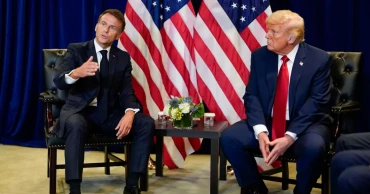
U.S. President Donald Trump on Tuesday threatened to impose 200% tariffs on French wines and champagne after reports suggested French President Emmanuel Macron was unwilling to join his “Board of Peace” on Gaza.
“Well, nobody wants him because he’s going to be out of office very soon,” Trump said. “So you know, that’s all right. What I’ll do is, if they feel like hostile, I’ll put a 200% tariff on his wines and champagnes, and he’ll join. But he doesn’t have to join.”
Greenland, tariffs and Trump dominate Davos talks
Macron’s five-year presidential term ends in May 2027, and under French law, he is ineligible for a third term.
The Board of Peace, endorsed by the United Nations Security Council in November, is a global body tasked with overseeing the Israel-Hamas ceasefire. Invitations to world leaders, including Russian President Vladimir Putin, UK Prime Minister Keir Starmer, and Indian Prime Minister Narendra Modi, have been sent.
Trump also reiterated his plans regarding Greenland, saying, “I don’t think they’re going to push back too much. We have to have it ...They can’t protect it.”
#With inputs from Agencies
7 months ago
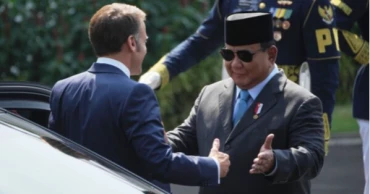
France's Macron presses ahead on his South Asia tour with talks in Indonesia
The French president met with his Indonesian counterpart on Wednesday as Emmanuel Macron continued his week-long trip to Southeast Asia focused on strengthening regional ties in an increasingly unstable global landscape.
Macron and France's first lady Brigitte Macron arrived in Indonesia’s capital, Jakarta, on Tuesday evening for the second stop in his tour after Vietnam, where Macron signed a deal to sell Hanoi 20 Airbus planes.
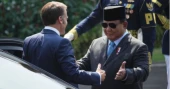
On arrival, Macron had warm words for Indonesian President Prabowo Subianto, describing him as a brother and “a great friend of mine.”
Military cooperation between Indonesia, Southeast Asia’s largest economy, and France grew in recent years, starting in 2019 when Subianto became defense minister. He and Macron met last November on the sidelines of the G20 summit in Brazil, where they discussed Indonesia’s plans to buy fighter jets and submarines from France.
French President Macron to make state visit to UK in July
Indonesia finalized an order for 42 French Dassault Rafale fighter jets in January 2024, with the first delivery expected in early 2026. The Asian nation also announced the purchase of two French Scorpene Evolved submarines and 13 Thales ground control interception radars.
Five of the radar systems are expected to be installed in Indonesia's new capital, Nusantara.
Indonesian Defense Minister Sjafrie Sjamsoeddin told reporters after welcoming Macron that the visit is aimed at strengthening "defense cooperation between Indonesia and France,”
On Wednesday, Subianto hosted the Macrons in a ceremony at Merdeka Palace in Jakarta before the two leaders went in for a bilateral meeting.
Afterward, the two presidents oversaw the signing of more than a dozen agreements, including a letter of intent for Indonesia to purchase of strategic weapons systems, especially fighter planes and submarines.
The developments "can open a new perspective with new orders for Rafales, Scorpènes, and light frigates, along with consolidated joint exercises,” Macron said at a joint news conference.
Subianto said that France is one of Indonesia’s main partners “in the modernization of defense equipment, including in the development of the defense industry through joint production and technology transfer.”
The two also discussed global issues, particularly the wars in Ukraine and the Middle East.
Indonesia is seeking to upgrade and modernize its arsenal and strengthen its domestic defense industry. Subianto crisscrossed the globe after becoming defense minister, traveling to China, France, Russia, Turkey and the United States in a bid to acquire new military weapon systems as well as surveillance and territorial defense capabilities.
Macron urges Gaza ceasefire during Cairo visit
The Indonesian Air Force currently operates a mix of fighter jets made in various countries, including the United States, Russia and Britain. Some of those aircraft have reached or will soon reach their end-of-life phase and need to be replaced or upgraded.
The two countries also signed agreements on trade, investment, energy, critical minerals and forestry.
Macron was also to meet with ASEAN's Secretary-General Kao Kim Hourn and speak at Jakarta State University.
On Thursday, Macron and his wife are to visit Borobudur, a 9th century Buddhist temple in the center of Indonesia’s Java island, and a military academy before heading to Singapore, where the French leader will speak at Asia’s top defense conference, the annual Shangri-La Dialogue.
1 year ago
Macron urges Gaza ceasefire during Cairo visit
During a visit to Cairo, French President Emmanuel Macron called for a ceasefire in Gaza and demanded that Israel lift its blockade to allow humanitarian aid into the besieged territory.
Macron held high-level discussions with Egyptian President Abdel Fattah el-Sisi at the Ittihadiya Palace, where the two sides aimed to sign a number of cooperation agreements.
The leaders were also scheduled to hold a trilateral summit with Jordan’s King Abdullah II to address the ongoing crisis in Gaza, reports Al Jazareea.
1 year ago
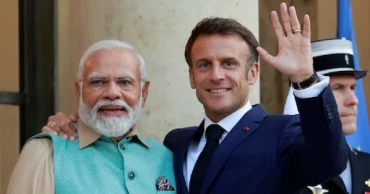
PM Modi in Paris to cochair AI action summit with Macron
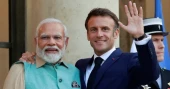
Prime Minister Narendra Modi has arrived in Paris for a two-day official visit to France, where he is set to co-chair the AI Action Summit alongside French President Emmanuel Macron.
The summit, which will take place shortly, aims to foster global collaboration on artificial intelligence (AI) governance, ethics, and innovation.
Upon his arrival in the French capital, PM Modi was received with a warm welcome by senior French officials and representatives from the Indian community.
Bimstec Summit: A meeting between Dr Yunus and Modi in the making?
His visit marks another significant step in the growing strategic partnership between India and France, particularly in the fields of technology and digital transformation.
The AI Action Summit is expected to bring together leading policymakers, technology experts, and industry leaders to discuss the responsible development and deployment of AI.
With artificial intelligence playing an increasingly influential role in various sectors, both leaders are expected to highlight the importance of international cooperation in ensuring AI benefits all humanity while mitigating potential risks.
Bangladesh issues may feature in Modi-Trump talks, hints India
During his stay, Prime Minister Modi is also scheduled to hold bilateral talks with President Macron. The discussions are likely to cover a wide range of issues, including defence collaboration, trade, climate action, and joint research initiatives in emerging technologies.
This visit follows a series of high-level engagements between India and France, reinforcing their long-standing diplomatic ties.
Analysts suggest that the AI Action Summit could pave the way for deeper technological cooperation and new policy frameworks aimed at ensuring ethical AI development on a global scale.
Source: News wirers
1 year ago

Emotions high at French protests over Macron's pension plan
Protesters opposing President Emmanuel Macron’s unpopular plan to raise the retirement age to 64 marched again Thursday in cities and towns around France, in a final show of anger before a crucial decision on whether the measure meets constitutional standards.
Demonstrators targeted the Central Bank offices in Paris and briefly invaded the headquarters of luxury conglomerate LVMH — but their attention increasingly centered on the Constitutional Council, which is to decide Friday whether to nix any or all parts of the legislation.
Activists dumped bags of garbage outside the council's columned façade in the morning. Later, another crowd holding flares faced off with a large contingent of riot police that rushed to protect the building.Paris police banned all gatherings outside the council from Thursday evening through Saturday morning, in an attempt to reduce pressure on the council members as they make their decision.
Police said some 380,000 people took part in the protests across France Thursday. The number was down from recent weeks, but unions still managed to mobilize sizable crowds. The demonstrations were largely peaceful, though dozens of injuries were reported among police and protesters.
Unions had been hoping for a strong turnout Thursday to pressure both the government and the members of the Constitutional Council tasked with studying the text of the pension reform plan. Critics challenged the government’s choice to include the pension plan in a budget bill, which significantly accelerated the legislative process. The government’s decision to skirt a parliamentary vote by using special constitutional powers transformed opponents’ anger into fury.
The trash piles signaled the start of a new strike by garbage collectors, timed to begin with the nationwide protest marches. A previous strike last month left the streets of the French capital filled for days with mounds of reeking refuse.
Polls consistently show a majority of French people are opposed to the pension reform, which Macron says is needed to keep the retirement system afloat as the population ages. Protesters are also angry at Macron himself and a presidency they see as threatening France's worker protections and favoring big business.
Fabien Villedieu of the Sud-Rail Union said LVMH “could reduce all the holes" in France's social security system. ”So one of the solutions to finance the pension system is a better redistribution of wealth, and the best way to do that is to tax the billionaires.”
Bernard Arnault, head of LVMH, "is the richest man in the world so he could contribute,” Villedieu said.Security forces intervened to stop vandals along the Paris march route, with 36 people detained, police said. Like in past protests, several hundred “radical elements” had mixed inside the march, police said.
Thousands also marched in Toulouse, Marseille and elsewhere. Tensions mounted at protests in Brittany, notably in Nantes and Rennes, where a car was burned.
“The mobilization is far from over,” the leader of the leftist CGT union, Sophie Binet, said at a trash incineration site south of Paris where several hundred protesters blocked garbage trucks. “As long as this reform isn’t withdrawn, the mobilization will continue in one form or another.”CGT has been a backbone of the protest and strike movement challenging Macron's plan to increase France's retirement age from 62 to 64. Eight unions have organized protests since January in a rare voice of unity. Student unions have joined in.
Macron had initially refused a demand to meet with unions, but during a state visit on Wednesday to the Netherlands proposed “an exchange” to discuss the follow-up to the Constitutional Council decision. There was no formal response to his offer.
“The contention is strong, anchored in the people," said Laurent Berger, head of the moderate CFDT union. If the measure is promulgated, “there will be repercussions,” he warned, noting the “silent anger” among the union rank and file.
Protests and labor strikes often hobble public transportation in Paris, but Metro trains were mostly running smoothly Thursday. The civil aviation authority asked airports in Toulouse, Bordeaux and Nantes to reduce air traffic by 20%.
3 years ago

Macron's govt ignites firestorm of anger in France with unpopular pension reforms
A big day has come for French high school student Elisa Fares. At age 17, she is taking part in her first protest.
In a country that taught the world about people power with its revolution of 1789 — and a country again seething with anger against its leaders — graduating from bystander to demonstrator is a generations-old rite of passage. Fares looks both excited and nervous as she prepares to march down Paris streets where people for centuries have similarly defied authority and declared: “Non!”
Two friends, neither older than 18 but already protest veterans whose parents took them to demonstrations when they were little, are showing Fares the ropes. They’ve readied eyedrops and gas masks in case police fire tear gas — as they have done repeatedly in recent weeks.
“The French are known for fighting and we’ll fight,” says one of the friends, Coline Marionneau, also 17. “My mother goes to a lot of demonstrations ... She says if you have things to say, you should protest.”
For French President Emmanuel Macron, the look of determination on their young faces only heralds deepening crisis. His government has ignited a firestorm of anger with unpopular pension reforms that he railroaded through parliament and which, most notably, push the legal retirement age from 62 to 64.Furious not just with the prospect of working for longer but also with the way Macron imposed it, his opponents have switched to full-on disobedience mode. They’re regularly striking and demonstrating and threatening to make his second and final term as president even more difficult than his first. It, too, was rocked by months of protests — often violent — by so-called yellow vest campaigners against social injustice.
Fares, the first-time protester, said her mother had been against her taking to the streets but has now given her blessing.
“She said that if I wanted to fight, she wouldn’t stop me,” the teen says.
Critics accuse Macron of effectively ruling by decree, likening him to France’s kings of old. Their reign finished badly: In the French Revolution, King Louis XVI ended up on the guillotine. There’s no danger of that happening to Macron. But hobbled in parliament and contested on the streets piled high with reeking garbage uncollected by striking workers, he’s being given a tough lesson, again, about French people power. Freshly scrawled slogans in Paris reference 1789.
So drastically has Macron lost the initiative that he was forced to indefinitely postpone a planned state visit this week by King Charles III. Germany, not France, will now get the honor of being the first overseas ally to host Charles as monarch.
The France leg of Charles’ tour would have coincided with a new round of strikes and demonstrations planned for Tuesday that are again likely to mobilize many hundreds of thousands of protesters. Macron said the royal visit likely would have become their target, which risked creating a “detestable situation.”
Encouraged by that victory, the protest movement is plowing on and picking up new recruits, including some so young that it will be many decades before they’ll be directly impacted by the pushed-back retirement age. Their involvement is a worrisome development for Macron, because it suggests that protests are evolving, broadening from workplace and retirement concerns to a more generalized malaise with the president and his governance.
Violence is picking up, too. Police and environmental activists fought pitched battles over the weekend in rural western France, resulting in dozens of injuries. Officers fired more than 4,000 nonlethal dispersion grenades in fending off hundreds of protesters who rained down rocks, powerful fireworks and gasoline bombs on police lines.
“Anger and resentment,” says former President François Hollande, Macron’s predecessor, “are at a level that I have rarely seen.”
For Fares, whose first demonstration was a peaceful protest in Paris this weekend, the final straw was Macron’s decision to not let legislators vote on his retirement reform, because he wasn’t sure of winning a majority for it. Instead, he ordered his prime minister to skirt parliament by using a special constitutional power to ram the bill through.
It was the 11th time that Prime Minister Elisabeth Borne had to resort to the so-called Article 49.3 power in just 10 months — a telling sign of Macron’s fragility since he lost his parliamentary majority in an election last June.
“It’s an attack on democracy,” Fares said. “It annoyed me too much.”
Her friend Luna Dessommes, 18, added hopefully: “We have to use the movement to politicize more and more young people.”
At age 76, veteran protester Gilbert Leblanc has been through it all before. He was a yellow vest; by his count, he took part in more than 220 of their protests in Macron’s first term, rallying to the cry that the former banker was too pro-business and “the president of the rich.”
Long before that, Leblanc cut his teeth in seminal civil unrest that reshaped France in May 1968. He says that when he tells awe-struck young protesters that he was a “soixante-huitard” — a ’68 veteran — they “want to take selfies with me.”
This winter, he has kept his heating off, instead saving the money for train fares to the capital, so he can protest every weekend, he said.
“My grandfather who fought in World War I, got the war medal. He would rise from his grave if he saw me sitting at home, in my sofa, not doing anything,” Leblanc said.
“Everything we’ve obtained has been with our tears and blood.”
3 years ago
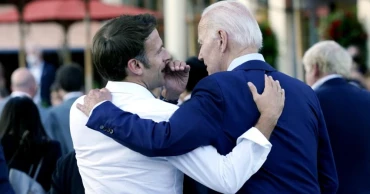
Biden, Macron ready to talk Ukraine, trade in state visit
French President Emmanuel Macron is headed to Washington for the first state visit of Joe Biden’s presidency — a revival of diplomatic pageantry that had been put on hold because of the COVID-19 pandemic.
The Biden-Macron relationship had a choppy start. Macron briefly recalled France’s ambassador to the United States last year after the White House announced a deal to sell nuclear submarines to Australia, undermining a contract for France to sell diesel-powered submarines.
But the relationship has turned around with Macron emerging as one of Biden’s most forward-facing European allies in the Western response to Russia’s invasion of Ukraine. This week’s visit — it will include Oval Office talks, a glitzy dinner, a news conference and more — comes at a critical moment for both leaders.
The leaders have a long agenda for their Thursday meeting at the White House, including Iran’s nuclear program, China’s increasing assertiveness in the Indo-Pacific and growing concerns about security and stability in Africa’s Sahel region, according to U.S. and French officials. But front and center during their Oval Office meeting will be Russia’s war in Ukraine, as both Biden and Macron work to maintain economic and military support for Kyiv as it tries to repel Russian forces.
READ: Biden strengthening US policy to stem sexual violence in war zones, including in Ukraine
In Washington, Republicans are set to take control of the House, where GOP leader Kevin McCarthy says Republicans will not write a “blank check” for Ukraine. Across the Atlantic, Macron’s efforts to keep Europe united will be tested by the mounting costs of supporting Ukraine in the nine-month war and as Europe battles rising energy prices that threaten to derail the post-pandemic economic recovery.
White House National Security Council spokesman John Kirby on Monday described Macron as the “dynamic leader” of America’s oldest ally while explaining Biden’s decision to honor the French president with the first state visit of his presidency.
The U.S. tradition of honoring foreign heads of state dates back to Ulysses S. Grant, who hosted King David Kalakaua of the Kingdom of Hawaii for a more than 20-course White House dinner, but the tradition has been on hold since 2019 because of COVID-19 concerns.
“If you look at what’s going on in Ukraine, look at what’s going on in the Indo Pacific and the tensions with China, France is really at the center of all those things,” Kirby said. “And so the president felt that this was exactly the right and the most appropriate country to start with for state visits.”
Macron was also Republican Donald Trump’s pick as the first foreign leader to be honored with a state visit during his term. The 2018 state visit included a jaunt by the two leaders to Mount Vernon, the Virginia estate of George Washington, America’s founding president.
Macron was scheduled to arrive in Washington on Tuesday evening ahead of a packed day of meetings and appearances in and around Washington on Wednesday — including a visit to NASA headquarters with Vice President Kamala Harris and talks with Biden administration officials on nuclear energy.
On Thursday, Macron will have his private meeting with Biden followed by a joint news conference and visits to the State Department and Capitol Hill before Macron and his wife, Brigitte Macron, are feted at the state dinner. Grammy winner Jon Batiste is to provide the entertainment.
READ: Biden says “unlikely” that missile hitting Poland was fired from Russia
Macron will head to New Orleans on Friday, where he is to announce plans to expand programming to support French language education in U.S. schools, according to French officials.
For all of that, there are still areas of tension in the U.S.-French relationship.
Biden has steered clear of embracing Macron’s calls on Ukraine to resume peace talks with Russia, something Biden has repeatedly said is a decision solely in the hands of Ukraine’s leadership.
Perhaps more pressing are differences that France and other European Union leaders have raised about Biden’s Inflation Reduction Act, sweeping legislation passed in August that includes historic spending on climate and energy initiatives. Macron and other leaders have been rankled by a provision in the bill that provides tax credits to consumers who buy electric vehicles manufactured in North America.
The French president, in making his case against the subsidies, will underscore that it’s crucial for “Europe, like the U.S., to come out stronger ... not weaker” as the world emerges from the tumult of the pandemic and Russia’s invasion of Ukraine, according to a senior French government official who briefed reporters on the condition of anonymity to preview private talks.
Macron earlier this month said the subsidies could upend the “level playing field” on trade with the EU and called aspects of the Biden legislation “unfriendly.”
READ: World’s largest active volcano Mauna Loa erupts in Hawaii
The White House, meanwhile, plans to counter that the legislation goes a long way in helping the U.S. meet global efforts to curb climate change. The president and aides will also impress on the French that the legislation will also create new opportunities for French companies and others in Europe, according to a senior Biden administration official who briefed reporters on the condition of anonymity to preview the talks.
Macron’s visit comes about 14 months after the relationship hit its nadir after the U.S. announced its deal to sell nuclear submarines to Australia.
After the announcement of the deal, which had been negotiated in secret, France briefly recalled its ambassador to Washington. A few weeks later Macron met Biden in Rome ahead of the Group of 20 summit, where the U.S. president sought to patch things up by acknowledging his administration had been “clumsy” in how it handled the issue.
Macron’s visit with Harris to NASA headquarters on Wednesday will offer the two countries a chance to spotlight their cooperation on space.
France in June signed the Artemis Accords, a blueprint for space cooperation and supporting NASA’s plans to return humans to the moon by 2024 and to launch a historic human mission to Mars.
The same month, the U.S. joined a French initiative to develop new tools for adapting to climate change, the Space for Climate Observatory.
3 years ago

French National Assembly vote decides battle between Macron and left
It's not even two months since Emmanuel Macron was convincingly re-elected as president but he is already in a crunch election that could prevent him pushing through his reforms.
French voters go to the polls on Sunday to decide who will control their National Assembly, reports BBC.
Mr Macron beat the far right in April, but this time the challenge is harder.
Far-left Jean-Luc Mélenchon leads a left-green alliance that finished neck and neck with Macron only a week ago.
They call themselves Nupes, which stands for New Ecological and Social Popular Union, and the polls suggest they could stop the president winning the 289 seats he needs for an outright majority. The centrist Macron alliance, Ensemble, portrays them as a "marriage of convenience" of Communists, Socialists, far-left Mélenchonists and Greens.
But Nupes have galvanised voters with a promise to fight spiralling prices, bring down the retirement age and tackle climate change. Green leaders and many green voters back them, accusing President Macron of doing little in the past five years.
READ: French projections: Macron's centrists will keep a majority
Sunday's second round is almost entirely made up of run-off duels between two candidates, and almost half involve the two big alliances. Several ministers in the Macron government are battling to keep their seats and hold on to their jobs, and two of the toughest fights involve Europe Minister Clément Beaune and Green Transition Minister Amélie de Montchalin.
Without an outright majority of 289 seats, Mr Macron will need the support of other parties to push through his big-ticket reforms, such as raising the retirement age, cutting taxes and reforming benefits. Pollsters suggest Ensemble will win 255-305 seats and Nupes 140-200.
As the sun went down on the campaign on Friday night, Nupes spokesman Ian Brossat told supporters in Longjumeau south of Paris: "They didn't think the left and Greens could get together - it would be chaos and catastrophe; but the chaos today is economic, with food prices going up. We've got 10 million people in poverty."
4 years ago

President Hamid congratulates Macron on re-election
President Abdul Hamid on Wednesday congratulated Emmanuel Macron on being re-elected as the President of France.
In a congratulatory message, Hamid said your re-election testifies the trust and confidence the French people have reposted on your leadership and your all inclusive projects and commitments for their better future.
"I hope, under your stewardship, France will continue a leading role in ensuring global peace, prosperity and security," he also said.
READ: Romanian ambassador presents credentials to President Hamid amid hope of growing Dhaka-Bucharest ties
He said that Bangladesh and France enjoy excellent bilateral relations which are rooted in shared values, democracy, equality and fraternity.
"We also recall moral and material support of the French people during our Liberation war in 1971. Since our independence, our relations have grown over the years and expanded in many areas of co-operation through meaningful engagement," he also said.
4 years ago

Macron keeps an open line to Putin as war in Ukraine rages
While most of the world is shunning President Vladimir Putin over Russia’s invasion of Ukraine, one of the few leaders keeping an open line of communication is French President Emmanuel Macron.
Macron’s diplomatic efforts to prevent the war failed, but he’s not giving up: the two men have spoken four times since Russian forces attacked Ukraine on Feb. 24, and 11 times over the past month.
The French leader, whose country holds the European Union’s rotating presidency, is now one of the few outsiders with a view into Putin’s mindset at the time of the largest military invasion in Europe since World War II. Israeli Prime Minister Naftali Bennett is also becoming a mediator, meeting Putin on a surprise visit to Moscow on Saturday and speaking with him again by phone on Sunday.
Macron’s relentless push for dialogue reflects France’s post-World War II tradition of carving out its own geopolitical path and its refusal to blindly follow the United States.
After Russian troops pushed deep into Ukraine, Macron’s resolve to maintain communication channels with Putin is providing Western allies with insight into the Russian leader’s state of mind, his intentions on the battlefield and at home in Russia as the Kremlin cracks down on opponents.
“He is keeping a diplomatic channel open for the West in case Putin might want to de-escalate and look for a way out of this crisis,” said Benjamin Haddad, a senior director for Europe at the Atlantic Council in Paris and a member of Macron’s party.
Macron has also spoken to Putin on behalf of Ukrainian President Volodymyr Zelenskyy, Haddad said, trying to extract some mercy from Putin: local cease-fires, safe passage for trapped civilians and access to humanitarian aid.
During their most recent call on Sunday that came at Macron’s request, the French leader and Putin focused for nearly two hours on the safety of Ukraine’s nuclear plants.
Putin said he doesn’t intend to attack them and agreed on the principle of “dialogue” between the International Atomic Energy Agency, Ukraine and Russia on the issue, according to a French official who spoke on condition of anonymity in line with the French presidency’s practices.
Read: UN court hearings to open in Ukraine case against Russia
There is “absolutely no illusion at the Elysee that Putin will keep his word on anything he promises,” Haddad said, or that Putin will change his mind about the invasion. But Haddad said that it’s important that Macron keeps trying to engage Putin even as the West punishes Russia and strengthens Ukraine’s defenses.
And breaking with the diplomatic norm of keeping such conversations secret, the French presidency has widely shared the content of Macron’s talks with Putin. Macron’s advisers and the president himself detailed the excruciating efforts to prevent the war and then laid bare Putin’s broken promises of peace.
That helped Macron galvanize support for the toughest sanctions against Russia, uniting the notoriously divided 27-member EU and revive NATO’s geopolitical role.
To the extent that keeping lines of communication open can be useful during a conflict to relay messages, warnings or threats, and hear the response, the Biden administration believes that such contacts can be useful for at least getting some insight into Putin’s mood, demeanor and mindset. Hence, Secretary of State Antony Blinken will go to Paris Tuesday to hear from Macron directly about his latest conversations with Putin.
But U.S. officials remain unconvinced that Macron’s efforts — or any other leader’s — have had any significant impact on Putin’s decison-making process. They note that despite a series of interventions by the French president, Putin has not only gone ahead with the invasion but also intensified the conflict.
The French president has been clear from the start: Putin alone is to blame for the death and destruction in Ukraine and the major consequences of the war for France and Europe. But on the other hand if Putin wants to talk, he will listen.
Putin called on Thursday. The number of refugees fleeing Ukraine had already topped 1 million and several towns in the east were in ruins. Macron picked up and they talked for 90 minutes.
An official in the French presidency rushed to brief reporters on the conversation. Putin told Macron the military operation in Ukraine is “going according to plan” and he will continue “until the end,” the official said.
Read: Ukraine says Russia steps up shelling of residential areas
Putin claimed that “war crimes” were being committed by Ukrainians. He called them “Nazis,” the official said. There’s no need to negotiate, Putin said. He will achieve the “neutralization and disarmament of Ukraine” with his army. The official couldn’t be named in keeping with Elysee practices.
Macron “spoke the truth” to Putin, the official said, and explained how his war on Ukraine is perceived by the West. “I spoke to President Putin. I asked him to stop attacks on Ukraine. At this point, he refuses,” Macron tweeted.
He said dialogue will continue. “We must prevent the worst from happening.”
Since he was elected president in 2017, Macron has shown a keen interest in forging personal relationships with world leaders, including those who value a degree of pragmatism when discussing democracy and human rights while pursing business opportunities.
His business-friendly diplomacy paid off in the Persian Gulf in December when he signed a multi-billion euro weapons contract with Abu Dhabi Crown Prince Mohammed bin Zayed Al Nayhan. Macron drew fierce criticism on that trip for traveling to Saudi Arabia to become the first Western leader to meet with Crown Prince Mohammed bin Salman after the 2018 killing of journalist Jamal Khashoggi.
“Macron stands out among European Union leaders with his willingness to be in the spotlight, to drive the foreign policy and push things ahead,” said Silvia Colombo, an expert on EU foreign relations at the International Institute in Rome.
There is no other foreign leader that Macron has tried to bring closer to his corner than Putin. Macron, a staunch European, was confident that a mixture of personal charm and the splendor of France’s past would convince Putin to keep Russia within the European security habitat.
Macron first hosted Putin in the sumptuous Place of Versailles in 2017. Two years later they discussed stalled Ukraine peace talks in Macron’s summer residence at the Fort de Bregancon on the French Riviera as Macron tried to build on European diplomacy that had helped ease hostilities in the past.
It’s become clear over the past several weeks that Putin was on the war path even as he denied it, sitting across from Macron at a very long table during his last visit to Moscow.
Macron wanted to believe him, Foreign Minister Jean-Yves Le Drian said after critics claimed the French president has fallen into the old European trap of appeasing Putin’s Russia.
“The president is not naive,” Le Drian said on the eve of Russia’s invasion. “He knows the methods, the character and the cynical nature of Putin.”
4 years ago