kitchen markets
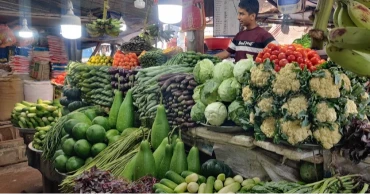
Chandpur’s winter harvest eases the burden on plates
As winter sets in, consumers in Chandpur are finding a welcome relief in kitchen markets, as the prices of winter vegetables see a modest decline, particularly benefiting low-income groups.
Vendors in the coastal district say this year’s price correction is a departure from previous trends, attributing the stability to the absence of syndicates that traditionally caused sudden spikes.
“If this situation continues, it could provide lasting relief for consumers,” a local vendor told UNB.
Agriculturists echoed this observation, noting that last year, potato prices had surged to Tk 80 per kilogram, while high-quality potatoes are now available at Tk 22–25 per kilogram.
Read more: Dry fish trade keeps Narail economy moving in winter
Other vegetables have also become more affordable: papaya is selling at Tk 25–30 per kilogram, and lower-quality potatoes are offered at six to seven kilograms for Tk 100 in van markets across neighbourhoods.
Similar pricing patterns are evident in the district town’s roadside markets, including Wireless, Baburhat, Bohoria, Mahamaya, Bakila, and Munshirhat in Matlab.
Over the past fortnight, fresh winter vegetables such as bottle gourd, ridge gourd, black eggplant, pointed gourd, chichinga, okra, and cucumber have seen price reductions of Tk 10–15 per kilogram, now retailing at Tk 45–50 per kilogram.
Other staples include radish at Tk 40 per kilogram, fresh cauliflower at Tk 35–40 per piece, and smaller cabbages at Tk 40 each. Bitter gourd remains relatively expensive at Tk 80–90 per kilogram, green chilli is Tk 80, coriander leaves Tk 30–40, medium-sized bottle gourd Tk 40, and carrots Tk 120 per kilogram.
Local tomatoes sell for Tk 100–120 per kilogram, taro at Tk 40–50, and leafy vegetables such as red amaranth, pumpkin, kolmi, pointed gourd, and radish are priced between Tk 20–30 per kilogram. Onion prices have fallen to Tk 50 per kilogram.
Read more: Polyshade tomato farming reviving Narail’s rural economy
Traders in the city’s busiest market, Biponibag, including Juel Mia, Jahangir Khan, Iqbal Bepari, and Abul Kalam Bepari, expect prices to fall further in the coming days.
Observations across other prominent district markets, such as Palbazar, New Market, Puranbazar, Wireless Market, and Biponibag, confirm this trend.
Vegetable vendors selling directly from vans are offering produce at Tk 5–10 lower per kilogram than retail shops, attracting crowds of low-income buyers, especially in the evenings.
Each morning, large quantities of fresh vegetables arrive via trawlers from remote char areas in Matlab Uttar, Chandpur Sadar, and Haimchar, including Raj Rajeshwar, Char Ibrahim, Harina, Char Kashim, Kanudi and Bishnupur.
Despite the ample supply, the lack of government regulation in retail markets keeps prices higher than production costs. Mohammad Mobarak Hossain, an agricultural officer at the Department of Agricultural Extension in Chandpur, told UNB that authorities have no power to control market prices.
He said winter vegetable cultivation targets cover 6,100 hectares, aiming for a total production of 134,200 metric tons. Vegetables are grown across nearly 12,000 hectares along riverbanks and chars, with additional supply coming from neighbouring districts.
“There is no shortage of winter vegetables,” he emphasised.
The current price trend provides a glimmer of hope for consumers, signalling a more stable market for winter staples this season.
Read more: Naogaon farmers face uncertainty as unseasonal rain hits early crops
9 months ago
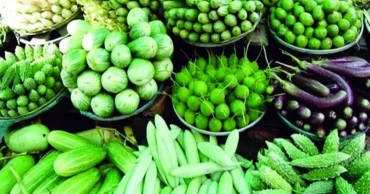
Vegetable prices remain high, consumers forced to buy in small quantities
The prices of vegetables in Dhaka’s kitchen markets have shown no sign of decline throughout the month, forcing consumers to reduce purchases to 250–500 grams instead of one kilogram.
Frustrated buyers say the soaring prices have put additional pressure on their daily expenses.
A visit to several wholesale and retail markets in the capital on Friday revealed that vegetable prices remain unchanged from last week.
Hyacinth bean (shim) is being sold at the highest rate—Tk 200 per kg—while good quality round brinjal is going for Tk 150 a kg. Tomatoes and carrots are also selling for more than Tk 150 per kg.
“One round brinjal weighs more than 250 grams. That means each piece costs Tk 40–50. We cannot afford to buy more than two,” said Sumona Akhter Ruby, a shopper at Uttar Badda kitchen market.
Another consumer, Monsur Ahmed, said, “A quarter kilo of hyacinth bean costs Tk 50. Tomatoes are almost the same. With Tk 500, vegetables don’t last even two days for a family of four.”
Prices of chicken, beef, milk, cucumber, and vegetables increase ahead of Eid
Among other vegetables, yardlong beans (barboti) are selling at Tk 120–80 a kg, while sponge gourd, snake gourd, ridge gourd and okra are priced at Tk 80–100 a kg. Bottle gourd is selling for Tk 100–120 per piece and jali kumra for Tk 50–70 each.
Traders said that previously they did not sell less than half a kilo of vegetables, but due to the high prices, they are now selling in 250-gram portions.
“As wholesale prices are still high and supply is limited, we are forced to buy at higher rates. Sales are also lower now,” said Asadul, a vegetable seller at Motijheel AGB Colony market.
The price of leafy greens has also gone up in line with vegetables. Just a month ago, spinach, water spinach and stem amaranth were Tk 10 per bunch, but now they are Tk 20. Pumpkin leaf, bottle gourd leaf and Malabar spinach (puishak) are being sold for Tk 50 a bunch.
A visit to Karwan Bazar wholesale hub, however, showed that prices have dropped by Tk 10–15 per kg compared to last week, though this decline has not been reflected in the retail markets.
The prices of small fish have also surged. Kachki fish is selling at Tk 600–800 a kg, river shrimp at Tk 1,000–1,200, local koi at Tk 800–1,000, punti at Tk 650–750 and gunchi at Tk 700 a kg.
Despite an abundant supply of hilsa in the market, the prices remain beyond the reach of most middle-income consumers. Large hilsa is selling for Tk 2,200–2,500 a kg, medium-sized for Tk 1,800–2,000, and small ones for Tk 1,200–1,500.
Prices of winter vegetables drop in Khulna, essentials continue to rise
In the meat market, chicken prices remain unchanged—sonali chicken is selling for Tk 300–320 a kg, broiler at Tk 170, and local chicken between Tk 550 and 650 depending on location.
Beef is selling at Tk 750–800 a kg, while mutton is priced at Tk 1,000–1,200 per kg.
Consumers expressed frustration, saying that unless vegetable prices fall, it will be increasingly difficult to manage household expenses as a large portion of their monthly income is being spent on groceries.
1 year ago
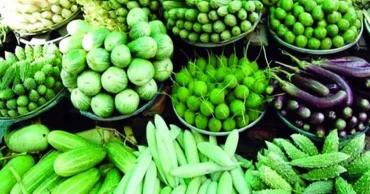
Vegetable prices remain high, most selling above Tk 100 per kg
The prices of vegetables remained high in the capital’s kitchen markets over the past three weeks, with most varieties selling above Tk 100 per kilogramme, leaving consumers frustrated.
During visits to kitchen markets in Motijheel, Shantinagar, Malibagh, Rampura and Badda on Friday, many buyers were seen expressing anger over the spiralling prices.
“Brinjal is still being sold at Tk 200 per kg. How is this even possible? Pointed gourd (Potol) that usually sells at Tk 50 a kg has now doubled in price,” said Shahnima Akter, a buyer at kitchen market in Badda area.
“If the prices remain like this, how will low-income people afford vegetables?” she asked.
Good quality round brinjal was found selling between Tk 180–220 per kg, long brinjal at Tk 140–160, and white brinjal at Tk 100–120 per kg.
Other vegetables also witnessed price hikes. Pointed gourd was selling at Tk 80–100 a kg, teasel gourd at Tk 100, yardlong beans at Tk 100–120, ridge gourd at Tk 80–100, and bitter gourd at Tk 80–120 per kg.
Vegetable prices soar in Dhaka's kitchen markets; no item below Tk 80
Tomato was being sold at Tk 160–180 per kg, cucumber at Tk 80–100, and carrot at Tk 140–180. Bottle gourd was priced between Tk 80–120 per piece, while ash gourd was selling at Tk 80–100.
Papaya was the cheapest among vegetables, though its price rose by Tk 10 in the past week to Tk 40 per kg.
Newly harvested beans entered the market at higher prices, selling at Tk 240–280 per kg.
“Compared to other times, supply of vegetables has dropped by half. This season usually sees lower supply, and on top of that, extra tolls are being charged at different points. That’s why the prices are so high,” alleged Aslam, a vegetable trader in North Badda.
Another trader, Monsur, said supply is likely to increase from mid-September, which may bring prices down slightly. Until then, consumers will have to bear with higher rates.
Leafy greens have also become pricier. A bundle of water spinach, spinach or helencha, previously sold at Tk 10, was now priced at Tk 15–20. Bottle gourd and pumpkin leaves were selling at Tk 50–70 a bundle, up from Tk 30–40 earlier.
Green chili was still selling at high prices — Tk 200–250 per kg.
Onion prices eased slightly, retailing at Tk 65–70 per kg, while garlic was selling between Tk 120–180. Lentil prices, however, increased — with coarse lentils selling at Tk 140 and finer varieties at Tk 160 per kg.
Prices of chicken, beef, mutton, and eggs remained unchanged. Broiler chicken was selling at Tk 170–180 per kg, Sonali chicken at Tk 300–320, and local chicken between Tk 580–650 per kg depending on size.
A dozen brown eggs were selling at Tk 150 and white eggs at Tk 140. Beef was selling at Tk 750–800 per kg, while mutton was selling between Tk 900–1,100.
Prices of chicken, fish rise in Dhaka’s kitchen markets
Fish prices also showed little change. Hilsa remained highly priced, with fish weighing over one kg selling at Tk 2,500–2,800 per kg, one-kg hilsa at Tk 2,300–2,500, hilsa below one kg at Tk 1,600–1,800, and smaller ones at Tk 800–1,200.
Giant freshwater prawns (golda) were selling between Tk 1,200–1,500 per kg, while tiger prawns (bagda) were priced at Tk 800–1,000. Rui was selling at Tk 300–350 per kg, catla at Tk 350–400, kalibaush at Tk 320–380, and tilapia at Tk 220–260.
Market insiders said unless vegetable prices come down, the overall market will not return to stability.
They also warned that persistent high prices of eggs, chicken, and fish may push up food inflation further next month.
1 year ago

Soaring prices in Khulna markets: A struggle for middle and low-income groups
In the aftermath of the January 7 national election, the kitchen markets in Khulna have witnessed a substantial hike in the prices of daily essentials, severely impacting middle-class and low-income families. This sudden increase in prices is making it increasingly difficult for these groups to manage their household budgets.
Recent market trends show a noticeable rise in the cost of various commodities. In particular, the prices of rice have seen a significant uptick over the past week. Seasonal factors have also led to increased vegetable prices during the winter, and essentials like broiler chicken, flour, pulses, chickpeas, ginger, and garlic are not exempt from this trend.
RMG workers in Gazipur demonstrate for wages set by govt, gridlock on Dhaka-Tangail highway
Local consumers express a sense of helplessness, feeling like hostages to what appears to be an uncontrollable syndicate. This situation has exacerbated their financial challenges, especially for those struggling to meet daily expenses.
Traders attribute this surge in prices to a poor supply chain. However, residents speculate that certain unscrupulous traders are exploiting the post-election period to unjustifiably raise prices.
A recent survey of Khulna's kitchen markets revealed the following price points: Miniket rice at Tk 68-70 per kg, BR-28 Paijam variety at Tk 65-66 per kg, and local variety rice at Tk 50-52 per kg. Vegetable prices have also surged, with beans costing Tk 80-100 per kg, cauliflowers and cabbages at Tk 50 each, and eggplant, ridge gourd, and bottle gourd ranging from Tk 80 to Tk 100.
The poultry market is not immune to these increases, with broiler chicken now at Tk 220-225 per kg after a Tk 20 increase, and Pakistani chicken at Tk 320-340. Beef prices have also risen, selling at Tk 700 per kg despite authorities setting the price at Tk 650.
Karwan Bazar slum fire: Firefighters recover 2 burnt bodies
Amirul Islam, a local fish trader, noted that fish prices have escalated by Tk 10-50. Additionally, the cost of chickpeas has jumped from Tk 85-90 to Tk 100-110 per kg, and high-quality pulses are now at Tk 150-160 per kg. Even the price of local onions has risen, now selling at Tk 80-100 per kg, up from the previous Tk 80-90.
This alarming price rise in essential commodities is placing significant strain on the residents of Khulna, with the most substantial impact felt by those in the middle and lower economic brackets.
2 years ago
.jpg)
No kitchen markets to be allowed at undesignated places in capital :Tazul
LGRD Minister Tazul Islam has said wholesale and retail kitchen markets should be set up at places designated by the government to reduce traffic jam and public hassles.
“Action will be taken against those who will set up shops occupying roads that hampers people’s movement,” he said.
He said this on Thursday after visiting Gabtoli kitchen market aiming to relocate Karwan Bazar there.
Also read: LGRD Minister directs WASA to fix water price in capital rationally
“Karwan Bazar was established long ago and goods from this market are distributed in retail markets of the city. Traders coming from different parts of the country struggle to reach here while distribution also becomes a struggle due to traffic jam. So we have started working on how Karwan Bazar can be shifted to a different suitable point of Dhaka,” he said.
He said wholesale and retail kitchen markets should not set up at the same place in densely populated areas and it is better if wholesale kitchen markets can be shifted outside the city.
“The mayors and councilors will decide how many markets are needed in an area instead of establishing wholesale and retail kitchen markets everywhere. If new markets are needed it will be done identifying the suitable spots,” the minister said.
Also read: Re-excavated canals: LGRD Minister predicts less waterlogging in Dhaka
“It’s not logical to establish a three-storied building for kitchen market but at Gabtoli it is being made to sell other products like electronics goods in the upper floors. Our main aim is to build a planned and beautiful Dhaka,”he added.
4 years ago

Fish, vegetables prices go up in Khulna kitchen markets after Eid holidays
Prices of fish and vegetables have shot up in the kitchen markets of Khulna after Eid holidays, bringing a blow to people from middle and low income groups.
The consumers alleged that every year after Eid, traders sell vegetables and fish at higher prices.
Despite having enough supply, the prices have gone up, said some consumers who came to New Market in the city five days after Eid to buy vegetables and fish.
However, vegetable traders in different markets of the city said that there is a shortage of vegetables in the market.
In the city markets, pointed gourd, eggplant, ladies-finger, bitter gourd, papaya, colocasia stem and different spinaches are selling between Tk 50-60 per Kg while potatoes, carrots, green chilies and cucumbers between Tk 100-150 per kg.
Read: Spice prices shoot up ahead of Eid despite sufficient stock
Hilsas are selling between Tk 1000-1500 per kg while prawns and lobsters at Tk 700-1200 per kg.
Hilsa trader Joynal said they collect fish from Khulna New Market. Hilsa supply is low in the wholesale market as many fishermen did not go to the sea during EId. “So the prices seem a bit high.”
Besides, rohita, katla, pangasea, tilapia, Bhetki, puti and tengra are selling between Tk 200-600 per kg.
Imran, a buyer who came to Rupsha kitchen market, said that he came to the market to buy fish and vegetables after getting bored of eating meat since Eid and found the price of fish very high. “Every year after Eid the market becomes unstable.”
Sheikh Palash Hossain, president of the Wholesale Traders' Association, said the prices of vegetables usually increase in the post-Eid time, which is normal. Besides, the supply of vegetables in the market is less due to Eid vacation, he said.
“The prices of vegetables and fishe go up as their demand increases after Eid,” he added.
4 years ago

Soaring prices of key items in Dhaka turn up heat in the kitchen
The overheated kitchen markets in Dhaka left the middle class and marginal income groups of people gasping even in the winter season. “We’re now in the middle of winter. The prices of key vegetables should have gone down by the time, but the prices are on fire,” said Shamim Gowher, a businessman. After visiting various kitchen markets, the UNB Correspondent found that the retailers were selling popular vegetables at Tk 50 to Tk 90 per kg claiming that there was a short supply in major wholesale markets. But the wholesalers claimed that the retailers are charging higher prices for vegetables for no reason. According to his market investigation, the price of broiler chicken has shot up to Tk 200 a kg, pinching the pockets of commoners already battered by the surging prices of other essentials like rice, edible oil, sugar and pulses. Visiting some wholesale kitchen markets, the correspondent observed that the winter vegetables are selling at 20 percent to 30 percent higher prices based on quality this year compared to that of the previous year. The price variation of vegetables also is based on areas like Gulshan, Banani and Hatirpool. The prices of vegetables at Karwan Bazar, Mohammadpur Krishi Market, Mirpur, Khilgaon, Fakirapool and Motijheel are almost similar.
Read:Spectre of panic buying returns to kitchen markets ahead of lockdown
4 years ago

Kitchen markets in Dhaka take the heat from 22-day Hilsa ban
Kitchen markets in Dhaka saw huge crowds of Hilsa lovers on Sunday evening as they rushed to buy the delicious fish ahead of a 22-day ban on its catching, selling, hoarding and transporting.
Many of the customers, however, retuned home empty as most of the sellers of the popular fish ran out of their stocks by 10 PM due to its high demand and supply crunch.
Read: 22-day ban on Hilsa fishing begins Sunday midnight
Talking to UNB, some Hilsa traders at Karwan Bazar said this season saw its higher prices due to its short supply and large volumes of export.
“The demand was very high, even well before the restriction period, due to the short supply,” said Kamrul Hasan, a fish trader.
The government has given a go-ahead to 52 companies to export 2,080 tonnes of Hilsa to India by October 10, ahead of Durga Puja, the largest festival of the Hindu community.
The government had banned the Hilsa export to India in 2012 but it approved the export of 500 tonnes of the fish in 2019 and 475 tonnes in 2020.
The 22-day Hilsa ban took effect on Sunday midnight as it is aimed at ensuring the safe spawning of the popular fish during its peak breeding period. The ban will remain in place till October 25.
Read: Durga Puja: 23 tonnes of Hilsa sent to India through Benapole
Fisheries Department, upazila and district administrations, police and coast guard personnel will carry out regular drives to make sure that the ban is implemented strictly.
Aminul Islam, district fisheries officer of Laxmipur, told UNB that there are around 52,000 fishermen in his district and 3,000 of them are registered.
They will get around 40 kg food aid as compensation during this restriction period, he said.
Meanwhile, the district administration was seen campaigning along riversides to make the fishermen aware about the importance of the government decision.
Read:Govt to consult experts to boost Hilsa production: Dipu Moni
On Sunday, Raunak Mahmud, secretary of the fisheries and livestock ministry, said some 1,118.068 metric tons of VGF rice has been allocated for 555,944 fishermen families in 36 districts where the ban on selling and fishing Hilsa will be enforced.
According to Protection and Conservation of Fish Rules, 1985, fishermen not abiding by the ban can be punished with a minimum of 1 to maximum of 2 years’ rigorous imprisonment or be fined up to TK 5,000.
4 years ago
.jpg)
Prices in kitchen markets on the up ahead of Ramadan
The prices of most vegetables have doubled in the capital’s kitchen markets compared to a week ago due to supply crunch, according to consumers.
At several kitchen markets in the city on Sunday, each kg broiler chicken was selling at Tk170-180 which was Tk150-160 a week ago. It was sold for Tk120-130 last month.
Besides, the prices of different daily essential commodities including soybean and palm oil, chicken, flour and sugar keep on soaring in Dhaka’s kitchen markets ahead of the month of Ramadan.
The consumers urged the government to take proper steps to control the prices at the kitchen markets in the holy month of Ramadan amid the COVID-19 crisis.
Also read: Prices of daily essentials soar in kitchen markets
Shariful Alam, a resident of Amulia, said he has to purchase most vegetables at double the prices compared to a week ago. “Today I bought a kg of aubergine and cucumber at Tk50 which was Tk25 respectively in the last week. Besides, I purchased a kg broiler at Tk170 which was Tk150 a week ago,” he also shared.
A hali of lemon (four pieces) was selling at Tk40-60, each kg arum at Tk40-50, bitter gourd at Tk50-60, papaya at Tk40, bean at Tk40-60 and yardlong bean at Tk50, lady's finger at Tk60, calabash at Tk40-50, and patal (pointed gourd) at Tk50-60 in capital.
5 years ago