Voice of America
Judge orders restoration of Voice of America, hundreds of journalists to return to work
A US federal judge on Tuesday directed the Trump administration to reinstate operations of Voice of America, which had been largely shut down a year ago, clearing the way for hundreds of employees on administrative leave to resume work.
US District Court Judge Royce C. Lamberth instructed the U.S. Agency for Global Media to submit a plan within a week to bring VOA back on air. The broadcaster has been running with minimal staff since President Donald Trump issued an executive order to close it.
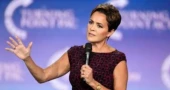
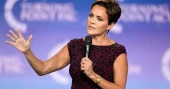
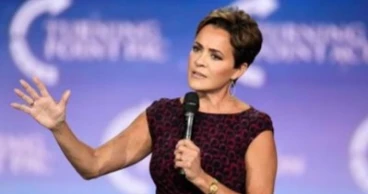
Earlier, Lamberth ruled that Kari Lake, Trump’s pick to head the agency, lacked the legal authority for her actions involving VOA. In Tuesday’s decision, he criticised the measures taken in response to Trump’s directive, which sidelined 1,042 of the organisation’s 1,147 employees, saying no sound justification had been provided.
There was no immediate response from the agency. Lake had earlier opposed the court’s March 7 ruling and indicated plans to appeal. Meanwhile, Trump has nominated Sarah Rogers, currently undersecretary of state for public diplomacy, to lead USAGM, subject to Senate approval.
Patsy Widakuswara, VOA’s White House bureau chief and one of the plaintiffs, welcomed the ruling, expressing hope of rebuilding the organisation and restoring trust among its global audience.
Founded during World War II, VOA has long provided news to countries with limited press freedom. Before the shutdown order, it broadcast in 49 languages, reaching an estimated 362 million people worldwide.
6 months ago
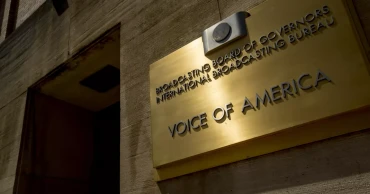
A federal lawsuit claims that the Trump administration has illegally closed down the Voice of America
A federal lawsuit claims that the Trump administration unlawfully closed down the Voice of America (VOA) and is asking a court to restore the outlet, which for decades has provided news about the U.S. to countries, including those without a free press.
Filed in the U.S. District Court in New York, the lawsuit was brought by VOA reporters, Reporters Without Borders, and several unions against the U.S. Agency for Global Media and Kari Lake, the former Arizona candidate and President Trump's representative. The lawsuit states, "In many parts of the world, a crucial source of objective news is gone, and only censored state-sponsored media remains."
Lake has criticized the agency, calling it a “giant rot” in need of dismantling and rebuilding. VOA, established during World War II, has been a key source of impartial news, often broadcast into authoritarian nations. Funded by Congress, it operates under a charter that ensures journalistic integrity.
The lawsuit accuses the Trump administration of unlawfully shutting down the agency in the past week, alleging that Republicans claim VOA is biased with left-wing propaganda, a charge the agency denies. The lawsuit states that the second Trump administration has attempted to "shutter it completely." The U.S. Agency for Global Media, which oversees VOA and other networks, did not immediately respond to a comment request.
Trump plans to sign executive order for shutdown of US Education Department
In a recent interview, Lake described VOA as “like having a rotten fish and trying to find a portion that you can eat,” and stated on X that the Agency for Global Media is "a giant rot and burden to the American taxpayer" and "a national security risk."
Clayton Weimers, executive director of Reporters Without Borders in the U.S., said his group is acting to protect VOA and press freedom globally.
There are also other media-related legal actions underway. At VOA's sister organization, Radio Free Asia (RFA), about 75% of its Washington office staff was furloughed on Friday, and the agency has canceled contracts with freelancers working abroad. RFA also plans to file a lawsuit to secure continued congressional funding.
Trump to seek trade negotiations as Americans feel the impact of the trade war: Canadian PM
Radio Free Europe/Radio Liberty (RFE/RL) filed a lawsuit on Tuesday in Washington, asking the court to compel the U.S. Agency for Global Media to release its next funding payment. RFE/RL broadcasts in 23 countries and 27 languages, and the lawsuit argues that the lack of funding has forced severe cuts in operations, potentially threatening the organization's survival.
1 year ago
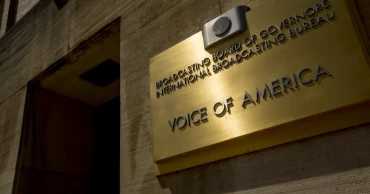
Trump signs order to slash staff at VoA, other US-funded media outlets
The Trump administration initiated significant reductions at Voice of America (VOA) and other government-funded pro-democracy media on Saturday, with the agency’s director confirming that all VOA employees have been placed on leave.
On Friday night, shortly after Congress approved its latest funding bill, President Donald Trump instructed his administration to scale back operations of multiple agencies to the minimum required by law. Among them was the U.S. Agency for Global Media, which oversees Voice of America, Radio Free Europe, Radio Free Asia, and Radio Marti, the Spanish-language broadcaster targeting Cuba.
Early Saturday, Kari Lake, a former Arizona gubernatorial and U.S. Senate candidate recently appointed by Trump as a senior adviser to the agency, posted on X, urging employees to check their emails. This coincided with official notices informing VOA staff of their placement on paid administrative leave.
“For the first time in 83 years, the storied Voice of America is being silenced,” said Michael Abramowitz, VOA’s director, in a statement. He noted that nearly all of the 1,300 employees were affected.
“VOA promotes freedom and democracy around the world by telling America’s story and by providing objective and balanced news and information, especially for those living under tyranny,” Abramowitz added.
One journalist, who requested anonymity due to lack of authorization to speak publicly, commented, “We expected something like this to happen, and it just happened to be today.”
Press freedom organization Reporters Without Borders denounced the move, stating it “condemns this decision as a departure from the U.S.’s historic role as a defender of free information and calls on the U.S. government to restore VOA and urges Congress and the international community to take action against this unprecedented move.”
The U.S. Agency for Global Media also sent termination notices for grants funding Radio Free Asia and other affiliated programs. These networks provide U.S. domestic news to international audiences, often in local languages. Outlets like Radio Free Asia, Radio Free Europe, and Radio Marti focus on countries with authoritarian governments, including China, North Korea, and Russia.
“The cancellation of Radio Free Europe/Radio Liberty’s grant agreement would be a massive gift to America’s enemies,” said Stephen Capus, the network’s President and CEO, in a statement.
Tens of thousands rally in Rome in support of Europe amid defense spending debate
Collectively, these networks reach an estimated 427 million people worldwide. Established during the Cold War, they have long played a role in promoting U.S. influence and countering authoritarianism, alongside agencies like USAID, which Trump has also targeted for reductions.
The cuts mark a major shift away from a post-Cold War tradition that has historically received bipartisan support. VOA’s leadership in the past has included figures like Dick Carlson, father of conservative commentator Tucker Carlson.
Thomas Kent, a former president and CEO of Radio Free Europe/Radio Liberty, said Trump’s broader plans for these agencies remain unclear but warned of the consequences.
“Without the international broadcasting, the image of the United States and the Trump administration will be in the hands of others, including the administration’s opponents, (and) countries and people who consider the United States an enemy,” said Kent, who now works as an international media ethics consultant.
Meanwhile, Lake posted a video on X discussing cost-cutting efforts without addressing VOA’s employees or mission. Filmed inside a VOA-leased building, she described the facility as a financial burden and expressed her intention to break the agency’s 15-year lease.
“We’re doing everything we can to cancel contracts that can be cancelled, save more, downsize and make sure there’s no misuse of your dollars,” she said.
The official notice to employees placed them on administrative leave while assuring continued salary and benefits “until otherwise notified.” It also directed them to refrain from using agency facilities and to return government-issued equipment, such as phones and computers.
The Trump administration has already taken steps to exert control over VOA, including terminating contracts that allowed it to use content from independent news sources like The Associated Press. Additionally, it has barred AP from participating in presidential press pools and taken measures to regulate which media outlets are included in these pools.
Trump’s directive also mandates cuts at several lesser-known federal institutions, including the Woodrow Wilson International Center for Scholars, the United States Interagency Council on Homelessness, and the Community Development Financial Institutions Fund.
1 year ago
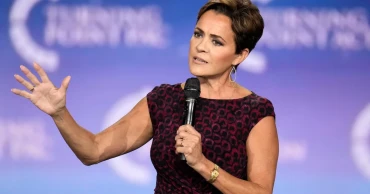
Trump taps immigration hard-liner Kari Lake as head of Voice of America
President-elect Donald Trump has chosen Kari Lake, a vocal supporter and former Arizona gubernatorial and Senate candidate, as the new director of Voice of America (VOA). The congressionally funded broadcaster is tasked with delivering impartial news to global audiences.
Lake, a former Phoenix TV news anchor who left her role in 2021 after controversies surrounding her social media posts and COVID-19 misinformation, emerged as a prominent political figure. Known for her sharp criticisms of mainstream media and alignment with Trump’s rhetoric, she gained national attention despite unsuccessful bids for public office.
Biden approves National Security Memo to assist Trump on key global issues
Trump announced that Lake would collaborate closely with the U.S. Agency for Global Media, which oversees VOA, to promote “American values of Freedom and Liberty” worldwide. He emphasized Lake’s role in ensuring fair and accurate broadcasting, contrasting it with what he has previously labeled as “fake news.”
VOA, established during World War II, has faced criticism from Trump in the past, including accusations of bias and unfavorable reporting on the U.S. Trump’s remarks particularly targeted VOA's coverage of the early COVID-19 outbreak in Wuhan, China, which the White House criticized during his first term.
US keen to support Syrian leaders on conditions
Lake has been unwavering in her support for Trump, including promoting unfounded claims of election fraud. Despite losing her Arizona gubernatorial bid and more recently her Senate race, Lake’s loyalty has kept her in Trump’s favor. She has written about her political journey and legal challenges in her book, Unafraid: Just Getting Started.
In related announcements, Trump named Leandro Rizzuto as ambassador to the Organization of American States, Dan Newlin as ambassador to Colombia, and Peter Lamelas as ambassador to Argentina. All appointees are notable Trump supporters or significant Republican donors.
1 year ago
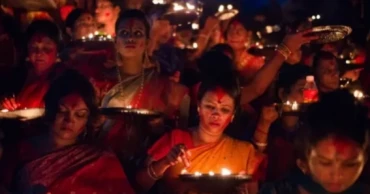
Minority groups in Bangladesh feel safer under interim govt: VOA survey
A significant portion of Bangladesh’s population believes the caretaker government is providing better security for religious and ethnic minorities compared to the previous Awami League government, reveals a recent survey by Voice of America (VOA).
The survey, conducted in late October, found that 64.1% of respondents think the caretaker government is offering greater protection to minorities than the previous administration. In contrast, 15.3% believe the situation has worsened, while 17.9% feel it remains unchanged.
It, however, says that the perceptions of security vary between Muslims and non-Muslims.
The poll included 1,000 respondents selected to reflect Bangladesh’s demographics. The sample was evenly split between men and women, with 92.7% identifying as Muslim. Slightly over half of the respondents were under the age of 34, and about a quarter resided in urban areas.
Initial Turmoil
After the fall of the Awami League government on August 5, religious minorities, particularly Hindus, faced a wave of violence, including attacks on homes, businesses, and places of worship.
"Attacks were motivated both by political affiliations and simply for being a minority," said Nur Khan Liton, a human rights activist. He noted incidents such as arson attacks on Ahmadiyya communities in Panchagarh.
Highlighting the longstanding vulnerability of minorities in Bangladesh, Meenakshi Ganguly, South Asia Director at Human Rights Watch, criticised successive governments for failing to protect minority rights.
“The indigenous communities in the Chittagong Hill Tracts are deliberately marginalised, and authorities have deprived them of their rights. Hindus and Ahmadiyyas remain targets of extremist groups,” Ganguly said in an interview with VOA.
However, under the caretaker government led by Dr Muhammad Yunus, significant efforts have been made to stabilise the situation. Civil society, religious institutions, and security forces came together to protect places of worship.
"Within a month, we observed notable improvements due to collaborative efforts from the public, political parties, and religious groups," said Nur Khan, now a member of the newly established Commission on Enforced Disappearances.
Differences in Perception
The survey revealed a divide in perceptions of safety between Muslims and minorities. Among Muslim respondents, only 13.9% felt the situation had worsened under the caretaker government. However, 33.9% of minority respondents believed their security had declined.
Jayati Sarker, a Dhaka resident and NGO worker, expressed mixed feelings. While she previously felt safe returning home late at night, she now fears venturing out even earlier in the evening. "In the past, I didn’t hesitate to return home with my daughter at 11 p.m. Now, even at 8 p.m., I feel unsafe," she said.
Despite these concerns, some respondents acknowledged a sense of relief due to the absence of certain political elements.
"For 15 years, Awami League activists acquired Hindu-owned land at low prices or forced sales. Now, they are gone, creating a sense of relief," Sarker added.
Read: 60.4 % think freedom of expression improved under interim govt: VOA survey
Hiren Pandit, a programme coordinator in Dhaka, noted improved security in rural areas due to increased military deployment but remained cautious about the future. "Our village homes were burned down, and we still live with insecurity," Pandit said.
International Concern
The post-transition violence against minorities in Bangladesh has drawn international attention. India’s Ministry of External Affairs has consistently voiced its concerns, while US Secretary of State Antony Blinken discussed minority rights with Dr Yunus during their September 26 meeting in New York.
Donald Trump, the newly elected US President, condemned the violence in an October 31 post on social media platforms X and Truth Social. “I strongly condemn the barbaric violence against Hindus, Christians, and other minorities in Bangladesh,” Trump wrote.
Future Prospects
In an address marking the caretaker government’s 100 days, Dr Yunus attributed the violence to political motivations rather than religious tensions. “Some incidents were given a religious guise to destabilise the country further,” he said.
Read more: VOA Survey on Bangladesh: 61.1% want elections soon, 65.9% prefer reforms first
Human rights activist Nur Khan sees encouraging signs but emphasised the need for consistent actions over the coming months to rebuild trust within minority communities. "The sense of unease is reducing, but whether minorities can feel fully secure depends on the government’s initiatives in the next six to nine months," Khan said.
1 year ago

DSA in Bangladesh is much better than in Western countries: PM Hasina
Prime Minister Sheikh Hasina has said that her government is looking into and examining similar digital security laws in the United States of America, United Kingdom, European countries and beyond to learn how they are applied in those countries – noting that Bangladesh’s law is much simpler than others.
The PM made the remarks during an interview with Voice of America’s Bangla service.
She said that if someone is creating social unrest or jeopardizing national security or imparting training on militancy and making bombs online than strict action must be taken accordingly.
“If someone, known as a journalist, tries to steal a file from a ministry, should that person be rewarded? If you do it in any civilized country, what action is taken against that person?” – the PM said.
Read More: Arson terrorists, killers must not grab power again: PM Hasina
“Despite being caught red-handed, the journalist was labelled a hero and awarded,” she observed.
“While the whole world was in total disarray due to Covid-19, and we were discussing buying vaccines, an official caught the file thief…. That person then became a hero and was rewarded. If this happened in any other country, developed or civilized, what would they have done?” – the Prime Minister posed the question.
The PM said law on digital security does not only exist in Bangladesh; the US and UK also have such laws.
“People in Bangladesh are using the internet and mobile phones more than ever. Out of 17 crore people, 12-13 crore have SIM cards,” she said.
Read More: PM Hasina seeks long-term US partnership to build Smart Bangladesh
“There are so many issues… so many… teaching online how to make bombs, how to kill people… these need to be stopped. I think this should be given special attention internationally. Action needs to be taken against those who are involving children and teenagers online in such crimes,” said the Prime Minister.
However, she said, the Bangladesh government is quite vigilant regarding the Digital Security Act. “In our country, there was a law earlier, when military dictators were in power, under which any journalist could be arrested without summons. After I (Awami League government) took over, I stopped this.”
“So, this is not a case of journalists being harassed. If anyone is involved in anti-social activities or militancy, generally action is taken against them,” the Prime Minister told Voice of America.
Read More: Extradition of convicted Tarique Rahman depends on UK govt: PM Hasina
3 years ago
.jpg)
FM mourns ex-VOA newscaster Kaffey Khan's death
Foreign Minister Dr AK Abdul Momen Friday expressed profound sorrow at the death of actor, vocal artist and former Voice of America (VOA) Bangla newscaster Kaffey Khan.
Kaffey Khan breathed his last at Virginia Center Hospital in Virginia of the US Thursday (US time).
Dr Momen said Kaffey Khan was a living legend.
The foreign minister also prayed for the salvation of his soul and extended sincerest condolences to his bereaved family.
Also read: Ex-VOA news presenter Kaffey Khan dies
The 92-year-old broadcast journalist was suffering from prostate cancer and old-age complications. He left behind two sons, two daughters and a host of relatives and well-wishers to mourn his death.
Kaffey Khan left Bangladesh for the US to join VOA Bangla in 1966 and went on retirement in 1994.
He acted in several films in Dhaka in the 60s apart from performing in stage dramas.
5 years ago

Ex-VOA news presenter Kaffey Khan dies
Kaffey Khan, a former news presenter of Voice of America’s Bangla section, died in the USA on Thursday. He was 92.
Kaffey , also the press secretary of BNP founder and late President Ziaur Rahman, breathed his last at Virginia Hospital Center, Arlington on Thursday afternoon while undergoing treatment for prostate cancer and old-age complications, said BNP organising secretary Syed Emran Saleh Prince.
Khan, also an actor, left behind two sons, two daughters and a host of relatives and well-wishers to mourn his death.
Also read: ICT Senior Prosecutor Zead-AI-Malum no more
Kaffey joined the Voice of America in 1966 and he was appointed press secretary of President Ziaur Rahman in 1977.
After the assassination of Zia, Kaffey rejoined VOA and went on retirement in 1994.
He acted in a number of films in Dhaka in the 60s apart from performing in stage dramas.
Also read: Health minister's mother Fouzia Maleque no more
BNP Secretary General Mirza Fakhrul Islam Alamgir expressed deep shock at his death.
In a condolence message, he recalled Kaffey ’s role as a press secretary of Ziaur Rahman.
Fakhrul prayed for the salvation of the departed soul and conveyed his deep sympathy to the bereaved family members.
5 years ago

Stay with VOA for authentic news: Roquia Haider
Dhaka, Oct 11 (UNB) - Bangla service chief of Voice of America (VOA) Roquia Haider on Friday said VOA won the people’s trust with authentic news.
6 years ago